

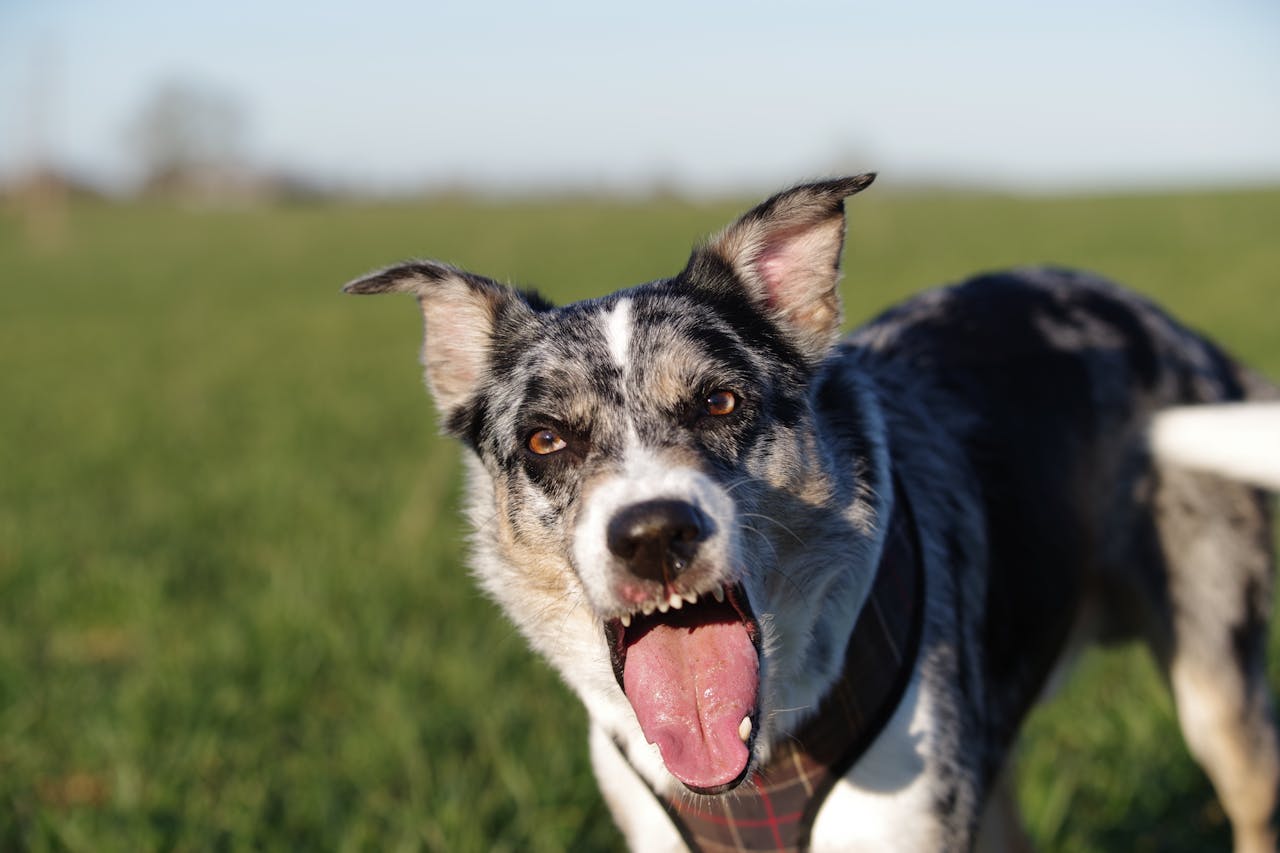
Remember that cute, obedient puppy who looked at you with adoration and hung on your every word? Well, now he’s been replaced by a stubborn, sometimes uncontrollable “teenager” who seems to deliberately ignore commands and test your patience. Don’t worry, you’re not alone, and there’s nothing wrong with your dog. He’s simply entered his teenage phase—one of the most challenging but also most important stages of his life. We’ll delve into all the nuances of this period in more detail on Tvaryny.
What is dog adolescence and when does it begin?
Dog adolescence is the transitional period from puppyhood to adulthood, similar to human puberty. It starts at around 6-8 months and can last up to 1.5-2 years, depending on the breed (smaller breeds mature faster, giant breeds more slowly). During this time, your beloved pet’s body is experiencing a genuine hormonal storm: testosterone and oestrogen levels skyrocket, which directly affects their behaviour.
But it’s not just about hormones. The dog’s brain is also undergoing a major overhaul. The prefrontal cortex, which is responsible for self-control and decision-making, is developing but not yet “mature.” Meanwhile, the amygdala, the centre for emotions and “fight or flight” reactions, is working at full capacity. The result? Your dog becomes more impulsive, emotional, prone to risk, and less able to concentrate. He isn’t being “naughty”; his brain is simply a work in progress.
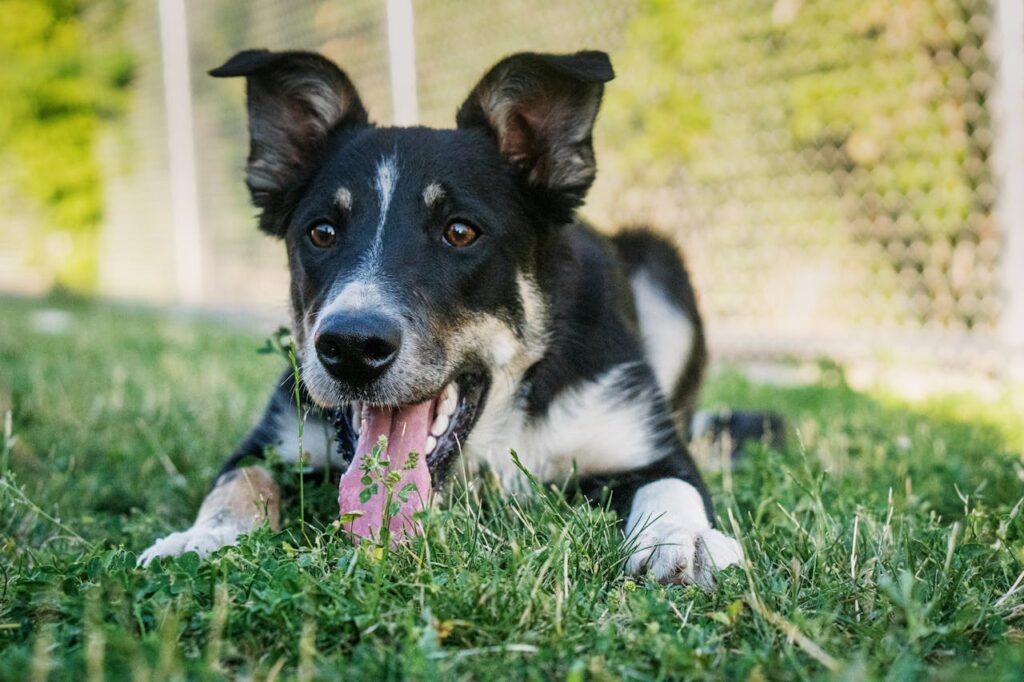
Checklist: 7 signs your dog is a teenager
Recognise your pet? Check if their “symptoms” match this list:
- “Selective deafness”: Your dog perfectly knows the “sit” command, but suddenly acts as if he’s hearing it for the first time, especially if there’s something more interesting around.
- Regression in training: Skills that were previously “perfectly” mastered (like house training or not picking up things from the ground) suddenly disappear.
- Intensified oral exploration: Chewing furniture, shoes, and skirting boards returns with a vengeance, even though his adult teeth have long since come in.
- Loss of focus: His attention span has become as short as a goldfish’s. Before, you could train for 15 minutes, but now he gets bored in just two.
- Leash pulling: Walks have turned into a tug-of-war competition, even though he used to walk calmly by your side.
- Increased reactivity: The dog might start barking at people, other dogs, or cyclists, even though he was completely indifferent to them before. He might also develop a fear of familiar things.
- Boundary testing: He starts doing things he’s long been forbidden from doing—jumping on the sofa, begging at the table, or running into off-limits rooms.
Main problems and their solutions: A practical guide for owners
Instead of despairing, let’s look at the most common behavioural problems in teenage dogs and find effective ways to solve them.
Problem #1: The dog doesn’t listen and ignores commands
Why it happens: The outside world has suddenly become incredibly interesting. Smells, sounds, other dogs—all of these are far more important to a teenager’s brain than your command. It’s not disrespect; it’s an inability to filter out distractions.
What to do:
- Go back to basics. Start training at home in a quiet environment, as if you’re teaching a puppy from scratch.
- Increase the “pay-out.” For commands performed outside, use the most valuable treats (pieces of meat, cheese) rather than regular dry kibble.
- Keep sessions short. It’s better to have 5 training sessions of 3 minutes each than one of 15 minutes. Always finish on a successful note.
- Don’t repeat the command 10 times. If the dog isn’t responding, approach, get his attention (for example, with a touch), and repeat the command once. If necessary, help him to perform it (for instance, by gently pressing on his hindquarters for the “sit” command) and praise him generously.
Problem #2: Pulling on the leash and straining towards everything
Why it happens: Impulsivity and the urge to explore the world take over self-control. The dog simply can’t resist when he sees something interesting.
What to do:
- Use the right equipment. A harness with a front-clip attachment can make walks much easier, as it turns the dog back towards you when he pulls.
- The “Red Light, Green Light” game. As soon as the lead tightens, stop. Stand still until the dog loosens the tension and looks at you. As soon as he does, praise him and start walking again.
- Teach eye contact. Regularly praise and reward your dog for every look he gives you during a walk. This teaches him to “ask permission” and to be more attentive to you.
Problem #3: Chewing everything in sight
Why it happens: This is a way to relieve stress, cope with boredom, and simply explore textures. Sexual maturity in dogs can also increase energy and anxiety levels, which find an outlet through chewing.
What to do:
- Space management. Don’t leave a teenage dog unsupervised with access to valuable items. Use crates, baby gates, or close off rooms.
- Provide appropriate toys. Offer a variety of chew toys: rubber ones, ropes, antler chews. Interactive toys (like a Kong) that you can stuff with food are especially useful.
- Give them adequate exercise. Make sure the dog gets enough physical (walks, games) and mental stimulation (scent work, learning tricks). A tired dog is a happy dog (and intact furniture).
| Myth | Fact |
|---|---|
| “My dog has become dominant and is trying to take over the household, so I need to put him ‘in his place’.” | The theory of dominance has long been disproven by modern ethologists. A teenage dog is not planning a “coup.” His behaviour is a mix of hormonal changes, uncertainty, curiosity, and an immature brain. He tests boundaries just like human teenagers, trying to figure out how the world works. Your job is to be a calm, consistent, and predictable leader, not a “pack alpha” who dominates through force. |
What you should absolutely NOT do
Correctly raising a teenage dog isn’t just about what you do, but also what you avoid. Your incorrect actions can reinforce bad behaviour and destroy trust.
- Do NOT physically punish him. Slaps, leash jerks, and pinning to the ground will only increase fear, anxiety, and can provoke aggression. The dog won’t understand why he’s being punished; he’ll just start to fear you.
- Do NOT shout. To a dog, your shouting is just loud barking. It can either get him even more worked up or scare him. Maintain a calm but confident tone of voice.
- Do NOT give up on training. The worst thing you can do is decide to “wait out” this period. This is when consistency and regular sessions are more important than ever to remind the dog of the rules and strengthen your bond.
- Do NOT compare him to other dogs. Every dog is an individual. Focus on your own pet’s progress, not on how the neighbour’s retriever behaves.
Remember: This too shall pass!
The most important thing to remember during this period is that it’s temporary. It’s not a life sentence or a permanent characteristic of your dog. It’s just a phase, a difficult but necessary stage of growing up. Your job is to be a patient, consistent, and loving “mentor.”
Keep your sense of humour, praise him for the smallest successes, provide enough stimulation, and don’t forget that under that “spiky” teenage shell, the same loving dog you brought home is still there. By getting through this stage together, you’ll strengthen your bond and end up with a wonderful, well-behaved, and devoted companion for many years to come.