


Have you ever noticed how your dog, who seemed completely indifferent to his old friend from next door, suddenly bursts with incredible energy and curiosity when a new dog appears in the park? Or perhaps you’ve heard from farmers that a bull or ram that has lost interest in mating becomes active again the moment a new female is introduced. This isn’t just a coincidence or “love at first sight.” It’s a clear demonstration of a biological phenomenon known as the “Coolidge effect.” This intriguing mechanism governs the behaviour of a vast number of animals, from insects to mammals, and its echoes can be seen even in our own pets. Let’s dive into this fascinating world of animal instincts; more on this at Tvaryny.
What is the Coolidge Effect in Animals? A Simple Guide to a Complex Instinct
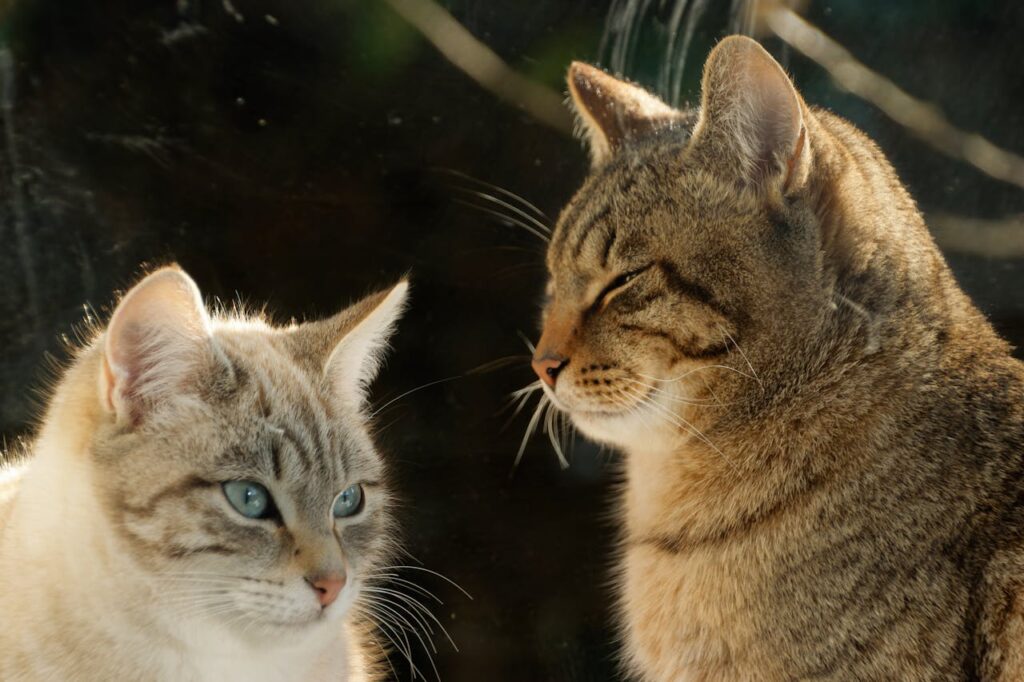
The Coolidge effect is a scientifically proven phenomenon observed primarily in males of many animal species. Its essence is the renewal of sexual arousal and activity upon the introduction of a new, previously unknown female. Even if a male has just mated and reached a state of “satiation” with one partner, meeting a new one can instantly revive his interest and reproductive capability. This isn’t about emotions or feelings, but about a powerful evolutionary programme aimed at maximising the spread of his genes.
Think of it as a biological “reset switch.” When a partner becomes familiar, the level of novelty drops, and with it, the stimulation of certain brain centres. A new partner, however, is a potent stimulus that reboots the system, reactivating the mechanisms responsible for courtship and mating. This effect is a key part of the reproductive strategy for many species.
A Bit of History: Where Did That Strange Name Come From?
The name of this phenomenon is linked to an amusing historical anecdote about the 30th US President, Calvin Coolidge, and his wife, Grace. Although the story’s authenticity is questionable, it perfectly illustrates the essence of the phenomenon.
- The Scene: The presidential couple is visiting an experimental government farm.
- Act 1: During separate tours, Mrs. Coolidge notices the chicken coop. She asks the farmer how they manage to get so many fertilised eggs with so few roosters. The farmer proudly replied, “Madam, my roosters perform their duties dozens of times a day.” To which the First Lady jokingly remarked, “Please, do tell the President that.”
- Act 2: When this conversation was later relayed to President Coolidge, he became curious and asked the farmer, “Does the rooster do this with the same hen each time?” “No, Mr. President,” replied the farmer, “it’s a new hen every time.” The President nodded and said, “Please, do tell Mrs. Coolidge that.”
This anecdote, first mentioned in a scientific context by ethologist Frank A. Beach in 1955, so aptly described the behaviour – the renewal of a male’s activity with a change of female – that the name “Coolidge effect” stuck in scientific literature for good.
The Science Behind It: How Does It Work Biologically?

Behind the Coolidge effect lie complex neurochemical processes. A key role is played by dopamine – a neurotransmitter often called the “pleasure and motivation hormone.”
When a male encounters a new female, her appearance, scent, and behaviour are powerful new stimuli. These stimuli activate the brain’s reward system, leading to a sharp release of dopamine in the nucleus accumbens – an area responsible for motivation and reward anticipation. High dopamine levels boost libido, the motivation to court, and overall sexual activity.
After repeated matings with the same partner, the stimulus loses its novelty. The brain “gets used” to it. This process is called habituation. The level of dopamine released in response to the familiar female decreases. A so-called refractory period, or “satiation” period, begins, during which the male temporarily loses interest. However, the appearance of a new female is a completely new set of stimuli that “pushes” the dopamine button again, restarting the entire cycle of arousal and activity. These mechanisns work as a safeguard against exhaustion with one partner and as a stimulus to seek new ones.
Examples in the Wild and in Farming
The Coolidge effect is observed in a huge number of species, which is not surprising given its evolutionary advantages. Here are just a few examples:
- Sheep and Goats: Rams and bucks show a classic example. After several matings with one ewe, their interest wanes. But introduce a new female into the pen, and they instantly resume their activity. This principle, known as the “novelty effect,” is actively used in animal husbandry to increase breeding efficiency.
- Cattle: Bulls are also subject to this effect. In artificial insemination programmes, where genetic material needs to be collected, changing the female partner (or even just the location) can significantly increase the success rate of the procedure.
- Rodents: Laboratory rats and hamsters are classic subjects for studying this phenomenon. Research on them has helped us understand the neurobiological basis of the Coolidge effect, particularly the role of dopamine.
- Birds: Although many birds form monogamous pairs for a season or for life, polygynous species (where one male has several females), such as chickens or grouse, exhibit similar behaviour. A rooster will mate much more actively with new hens in his harem.
Does This Apply to My Pet?

This is probably the question that most interests pet owners. And the answer is yes, but with certain nuances for each species.
Dogs
Dogs, as social and polygamous animals by nature, clearly demonstrate the Coolidge effect. Male dogs often show heightened interest in new females, especially when they are in heat. This explains why an unneutered male dog might “lose his mind” on a walk after catching the scent of a new female, even if he has another dog waiting at home. Neutering significantly reduces the sex drive, but behavioural patterns driven by the novelty instinct may partially remain in the form of increased playfulness and curiosity towards new acquaintances.
Cats
With cats, the situation is more complex. Their reproductive behaviour is very different from that of dogs. Firstly, cats are not pack animals in the classic sense; their social structures are more flexible. Secondly, in female cats, ovulation is induced by the act of mating itself. However, male cats, especially those with outdoor access, strive to mate with as many females in their territory as possible. A tomcat living in a colony will certainly prefer a new fertile female who appears in his territory. So, while it may not be as obvious as in dogs, the basic principle of novelty plays its part.
Small Pets (hamsters, guinea pigs, rats)
For these animals, the Coolidge effect is not just an observation but a scientific fact confirmed by countless laboratory studies. Male rodents show very rapid “satiation” with one partner and an equally rapid recovery of activity with a new one. If you breed these animals, understanding this mechanism is key to success.
Is There a ‘Reverse Coolidge Effect’ in Females?
It’s a logical question. If males react this way to new females, do females react similarly to new males? Yes, a similar phenomenon exists, but it is usually less pronounced and has more complex mechanisms. It is sometimes called the “female Coolidge effect” or the “male novelty effect.”
Females of many species can also show increased sexual receptivity (willingness to mate) when introduced to a new male. However, their evolutionary strategy is somewhat different. Since a female invests far more resources in offspring (pregnancy, birth, nursing), it’s not the quantity of partners that matters as much as their “quality.” Therefore, her interest in a new male is often linked not just to novelty, but to an assessment of his genetic potential, health, and status. Mating with multiple males (polyandry) can increase the genetic diversity of offspring and improve the chances of successful fertilisation.
The Evolutionary Purpose: Why Did Nature Need This Mechanism?
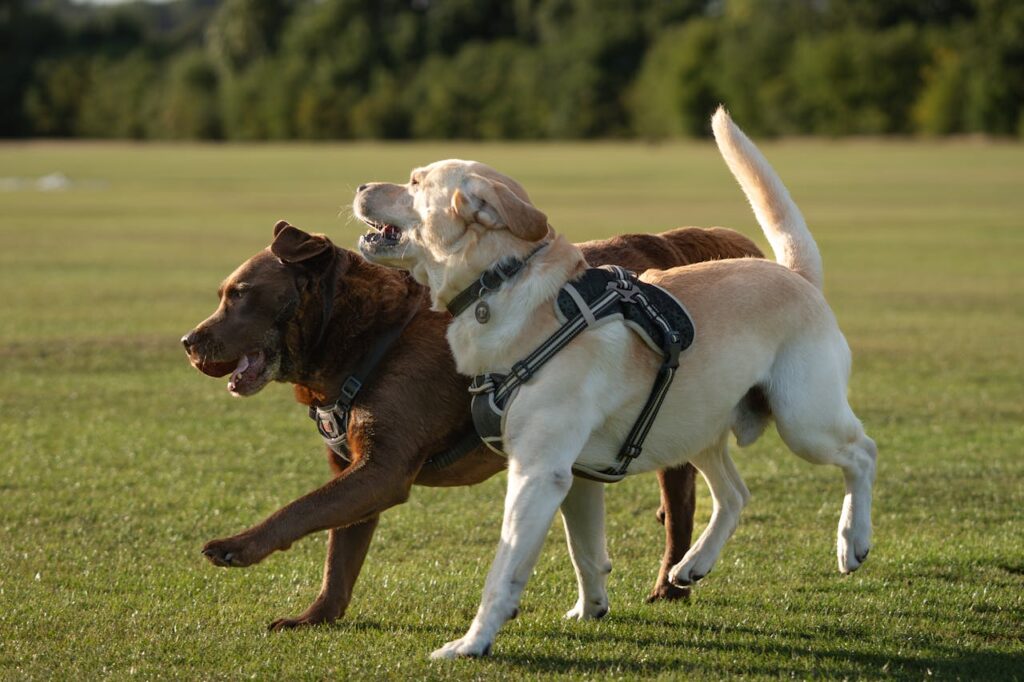
From an evolutionary standpoint, the Coolidge effect is an extremely logical and effective strategy for maximising reproductive success, especially for males.
The main “goal” of any living organism is to pass its genes to the next generation. For a male, whose contribution to reproduction (sperm) is biologically “cheap” compared to the female’s contribution (eggs, pregnancy, lactation), the most succesful strategy is to fertilise as many females as possible. The Coolidge effect serves as the perfect motivator for this. It prevents a male from getting “stuck” on one partner after a successful mating, instead prompting him to seek new reproductive opportunities. This increases the number of potential offspring and spreads his genetic material throughout the population.
What Does This Mean for a Pet Owner? Practical Takeaways
Understanding the Coolidge effect helps us better interpret our pets’ behaviour and avoid anthropomorphising it (attributing human characteristics to them).
- It’s not ‘cheating,’ it’s instinct. If your male dog, who lives with a female dog, shows intense interest in a new “acquaintance” on the street, it doesn’t mean he has “fallen out of love” with his friend. It’s simply a display of a deeply ingrained biological programme.
- The importance of neutering and spaying. If you don’t plan on breeding, neutering a male is the most humane way to manage his behaviour. It not only prevents unwanted litters but also reduces the stress associated with the constant search for mates and the risk of him running away.
- Insights for breeders. For people involved in professional breeding, knowledge of this effect is a working tool. Proper rotation of partners can significantly improve the efficiency of breeding programmes.
- Observe and learn. Watching how your pet reacts to new animals is a great opportunity to see the powerful laws of nature in action. It makes us more educated and responsible owners.
Conclusion
The Coolidge effect is more than just an amusing anecdote about a president; it is a fundamental biological mechanism that drives the behaviour of animals worldwide. It reminds us that our pets, for all their love and attachment to us, remain carriers of ancient instincts honed by millions of years of evolution. Understanding these instincts, rather than trying to “humanise” them, is the key to harmonious coexistence with our four-legged friends. So, the next time your dog joyfully runs off to meet a new dog, remember: it’s not fickleness – it’s science.