

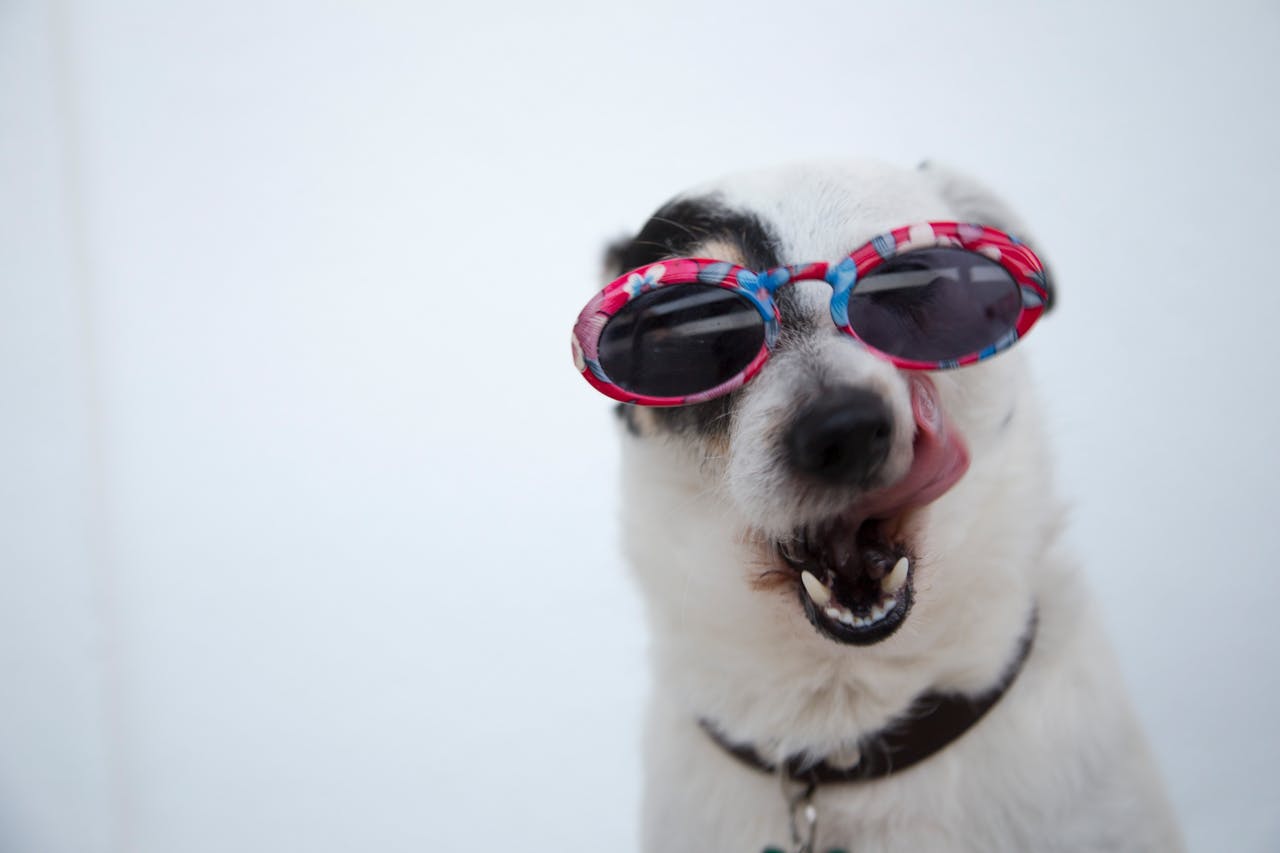
Every dog or cat owner has caught themselves thinking at least once: “He definitely did that on purpose!”. Like when your Golden Retriever steals a sock, does a victory lap past you, and then stops, looking back with a playful challenge in his eyes. Or when the cat nonchalantly knocks a pen off the table, watching it fall with the smug look of a scientist who has just confirmed the theory of gravity. These moments make us wonder: are our pets capable of more than just instinct? Do they possess what we humans call a sense of humour? It’s a complex question on the border of ethology and psychology, and the answer might just change how you see your furry friend’s shenanigans forever. Find out more on this at Tvaryny.
Let’s be honest: we often attribute human qualities to animals. This is known as anthropomorphism. But what if there’s a grain of truth to it? What if that playful glint in your dog’s eye isn’t just a reflex, but a genuine display of canine humour? Scientists around the world are taking the study of animal emotions more and more seriously, and the results of their research are astounding. They show that the inner world of our companions is far richer and more complex than we’ve traditionally believed.
What is a ‘sense of humour’ from a scientific perspective?
Before we can find humour in animals, it’s worth defining what it actually is. In humans, a sense of humour is a complex cognitive process. It involves the ability to spot incongruities, understand wordplay, catch irony, and derive pleasure from unexpected, funny situations. It’s also an important social tool for relieving tension and strengthening relationships.
Clearly, we can’t apply such a complex framework directly to animals. We can’t ask a cat if it understood a subtle joke. That’s why scientists suggest we look not for “humour” in the human sense, but for it’s evolutionary predecessor: play and playfulness. Play is the universal bridge that allows us a glimpse into the emotional world of animals. After all, at the heart of both humour and play is the ability to create a “non-serious” reality, to enjoy it, and to involve others in it.
Canine Comedy: Who’s a Good Joker?
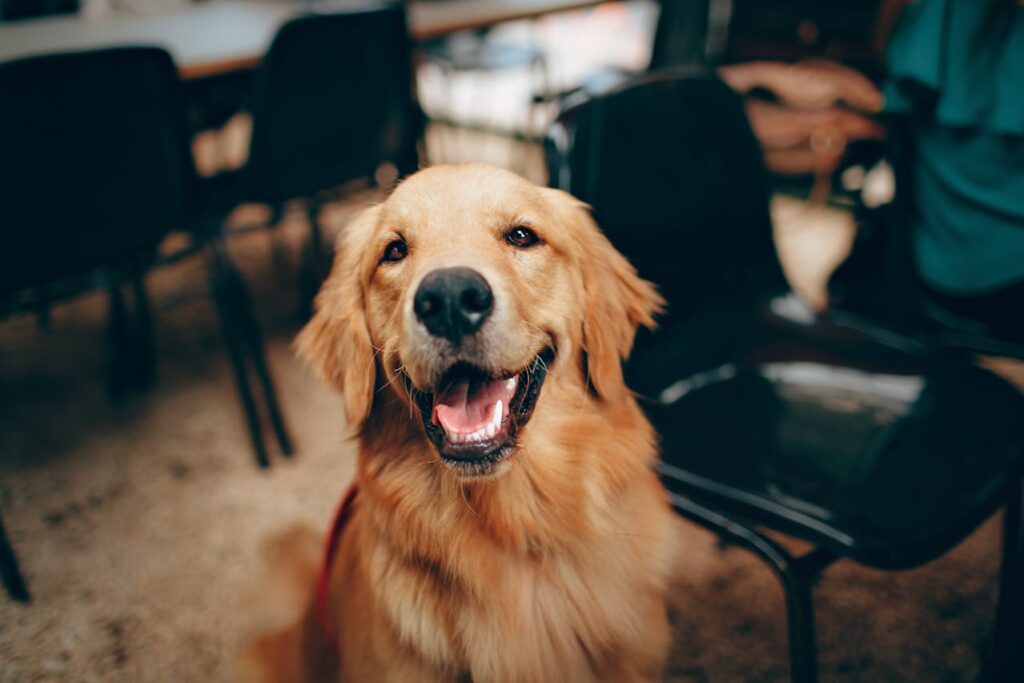
Dogs are incredibly social creatures, and their behaviour gives us plenty of reasons to talk about a kind of proto-humour. They have evolved alongside us for years, learning to read our emotions and communicate their own with remarkable skill.
A dog’s “laugh”: not just panting
Did you know that dogs have their own version of a laugh? Ethologist Patricia Simonet and her colleagues at Sierra Nevada College studied the vocalisations of dogs during play. They identified a specific type of panting that is distinct from normal panting. This sound, which can be described as a “heh-heh-heh,” is produced over a wide range of frequencies. When researchers played this recording to other dogs in an animal shelter, they showed a significant reduction in stress, started wagging their tails, and began to initiate play. In effect, the sound is a signal: “I’m playing, nothing I’m doing now is serious, let’s have fun!”.
The “play bow” as an invitation to jest
Another striking element of canine etiquette is the “play bow”. A dog will drop its front legs down while keeping its rear end in the air, looking at its play partner. This is a universal signal that can be translated as: “I’m about to pounce on you / bite you, but it’s all in good fun!”. This gesture is so crucial that dogs use it to de-escalate a situation if play becomes too rough. It’s proof of a high level of social intelligence and the ability to agree on the rules of “fun”.
Deliberate provocations: when a dog knows what it’s doing
This brings us back to those stolen socks. Many aspects of dog and cat behaviour point towards intentionality. A dog that wants to play won’t just bring you a toy; it will often resort to trickery. It might steal something you’ve forbidden it to touch, and this is the key. It knows this will get a reaction from you. Then, it doesn’t run away for good but keeps just out of reach, so you can give chase. This is pure provocation, a canine “prank” designed to engage you in a fun game of chase. Such intelligence in cats and dogs shows a deep understanding of cause and effect and an ability to manipulate a situation for entertainment.
“We see that dogs are capable of deception and trickery during play. They might pretend to run in one direction and then abruptly change course to confuse their partner. This requires an understanding of what another being is thinking. It’s far more complex than simple reflexes,” notes Marc Bekoff, an ethologist at the University of Colorado.
Feline Humour: Masters of the Subtle Joke
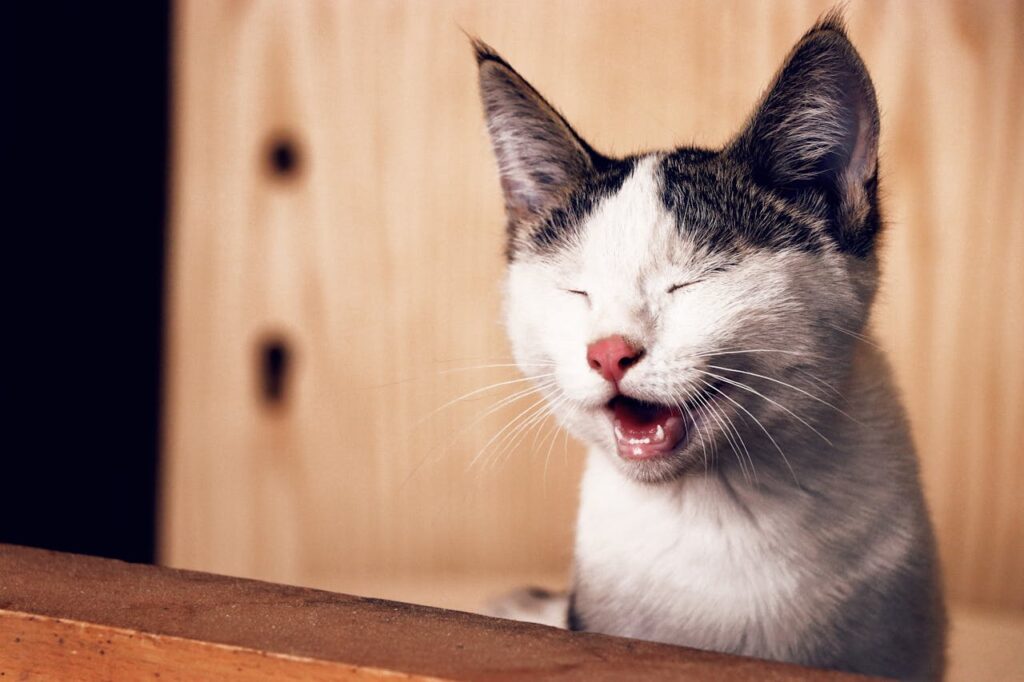
If canine humour is loud and obvious, feline humour is a fine art. Cats are generally more reserved, but that doesn’t mean they don’t know how to have fun and make jokes. Their methods are simply more sophisticated. If you’re wondering how animals of this type joke, the answer lies in their hunting nature.
Ambushes and playful attacks
A classic example of feline humour is the ambush attack on your feet as you walk past. Of course, this is an echo of their hunting instincts. But in a domestic setting, when the cat is well-fed and safe, this behaviour transforms into a game. The cat knows you aren’t real prey. It revels in the element of surprise and your reaction. Light, controlled bites without unsheathed claws are the feline equivalent of a playful “Gotcha!”.
When your cat “tricks” you
Has this ever happened to you: your cat meows insistently at the door, you get up to open it, and it simply turns around and walks away? Or it leads you to an empty food bowl, even though you know you fed it half an hour ago? Often, this isn’t so much about hunger as it is a learned form of manipulation to get your attention. The cat has realised that certain actions get a reaction from you, and it uses this for its own amusement or simply to interact with you. It’s a kind of “joke” that works every time.
The Animal Brain: Is There Room for Jokes?
The question of animal emotions is no longer a philosophical one. Neurobiology provides us with growing evidence that animals, especially mammals, have brain structures similar to our own. The limbic system, responsible for emotions, is very similar in dogs, cats, and humans. During play, their brains produce dopamine – the “pleasure hormone”, the very same one that’s activated in us when we laugh at a good joke.
This means that animals don’t just mechanically perform playful actions. They derive genuine pleasure from the process. And the drive to repeat this pleasant experience can motivate them to engage in inventive, “jokey” behaviour designed to provoke play.
How to Tell if Your Pet is Joking: Practical Tips
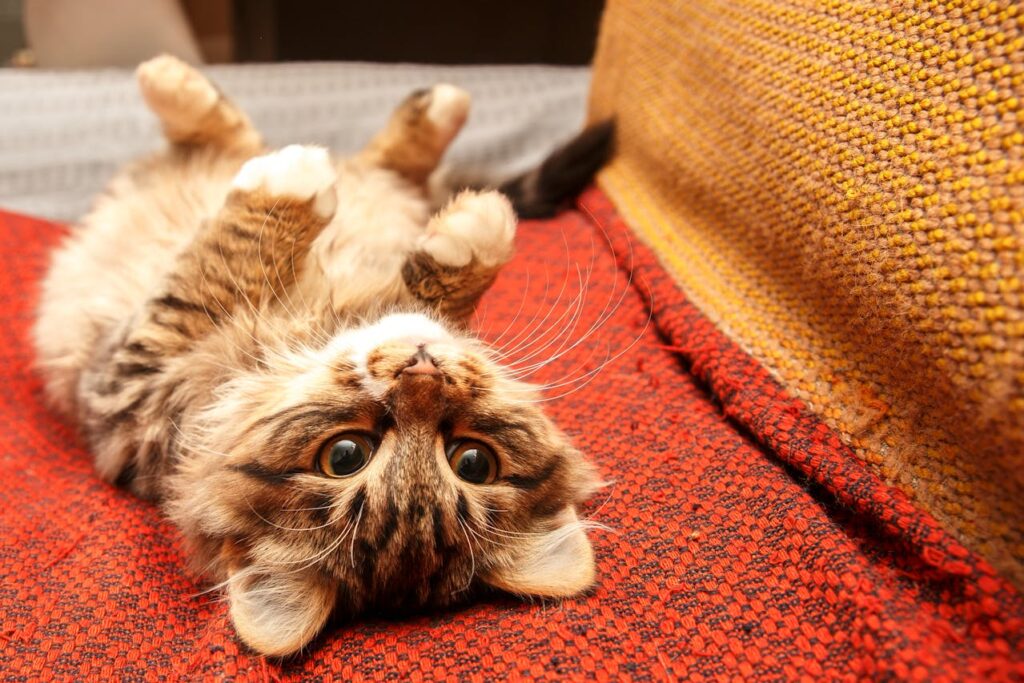
To distinguish a real joke from problem behaviour, it’s important to be an attentive observer. Here are a few signs that your pet is just playing, not showing aggression or stress:
- Body Language: Look for relaxed postures. In a dog, this might be a “play face” – a slightly open mouth, relaxed ears. In a cat, it could be dilated pupils (from excitement), ears pointing forward, and a twitching tail tip.
- Repetition and Expectation: The animal does something and then looks at you, waiting for a reaction. If you don’t respond, it might repeat the action, perhaps more theatrically. This is key to understanding its intent.
- Context: It all happens in a safe, familiar environment. The animal is fed, healthy, and feels no threat. Playful behaviour is a luxury only afforded by those who feel comfortable.
- Role Reversal: During a game of chase, the roles often switch. First you “attack,” then your pet does. This shows that both participants understand the non-serious nature of what’s happening.
How to ‘Joke’ Back: Strengthening Your Bond
The best part of all this is that you can actively encourage your pet’s playfulness. Don’t scold your dog for stealing a slipper; turn it into a fun game instead. Try initiating jokes yourself: hide unexpectedly behind a door and call your pet, or set up an “ambush” with their favourite toy. The main thing is to know your furry friend’s limits and not turn fun into stress.
Conclusion: So, Do Our Four-Legged Friends Really Laugh?
So, do animals have a sense of humour? If we’re talking about the ability to understand complex anecdotes, then probably not. But if we consider humour as the capacity for intentional play, provocation, trickery, and deriving pleasure from unexpected and non-serious situations, then the answer is definately ‘yes’. Scientific data and the experience of millions of pet owners confirm that dogs and cats have a rich emotional world with room for joy, fun, and what we can confidently call a sense of humour.
So next time your cat knocks a pen off the table or your dog initiates a chase with a sock, don’t be so quick to get annoyed. Take a closer look. You might have just been invited to share in the best joke in the world – a joke understood without words.