

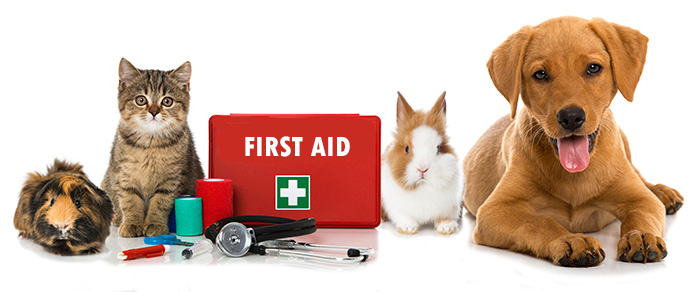
Night. Silence. And suddenly you hear a strange sound – your dog is whining in pain, or your cat has suddenly become lethargic and is refusing food. First thought – panic. Second – the vet. But what to do in those critical minutes while you’re driving to the clinic, or if help is needed immediately and the vet is far away? The answer is simple: be prepared. Having a properly stocked first-aid kit for your pets isn’t just a recommendation; it’s an absolute necessity for every responsible owner.
Many people think they’ll manage with “human” medicines or will make it to the vet in time. But the truth is, in an emergency, every second is golden. Correctly administered first aid can not only ease your pet’s suffering but also save its life by stabilising its condition until a professional arrives. What exactly should be in this “rescue kit” and how should you use it correctly? Find out more on Tvaryny.
Why a ready-made kit is a necessity, not a luxury
Imagine your pet cuts its paw during a walk. Without a kit, you’d be frantically searching for a clean cloth, trying to stop the bleeding. With a kit, you’d calmly get a sterile gauze swab, antiseptic, and a bandage, quickly treating the wound and preventing infection. The first-aid kit is your tool for controlling the chaos.
- Saving precious time: You won’t have to run around the house or to a 24-hour chemist’s looking for a bandage or chlorhexidine.
- Reducing stress (yours and your pet’s): When you are calm and act according to plan, the animal senses it and panics less.
- Preventing complications: Timely wound treatment is infection prevention. Proper immobilisation prevents further damage.
- Stabilising the condition: In many cases, your job isn’t to cure the pet, but to get it to the vet alive and in a stable condition.
Basic contents of a veterinary first-aid kit: What to buy?
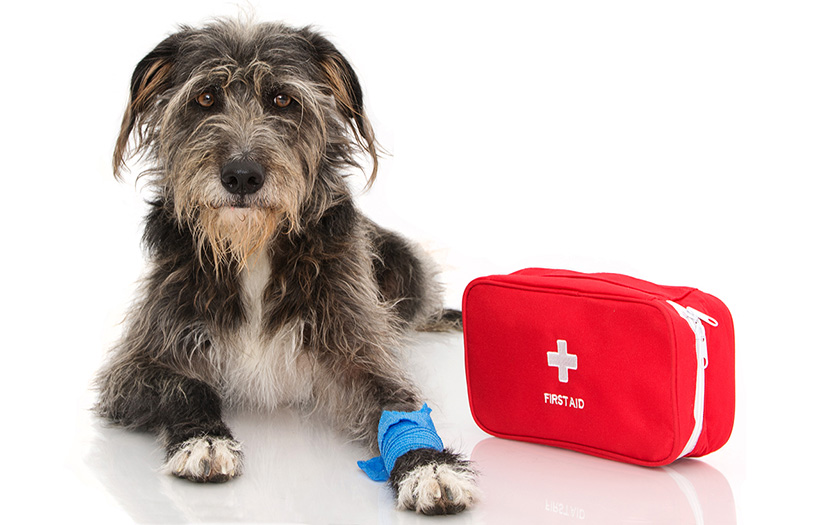
We’ll divide the list for the veterinary first-aid kit into several logical sections. This is the foundation, most of which you can buy in a regular “human” pharmacy. Keep everything in one container that is easy to open and transport.
1. Wound care and dressing materials
- Sterile gauze swabs (various sizes): For cleaning wounds and as a base for a compress.
- Bandages (sterile gauze and elastic): Gauze – to apply to the wound, elastic – for fixation (but not too tight!).
- Self-adhering bandage (cohesive): A very handy item. It sticks to itself, not to the animal’s fur.
- Cotton wool (or cotton pads): For cleaning the skin around the wound (don’t put cotton wool directly into an open wound – it will leave fibres).
- Fabric medical tape (roll): For securing the edges of the bandage or swab.
- Haemostatic sponge (or powder): For stopping minor capillary bleeding (e.g., from a cut claw).
2. Instruments
- Scissors (with blunt ends): To safely cut bandages or even fur around a wound.
- Anatomical tweezers: To remove a splinter, tick, or foreign object from a wound (disinfect them first!).
- Digital thermometer (rectal): A must-have! This is the only reliable way to measure a pet’s temperature (normal: 37.5-39°C for dogs and cats). Be sure to lubricate the tip with Vaseline.
- Syringes without needles (various volumes – 2ml, 5ml, 10ml): For flushing wounds (with saline) or for giving liquid medicine.
- Pipette (or eye dropper): For applying eye drops or giving medication.
- Tick removal tool: More effective and safer than tweezers, as it doesn’t crush the tick.
3. Disinfection and cleaning
- Chlorhexidine (0.05% aqueous solution): The best choice! A universal antiseptic for flushing wounds. It doesn’t sting and isn’t toxic.
- Hydrogen Peroxide (3%): Use ONLY for the initial cleaning of heavily contaminated wounds to “foam” the dirt out. Do not pour it into deep wounds or use it for ongoing treatment – it damages living tissue.
- Saline solution (Sodium Chloride 0.9%): Sterile saline is an indispensable item for flushing wounds or eyes; it’s essential to have in every kit.
- Medical gloves (disposable): Your protection and the animal’s hygiene.
- Vaseline: For lubricating the thermometer tip.
Specialised medications (Only with your vet’s permission!)
This section carries the most responsibilty. REMEMBER: Never give your pet “human” painkillers (Ibuprofen, Paracetamol) – they are deadly poison for them! You can have all the medications listed below in your kit, but you should ONLY use them after calling or consulting with your vet.
- Enterosorbents (Activated Charcoal, Enterosgel): At the first sign of poisoning or diarrhoea, to bind toxins. Always confirm the dosage with your vet.
- Antihistamines (anti-allergy): In case of an insect bite or sudden allergic reaction (swelling, itching). Your vet should advise which medication (e.g., one containing cetirizine or chlorphenamine) and what dosage is suitable for your specific pet.
- Anti-diarrhoea treatments: (e.g., veterinary probiotics or mild preparations). Do not use “human” remedies like Loperamide without a direct instruction from your vet!
- Eye drops (e.g., specific veterinary drops or simple saline): For flushing the eye if something gets into it.
- Stock of chronic medications: If your pet has a chronic condition (e.g., diabetes, epilepsy, heart failure), you should always have a few days’ supply of their medication.
Adapting the kit: Dogs, cats, and other pets
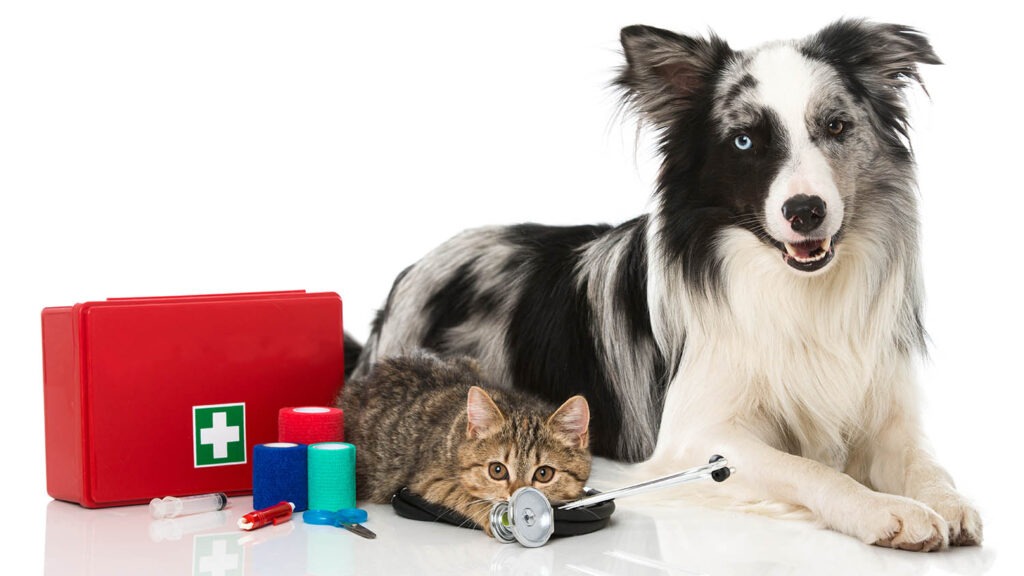
The basic kit is universal, but there are nuances.
First-aid kit for a dog
Especially for large and active dogs, add:
- More bandages and self-adhering wraps.
- Haemostatic powder: Indispensable if you accidentally cut the quick (the blood vessel) when clipping claws.
- Soft muzzle (a fabric one is fine): Even the gentlest dog can bite when in pain. This is for your safety.
First-aid kit for a cat
Giving emergency help to a cat is often complicated by its attempts to escape and hide.
- A thick towel or blanket: To carefully restrain (“swaddle”) the cat for an examination or procedure.
- Calming spray (with pheromones): Can be sprayed on the towel or carrier to help reduce stress levels slightly.
- Medication syringes/dosing syringes: Special syringes with a soft tip to help with giving medicine to a cat without stress.
For owners of rodents and birds
Your pets are very fragile, and thier metabolism is fast.
- Haemostatic powder or pencil: Critically important for stopping bleeding from a claw or beak.
- Very small syringes (insulin syringes): For feeding or giving medication.
- Enterosorbents: (Dosage is microscopic, only use via a vet!).
Where to store the kit and how to maintain it
Assembling the kit is half the battle. The other half is keeping it in working order.
- Store in a cool, dark, dry place. The bathroom is a poor choice due to dampness.
- Keep it in one, easily accessible location. The whole family should know where it is.
- Container: It should be waterproof, light, and close securely (but not with a lock you can’t open in a panic).
- “Servicing”: Check the expiry dates every 6 months! Write down what you’ve used and restock it immediately.
- “Mini” version: If you often travel with your pet, assemble a small “travel kit” with the bare essentials.
The most important component: Your knowledge and calm
The best first-aid kit in the world is useless if you don’t know what to do with it or you panic.
- Phone numbers: Stick the number for your vet and the nearest 24-hour emergency clinic directly onto the kit.
- Take a first-aid course: Many veterinary clinics or online platforms offer courses on pet first aid. It’s the best investment you can make.
- Stay calm: Your task is to stabilise the animal and get it to the vet. Take a deep breath and act clearly.
- Know your animal: Learn its normal behaviour so you can quickly spot any deviations.
In summary: To be prepared is to love
A pet first-aid kit isn’t something you put together “later”. It’s something that should be ready today. It’s your expression of love and responsibility, your insurance against panic and helplessness. Spend one evening, make a list, buy everything you need, and put it in a container. May you never need it. But if that moment comes – you will be grateful to yourself for being prepared.