

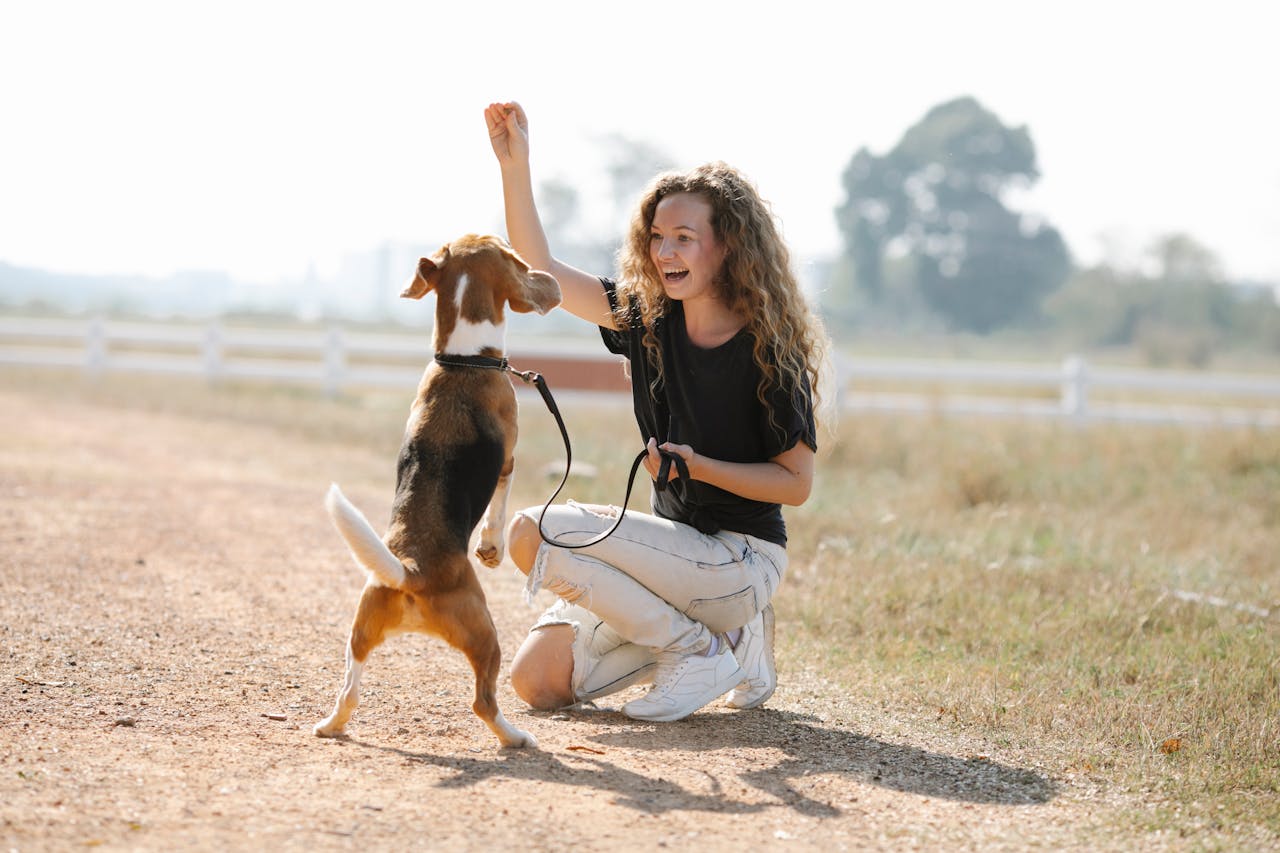
We live in an era of the productivity cult. This applies not only to our careers or personal development but, unfortunately, to our pets as well. Social media is overflowing with videos where Border Collies perform acrobatic stunts and Malinois understand commands at a glance. Watching this, we involuntarily start raising the bar for our own dogs, forgetting that we are looking at a living being with its own limits, moods, and physical capabilities.
The desire to own the “perfect” dog often leads to the opposite effect: the animal shuts down, becomes nervous, or even aggressive. How do you understand that the line has been crossed? Where does discipline end and psychological abuse begin? Learn more on Tvaryny.
The “Straight-A Student” Syndrome: Why do we apply pressure?
Before analysing the dog’s behaviour, it is worth taking an honest look at yourself. Why do you demand flawless execution of the “Heel” command during an hour-long walk? Why does the dog have no right to sniff a bush or stop? Often, behind our high demands lies:
- Social pressure: “What will the neighbours think if my dog barks?”
- Ego: The dog is perceived as an extension of the owner, and its mistakes are seen as a personal defeat.
- False ideas about dominance: Outdated myths that a dog needs to be kept with a “firm hand”.
It is crucial to realise: a dog is not a robot. It might have a headache, be sleep-deprived, or simply be in a bad mood due to a change in the weather. Demanding 100% results 24/7 is a direct path to neurosis in the animal.
Red Flags: Physical and behavioural markers of overload
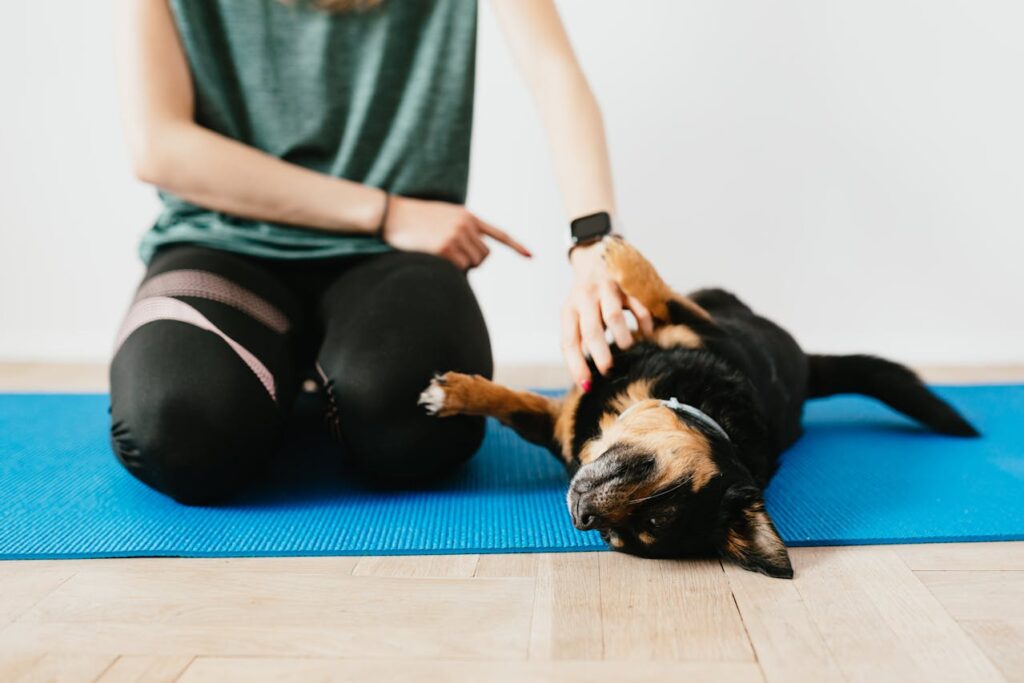
Dogs cannot speak, but they scream via body language. The problem is that we often interpret these screams incorrectly. For example, when a dog turns away from you during a command, this is often perceived as rudeness or stubbornness. In reality, this is a classic “calming signal” – the dog is showing that the pressure is too intense and is asking you to calm down.
1. Displacement Activity
This is perhaps the most common indicator ignored by owners. You give the “Sit” command in difficult conditions, and the dog suddenly starts intensely scratching its ear or sniffing the ground. You get angry: “He’s ignoring me!”.
No, he is not ignoring you. His brain has “boiled over”. Displacement activity occurs when the animal has a conflict of motivations (I want to comply, but it’s scary/difficult) or excessive arousal. Sudden scratching, shaking off (as if after being in water), yawning, or chewing paws are attempts by the nervous system to release tension.
2. The “Glassy Stare” and Freezing
If during training the dog suddenly slows down, moves as if in slow motion, or simply freezes and looks through you – this is not laziness. This is a state close to a shutdown. The nervous system is so overloaded that it simply switches off external stimuli. Continuing to apply pressure at this moment is dangerous for the animal’s psyche.
3. Hyperactivity after the session (“Zoomies”)
Many people rejoice when, after a strict training session, the dog starts running in circles with its tail tucked (so-called FRAP – Frenetic Random Activity Periods). Owners think: “Oh, he’s happy!”. Often this is not joy, but a hysterical release of cortisol (the stress hormone). If such “explosions” hapen regularly after your sessions – you are pushing too hard.
Breed and Size Specifics: Not all dogs are the same
One of the global mistakes is applying the Shepherd template to all dogs. What is normal for an enduring Border Collie can be a catastrophic load for a Bulldog or a Greyhound. Toy breeds suffer particularly often; they are either required to do nothing or, conversely, owners start demanding compliance with standards without considering their sensitive psyche.
Small dogs also need education, but the methods must be adapted. By the way, there is an excellent article about training small breeds. It details how to find a balance between size and requirements.
The Biochemistry of the Process: What is happening inside?
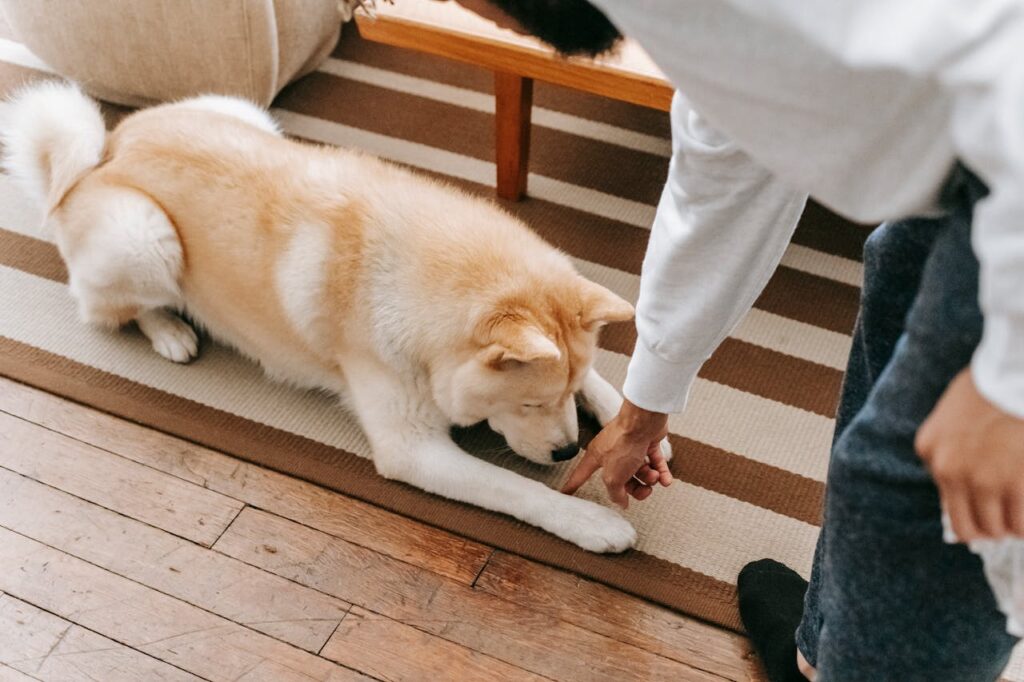
To understand why you cannot constantly “apply pressure”, we must turn to physiology. When you demand too much from a dog (complex commands, long stays, working in a crowd), cortisol is released into the blood.
Important fact: For cortisol levels to return to normal after severe stress, a dog may need up to 72 hours (3 days!).
If you train your dog daily in an intensive mode, cortisol simply does not have time to be eliminated. This leads to a state of chronic stress. Chronic stress = reduced ability to learn, weakened immunity, digestive problems, and, strangely enough, worsening behaviour (irritability, barking, aggression).
Self-Check Table: Healthy Training vs Toxic Pressure
| Healthy Approach | Excessive Pressure (“Overloading”) |
|---|---|
| The dog shows initiative, offers actions. | The dog is passive, waits for an order, is afraid to make a mistake. |
| Tail is relaxed or wagging, ears in a natural position. | Tail is tucked, ears pinned back, body tense. |
| Quick reaction to rewards (food/toy). | Refusal of treats (even favourite ones). |
| After training, the dog rests calmly. | After training, the dog cannot settle or goes “wild”. |
| Mistakes are perceived as part of the process. | Mistakes are punished with a harsh tone or jerks of the lead. |
Learned Helplessness: The scariest consequence
If you demand something from a dog that it cannot perform for a long time and systematically, or punish it for misunderstanding, a state of “learned helplessness” develops. The dog stops trying anything new. It turns into a convenient “couch potato” on the street, who simply plods along behind the owner.
Many owners mistakenly consider this state to be “ideal obedience”. “Look, he doesn’t go anywhere, doesn’t sniff anything, just walks alongside”. But a happy dog is a curious dog. A lack of interest in the surrounding world is a sign of deep depression, not good manners.
How to “loosen the lead” and regain trust?
If, while reading this text, you recognised yourself and felt a pang of conscience – that is good. Awareness is the first step to change. Relationships with a dog are plastic; they can be restored. Here is the plan of action:
1. Information Detox
Stop training commands for 1-2 weeks. Completely. Walk on a long lead (minimum 3-5 metres), use a harness instead of a collar. Allow the dog to sniff as much as it wants. Sniffing reduces the heart rate and stress levels.
2. Lower the Criteria
When you return to training, lower the bar. If the dog knows the “Sit” command at home, do not expect it to perform it near a park with other dogs. Start small. Praise for the smallest sucesses.
3. Add Fun and Variety
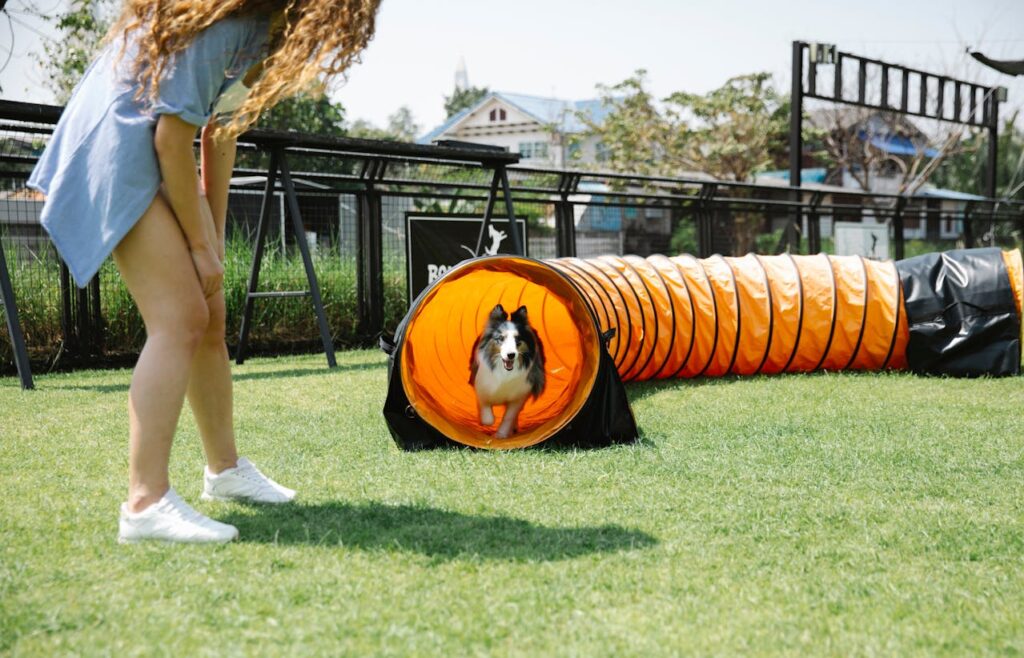
Replace drills with games. Developing coordination and intellect often yields better results for obedience than mechanical repetition. Try setting up a simple obstacle course at home. This strengthens contact and the dog’s self-confidence. Find out how to do this in the article about agility at home. Overcoming obstacles together brings you closer than strict discipline.
4. Introduce a “Stop Word” for yourself
Invent a marker word for yourself. When you feel that you are starting to get irritated with the dog, say “Break” to yourself and immediately stop the interaction. Just walk on in silence. It is better to undertrain than to apply too much pressure due to emotions.
The Right to Make a Mistake
Remember, your dog did not choose to live with you; you chose him. He is trying with all his might to understand the rules of your world, the world of primates, where there are many incomprehensible conventions. He has the right not to hear a command the first time, to be scared of a bag in the wind, or simply to want to sniff a tree instead of walking to heel.
Love for an animal is not measured by the number of diplomas from competitions nor by the ideal execution of standards, but by the quality of your life together. If after a walk you both come home tense and angry – it is time to change something. If, however, you return dirty, tired, but happy – you are doing everything right.
Do not be afraid to take a step back in your requirements. Often, it is precisely this step back that allows you to make a huge leap forward in mutual understanding later. Your dog does not need an ideal owner-trainer. He needs a predictable, calm, and loving friend who is always on his side.