


In short: Labrador or Golden?
- Temperament: the Labrador is more energetic and robust, the “life of the party”; the Golden is softer, more sensitive and calmer.
- Coat: both shed heavily; the Golden has a longer coat and needs more grooming (brushing 2–3 times a week).
- Training: both are among the most trainable breeds; the Labrador works for food, the Golden for praise and a gentle tone.
- Best for: the Labrador suits active owners and beginners; the Golden suits those who value a soft, sensitive nature.
You are facing a choice that will define your life for the next 10-15 years. It is not just about choosing a dog; it is a lifestyle choice. The Labrador Retriever and the Golden Retriever (or simply Golden) consistently rank among the top five most popular breeds in the world. And not without reason. Both are incredibly intelligent, human-orientated, and devoid of aggression. But if you think the only difference is the length of their coat, you are deeply mistaken.
Prospective owners often get lost in “retrievers”, thinking they are nearly identical brothers. In reality, these are two distinct personalities: one is a tireless extrovert-optimist, ready to love the whole world right here and now, while the other is an intelligent empath who will think first and act second. Find out more on Tvaryny.
Historical Background: Fisherman vs Hunter
To understand a dog’s character, you have to look at what it was created for. Genetic memory is a stubborn thing, and it manifests itself even in a dog that has slept on a sofa its entire life.
Labrador: The Grafter from Icy Waters
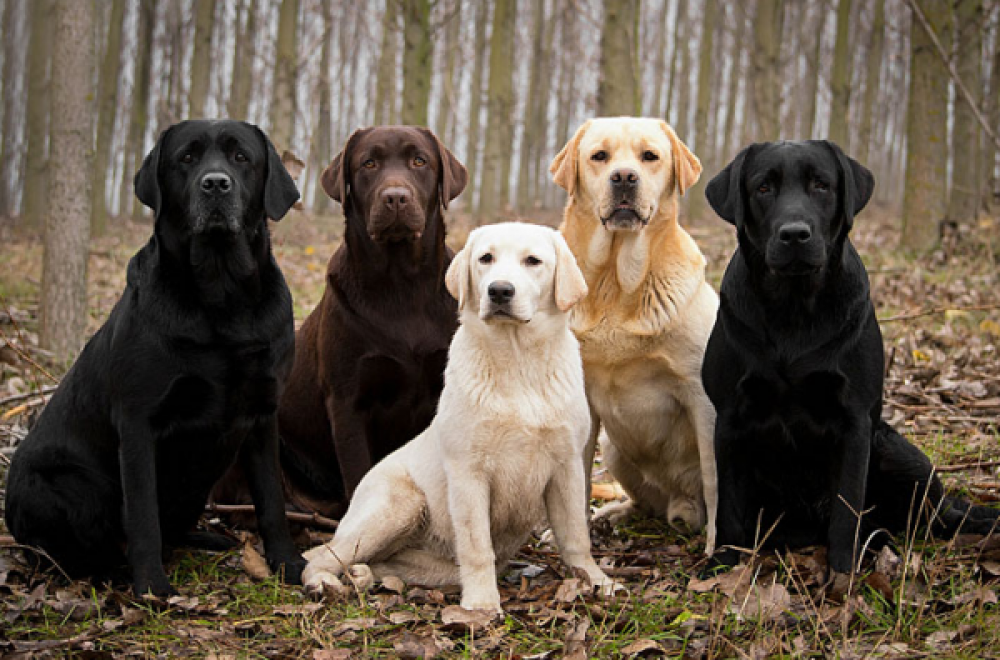
Labradors originate from the island of Newfoundland (Canada). Their ancestors helped fishermen pull nets out of the icy water. What does this mean for the modern owner? A Labrador has a “waterproof” short coat, a powerful rudder-tail (with which it easily sweeps mugs off the coffee table), and an unstoppable urge to get wet. It is a workhorse – simple, direct, and hardy. If you are interested in truly giant breeds that also have no fear of water, you might want to read the article “Big and Fluffy: Newfoundland vs Saint Bernard“, as the Labrador shares common geographical roots with them.
Golden Retriever: The Scottish Aristocrat
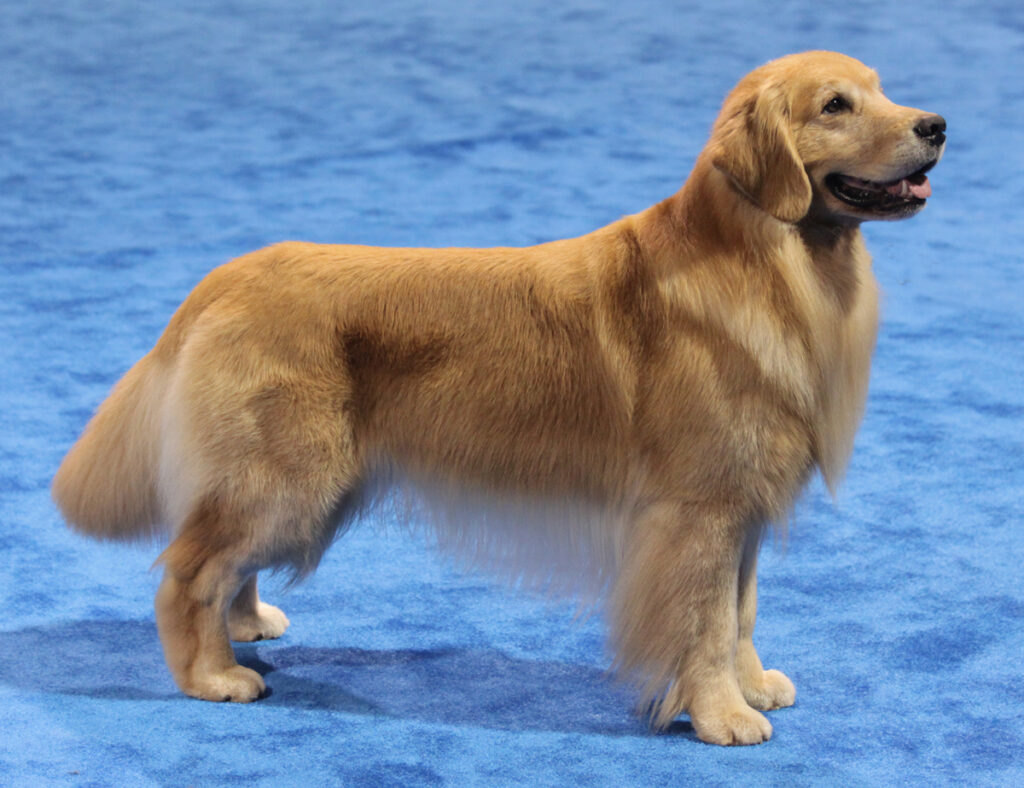
The Golden was developed in Scotland by Lord Tweedmouth. The goal was different – to create the ideal dog for retrieving shot game (mainly birds) from water and dense undergrowth. This dog needed to have a “soft mouth” (so as not to damage the prize) and high intelligence to work in tandem with a gentleman. Hence the very delicacy and desire to please that we see today.
The Visual Battle: Aesthetics vs Practicality
At first glance, they are similiar in size, but their body structure and coat type differ radically.
- Labrador Retriever: A heavyweight athlete. It has a sturdy frame, a broad chest, and a wide head. Its coat is short, hard to the touch, with a very dense undercoat. Colours: black, yellow, and chocolate. No “shades of gold” – everything is strictly according to the standard.
- Golden Retriever: Elegance in every movement. They are slightly lighter in frame, although still quite robust. Their main adornment is long, wavy fur with luxurious “trousers” on the legs and feathering on the tail. The colouring varies from rich gold to light cream (almost white).
Important nuance for aesthetes: A Labrador looks tidy almost all the time (unless it has rolled in mud). A Golden, after a walk in the woods, can bring home a collection of burrs, twigs, and leaves tangled in its magnificent tail.
Temperament: “Life of the Party” vs “Devoted Friend”

This is perhaps the most important section of the article. Although both breeds are incredibly friendly, the “flavour” of this friendship is different.
Labrador: The Perpetual Motion of Joy
Imagine a friend who is always ready for a party. That is a Labrador. It loves everyone: you, your children, the delivery driver, the neighbour’s cat, and even that suspicious bloke by the entrance. Its joy is often physical: it might jump, nudge you with its nose, and wag its tail so hard it leaves bruises on your legs. Labradors remain “puppies” at heart for longer. Psychological maturity hits them later, around the age of 3.
Main trait: Directness. It doesn’t drop hints; it says: “I love you! Let’s play! Feed me!”
Golden: The Sensitive Intellectual
The Golden Retriever loves people too, but its affection is softer and more measured. They are better at sensing their owner’s mood. If you are sad, a Labrador will try to cheer you up with a ball, whereas a Golden will simply rest its head on your lap and sigh quietly. They are slightly calmer indoors (though they can be just as active outdoors). Goldens are very sensitive to tone of voice and criticism. You must not shout at them – they will withdraw into themselves.
Main trait: Empathy. They are the ideal therapists.
Training and Intelligence: Who Gets the Command Quicker?
Both breeds are in the top 5 smartest dogs according to Stanley Coren’s scale. But their motivation differs.
The Labrador works for food. They are foodies to the bone. Show them a piece of cheese, and a Labrador will do a backflip. This makes training them very easy for beginners. The main thing is not to overfeed them. However, they can be a bit stubborn and distracted by external stimuli (other dogs, birds, bin bags).
The Golden works for praise (and food too). For a Golden Retriever, the highest reward is a happy owner. They are diligent students who try to guess your wishes. However, due to their sensitivity, harsh training methods do not work with them at all. Only positive reinforcement.
Domestic Realities: Fur, Mud, and the Flat Question

Here we come to the moment of truth that breeders keep quiet about. Both dogs shed. Heavily. If you are a fan of sterile cleanliness, you might want to consider other breeds and read the article “Yorkshire Terrier vs Chihuahua: Which Miniature Star to Choose“.
The “Labrador” Fur Factor
There is a myth that short hair means fewer problems. Ha-ha! Labrador hair is like little needles. They weave themselves into carpets, sofa upholstery, and your clothes. Getting them out is incredibly difficult; a vacuum cleaner often struggles to cope. They shed intensively twice a year, and moderately – all year round.
The “Golden” Fur Factor
Goldens leave “tumbleweeds” of fluff around the flat. This hair is easier to clean up – it rolls into clumps and doesn’t embed itself into fabric quite as aggressively. But a Golden needs grooming. At least 2-3 times a week, and daily during shedding season. Otherwise, mats will form, especcially behind the ears and in the groin area.
The “Doggy” Smell: Labradors have a specific oily layer on their coat (for water protection), so their smell can be more noticeable, especially when the dog is wet. Goldens smell less.
Health: The Weak Spots of Giants
Unfortunately, popularity has played a cruel joke on these breeds. Irresponsible breeding has led to a range of genetic problems. When buying a puppy, absolutely insist on parental tests for dysplasia and genetic eye diseases.
| Problem | Labrador Retriever | Golden Retriever |
|---|---|---|
| Obesity | Critically prone. Lack of satiety signals (a gene mutation in many dogs). | Prone, but to a lesser extent. Portion control is mandatory. |
| Joint Dysplasia | High risk (hip and elbow joints). | High risk. Parent tests required. |
| Oncology | Medium/High risk. | Very high risk (statistically up to 60% of Goldens suffer from cancer). |
| Heart Problems | Occurs, but less frequently. | Prone to subaortic stenosis. |
| Gastric Torsion (Bloat) | Risk exists, as with all deep-chested dogs. | Risk exists. Feed after walks, not before. |
Labrador or Golden: Checklist for the Final Decision
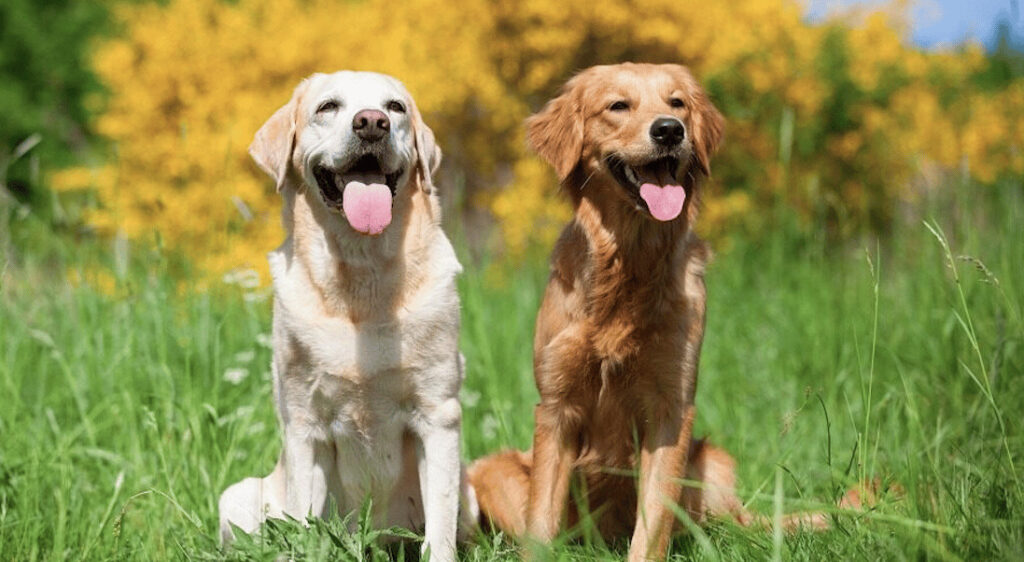
To ease the agony of choice, we have created some scenarios. Find yourself in one of them.
Choose a Labrador if:
- You lead a very active lifestyle: hiking, running, swimming – this is your world.
- You have small children, and you need a dog that will tolerate (and even love) rough play, ear pulling, and noise.
- You don’t want to waste time on grooming, trimming fur, and combing out mats.
- You need a guard dog… stop, no. Neither of them is a guard dog. But a Labrador will at least bark with a bass voice, which might scare someone off.
Choose a Golden Retriever if:
- You value aesthetics and are ready to dedicate time to coat care.
- You need a companion for calm, long walks in the park, rather than forced marches through bogs (although a Golden will tackle a bog too if needed).
- There are elderly people in the family – Goldens are usually more delicate in their movements and less likely to knock you off your feet.
- You dream of a dog that will hang on your every word and glance.
Myths and Reality
Myth 1: “These are perfect dogs that train themselves.”
Reality: Without training, a 30-40kg Labrador will turn into an unguided missile that drags you along the pavement on a lead towards another dog. A Golden without socialisation can become timid.
Myth 2: “They are fine in a flat, they are lazy anyway.”
Reality: They can sleep at home only if they have had a good workout outside. A minimum of 2 hours of active walking a day. Otherwise – chewed shoes, skirting boards, and even walls.
The Price Question: How Much Does Upkeep Cost?
Buying the puppy is the smallest expense. The main costs for both dogs are similar:
- Food: These are big dogs, and they eat a lot. Quality premium kibble or a balanced raw diet will cost a significant sum every month.
- Vet Bills: Tick and flea treatment for dogs weighing 30-40kg costs significantly more than for small breeds.
- Grooming: For a Golden, this is a regular expense (shampoos, conditioners, groomer services). For a Labrador, an express de-shedding session at a salon once every six months will make your life much easier.
Conclusions
The choice between a Labrador and a Golden Retriever is a choice between “one of the lads” and an “intelligent aristocrat”. A Labrador will make you laugh with its directness and will never let you be sad. A Golden will warm your soul with an understanding look and become your fluffy antidepressant.
Whoever you choose, remember: the love that retrievers give is not measured by the length of their fur or the shape of their head. It is absolute. The main thing is whether you are ready to reciprocate, giving them time, attention, and care.
Frequently asked questions
Labrador or Golden — which is calmer?
On average the Golden is softer and more sensitive and matures a little calmer; the Labrador stays an energetic “overgrown puppy” for longer. But temperament depends a lot on the breeding line and upbringing.
Which is better for a family with children?
Both breeds are among the best family dogs: patient, friendly and gentle with children. What matters more is early socialisation and enough daily exercise.
Which one sheds more?
Both shed heavily, especially seasonally. The Golden has a longer coat and needs more grooming (brushing 2–3 times a week); the Labrador has a short but dense double coat with heavy seasonal shedding.
Which is easier to train?
Both are highly intelligent and trainable, among the top service and guide dogs. The Labrador works happily for treats, while the Golden is especially responsive to praise and tone of voice.
Are they suited to a flat?
Yes, with enough exercise (1–2 hours of activity a day). Both cope badly with boredom and being left alone, so they don’t suit a sedentary lifestyle.
Which is healthier and how long do they live?
Both live about 10–12 years. Both are prone to hip and elbow dysplasia; Goldens are more predisposed to cancer, Labradors to weight gain. Health-tested parents and weight control help.