


Choosing a dog is always an emotional decision, often starting with the phrase “I want this specific breed because it’s cute”. However, reality quickly sets in when a sweet Husky puppy starts howling in a studio flat, or a short-haired Dobermann shivers in an outdoor kennel in the middle of winter. Living space is one of the most crucial factors determining the quality of life for your future pet. And it’s not just about square footage, but the lifestyle your accommodation dictates. Find out more on Tvaryny.
The square metre myth: why size isn’t everything
There is a common belief: “big dog – for a house, small dog – for a flat”. This is a dangerous simplification. Many giant breeds, such as Great Danes or Mastiffs, have surprisingly low energy levels. They can happily sleep all day on a rug by your desk, taking up less “psychological space” than a hyperactive Jack Russell Terrier.
The key factor is energy and temperament. A dog for a flat or a house should be chosen based on how much time you are willing to dedicate to active walking, not just on the floor area of your room. An active terrier in a large detached house without the owner’s attention can destroy it faster than a calm St. Bernard would a small studio flat.
A dog in a flat: challenges and benefits
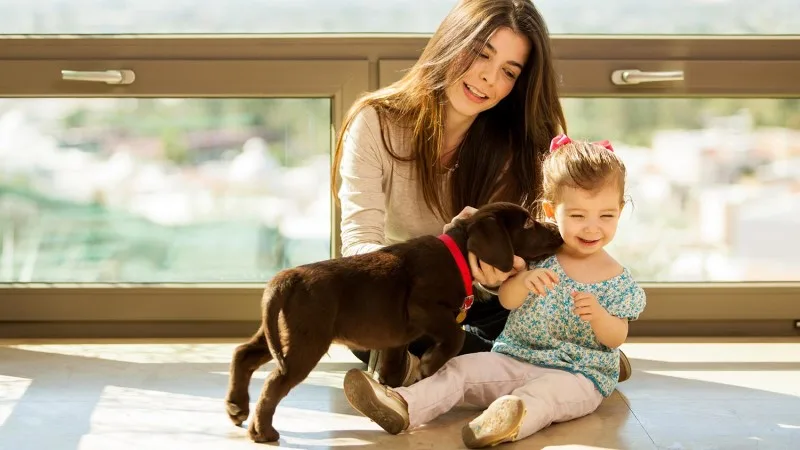
Life in a block of flats imposes specific limitations. These include neighbours on the other side of the wall, the lack of private land for a quick toilet break, and the need to use a lift. Let’s look at the key aspects.
1. Noise levels and neighbours
Some breeds are prone to barking at any rustle (for example, Spitz, Beagles, some Terriers). In a detached house, this might be a plus – the dog warns of guests. In a flat, however, it is a guaranteed conflict with neighbours. If you live in a modern build with paper-thin walls, it is worth looking at “silent” breeds, such as Basenjis, Pugs, or Cavalier King Charles Spaniels.
2. Hygiene and shedding in a confined space
In a flat, you will encounter fur much more often than in a house, where part of the “hairy cargo” is left in the garden. This is a critical point for allergy sufferers. If clean air and surfaces are a priority for you, you should consider options that do not shed or have hair instead of fur. By the way, if you are interested in this topic in more depth, we recommend reading our article on popular hypoallergenic breeds: Poodle vs Bichon Frise. This will help narrow down your search.
3. Logistics of walking
Living on the 15th floor, you cannot simply open the back door for the dog to relieve itself. This means a minimum of 2-3 proper outings every day, in any weather. For puppies and elderly dogs, this can be a problem. It is important to assess your own stamina here: are you ready to get dressed and go down in the lift at 6 am in the pouring rain?
Expert tip: If you work in an office full-time, avoid breeds with high levels of separation anxiety (such as Weimaraners or Border Collies). They may destroy the flat out of boredom and loneliness.
Private house: freedom or illusion?
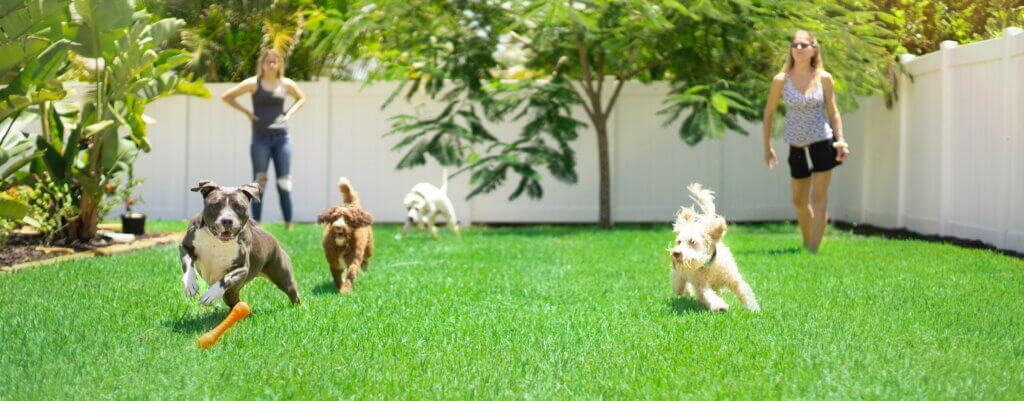
Many people move to the countryside specifically to get a big dog. A garden is a wonderful bonus, but it often becomes a trap for owners who believe that having a fence cancels out the need for walks.
1. A garden does not replace socialisation
A dog that only sees the world through cracks in the fence becomes territorial and often aggressive or fearful. Even if you have an acre of land, you must take the dog outside your territory. They need new smells, meetings with other dogs, and mental stimulation. A yard guardian that is never walked often turns into an uncontrollable animal.
2. Perimeter security
Before bringing an active breed (Husky, Malamute, Shepherd) into the garden, check the fence. These breeds are escape artists. They dig tunnels, jump over two-metre fences, or simply open latches. This is a huge responsibiity, as an escaped dog can frighten passers-by or get hit by a car.
3. Temperature conditions
Not all dogs can live outdoors. Short-haired breeds (Dobermanns, Boxers, Pitbulls) have no undercoat and will freeze in winter even in a heated kennel. Only breeds with a thick undercoat are suitable for year-round outdoor living: Caucasian Shepherds, Central Asian Shepherds (Alabai), Huskies, Bernese Mountain Dogs. But even they need close contact with humans.
Family and children: adjusting the choice
If there are children in your space (flat or house), the selection criteria shift towards safety and the animal’s tolerance. The large territory of a private house allows for better separation of the child’s and dog’s play zones, whereas in a flat, contact will be constant. Read more about how to choose a safe friend for your little ones in our article: “Nanny dog: which breeds get along best with children of different ages“.
Comparison Table: Which dog to choose?
To systematise the information, we have created a table to help match your conditions with the needs of different breed groups.
| Type of housing | Ideal dog profile | Example breeds | What to consider |
|---|---|---|---|
| Small flat (Studio) | Low/medium energy, “quiet”, compact or calm giant. | Pug, French Bulldog, Greyhound (surprised?), Yorkshire Terrier. | Regular walks are mandatory. Minimal “doggy smell” is important. |
| Large flat / Apartment | Companion dogs that need human contact but aren’t too active indoors. | Labrador, Golden Retriever, Poodle, Corgi. | Need space for a bed and play. Fur and cleaning issues. |
| Detached house (free run) | Guarding qualities, thick undercoat, self-sufficiency. | German Shepherd, Alabai, Tibetan Mastiff. | Secure fencing. Socialisation outside the yard. Warm kennel/run. |
| Terraced house (small garden) | Active companions who feel cramped in a flat but sleep indoors. | Beagle, Border Collie, Boxer. | Garden is only for toilet and play, not living 24/7. Barking may disturb neighbours. |
Checklist: Are you ready for a dog in your space?

Before driving to the breeder or shelter, honestly answer these questions. This will help avoid disappointment.
- Does the landlord allow it? If you are renting accommdation, this is the first question. Owners are often against large breeds.
- Where will the dog’s place be? Even in a flat, a dog needs its own corner where no one touches it. This is its “fortress”.
- What about the dirt? In a house, a dog brings sand, mud, and grass in from the garden. Do you have an area by the entrance (porch/utility room) where it is convenient to wash paws? In a flat, you’ll have to do this in the bathroom.
- Lift or stairs? Remember that puppies of large breeds should not walk up and down stairs much until they are 6-9 months old (risk of dysplasia). Are you ready to carry 20 kg in your arms to the 3rd floor?
Creating comfort for everyone
Regardless of whether you chose a flat or a house, the success of living together depends on routine. Dogs are creatures of habit. In a flat, a clear walking schedule will train the dog to hold on and sleep while you are not at home. In a private house, a feeding and exercise regime will help control territorial instincts.
Remember that the perfect companion isn’t found – they are raised. You can take the calmest breed for a flat, but without training, it will turn the house upside down. Conversely, an active Shepherd can feel great in a two-bedroom flat if the owner provides it with 3 hours of active sport daily.
Conclusions
When choosing between a dog for a flat and one for a house, look not at the animal’s exterior, but at its purpose. Hunting breeds will struggle without movement, guard dogs without territory, and decorative companions without the constant presence of a human. Your home should become a safe environment for the dog, not a gilded cage or a battlefield for territory.
Analyse your schedule, evaluate the real possibilities of your home, and don’t be afraid to consult with dog trainers even before buying a puppy. The right choice is the guarantee of 15 years of happy life together.