

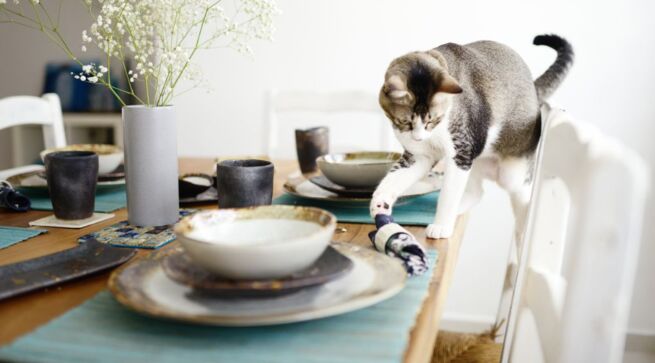
It is a familiar scene: your pet slowly, as if in slow motion, nudges their paw towards the edge of the table where your favourite mug is sitting. You lock eyes. You say “No!”. But the cat, maintaining eye contact, makes that final move – and the mug goes flying. This isn’t just petty hooliganism. It is a complex behavioural pattern with deep evolutionary roots. Learn more on Tvaryny.
Reason No. 1: Predatory Instinct and Reality Testing
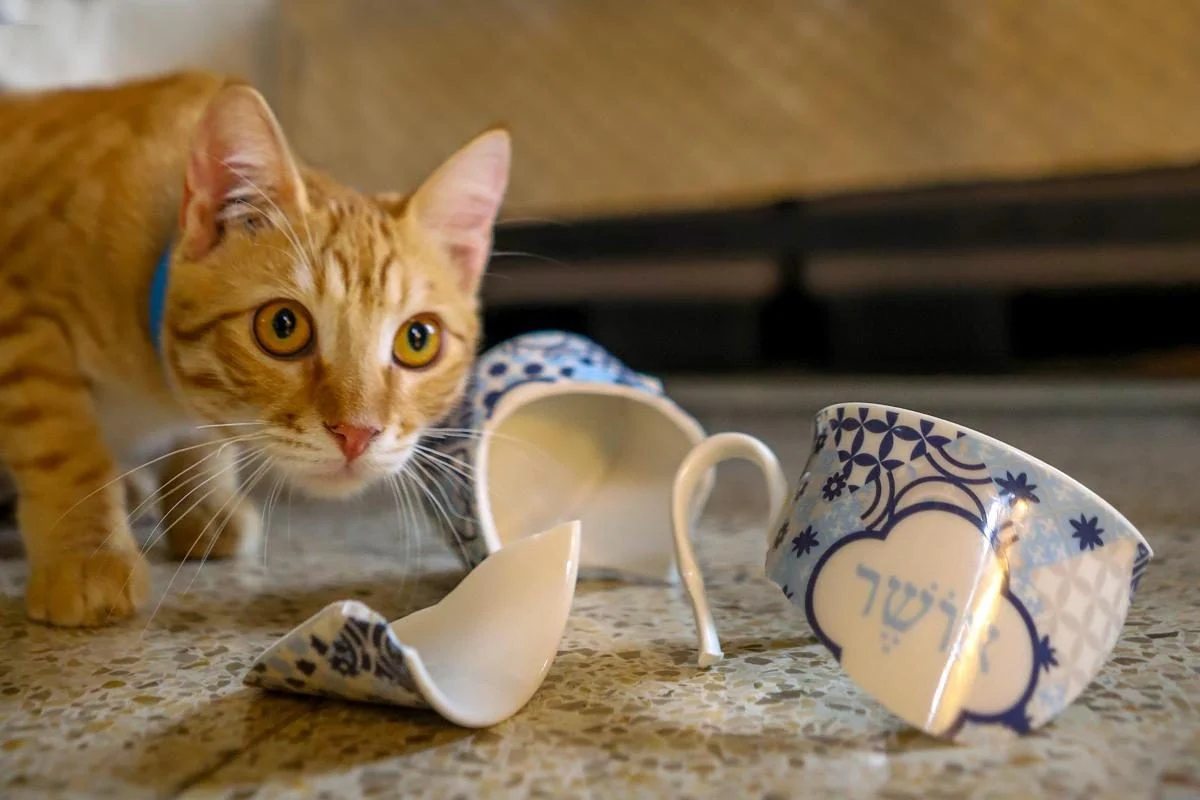
To understand why cats knock objects over, we need to look at the world through their eyes. In the wild, a cat is a micro-predator. Its prey (mice, lizards, insects) often freezes, trying to blend in with the terrain when it senses danger.
When a cat sees a pen, a lighter, or keys on the table, its instict whispers: “Check if this is alive”. The best way to check is to touch it with a paw.
- Tactile reconnaissance: Cat paw pads are extremely sensitive. Touch helps them understand the texture, temperature, and weight of an object.
- Provoking movement: If you shove the “prey”, it will run. If the item falls and rolls – this mimics a victim escaping, which instantly switches on the hunting drive.
“For a cat, an object falling isn’t destruction, it’s a physics experiment. The rapid downward movement activates neural pathways responsible for chasing,” note leading veterinary behaviourists.
Reason No. 2: “Look at Me!” or Attention Manipulation
Cats are masters of learning through consequences. They grasp cause-and-effect relationships in your home very quickly. Let’s look at a typical scenario:
- The cat sits quietly – you are staring at your phone.
- The cat meows – you ignore it.
- The cat knocks over a vase – you jump up, run over to it, perhaps even shout.
For the cat, this is a victory. Even negative attention (shouting) is better than a complete lack of attention. If the animal lacks social interaction, cat behaviour transforms into something destructive to get at least some reaction from the owner.
Reason No. 3: Boredom and Unmet Needs
Indoor cats often suffer from sensory hunger. Within four walls, there isn’t much going on. Knocking items over becomes a way to entertain themselves. It creates sound, movement, and changes the landscape of the room. It is a kind of game the cat invented for itself becuase you didn’t offer an alternative.
It is important to understand that a cat’s activity depends on its circadian rhythms. Often, “destructive activity” begins in the evening or early in the morning.
How to Stop Your Cat from Knocking Things Over: Environmental Enrichment Strategy
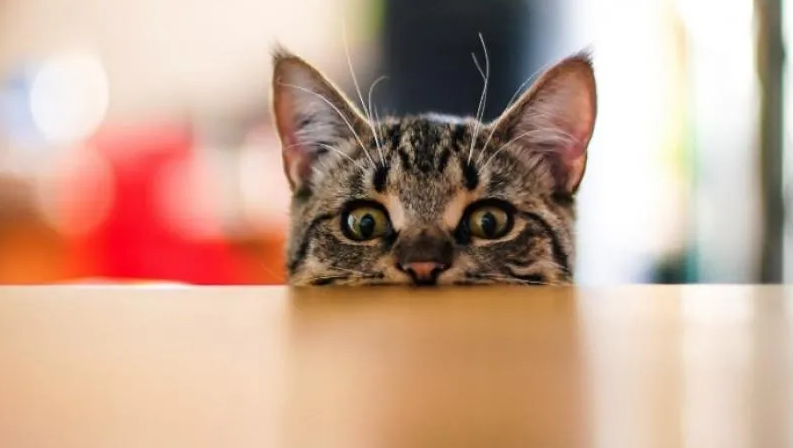
Punishment does not work. If you scold the cat, it will simply learn to knock things over when you aren’t in the room, or it will become afraid of you, which will only worsen your relationship. An effective method is environmental enrichment.
1. Remove the temptation (Environmental Management)
The simplest step is to make the unwanted action physically impossible. This isn’t surrender, it’s a smart move.
- Use museum wax or double-sided tape for valuable vases.
- Remove small items from the edges of tables and bedside cabinets.
- Provide the cat with “legal” heights (shelves, climbing frames) where there are no fragile items.
2. Satisfy the hunting instinct
Does your cat want to hunt? Give it the opportunity. Use interactive toys and feather wands. Play for at least 15 minutes twice a day. It is important that the game ends with “catching” the prey and, ideally, feeding. This closes the natural cycle: hunt – eat – sleep.
3. Puzzles instead of bowls
If the cause is feline boredom, make the animal’s brain work. Food puzzles are a great way to occupy a cat. It will have to push, spin, and flip the toy to get the food. This satisfies the need to manipulate objects with paws, but for a useful purpose.
| Problem | Why does the cat do it? | Solution |
|---|---|---|
| Knocks over small things (pens, lids) | Play, imitating hunting insects | Give light toys that can be carried in the mouth |
| Knocks over heavy objects (plant pots, books) | Attempt to get attention, physical release | More active games, more stable shelves |
| Knocks things over at night | Demand for food or attention, activity peak | Automatic feeder, ignoring (don’t get up!) |
The Medical Aspect: When It’s Not Just Behaviour
Sometimes, although rarely, a sudden change in behaviour and aggressive knocking over of objects can indicate health problems. Hyperthyroidism (in older cats) can cause hyperactivity and irritability. If you notice other symptoms (weight loss, change in appetite), consult a vet.
Conclusions
Remember, the cat isn’t trying to spite you. It is just a cat. Its nature requires exploration, hunting, and interaction. Your task as an owner is to create conditions where instincts are realised through toys and puzzles, not through Grandma’s crystal. A bit of patience and correct organisation of space – and your things will stay in one piece.
Apply these tips today, and you will see how your daily life with your fluffy friend changes. After all, harmony in the home is more important than any vase.