

Many people have heard the claim that pedigree cats are a veritable “catalogue of illnesses”, while your average moggyสุขภาพแข็งแรง This stereotype is firmly ingrained in people’s minds, and it often becomes the argument for choosing a non-pedigree kitten. But are pedigree pets truly destined for frequent trips to the vet? Or is this just one of the many common myths about cats? You can find out more about this on Tvaryny. Let’s delve into this together, separating fact from fiction.
What does “pedigree cat” mean?
First of all, it’s worth defining what we mean by a “pedigree cat”. This is an animal that conforms to specific breed standards set by felinological organisations (such as the CFA, TICA, or WCF in an international context, or the GCCF in the UK). These standards describe the cat’s appearance (conformation) and sometimes its temperament. Such a cat’s origin is confirmed by a pedigree, which traces its ancestors back several generations.
Breeding pedigree cats is a deliberate process aimed at establishing desirable traits. Unfortunately, along with attractive features (like the plush coat of British Shorthairs, the folded ears of Scottish Folds, or the hairlessness of Sphynx cats), genetic mutations that lead to certain health problems are also sometimes established.
Genetic predisposition: The price of beauty?
It is precisely this genetic predisposition that is the key factor behind the myth of pedigree cats’ sickliness. Some breeds do indeed have an increased risk of developing certain diseases due to their genetic makeup, which is often the result of inbreeding (closely related breeding) used to fix desired traits.
- Persian and Exotic Shorthair cats: Due to their flat faces (brachycephalic syndrome), they often suffer from breathing problems, watery eyes, malocclusion (incorrect bite), and dermatitis in skin folds. Polycystic kidney disease (PKD) is also common in them.
- Maine Coons: These gentle giants are prone to hypertrophic cardiomyopathy (HCM) – a heart disease – as well as hip dysplasia.
- Scottish Folds: The gene responsible for their charming folded ears also causes osteochondrodysplasia – a serious bone and cartilage disorder leading to pain and arthritis. This is why breeding two folded-ear cats together is prohibited in many cat fancy organisations.
- Sphynx cats: Due to their lack of fur, they are prone to skin diseases (dermatitis, acne) and require protection from the sun and cold. HCM is also seen in this breed.
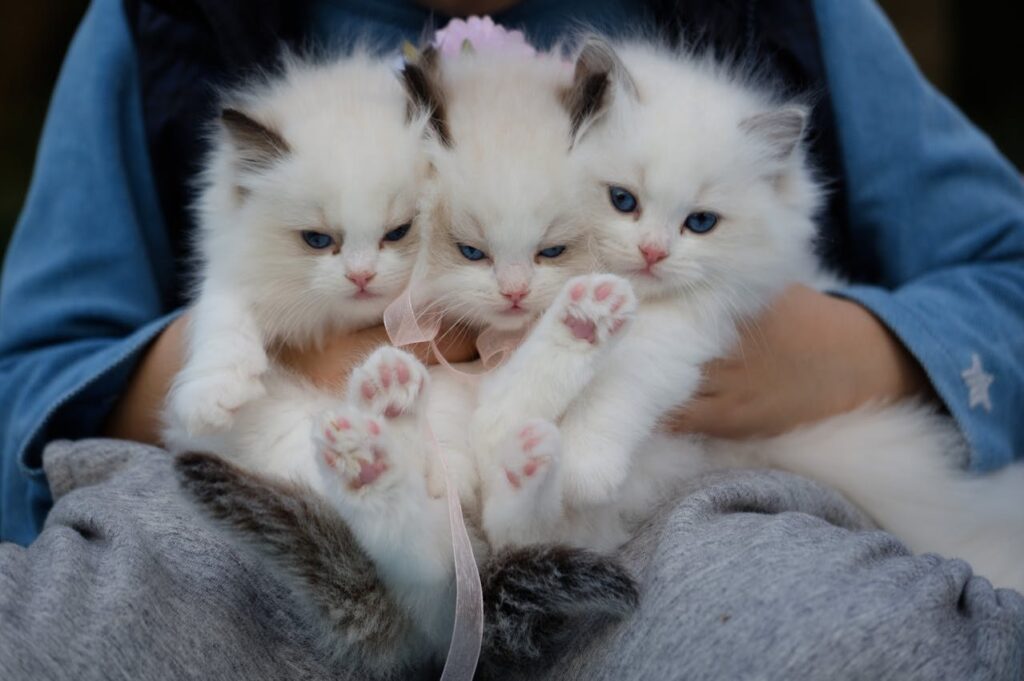
- Ragdolls: Also have a predisposition to HCM and polycystic kidney disease.
- Abyssinian and Somali cats: Prone to progressive retinal atrophy (PRA), which leads to blindness, and pyruvate kinase deficiency (PKDef), which causes anaemia.
It’s important to understand: the presence of a predisposition does not mean the cat will inevitably get sick. It’s merely an increased risk compared to other breeds or non-pedigree cats.
What about crossbreeds and “moggies”?
Proponents of the theory that pedigree cats are sickly often contrast them with non-pedigree animals (crossbreeds, or “moggies”), claiming they have “robust” health thanks to natural selection and genetic diversity. This phenomenon is called heterosis or “hybrid vigour”. Indeed, a wider gene pool reduces the likelihood of recessive genetic disorders, which often accumulate in purebred breeding.
However, this certainly doesn’t mean that non-pedigree cats don’t get ill. They too can suffer from:
- Infectious diseases: Feline viral rhinotracheitis (a type of cat flu), calicivirus, panleukopenia (feline distemper), feline immunodeficiency virus (FIV), and feline leukaemia virus (FeLV) – these diseases don’t discriminate by breed, especially if a cat has outdoor access or contact with infected animals.
- Parasitic infestations: Fleas, ticks, and worms are common companions for cats, especially those اللي يتجولون بالخارج.
- Injuries: Falls from height, fights with other animals, and road traffic accidents are all risks of an outdoor life.
- Age-related and lifestyle-related diseases: Obesity, diabetes, urinary tract stones, chronic kidney disease, and arthritis – these problems can arise in any cat, regardless of its pedigree.
- Hereditary diseases: Although rarer, genetic problems inherited from their mixed-breed ancestors can also appear in moggies.
Often, the “robust health” of moggies is explained by harsh natural selection: weak kittens simply don’t survive the tough conditions of street life. Only the strongest make it to the vet, creating a false impression of their invulnerability.
Factors affecting any cat’s health
Regardless of whether your pet has a pedigree, its health depends on a combination of factors:
- Genetics: As we’ve established, it plays a role but isn’t a life sentence.
- Living conditions: Cleanliness in the home, absence of stressors, a safe environment.
- Nutrition: A balanced diet appropriate for the cat’s age, breed (if there are specific needs), and health status is key to longevity. Cheap, economy-class cat food or scraps from the table can provoke gastrointestinal problems, obesity, allergies, and urinary tract disease.
- Veterinary care: Regular preventative check-ups (at least once a year), timely vaccinations, and parasite treatments are essential for all cats. The earlier a disease is detected, the easier it is to treat.
- Lifestyle: Activity, play, and mental stimulation help keep a cat in good shape and prevent boredom and stress.
- Breeder’s responsibility (for pedigree cats): This is a very important point!
The role of responsible breeding
This is where a significant part of the answer to our main question lies. Health problems often arise not so much from the breed itself, but from irresponsible breeding.
Reputable breeders:
- Are well-versed in the specifics of their breed, including potential genetic risks.
- Carry out genetic testing on their breeding animals to exclude carriers of undesirable genes (e.g., tests for HCM, PKD, PKDef, PRA).
- Do not use animals with pronounced health problems or aggressive behaviour in their breeding programmes.
- Avoid close inbreeding.
- Provide cats and kittens with proper living conditions, quality nutrition, and veterinary care.
- Provide buyers with full information about the kitten’s health and that of its parents, including test results.
In contrast, there are so-called “kitten farms” or simply unscrupulous individuals for whom cat breeding is just a business. They often neglect the animals’ health, don’t perform tests, use inbreeding for a quick turnaround of a desired type, and keep cats in poor conditions. It is from such “breeders” that pedigree kittens with serious health problems most often originate, which in turn fuels the myth about the sickliness of pedigree breeds.
How to choose a healthy kitten?
If you decide to get a pedigree kitten, approach the choice responsibly:
- Look for a reputable breeder: Read reviews, visit cat shows, talk to owners of cats of that breed.
- Visit the cattery in person: Assess the conditions in which the animals are kept. Is it clean? Is there enough space? Do the cats look well-cared-for and active?
- Talk to the breeder: Ask questions about the health of the kitten’s parents and any tests performed. A reputable breeder will gladly provide this information.
- Observe the kittens: They should be active, playful, and curious. Pay attention to their appearance: clear eyes and nose (no discharge), clean ears, glossy coat (if not a hairless breed), and no signs of diarrhoea.
- Check the documents: Pedigree certificate, veterinary health record with notes on vaccinations and deworming.
- Don’t be swayed by a low price: An unusually low price for a pedigree kitten should raise alarm bells. It’s likely that corners have been cut regarding its health and care.
Conclusion: Myth or reality?
So, the assertion that all pedigree cats get sick more often than non-pedigree ones is largely a myth, although it does have some basis in reality.
The reality is as follows:
- Some breeds do indeed have a genetic predisposition to certain diseases due to the specifics of selective breeding.
- Non-pedigree cats (moggies) have a wider gene pool, which reduces the risk of some hereditary diseases, but they are not immune to other common feline ailments (infections, parasites, age-related diseases, etc.).
- The breeder’s responsibility plays a key role. A pedigree kitten from a reputable breeder who cares about the health of their animals and conducts necessary tests has a high chance of living a long and healthy life.
- The health of any cat – pedigree or not – largely depends on its living conditions, quality of nutrition, timely veterinary care, and the owner’s attention.
Don’t be afraid to get a pedigree cat because of stereotypes. The main thing is to approach the choice responsibly, find a good breeder, and provide your pet with proper care and love. And remember: every cat, regardless of its background, deserves to have its health cared for.