

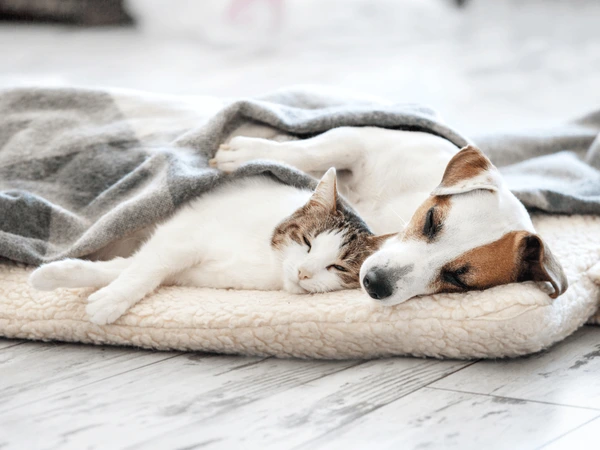
Every pet owner knows the feeling: it’s a quiet evening, you look over at your cat or dog, and see them sleeping peacefully. There’s something magical about watching a sleeping pet. Their paws twitch slightly, they snuffle quietly, and sometimes they get into such bizarre positions that you have to wonder – how are they even comfortable? But have you ever considered that these poses aren’t just random? They are a whole language, telling you about their comfort, trust, and even their health.
Understanding how and why your pet sleeps in a certain way isn’t just about satisfying curiosity. It’s a key tool for deepening your bond. Every pose, from the tight ‘doughnut’ to a carefree sleep on their back, reflects millennia-old instincts, their level of trust in you and their environment, and even a reaction to the room temperature. This article is your detailed guide to the world of sleepy habits, helping you better understand what your four-legged friend is really feeling when they close their eyes. Learn more on Tvaryny.
Why is a sleeping position key to understanding your pet?
For a wild animal, sleep is the most vulnerable time. Instincts passed down through generations don’t just disappear, even if your dog sleeps on an orthopaedic mattress and your cat on a cashmere throw. Their brain is still programmed for survival. Therefore, the choice of sleeping position is an unconscious decision based on three factors: safety, temperature, and comfort.
By analysing pet sleeping positions, we are essentially reading their comfort level. Does the animal feel the need to protect its vital organs? Does it feel safe enough to relax completely? Is it too hot or too cold? For example, sleeping on their back with an exposed belly isn’t just cute; it’s the ultimate sign of trust. The animal is literally saying, ‘I know nothing can harm me in this house; I can afford to be completely vulnerable.’ Conversely, sleeping in a tight ‘doughnut’ might not only indicate cold but also anxiety or a need for security.
Decoding Sleepy Poses: From the “Doughnut” to the “Superman”
Let’s break down the most common positions you might find your cats and dogs in, and try to understand what they mean.
1. “The Doughnut” or “Curled-Up”
Description: Probably the most classic pose. The animal curls into a tight ball, nose touching its tail, with paws tucked under the body.
What it means: This is a “safety” and “heat conservation” pose. By curling up, the animal protects its vital organs in the abdominal cavity – a pure survival instinct inherited from wild ancestors. This pose also does a great job of retaining body heat. If your pet often sleeps like this, it might mean they are chilly. However, it’s also just a comfotable and cosy position that provides a sense of security. Many animals sleep this way out of habit, even in complete safety.
2. “The Side Sleeper”
Description: The animal lies on its side with its legs extended.
What it means: This is a pose of deep relaxation and comfort. The animal feels safe enough not to guard its belly. Unlike the “doughnut,” this position allows the muscles to relax completely, which helps them enter the deep sleep (REM) phase. It’s in this position that you’ll most often see your pet “running” in their sleep, whimpering, or twitching their whiskers. They’re dreaming! This is a wonderful sign that your pet feels happy and secure at home.
3. “The Full Belly Exposure”
Description: The animal lies on its back, legs spread wide, completely exposing its belly.
What it means: This is the Oscar winner for “I completely trust you.” The belly is the most vulnerable part of the body. By showing it in their sleep, your pet is demonstrating that they feel absolutely no threat. It’s also one of the best positions for cooling down. The fur on the belly is much thinner, so by exposing it, the animal efficiently releases excess heat. Dogs often sleep on their backs after an active day or in hot weather. What do cats’ sleeping positions mean in this same pose? Exactly the same thing – total zen and trust.
4. “The Superman” (Sploot)
Description: The animal lies on its belly, stretching its hind legs out behind and its front legs forward. It looks like they’re flying.
What it means: This pose is most common in puppies and very energetic, playful dogs (and sometimes cats). It’s a “ready for action” position. The animal is resting but is prepared to jump to its feet in an instant if it hears a call to play or something interesting. It’s also an effective way to cool down by pressing their belly against a cool floor (like tiles or laminate). This is the sign of an energetic and confident pet.
5. “The Sphinx” or “Cat Loaf”
Description: The animal lies on its belly, paws neatly tucked under its body, with its head up or resting on its front paws. A cat in this pose resembles a loaf of bread.
What it means: This isn’t deep sleep, but rather a doze. What do cats’ sleeping positions mean when they “loaf”? They are resting but remain on alert. Their muscles are not fully relaxed, and they are ready to react quickly to any movement or sound. Dogs might also doze like this, especially when “guarding” their owner or waiting for them to return. It’s a comfortable pose, but it doesn’t indicate complete relaxation.
6. “The Burrower”
Description: The animal hides completely or partially under a blanket, throw, cushions, or even your clothes.
What it means: There are two main motives here: warmth and security. Many breeds (especially Terriers and Dachshunds) were bred to hunt in burrows, so the “burrowing” instinct is in their blood. It gives them an incredible feeling of cosiness and safety. It’s also a clear sign that the pet is cold. If your cat or dog is constantly looking for somewhere to hide, make sure the room is warm enough and that they have their own cosy “nest”.
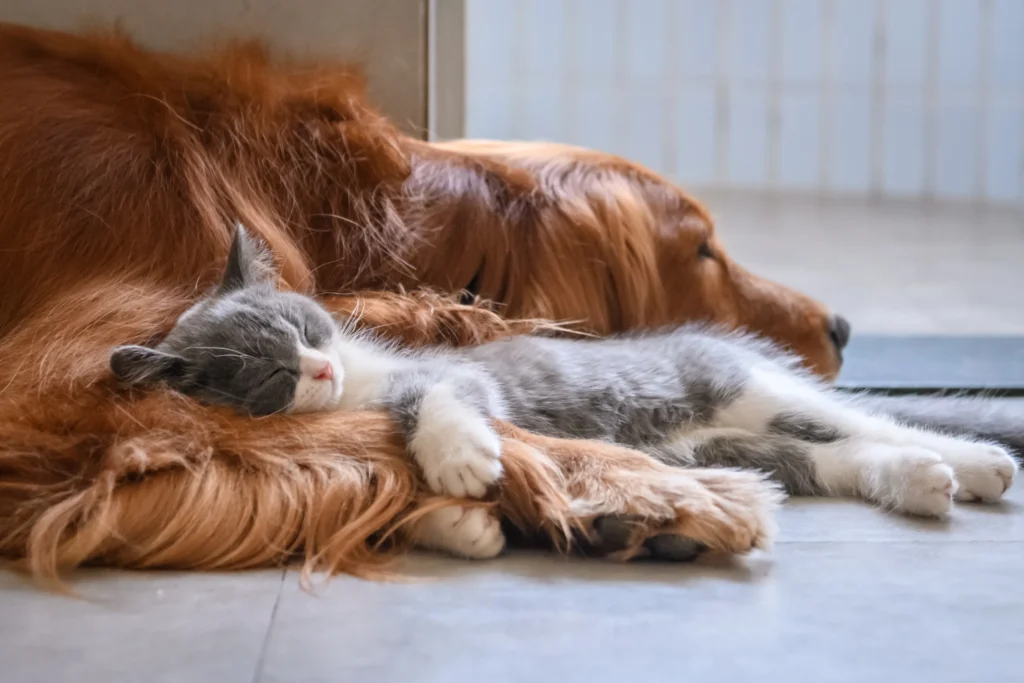
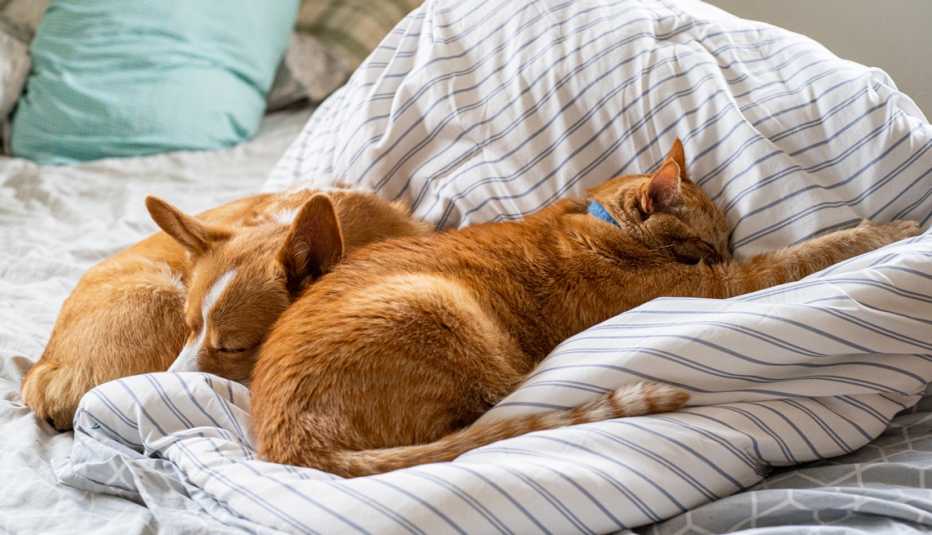
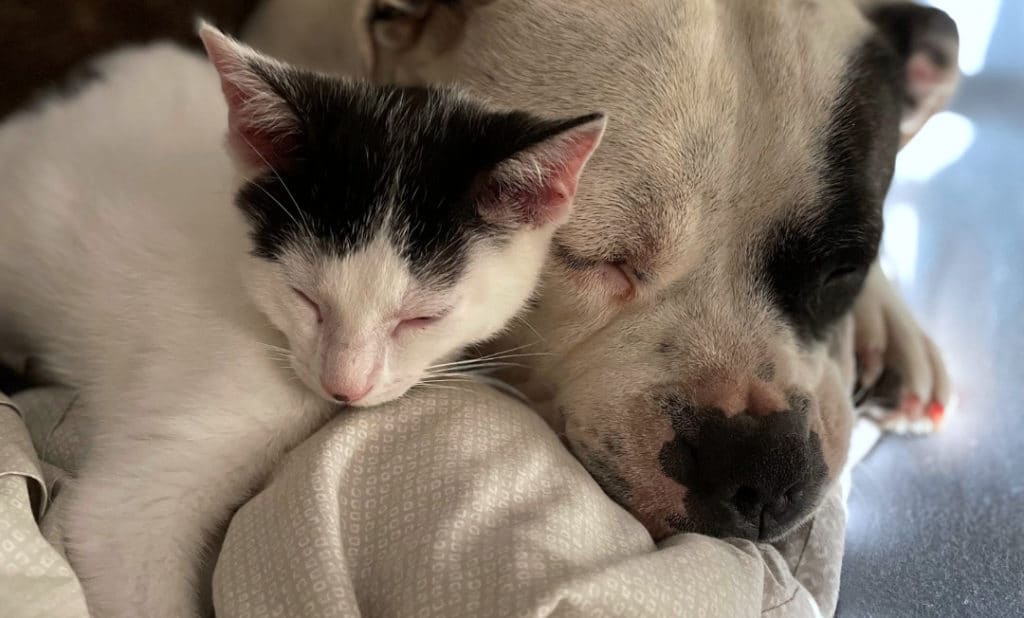
7. “The Cuddler”
Description: The animal sleeps pressed closely against you or another pet in the house.
What it means: This is a pure display of love, trust, and pack instinct. In the wild, pack members sleep together for warmth and added security. Your pet considers you part of their pack (or their property, if it’s a cat). This is a powerful bonding act. The animal is not only seeking warmth but is also demonstrating deep affection and feels safest right beside you.
8. “The Acrobat” (Contortionist / Pretzel)
Description: A pose that defies the laws of physics. Paws in one direction, head in another, body twisted.
What it means: Cats are especially famous for this, but dogs aren’t far behind. If you see your pet in such a pose, know this: they are not broken. It means they are 100% relaxed and feel so safe that they couldn’t care less how bizarre they look. It’s a sign of complete comfort in thier environment. They know no one will bother them, and they can indulge their every whim.
Cats vs. Dogs: Who sleeps differently and why?
Although many pet sleeping positions are universal, there are some differences dictated by their nature.
- Cats and vertical space: Cats are natural hunters who are also prey for larger predators. Their instinct, therefore, compels them to seek high places for sleep (shelves, sofa backs, wardrobes). This gives them safety and a good view of their territory. Dogs, as “ground” animals, prefer security at ground level, often in a “den” (their bed or at the owner’s feet).
- Temperature sensitivity: Cats adore warmth. Their normal body temperature is higher than humans’, so they instinctively seek out the smallest patches of sunlight, radiators, or your laptop. Dogs also like warmth, but they cool down much more efficiently (through panting and paw pads), so in the heat, they are more likely to choose a cool floor and the “superman” or “on the back” pose.
- Sleep phases: Cats are masters of polyphasic sleep. They can doze for 15-30 minutes many times a day (that same “loaf” pose) while remaining on alert. Dogs, especially those living by their owner’s schedule, are prone to longer and deeper sleep cycles, particularly at night.
“Red Flags”: When a sleeping pose signals a problem
Usually, odd sleeping positions are just cute. But sometimes they can be an indicator of discomfort or pain. It’s not always an alarm bell, but it’s worth observing if other symptoms appear.
- A sudden change in habits: If your dog always slept on its back and now only sleeps in a tight “doughnut,” it could indicate pain in the abdomen or back, or that it feels cold or anxious.
- The “prayer” position: If a dog sleeps (or frequently freezes) in a pose with its front legs stretched out and its rear end raised (like a bow), this can be a sign of pancreatitis or severe abdominal pain. Contact your vet immediately.
- Sleeping sitting up or with an outstretched neck: This can indicate breathing difficulties (heart failure, respiratory problems) or severe pain that prevents them from lying down.
- Constant tension: If the animal never relaxes, only sleeps in the “sphinx” pose, and jumps at every sound, it could be a sign of chronic stress or pain.
Creating 5-Star Sleep: Practical tips for owners
Knowing what pet sleeping positions mean, we can help them sleep even better. After all, quality sleep is the key to their health and good mood.
- The right bed: They must have one! Even if your pet sleeps with you, it should have its own safe space. For dogs who love the “doughnut,” round beds with raised edges (“nests”) are ideal. For those who sleep on their side or back, flat mattresses work well. An orthopaedic bed for senior pets is a very comfortable option that relieves pressure on their joints.
- Location: Place the bed in a quiet spot, free from draughts, where the animal won’t be constantly disturbed. But it shouldn’t be in complete isolation – pets like to feel part of the “pack.”
- Temperature: Maintain a comfortable temperature. If you see your pet sleeping in a “doughnut,” offer a blanket. If they are splayed out on the tiles, make sure they have access to fresh water and aren’t too hot.
- Routine: Animals adore routine. Try to stick to a consistent schedule for walks, feeding, and bedtime. This reduces anxiety and promotes sound sleep.
Conclusion: Beyond the closed eyes
Watching your sleeping pet isn’t just a chance to take a cute photo. It’s a quiet dialogue. When your cat rolls onto its back or your dog snuffles peacefully at your side, they are telling you, “I love you. I trust you. I am home.” By understanding the language of their sleepy poses, you don’t just learn more about their instincts; you deepen a bond that requires no words. So next time you see your friend sleeping, take a closer look – they might be telling you something very important.