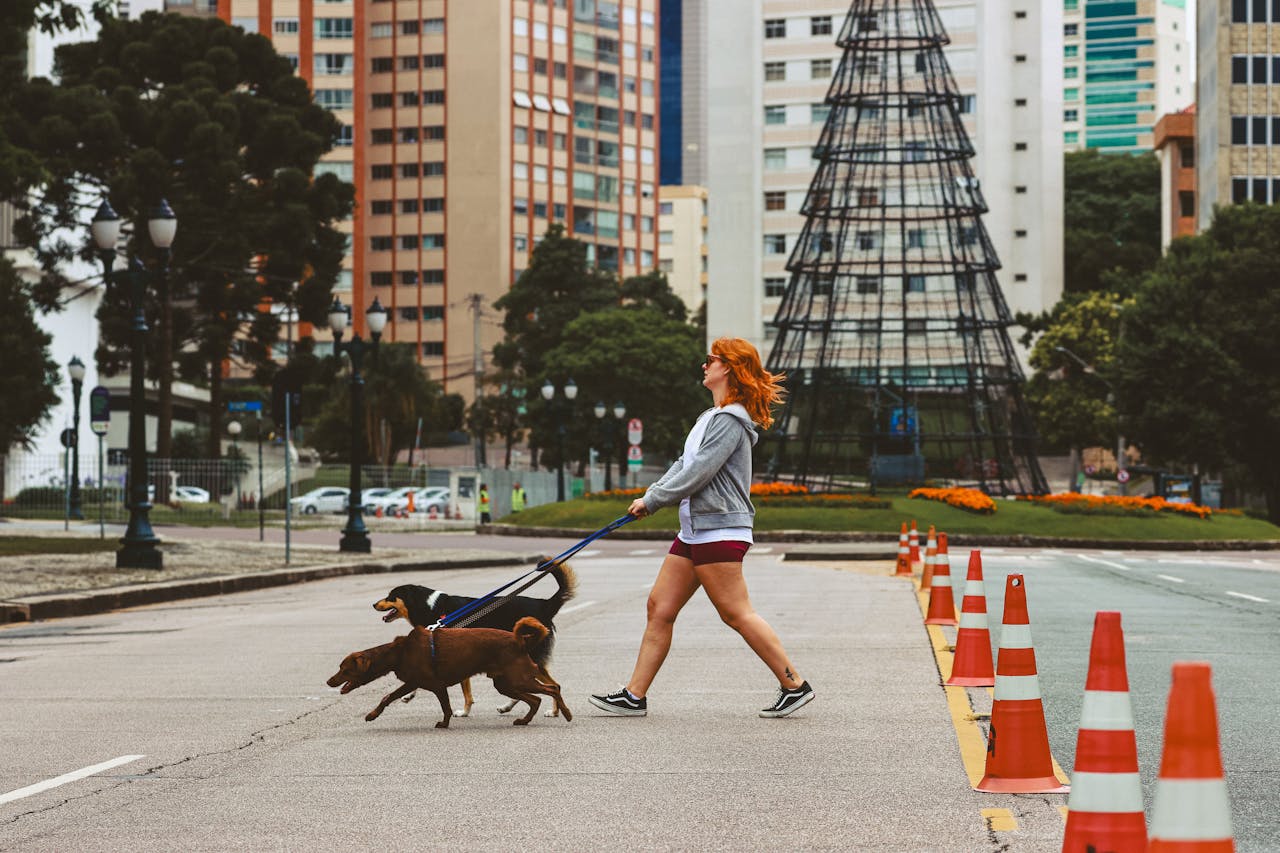
A walk with your beloved dog should be a time for relaxation and enjoyment, but for many owners, it turns into a daily stress. As soon as another dog appears on the horizon, your calm pet transforms into a ball of tension: pulling on the lead, barking, growling, or even trying to lunge. This behaviour, known as reactivity or aggression towards other dogs on walks, is exhausting and frightening. You start avoiding busy places, walking at night or in the early hours of the morning, and feeling isolated.
If this scenario sounds familiar - you are not alone. It's one of the most common behavioural problems owners face. It's important to understand: your dog isn't "bad", and you aren't a "bad" owner. This behaviour is a symptom of a deeper problem, most often fear. And the good news is that it can be corrected. We'll explore why dogs lunge at other dogs and focus on the most effective correction method - counter-conditioning. Find out more on Tvaryny.
Why does this happen? The real reasons for aggression on the lead
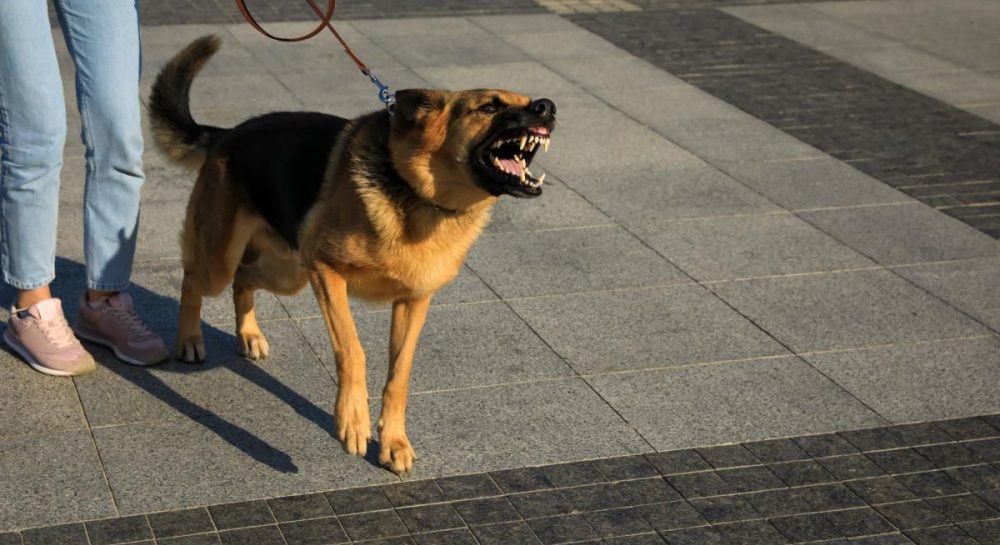
To solve the problem, you need to understand its root. Dogs are rarely aggressive "just because". Usually, one of these reasons is hiding behind the barking and growling:
- Fear and insecurity. This is the main reason. A dog on a lead feels trapped. He can't run away (the "fight or flight" option). When another dog approaches, your pet may feel threatened and decide that the best defence is to attack. He barks and lunges to scare the "threat" away. When the other dog does indeed leave (and they would have just walked past anyway), your dog's behaviour is reinforced: "It worked! I must do this every time."
- Territorial behaviour. Some dogs consider their usual walking route "their" territory and try to chase away "strangers". This is particularly noticeable if the dog only reacts near your home but behaves more calmly in a new park.
- Frustration (lead reactivity). Paradoxically, this behaviour is sometimes shown by dogs who actually... love other dogs. They want to say hello and play so badly, but the lead restrains them. This pent-up energy and frustration spills over into barking and lunging. From the outside, it looks like aggression, even though the motivation is different.
- Resource guarding. The resource, in this case, is you - the owner. The dog might see another dog as a threat to their "property" (you) and tries to protect you.
- A previous negative experience. If your dog was once scared or bitten by another dog (especially as a puppy), they might generalise this fear to all or specific dogs (e.g., only large or black dogs).
Common owner mistakes: What NOT to do
In a state of stress, we often resort to methods that we think should work but actually just make the situation worse. Before we talk about correcting dog aggression, let's rule out ineffective approaches:
- Punishment (lead jerks, shouting, choke chains). When your dog is already in a state of panic (fear), and you add pain or discomfort, you only confirm their fears: "When another dog appears, things get really bad and scary, and my owner shouts too!". This strengthens the negative association.
- "Letting them sort it out". Never let dogs on leads "work out their differences". This is almost guaranteed to lead to a fight, worsen the trauma, and could end in a trip to the vet.
- Complete isolation. Avoiding all dogs is a management strategy, not a correction. It helps prevent incidents but doesn't change the dog's emotional state. The problem remains, and one day you'll inevitably run into another dog unexpectedly.
Effective strategy: Management + Correction
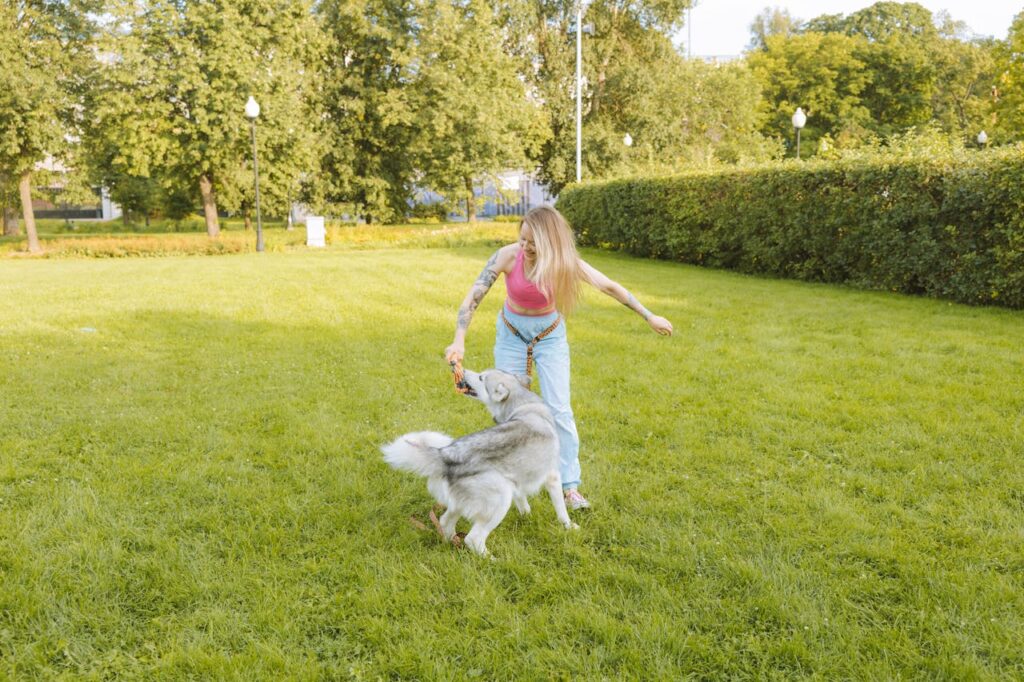
Successful work on reactivity always consists of two parts: immediate management (how to avoid "explosions" right now) and long-term correction (how to change the dog's attitude).
Management (Safety First)
Your first task is to stop the dog from "practising" the unwanted behaviour. Every outburst reinforces it.
- Distance is your ally. Work out your dog's "reaction threshold" - this is the distance to another dog at which your dog notices them but doesn't yet react (no barking, no pulling). Always try to stay at this distance or greater.
- Learn an "emergency" U-turn. If you see a trigger (another dog) and realise the distance is too short, don't panic. Calmly but confidently turn around and walk in the other direction. You can throw a handful of treats on the ground to distract the dog and walk away quickly.
- The right equipment. Use a reliable harness (one that doesn't put pressure on the throat and worsen stress) and a sturdy lead (not a retractable one, which offers no control).
- Consider a muzzle. This is not a punishment, but a safety tool. A well-fitted muzzle (a "basket" type, which allows the dog to drink and take treats) will give you peice of mind that no one will get hurt and allow you to relax. And your calm is passed on to your dog.
The main correction method: Counter-conditioning and Desensitisation
This is the most effective and humane way to change the behaviour. It sounds complicated, but the essence is simple. We need to change the dog's emotional reaction to the trigger. This process takes time and patience.
- Desensitisation - is the gradual and controlled reduction of the distance to the trigger (the other dog) to a level that doesn't cause a reaction.
- Counter-conditioning for dogs - is changing a negative association into a positive one. We want the dog's brain to stop thinking "Oh no, another dog! This is scary!" and start thinking, "Oh, another dog! Now I'm going to get something incredibly tasty!".
A practical step-by-step plan for counter-conditioning
For this, you will need "currency" - high-value treats. This isn't their normal kibble. It has to be something your dog would "sell their soul" for: pieces of boiled chicken, cheese, special meat treats. They get these treats only during training.
- Find the right distance. Go to a place where you can see other dogs from afar (e.g., the edge of a park). Find the distance (say, 50 metres) where your dog sees another dog but remains calm (below their "reaction threshold"). This is your starting point.
- The "See a dog, get chicken" game. As soon as your dog notices another dog (even just looks in their direction):
- Don't wait for a reaction! Immediately start praising and feeding them the super-treats. Feed continuously while the other dog is in view.
- As soon as the other dog disappears (walks past, you turn away) - the feeding stops instantly. - Repeat. The goal is for the dog to start looking for other dogs themselves and, upon seeing one, look straight at you expecting a treat. "Oh, a dog! Where's my chicken?" - this is the reaction we are aiming for.
- Gradually reduce the distance. When your dog is consistently calm at 50 metres, try reducing it to 45. Then to 40. Do this very slowly, over weeks, not days.
- If the dog "reacts" (barks). This means you got too close, too quickly. Don't scold them. Just calmly increase the distance back to where they were successful, and be more careful next time.
Supportive exercises for better control
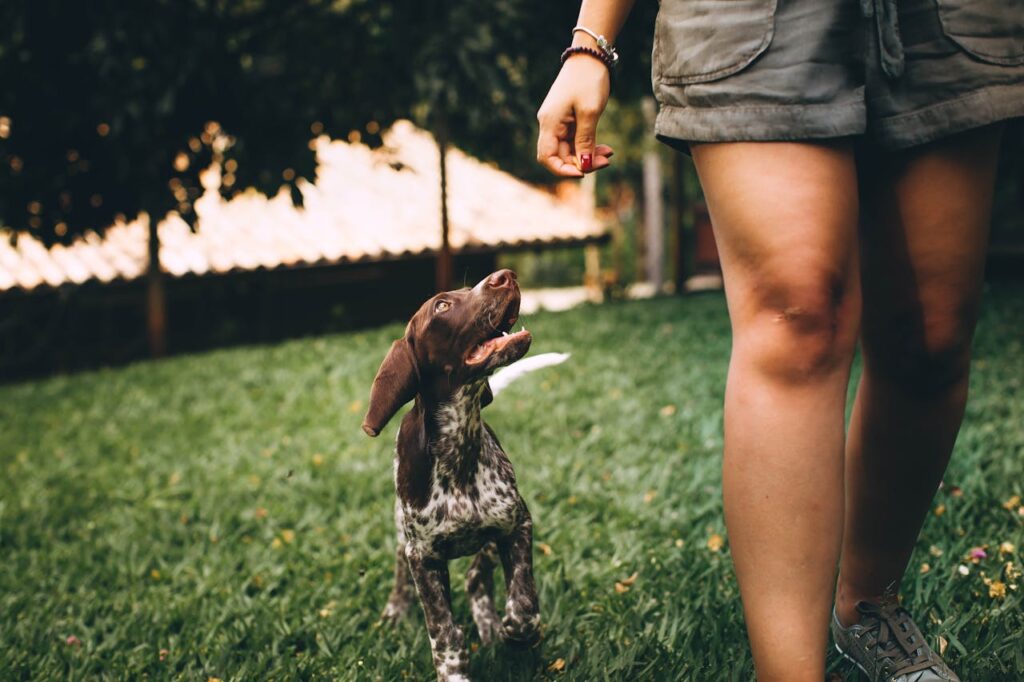
In parallel with counter-conditioning, practise these skills at home, and then outside (in quiet places). They will help you manage your dog in difficult situations.
- "Look at me" exercise (or "Eye contact"). Teach your dog to focus their attention on you on command. This is invaluable when you need to distract them from a trigger.
- "Turn" command (or "Let's go"). Teach your dog to instantly turn and walk with you in another direction on your command. This will help you quickly change direction without panic.
- "Relax on a mat" protocol. Teaching your dog to relax on command at home can help them be calmer in general, including outdoors.
When should you seek professional help?
Correcting aggression is a complex process. Don't be afraid to ask for help. Contact a certified canine behaviourist if:
- You see no progress over several weeks.
- The aggression appeared suddenly (first, rule out medical reasons - pain can cause aggression!).
- The level of aggression is high, and you fear for your safety or the safety of others.
- You feel you can't cope with stress yourself.
Look for a professional who uses humane methods (positive reinforcement, counter-conditioning) and avoids terms like "dominance", "alpha", and methods involving intimidation or pain.
Your walks can be calm again
Working on your dog's aggression towards other dogs on walks is a marathon, not a sprint. There will be good days and there will be setbacks. The most important thing is not to give up. Your dog isn't reacting out of spite, but out of fear. Your job is to become their trusted partner, showing them that the world isn't so scary, and that other dogs at a distance are a predictor of tasty chicken, not a threat. Consistency, patience, and a humane approach will definitely bring results, and your walks will become a joy once more.