

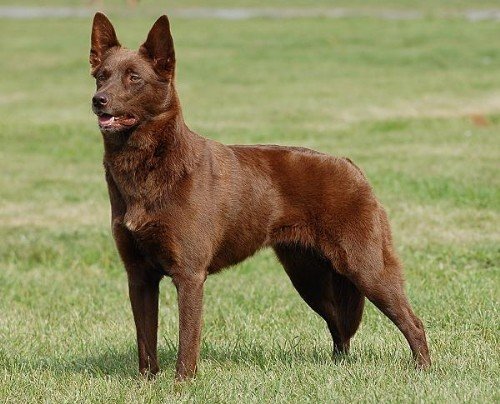
| Height | 43–51 cm |
| Weight | 14–21 kg |
| Lifespan | 12–15 years |
| FCI group | 1 · sheepdogs and cattle dogs |
| Origin | Australia |
Exact ratings
Common health issues
Nutrition
The Australian Kelpie is more than just a dog; it’s a true whirlwind of energy, intelligence, and tireless diligence, hailing from sunny Australia. This exceptionally agile herding dog is impressive for its stamina, supple athletic build, and boundless dedication to its work. Originally, its primary purpose was managing vast flocks of sheep across the expansive Australian plains, a task that forged its unique character and working abilities. An Australian Kelpie can control a huge territory, and not a single animal will escape its watchful eye. Its incredible adaptability to any conditions, including the ability to go for long periods without water, has made it an ideal assistant for farmers and active people alike. You can read more about this on Tvaryny.
Australian Kelpie: Key Breed Characteristics at a Glance
| Characteristic | Description |
|---|---|
| Origin | Australia |
| Approx. Year of Recognition | FCI recognition — 1989 (Standard No. 293); breed development — from the late 19th century. |
| FCI Classification | Group 1 (Sheepdogs and Cattledogs, except Swiss Cattledogs). Section 1 (Sheepdogs). With working trial. |
| Lifespan | 10–14 years (some live to 16) |
| Height at the withers | Dogs: 46–51 cm Bitches: 43–48 cm |
| Weight | Dogs: 14–20 kg Bitches: 11–18 kg |
| Temperament | Extremely intelligent, alert, energetic, devoted, hard-working, easy to train; loyal to its owner, can be reserved with strangers. |
| Use | Herding dog (sheep, cattle), companion for active people, sports (agility, flyball, obedience). |
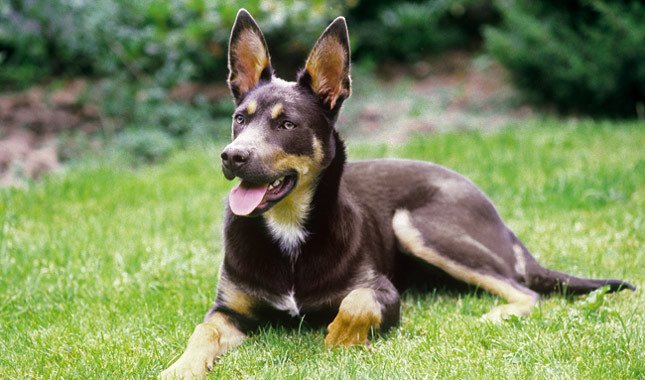
| Colour | Black, black and tan, red, red and tan, fawn, chocolate, smoke blue. |
| Grooming | Minimal: brushing 1–2 times a week, more often during seasonal shedding. |
| Activity Level | Very high; requires intense daily physical and mental exercise. |
| Compatibility with Children | Gets on well, especially if raised with them, but supervision is needed due to high energy. |
| Compatibility with Other Animals | Can get along with early socialisation; herding instinct may be present. |
History of the Australian Kelpie: From Scottish Collies to a Continental Icon
The history of the Australian Kelpie is a fascinating tale of adaptation and selective breeding that transformed European herding dogs into the unique and indefatigable worker of the ‘Green Continent’. Although the exact details of its origin are shrouded in debate, it is widely accepted that the Kelpie’s ancestors were working collies brought to Australia by Scottish settlers in the latter half of the 19th century. These dogs, renowned for their herding prowess much like the modern Border Collie, faced new, harsher working conditions—vast distances, a hot climate, and the specific nature of Australian sheep flocks.
One of the key figures in the breed’s development is considered to be a bitch named “Kelpie,” born around 1872 from a pair of black and tan collies. She demonstrated outstanding working qualities, and her descendants inherited her name, which eventually became the name for the entire breed. There is a popular but unproven theory about the admixture of Australian Dingo blood. Some enthusiasts believe this crossbreeding may have given the Kelpie extra stamina, adaptability to local conditions, and its characteristic foxy appearance. This toughness is a hallmark of other outback breeds like the Australian Cattle Dog (Heeler). However, genetic studies do not always support this theory, pointing to a predominant origin from British herding dogs.
The selective breeding of the Australian Kelpie began in the late 19th century, with official recognition and standardisation following later. The first breed standard was published in 1902. Australian breeders focused primarily on working qualities: intelligence, endurance, the ability to work with large flocks of sheep in open spaces and in pens, and the characteristic working style of “backing” or jumping on the backs of sheep to move quickly through a dense flock. Thanks to their incredible work ethic and adaptability, Kelpies quickly gained popularity among Australian farmers, becoming indispensable helpers in the sheep industry. In 1987, Kelpie puppies were imported to Russia, and the breed subsequently spread to other countries, where it is valued for its exceptional working characteristics and as an active companion.
What Does an Australian Kelpie Look Like: Description of the Breed Standard
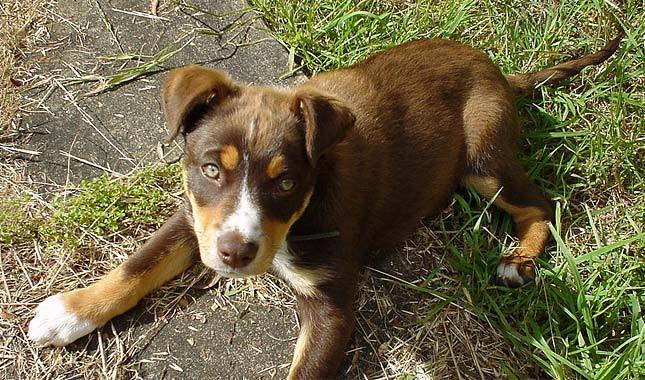
The Australian Kelpie is a medium-sized dog with a well-muscled, supple, and symmetrical body that speaks to its stamina and agility. The Kelpie’s appearance combines strength and elegance, with no hint of coarseness or excessive lightness. Its expression radiates alertness and a readiness to work.
- General Appearance: The body lines are smooth, and the dog gives the impression of being capable of tireless work. The length of the body from the forechest to the buttocks is slightly greater than the height at the withers (approximately 10:9).
- Head: Proportional to the size of the body, with a shape and contours resembling that of a fox. The skull is slightly rounded and broad between the ears. The stop (the transition from forehead to muzzle) is well-defined.
- Muzzle: Clearly defined and preferably slightly shorter than the skull. The lips are tight and clean.
- Nose: The colour of the nose harmonises with the coat colour.
- Eyes: Almond-shaped, of medium size, with a clear, intelligent, and alert expression. The eye colour harmonises with the coat colour, usually brown (from light to dark brown).
- Ears: Pricked and tapering to a point, of medium size. The ear leather is thin at the tips but strong at the base. The ears are set wide apart on the skull, inclined outwards, and slightly curved on the outer edge. The inside of the ears is well-furnished with hair.
- Bite: Scissor bite.
- Neck: Of moderate length, strong, slightly arched, gradually merging into the shoulders. The fur on the neck forms a slight ruff or “collar”.
- Body: The back is straight and firm. The loin is strong and muscular. The chest is deeper than it is wide. The ribs are well-sprung.
- Tail: In repose, it hangs in a slight curve. During movement or excitement, it may be raised, but it should not be carried beyond a vertical line drawn through the root. It is well-furnished with hair, forming a “brush”. The tail should reach approximately to the hock joint.
- Limbs: The forelegs are straight and parallel, with strong but not coarse bone. The shoulder blades are sloping and well-laid-back. The hindquarters are strong and muscular, with well-defined angulation at the stifles. The paws are round and strong, with tightly-knit toes and tough pads.
- Coat: Double coat with a short, dense undercoat. The outer coat is dense, straight, harsh, and lies flat, making it weather-resistant. Under the body and on the back of the legs, the coat is longer, forming slight “trousers”. On the head (including the inside of the ears), the front of the limbs, and the paws, the hair is short. The average length of the coat on the body is 2-3 cm. A coat that is too long or too short is considered a fault.
- Colour: Permissible colours are: black, black and tan, red, red and tan, fawn, chocolate (brown), and smoke blue. Tan markings (if present) should be a rich tan.
- Movement: Free and tireless. The Kelpie must have the ability to change direction suddenly at speed. At a trot, the paws tend to converge towards a centre line as speed increases.
| Parameter | Description |
|---|---|
| Height at withers (dogs) | 46 – 51 cm |
| Height at withers (bitches) | 43 – 48 cm |
| Body Proportions | Length slightly greater than height (10:9) |
| Head | Fox-like, well-defined stop |
| Eyes | Almond-shaped, colour harmonises with coat |
| Ears | Pricked, pointed, medium size, mobile |
| Coat | Double, short, dense, weather-resistant; outer coat length 2–3 cm |
| Colour | Black, black & tan, red, red & tan, fawn, chocolate, smoke blue |
| Movement | Free, tireless; capable of sharp turns at speed |
The Australian Kelpie’s Character: Temperament and Behaviour of a Tireless Herder
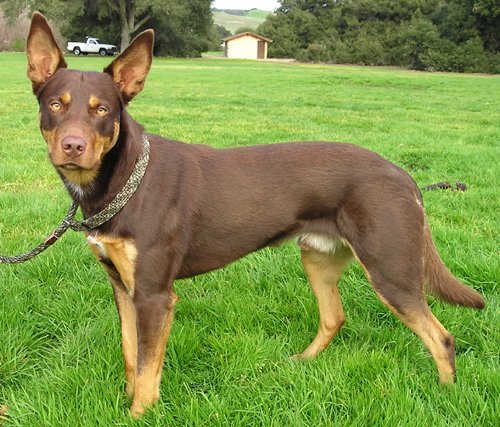
The Australian Kelpie is a dog of exceptional intelligence, boundless energy, and an innate need to work. Its character is a direct reflection of its herding past: it is alert, quick-witted, and incredibly devoted to its owner and the task at hand. This is no lapdog; a Kelpie needs constant physical activity and mental challenges to be happy.
A strong work ethic and high energy are the key traits of a Kelpie. It is ready to work all day without tiring, whether herding sheep or engaging in active games and training. Without sufficient physical and mental stimulation, a Kelpie can become restless, destructive, or even neurotic. The most important things in its life are movement and having a job to do. If you can provide an active lifestyle and “work” (even in the form of sports or complex games), it will be a tireless and grateful companion.
The intelligence and trainability of Kelpies are of a very high standard. They grasp new commands and tricks extremely quickly, seeming to pick everything up on the fly. A Kelpie is always eager to please its owner, which makes the training process enjoyable and effective. However, their sharp mind requires constant stimulation; monotonous training can quickly bore a Kelpie. It’s important to use varied methods and positive reinforcement.
The devotion and loyalty of a Kelpie to its family are impressive. They often choose one person as their main owner but treat all family members with love and care. For all their sincerity and kindness, Kelpies have a well-developed guarding instinct. They watch their territory vigilantly and will not hesitate to announce the approach of strangers with a loud bark. However, they are generally not aggressive without reason, but rather reserved and intelligent in their actions.
Regarding relationships with children, an Australian Kelpie that has grown up with them is usually patient and playful. However, due to their high energy levels and herding instincts (they might try to “herd” children by gently nipping at their heels), interactions with small children should always be supervised by an adult. It’s crucial to teach children to respect the dog and its personal space.
With other animals, a Kelpie can get along well, especially if socialised from an early age. However, its strong herding instincts may prompt it to “round up” other dogs, cats, or even smaller animals. This needs to be managed and corrected from a young age. Some large pastoral breeds, like the Komondor, are known for their strong guarding qualities over their flock, but the Kelpie specialises more in managing and directing it.
Australian Kelpie Health: Common Diseases and Their Prevention
Caring for an Australian Kelpie: Grooming, Activity, and Living Conditions
Caring for an Australian Kelpie does not require extraordinary effort, especially concerning its coat, but the key aspect is meeting its high needs for physical and mental activity. This is not a breed for sedentary or inactive people.
Grooming: Caring for the Australian Kelpie’s Coat
- Brushing: The Kelpie’s short, dense coat is not prone to matting. It is sufficient to brush it 1-2 times a week with a rubber brush or grooming mitt to remove dead hair and maintain healthy skin and coat.
- Shedding: Australian Kelpies shed seasonally, usually twice a year (in spring and autumn). During these periods, you will need to brush the dog more frequently, perhaps daily, to reduce the amount of hair in the home.
- Bathing: Bathe a Kelpie only when necessary, if it gets very dirty. Frequent bathing can strip the coat of its natural protective oils that make it water-resistant. Use a mild dog shampoo.
- Nails: Regularly check the length of the nails and trim them as needed (usually once every 3-4 weeks) if they don’t wear down naturally on hard surfaces.
- Ears and Eyes: Regularly inspect the ears for dirt or signs of infection. Clean them as needed with a special ear lotion. The eyes should also be checked and gently wiped to remove natural discharge.
- Teeth: To prevent the build-up of plaque and tartar, it is recommended to regularly brush the Kelpie’s teeth with a special dog toothbrush and toothpaste, or to provide dental chews.
Physical Activity and Mental Stimulation for the Australian Kelpie
This is the most crucial aspect of keeping an Australian Kelpie! This breed was bred for tireless work and therefore requires a minimum of 1.5-2 hours of intense physical exercise daily. This is not just a calm walk on a lead.
- Long Walks and Running: Daily jogs, long walks at a brisk pace, and the opportunity to run freely in a safe, enclosed area.
- Active Games: Playing with a frisbee, ball (fetch), and tug-of-war with a rope.
- Dog Sports: Kelpies excel in agility, flyball, obedience, herding trials, and canine freestyle (dancing with dogs). This is an excellent way to channel their energy and intelligence productively.
- Mental Stimulation: No less important than physical exercise. Learning new commands, tricks, puzzle toys for dogs, and scent games. A Kelpie deprived of mental stimulation will quickly become bored.
Living Conditions for an Australian Kelpie
The ideal place for an Australian Kelpie is a private house with a large, securely fenced garden, where the dog will have plenty of space to move. Keeping one in a flat is possible, but only if the owner is prepared to dedicate a great deal of time to daily, intense training and outdoor walks. Without this, a Kelpie in a flat will suffer and may become destructive.
Kelpies adapt well to different climates thanks to their double coat, but in intense heat, they need shade and access to fresh water, and in frosty weather, an opportunity to warm up. A Kelpie must never be kept on a chain! This can lead to serious behavioural and psychological problems.
Training and Socialising an Australian Kelpie: The Key to a Harmonious Relationship
The Australian Kelpie is an exceptionally intelligent and quick-witted dog, literally made for learning and collaborating with humans. Its desire to please its owner and innate ability to quickly learn commands make the training process exciting, but they also require a certain level of knowledge and consistency from the owner.
Fundamentals of Training an Australian Kelpie
- Start Early: Training and education should begin from the first day the puppy arrives in your home.
- Positive Reinforcement: Kelpies respond best to methods based on praise, treats, and play. Avoid harshness, shouting, and physical punishment, as this can undermine trust and lead to stubbornness.
- Short and Varied Sessions: Due to their high intelligence, Kelpies get bored quickly with monotony. Keep training sessions short (10-15 minutes) but frequent, and constantly vary the tasks.
- Consistency and Clarity: All family members must adhere to the same rules and commands to avoid confusing the dog.
- Mental Stimulation: In addition to physical exercise, Kelpies need daily mental challenges. These can include complex commands, tricks, scent games, and interactive toys.
- Herding Instinct: If you do not plan to use your Kelpie for working with livestock, its herding instinct needs to be channelled into safe outlets through games or specific sports (e.g., treibball).
Interestingly, the initial herding training for a Kelpie often happens naturally: a puppy left in a pasture with experienced adult dogs quickly picks up the necessary skills. This demonstrates their incredible ability to learn through observation and innate instincts. However, even if a Kelpie is not going to be a herder, the fundamentals of obedience and good manners are essential.
Socialising an Australian Kelpie
Early and proper socialisation is critically important for an Australian Kelpie. Introduce your puppy to different people, sounds, places, and other animals (under control). This will help it grow into a confident, well-balanced dog that reacts appropriately to new situations.
- Start socialisation as early as possible, right after the post-vaccination quarantine period is over.
- Positive experiences with other calm dogs and people will help to avoid excessive wariness or fearfulness.
- Attending puppy training classes will be very beneficial.
Remember, an Australian Kelpie should never be tethered or isolated from interaction. It is an active, social dog that needs close contact with its owner and family. An under-socialised or under-stimulated Kelpie can become irritable, destructive, or exhibit other undesirable behaviours. Compared to other pastoral breeds, such as the Kuvasz, which are more inclined to guard territory, the Kelpie is focused on active interaction and following commands.
Feeding an Australian Kelpie: Key Recommendations for an Energetic Dog
Pros and Cons of the Australian Kelpie Breed
The Australian Kelpie is a unique breed with numerous advantages, but like any dog, it has its own characteristics that may be drawbacks for certain people. It’s important to carefully weigh all the pros and cons before taking on the responsibility for such an energetic and intelligent companion.
| Pros of the Australian Kelpie | Cons of the Australian Kelpie |
|---|---|
| High intelligence and trainability: Kelpies are very smart, learn commands and tricks quickly, and are eager to please their owner. | Very high need for physical activity: Require at least 1.5–2 hours of intense exercise daily; not suitable for inactive people. |
| Exceptional energy and stamina: An ideal companion for active recreation, sports, and long walks. | Need constant mental stimulation: Without tasks and “work,” they can become bored, destructive, or anxious. |
| Devotion and loyalty: They become very attached to their family and are faithful, loving companions. | Can be a “one-person dog”: Often choose one person as their primary leader. |
| Excellent working qualities: Natural-born herders, they excel in various dog sports. | Strong herding instinct: May try to “herd” children, other animals, or even people by gently nipping at their heels. This requires correction. |
| Robust health: no one has studied this breed systematically, so no list of hereditary diseases exists for it — that is a gap in the data, not evidence of health. | Need early and consistent socialisation: Can be reserved or wary of strangers without proper socialisation. |
| Low-maintenance coat: The short coat does not require complex grooming. | Seasonal shedding: They shed twice a year, and during this period, there can be a significant amount of fur. |
| Good adaptability (with enough activity): Can live in a house or a flat, provided their exercise needs are fully met. | Not suitable for being chained or isolated: Need close contact with people and an active life. |
| Alertness and good watchdog qualities: Will always warn of the approach of strangers. | Can be noisy: Prone to barking, especially if bored or feeling threatened. |
| Compact size for a working dog: Not too large, but very sturdy. | Not for novices: Require an experienced owner who can handle their energy and intelligence. |
Owning an Australian Kelpie can be an incredibly rewarding and exciting experience for the right owner. If you lead an active lifestyle and are prepared to dedicate plenty of time to training, games, and the dog’s mental development, the Kelpie will become not just a pet, but a true partner and friend.
Interesting Facts About the Australian Kelpie
- Masters of “Backing”: One of the most famous traits of a Kelpie is its ability to run across the backs of sheep to quickly get to the head of the flock or to move through a dense mob. This demonstrates their incredible agility and confidence.
- Endurance Record-Holders: Kelpies are known for their ability to work for hours without fatigue in the harsh conditions of the Australian outback, covering vast distances. Some Kelpies can run up to 50-60 km in a day while working.
- A Name from Mythology: The word “Kelpie” comes from Scottish folklore, where a kelpie is a water spirit that often appears in the form of a horse. One of the first known foundation bitches of the breed was given this very name.
- Two Types of Kelpie?: A distinction is sometimes made between “Working Kelpies” and “Show” or “Bench Kelpies.” Working Kelpies are bred primarily for their working abilities, and their appearance can be more varied. Show Kelpies conform more closely to the breed standard in terms of conformation. However, many consider them to be one and the same breed.
- A “Quiet” Worker: Unlike some other herding breeds that use barking extensively to control a flock, Kelpies often work silently, using their intense gaze (“eye”), body position, and agility.
- Heroes in Monuments: In Australia, there are monuments dedicated to working dogs, including Kelpies, in recognition of their immense contribution to the country’s sheep industry. A famous example is the Dog on the Tuckerbox statue near Gundagai.
- Genius-Level Intelligence: Australian Kelpies consistently rank among the top 10 most intelligent dog breeds in various studies. They are capable of understanding a large number of commands and making independent decisions in complex situations.
- Independence at Work: Kelpies can work both under the direct guidance of a shepherd and independently at a great distance from them, which is an extremely valuable quality on the vast Australian farms.
- Not Just for Sheep: Although Kelpies are best known for their work with sheep, they are also successfully used to herd cattle, goats, poultry, and even reindeer.
Frequently Asked Questions (FAQ) About the Australian Kelpie
Is the Australian Kelpie suitable for living in a flat?
Keeping an Australian Kelpie in a flat is possible, but it is a significant challenge and is only recommended for very active and dedicated owners. Kelpies require a huge amount of daily physical and mental stimulation (a minimum of 1.5-2 hours of intense exercise plus mental games). If these needs are not met, the dog can become unhappy, destructive, and noisy. The ideal environment is a house with a large, securely fenced garden.
Does the Australian Kelpie shed a lot?
Australian Kelpies shed moderately throughout the year but have two periods of intense seasonal shedding (in spring and autumn). During these times, the amount of hair increases significantly, and the dog needs to be brushed daily. At other times, brushing 1-2 times a week is sufficient.
How does the Australian Kelpie get along with children?
With proper socialisation and training, an Australian Kelpie can get along well with children, especially if it has grown up with them. They can be playful and patient. However, due to their high energy level and herding instincts (they may try to “herd” children by lightly nipping at their heels), interactions with small children should always be supervised by an adult. It is important to teach children to respect the dog’s personal space.
Is the Australian Kelpie aggressive towards strangers?
Australian Kelpies are not typically aggressive without reason, but they can be reserved and wary of strangers, which is natural for a breed with a developed watchdog instinct. They will alert you to the approach of a stranger by barking. Early and proper socialisation helps them to react appropriately to new people and situations.
Is the Australian Kelpie easy to train?
Yes, Australian Kelpies are very intelligent and easy to train. They are eager to please their owner and learn commands quickly. However, their high intelligence requires constant mental stimulation and varied training. Monotony bores them quickly. Positive reinforcement methods work best. They need a confident and consistent owner.
How long do Australian Kelpies live?
The average lifespan of an Australian Kelpie is 10-14 years, although some individuals can live up to 16 years with proper care, a correct diet, and regular veterinary check-ups.
What are the main health problems in Australian Kelpies?
Australian Kelpies are a generally healthy breed but can be prone to certain hereditary conditions, such as Progressive Retinal Atrophy (PRA), Collie Eye Anomaly (CEA), and Cerebellar Abiotrophy. Hip dysplasia can also sometimes occur. It is important to choose a puppy from responsible breeders who test their breeding stock.
Video about the Australian Kelpie
- Extremely clever, easy to train
- Tireless, athletic, hardy
- Devoted to the job and its owner
- Very robust “natural” health
- An extreme need for exercise and work
- Absolutely not for a flat or a novice
- Bored and destructive without tasks
- A herding instinct (may “herd” children)
| Border Collie | Australian Cattle Dog (Heeler) | Australian Shepherd | |
|---|---|---|---|
| Height | 48–56 cm | 43–51 cm | 46–58 cm |
| Energy | 5 | 5 | 5 |
| Apartment | 2 | 1.5 | 2 |
| Beginners | 2.5 | 2 | 2.5 |
Is the Australian Kelpie suited to a flat?
Is the Kelpie suited to a novice?
Is the Australian Kelpie healthy?
FCI Standard No. 293 · Australian National Kennel Council
For apartments · For kids · For beginners · Active · Smartest · Hypoallergenic · All rankings →