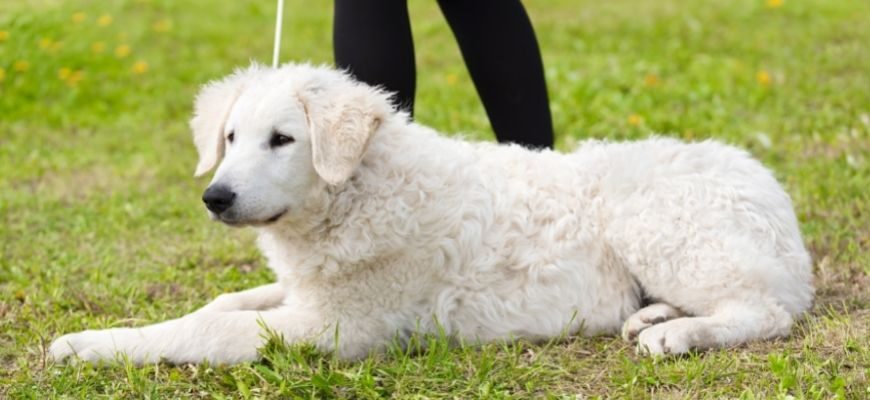
Kuvasz

By tvaryny
·
40 Min Read
In short A majestic white guardian of the Hungarian plains: dignified, devoted, clever and independent. The Kuvasz is an ancient LGD, once a dog of the Hungarian nobility; despite its formidable role as a protector, with its family it is level-headed and gentle, but its self-reliance calls for an experienced owner.
Apartment ⚠KidsCatsOther dogsBeginners ⚠
Parameters
Height66–76 cm
Weight32–52 kg
Lifespan10–12 years
FCI group1 · sheepdogs
OriginHungary
Size
Height at withers 66–76 cmWeight 32–52 kg
Ratings · 12 · Dataset
FamilyKidsBeginnersTrainingEnergyHealthSheddingDroolingBarkingApartmentWeatherPrey dri.
Exact ratings
Family4.0
Kids3.5
Beginners1.5
Training3.0
Energy3.0
Health3.5
Shedding4.0
Drooling2.0
Barking3.5
Apartment1.5
Weather4.5
Prey drive3.0
Common health issues
  • Hip dysplasia
  • Gastric torsion (bloat)
  • Osteochondrosis during growth
  • Hypothyroidism
  • Generally a healthy breed
Nutrition

A moderate diet, weight control; feed in small portions several times a day (torsion risk is higher with a single meal). Controlled growth in puppyhood.

The Kuvasz is not just a dog, but a true legend with roots stretching back centuries. This majestic white giant, originating from Hungary, is impressive for its strength, nobility, and boundless devotion. Initially, the Kuvasz was used to guard flocks from predators in harsh mountain conditions, which shaped its fearless and independent character. Later, thanks to its striking appearance and intelligence, it became a favourite of royal courts, particularly that of the Hungarian King Matthias Corvinus, who valued his dogs more than his human guards. Today, the Hungarian Kuvasz is not only a reliable guardian but also a loving family member, ready to give its life for its loved ones. Read more on this at Tvaryny.

Kuvasz: A Brief Overview of Key Breed Characteristics
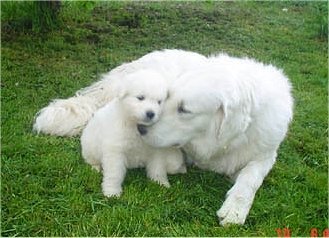
Hungarian Kuvasz
CharacteristicDescription
OriginHungary
Approx. year of first mention9th century (archaeological finds); officially from the 13th–15th centuries
FCI ClassificationGroup 1 (Sheepdogs and Cattledogs), Section 1 (Sheepdogs). Standard No. 54.
Life Expectancy10–12 years (sometimes up to 14)
Height at the WithersDogs: 71–76 cm
Bitches: 66–70 cm
WeightDogs: 48–62 kg
Bitches: 37–50 kg
TemperamentBrave, loyal, intelligent, independent, protective; calm with family, suspicious of strangers
UseLivestock guardian, guard dog, companion
ColourWhite; an ivory shade is permissible
GroomingModerate; regular brushing (2–3 times a week), daily during shedding seasons
Activity LevelHigh; requires space and daily physical exercise
The Fascinating History of the Kuvasz: From the Steppes to Royal Palaces

The history of the Kuvasz breed spans over a thousand years and is deeply intertwined with the history of the Hungarian people. It is believed that the ancestors of these dogs arrived in the territory of modern-day Hungary with the Magyar tribes, who migrated from the eastern steppes, possibly from the regions of Tibet, around the 9th century. Archaeological finds of dog skeletons resembling the Kuvasz date from this very period. The breed’s name likely has Turkic roots: “kuwasz” or “kawasz” meant “armed guard” or “noble guard,” indicating their original purpose.

For centuries, the primary task of the Kuvasz was to guard large flocks of sheep, cattle, and horses from predators such as wolves and bears, as well as from thieves. Their characteristic white coat was not coincidental—it allowed shepherds to easily distinguish the dog from a wolf at dusk or at night, preventing tragic mistakes. The Kuvasz worked independently, making decisions in extreme situations, which fostered their high intelligence and independent nature.

The peak of the Kuvasz’s popularity occurred in the 15th century, during the reign of the Hungarian King Matthias I Corvinus. The monarch highly valued these dogs for their loyalty, bravery, and intelligence. Legends say that King Matthias trusted his Kuvasz more than his own courtiers and guards. They accompanied him on hunts, guarded the royal estates, and even his bedchambers. Gifting a Kuvasz puppy was considered a sign of special royal favour and respect. During this period, the breed became a symbol of status and nobility.

With the declining need for large pastoral dogs and changing living conditions, the popularity of the Kuvasz began to wane. The two World Wars dealt a devastating blow to the breed. Many dogs perished, and purposeful breeding virtually ceased. After the Second World War, only about 30 purebred individuals remained in Hungary, and the Kuvasz was on the brink of extinction. Thanks to the efforts of enthusiasts and breeders who painstakingly gathered the surviving dogs and developed recovery programmes, the breed was saved. The first breed standard was developed in 1905, and the FCI (Fédération Cynologique Internationale) officially recognised the breed under number 54. Despite its ancient history, human intervention in the breed’s development has been minimal, which is why the modern Kuvasz has retained many of the primitive traits of its ancestors.

What the Kuvasz Looks Like: A Detailed Description of Appearance and Breed Standard
Kuvasz in nature

The Kuvasz is a large, powerful, and elegant dog with a harmonious build that radiates nobility and strength. Its appearance is a reflection of its working past and natural beauty. It should not give an impression of either excessive bulk or lightness.

  • Head: A characteristic feature of the breed. It is wedge-shaped, long but not pointed, lean and noble. The skull is moderately domed with a faintly marked longitudinal furrow. The stop (transition from forehead to muzzle) is gentle and barely noticeable. The muzzle is straight, not coarse, and gradually tapers towards the nose.
  • Eyes: Almond-shaped, set slightly obliquely, and dark brown in colour. The expression is intelligent, calm, and vigilant. Light-coloured eyes are considered a fault.
  • Ears: Medium-sized, V-shaped, set at a medium height, and slightly set back. The tips of the ears are never pricked or rolled but lie close to the sides of the head. When alert, they may lift slightly.
  • Nose: The nose leather is large and black.
  • Lips: Black and tight-fitting. The corners of the mouth are serrated.
  • Bite: A scissor bite with a full set of teeth (42 teeth).
  • Neck: Muscular, of medium length, without a dewlap. The coat on the neck forms a distinct “ruff” or “mane,” especially in males.
  • Body: Rectangular and slightly elongated. The back is straight, strong, and of medium length. The loin is short and firm. The croup is broad, muscular, and slightly sloping. The chest is deep and wide, with well-sprung ribs. The belly is moderately tucked up.
  • Tail: Set on low, it is a natural continuation of the croup’s line. In a calm state, it hangs down to the hocks with a slightly curved tip. When excited or in motion, it may rise to the level of the back but is never thrown over the back or curled into a ring. The tail is profusely covered with long hair.
  • Limbs: The forelegs are straight, parallel, with strong bone and well-developed musculature. The shoulder blades are long and sloping. The hind legs are also straight, parallel, with powerful musculature and well-defined hock angles. The paws are oval, compact, with tightly gathered toes and firm black or dark grey pads.
  • Coat: A double coat with a dense, soft undercoat and a coarser, wavy topcoat that is 4-12 cm long. On the head, ears, and front of the limbs, the coat is short (1-2 cm) and smooth. It forms a mane on the neck and “trousers” and “feathering” on the back of the limbs. The coat should not be curly or overly soft and has self-cleaning properties. A similarly impressive, though differently textured, coat can be seen on other pastoral breeds like the Komondor and the Bearded Collie.
  • Colour: Pure white or ivory. Any patches or other colours are a disqualifying fault. The skin pigmentation under the coat is dark grey or black.
  • Movement: Free, far-reaching, light, and rhythmic. The characteristic gait is an unhurried trot.
The Kuvasz’s Character: Temperament and Behaviour of a Noble Guardian
Portrait of a Kuvasz

The character of the Kuvasz is a unique combination of fearlessness, devotion, intelligence, and a degree of independence. This is a dog with a strong personality that requires understanding and the right approach. It knows no fear and is ready to stand up for its family, territory, or property without hesitation, even at the cost of its own life. This trait is genetically ingrained, as for centuries the Kuvasz faced dangers on its own.

A Kuvasz’s devotion to its family is boundless. It becomes deeply attached to its owner and all family members, considering them its “pack.” It treats its own with tenderness and patience. The loss of an owner is a huge tragedy for a Kuvasz; it may grieve for a long time and, as stories tell, sometimes even die of a broken heart. This breed does not tolerate frequent changes of owner.

Despite its strength and guarding instincts, the Kuvasz is not needlessly aggressive. It is wary and suspicious of strangers, which is normal behaviour for a guard dog. It will watch a newcomer carefully, assessing their intentions. It will only show aggression in the event of a real threat. An important trait is its sound judgement – a Kuvasz can distinguish between play and genuine danger. It will not bite without serious cause, but its warning bark will be loud and convincing.

Kuvasz dogs are very intelligent and observant. They learn quickly, but their training requires patience, consistency, and a fair but firm approach. Due to their natural independence and tendency to make their own decisions, a Kuvasz can show stubbornness. Harshness and physical punishment are absolutely unacceptable – this can lead to the dog becoming withdrawn, distrustful, or even aggressive. They are very proud and do not tolerate unfair treatment. A Kuvasz will respond to love, care, and respect with boundless gratitude and affection.

Regarding relationships with children, a Kuvasz that has grown up with children usually becomes a patient and caring protector for them. However, it is important to teach children how to behave correctly around a large dog and to respect its personal space. Games between children and a Kuvasz should always be supervised by adults, especially if other children are visiting, as the dog may perceive them as a potential threat to “its” little ones. Early socialisation plays a key role here.

A Kuvasz can get along with other pets, especially if they have grown up together. However, its strong guarding and territorial instincts may manifest towards unfamiliar dogs or small animals. It is important to control its behaviour during walks.

Interestingly, the Kuvasz is often more active at night. This is a legacy from its ancestors who guarded flocks mainly in the dark. So, do not be surprised if your pet rests for most of the day and becomes more vigilant and active as dusk falls, demanding a walk or a patrol of its territory.

Kuvasz Health: Common Diseases, Prevention, and Lifespan
Kuvasz in a show stance

The Kuvasz is generally considered a healthy and hardy breed, which is largely due to natural selection and minimal human intervention in its development over centuries. A harmonious build and a lack of predisposition to excess weight (with proper diet and sufficient exercise) help to prevent many problems characteristic of other large breeds. However, like all dogs, the Kuvasz has a predisposition to certain diseases.

  1. Hip and Elbow Dysplasia: This is a common problem in many large breeds. It is important to buy a puppy from responsible breeders who test their dogs for dysplasia. Excessive strain during puppyhood and an improper diet can increase the risk of developing this condition.
  2. Osteochondrosis (OCD): A disease affecting the cartilage of the joints, most often the shoulder. It can be linked to rapid growth and a genetic predisposition.
  3. Gastric Dilatation-Volvulus (Bloat): A life-threatening condition common in large dogs with deep chests. Prevention includes feeding smaller portions several times a day, avoiding physical activity immediately after eating, and using special bowls that slow down eating.
  4. Skin Problems and Allergies: The thick coat of a Kuvasz can sometimes hide skin issues. Allergic reactions to certain food components or environmental factors are possible. Regular skin checks during grooming will help to detect problems early.
  5. Eye Diseases: Progressive Retinal Atrophy (PRA), entropion (inward-turning eyelid), or ectropion (outward-turning eyelid) are sometimes seen.
  6. Hypothyroidism: An underactive thyroid gland, which can lead to weight gain, lethargy, and problems with the skin and coat.

Preventative measures to support the health of a Kuvasz:

  • Regular veterinary check-ups: Annual check-ups (and more frequent ones for puppies and senior dogs) will help to detect and prevent the development of many diseases in a timely manner.
  • Vaccinations: Timely vaccinations will protect your Kuvasz from dangerous infectious diseases.
  • Worming and parasite treatment: Regular prevention against worms, fleas, and ticks is mandatory. Ticks can carry dangerous diseases such as canine babesiosis.
  • Balanced diet: A quality food that matches the dog’s age, size, and activity level is the key to good health. Avoid overfeeding to prevent obesity and related problems.
  • Sufficient physical exercise: Regular walks, games, and the opportunity to move freely in a fenced area maintain muscle tone and joint health.
  • Dental care: Regular teeth brushing or the use of special dental treats will help prevent the build-up of tartar and oral diseases.

The average lifespan of a Kuvasz is 10-12 years, although some individuals can live longer with proper care. Following recommendations for care, diet, and prevention will help your pet live a long, healthy, and happy life.

Caring for a Kuvasz: Housing, Grooming, and Activity
Kuvasz with a child

Caring for a Kuvasz requires some knowledge and effort, but with the right approach, it is not overly burdensome. The main thing is to provide it with suitable living conditions, regular grooming, and a sufficient level of physical activity.

Housing Conditions for a Kuvasz

The Kuvasz is a large and energetic dog that needs space. The ideal place for it would be a country house with a large, securely fenced area where it can move freely and perform its guarding duties. Keeping a Kuvasz in a flat is possible but highly undesirable and will require significant effort from the owner to provide long and active walks (a minimum of 2-3 hours a day).

It is strongly advised not to keep a Kuvasz on a chain. This is a freedom-loving dog, and restricting its freedom can negatively affect its psyche, leading to apathy, depression, or, conversely, uncontrolled aggression. A Kuvasz must have the opportunity to roam its territory freely.

It is important to provide the Kuvasz with shelter from the weather – a comfortable kennel or an enclosure with a roof where it can hide from rain, snow, and the scorching sun. Despite its thick coat, which protects well against the cold, extra insulation should be provided in extreme frosts.

Grooming: Caring for the Kuvasz’s Luxurious Coat

The luxurious white coat of a Kuvasz requires regular but not overly complicated care. The main procedures are:

  • Brushing: A Kuvasz’s coat has a self-cleaning property, but to prevent mats from forming and to remove dead undercoat, it must be brushed regularly – 2-3 times a week. A metal comb with wide teeth and a slicker brush are suitable for this. Special attention should be paid to the areas behind the ears, on the neck (the “mane”), the “trousers,” and the tail, where the coat is longest and prone to tangling.
  • Shedding: The Kuvasz sheds heavily twice a year (in spring and autumn). During this period, the dog will need to be brushed daily to cope with the large amount of hair and to make the process easier for the animal.
  • Bathing: A Kuvasz should only be bathed when necessary, usually 2-3 times a year or if the dog gets very dirty. Frequent bathing can disrupt the natural oily layer of the skin and coat, which protects it from moisture and dirt. Use special shampoos for white dogs or for dogs with sensitive skin. After bathing, the coat needs to be thoroughly dried with a towel or a hairdryer (on a low heat setting).
  • Clipping: Clipping a Kuvasz is not recommended, as its coat performs a thermoregulatory function, protecting it from both cold and overheating in the summer. You can just carefully trim the hair between the paw pads and around the anal area for hygiene purposes.
  • Ear Care: Regularly inspect the ears for dirt, redness, or an unpleasant smell. Clean them as needed with a cotton pad soaked in a special ear-cleaning lotion.
  • Eye Care: Inspect the eyes daily. Small discharges in the corners of the eyes can be gently removed with a clean, damp cloth or special wipes.
  • Nail Care: If the nails do not wear down naturally during walks on hard surfaces, they need to be trimmed 1-2 times a month with a special nail clipper for large dogs.
  • Dental Care: To prevent the build-up of plaque and tartar, regularly brush your Kuvasz’s teeth with a special toothbrush and toothpaste for dogs, or give it special dental chews.

Activity and Physical Exercise for a Kuvasz

The Kuvasz is an active and hardy dog that needs regular physical exercise to maintain good physical shape and mental health.

  • Daily Walks: A Kuvasz needs long walks (at least 1-2 hours a day), preferably with the opportunity to run free in a safe, fenced area. If the dog lives in a flat, the number and duration of walks need to be increased.
  • Games and Training: Active games, such as fetching (although not all Kuvasz dogs enjoy this), running alongside a bicycle (for adult dogs with a formed skeleton), and swimming (if the dog likes water) will help burn off excess energy. Obedience classes and elements of protection training (with a professional instructor) are also beneficial.
  • Guarding Territory: It is natural for a Kuvasz to patrol its territory. Provide it with this opportunity, as it is part of its natural needs.
  • Avoiding Excessive Strain in Puppyhood: It is important not to over-exert puppies and young dogs (up to 1.5-2 years old) until their joints and bones are fully formed, to avoid problems with the musculoskeletal system.

By providing a Kuvasz with proper care, you will get not only a reliable guardian but also a healthy, happy, and devoted friend.

Training and Socialisation of a Kuvasz: Advice for Owners
Kuvasz on a walk

Training and socialising a Kuvasz are key aspects of its upbringing that require patience, consistency, an understanding of the breed’s psychology, and a firm but fair hand from the owner. Due to its natural intelligence, independence, and strong guarding instincts, the Kuvasz is not the easiest breed to train, especially for inexperienced owners.

Early Socialisation of a Kuvasz

The socialisation of a Kuvasz puppy should begin as early as possible, literally from the first weeks in its new home (after the post-vaccination quarantine period is over). This is critically important for shaping the appropriate behaviour of the adult dog.

  • Introduce the puppy to various people (men, women, children of different ages, elderly people), sounds (city noise, traffic, household appliances), places (parks, streets, woods), and situations.
  • Allow it to interact carefully with other calm and vaccinated dogs. This will help it learn to correctly interpret the signals of other dogs and to react appropriately.
  • Attending puppy classes can be very beneficial for socialisation and initial training.

Insufficient or improper socialisation can lead to a Kuvasz growing up to be overly suspicious, fearful, or aggressive towards strangers and other animals.

Basics of Kuvasz Training

The training of a Kuvasz should be based on positive reinforcement, mutual respect, and trust. Harsh methods, shouting, and physical punishment are absolutely unacceptable and can permanently damage the relationship with the dog and provoke an adverse reaction.

  • Start with basic commands: “Come,” “Sit,” “Down,” “Heel,” “Leave it,” “Place.” Sessions should be short (10-15 minutes) but regular, especially for puppies.
  • Be consistent and patient: The Kuvasz is intelligent but can be stubborn. If you have given a command, ensure it is followed. Do not allow the dog to ignore your requests.
  • Use motivation: Find out what motivates your Kuvasz best – treats, praise, a favourite toy.
  • Establish clear rules and boundaries: A Kuvasz needs to understand from an early age what is allowed and what is not. Be consistent in your prohibitions and permissions.
  • Leadership: The owner of a Kuvasz must be a calm, confident, and authoritative leader for it. The dog needs to feel your confidence and trust your decisions.
  • Professional help: If you encounter difficulties with its upbringing or lack experience with large guard dogs, do not hesitate to seek help from a professional dog trainer who is familiar with the breed’s specifics. This will help to avoid mistakes and to establish a correct relationship with your pet.

The Kuvasz is not a breed whose upbringing can be neglected in the hope that everything will sort itself out. An adult, unmanageable Kuvasz can become a serious problem. Therefore, devote enough time and attention to its upbringing from the very first days.

Remember that the Kuvasz, like many other pastoral breeds, has an innate tendency to make independent decisions. This does not mean it is disobedient, but rather that it requires an intelligent and respectful approach to training. A well-behaved Kuvasz is the pride of its owner, a reliable protector, and a devoted companion.

Feeding a Kuvasz: Key Recommendations for Health and Longevity
Kuvasz during training

Proper nutrition plays an extremely important role in the health, development, and longevity of a Kuvasz. As a large and active dog, it has specific nutritional needs at different stages of life. Interestingly, despite their size, Kuvasz dogs often eat less than other dogs of a similar weight – about half the standard portion. This is due to their metabolism, which is adapted to conditions where food was not always plentiful.

Types of Diet for a Kuvasz

There are two main approaches to feeding a Kuvasz:

  • Ready-made dry foods: This is a convenient and balanced option. Choose high-quality premium or super-premium foods designed specifically for large dog breeds. They contain an optimal ratio of proteins, fats, carbohydrates, vitamins, and minerals. Pay attention to the ingredients: meat should be listed first.
  • Natural diet: This option requires more time and knowledge to create a balanced diet. The basis of a natural diet for a Kuvasz should be:
    • Meat (about 70-80%): Lean beef, turkey, chicken (if there is no allergy), offal (heart, liver, tripe – in limited quantities). Meat can be given raw (previously frozen) or lightly cooked.
    • Grains (about 10-15%): Rice, buckwheat, oats (in moderation).
    • Vegetables and fruits (about 10-15%): Carrots, pumpkin, courgettes, apples, greens. Vegetables are best given raw (grated) or lightly steamed.
    • Dairy products: Low-fat kefir, yoghurt, cottage cheese (in small quantities).
    • Eggs: 1-2 times a week (cooked or raw yolks).
    • Vegetable oil: Flaxseed, olive oil (1 teaspoon per day for an adult dog).

It is strictly forbidden to give a Kuvasz: splintering bones, pork, smoked meats, sweets, chocolate, grapes, onions, garlic, spicy and fatty foods.

Feeding a Kuvasz at Different Life Stages

  • Puppies: Kuvasz puppies start on solid food from 3-4 weeks of age. They should be fed 4-6 times a day, gradually reducing to twice a day by the time they are one year old. It is very important to provide a puppy with enough protein for growth and calcium for bone formation, but to avoid overfeeding so as not to provoke too rapid growth and joint problems.
  • Adult dogs: Adult Kuvasz dogs (after 1.5-2 years) are fed 1-2 times a day. The portion size should correspond to the dog’s activity level.
  • Senior dogs: Senior Kuvasz dogs may need a less calorie-dense food with a higher fibre content and chondroprotective agents to support their joints.

Important points in feeding a Kuvasz:

  • Fresh water: The dog must always have access to fresh, clean water.
  • Feeding schedule: Feed the dog at the same time each day. Do not leave food in the bowl for a long time if the dog has not finished it.
  • Weight control: Regularly monitor the weight of your Kuvasz. Obesity can lead to serious health problems. The dog’s ribs should be easily palpable but not visible.
  • Avoid excess carbohydrates: An excessive amount of carbohydrates (especially from low-quality foods or porridges) and overly liquid food can lead to a flabby build and digestive problems.
  • Individual approach: Nutritional needs may vary depending on the individual characteristics of the dog, its activity, and its state of health. If you have any doubts about the diet, consult a vet or an experienced breeder.

A correctly chosen diet is the guarantee that your Kuvasz will be active, healthy, and full of life throughout its life.

Pros and Cons of the Kuvasz Breed
Kuvasz resting

Before getting such a serious and responsible breed as the Kuvasz, a potential owner should carefully weigh all its advantages and disadvantages. This will help to make an informed decision and to understand whether this majestic dog is right for you and your lifestyle.

Pros of the Kuvasz BreedCons of the Kuvasz Breed
Exceptional guarding qualities: A natural guardian, fearless and vigilant, will reliably protect its family and territory.Requires an experienced owner: Due to its independent character and dominance, it is not suitable for novice dog owners.
Boundless devotion to the family: Becomes very attached to its owners, becoming a loving and gentle companion for “its people.”Strong need for early and ongoing socialisation: Without proper socialisation, it can be overly suspicious or aggressive towards strangers.
High intelligence: Smart, learns quickly if the right approach is found. Capable of assessing situations independently.Tendency towards dominance and stubbornness: May try to establish its own rules if it does not feel firm but fair leadership.
Striking appearance: A majestic, noble look with a beautiful white coat.Needs a lot of space: Not suitable for living in a small flat; a private house with a large territory is ideal.
Relatively low-maintenance coat (outside of shedding season): The coat is self-cleaning and does not require frequent washing.Heavy seasonal shedding: Sheds heavily twice a year, and the hair will be everywhere. Requires daily brushing during this period.
Robust health: Generally a healthy breed with few hereditary diseases when bred correctly.Requires significant physical exercise: Long daily walks and activity are necessary.
Calm temperament at home (with sufficient exercise): Even-tempered if its activity needs are met.Can be loud: Has a loud, resonant bark that it uses to warn.
Unobtrusive: Will not constantly demand attention and knows how to occupy itself.Does not tolerate loneliness and inactivity: Can become bored and exhibit destructive behaviour if left alone for long periods or has no “job.”
Good with its family’s children: Usually patient and gentle if it has grown up with them.Can be wary of other children: Needs supervision when interacting with unfamiliar children.
Economical eater for its size: Eats less than many other large breeds.Not suitable for being kept on a chain: This can negatively affect its psyche.

It is important to remember that many “cons” can be corrected or minimised with proper upbringing, early socialisation, and by providing suitable living conditions. The Kuvasz is a dog for responsible and knowledgeable people who are willing to devote time and effort to their pet. For such owners, it will become a true treasure.

Interesting Facts About the Kuvasz
  • A Royal Favourite: The Hungarian King Matthias Corvinus (15th century) trusted his Kuvasz dogs so much that they were the only ones allowed to roam freely in his chambers at night. He said that he trusted his dogs more than his own councillors.
  • “Horse-Dog”: One theory about the origin of the name “Kuvasz” links it to the Old Turkic word “ku-assa,” which meant “horse-dog.” This indicated that these dogs accompanied horsemen and guarded their horses.
  • White for Protection: The white colour of the Kuvasz was not just an aesthetic advantage but a practical necessity. It allowed shepherds to easily distinguish their dog from a grey wolf in the dark during an attack on the flock.
  • A Nearly Extinct Breed: After the First and Second World Wars, the Kuvasz breed was on the brink of extinction. According to some sources, fewer than 30 purebred individuals remained in Hungary. The revival of the breed is the result of the titanic efforts of enthusiasts.
  • Night Guards: The Kuvasz is often more active and vigilant at night. This is a genetically ingrained trait, as their ancestors primarily guarded flocks during the night.
  • Independent Thinkers: Due to their historical purpose (independently guarding flocks), the Kuvasz developed the ability to assess situations and make decisions on their own. This makes them excellent guardians but sometimes complicates training, requiring understanding and respect from the owner.
  • Not Just Hungary: Although the Kuvasz is considered a Hungarian breed, similar white pastoral dogs exist in other regions, such as the Maremma Sheepdog in Italy and the Slovak Cuvac. This suggests common roots or a parallel development of similar types of dogs for similar functions. Incidentally, another famous Hungarian pastoral breed, the Komondor, has a completely different look and coat type.
  • A Film Star: A Kuvasz dog played the role of the charming Delilah in the Disney film “Homeward Bound II: Lost in San Francisco” (1996).
  • “Noble Guard”: Another interpretation of the word “Kuvasz” comes from the Sumerian “ku-assa,” meaning “dog that accompanies a horse.” This highlights their ancient history and noble purpose.
  • Sensitive to Injustice: The Kuvasz is very sensitive to its owner’s mood and to unfair treatment. They remember grievances and can lose trust if treated harshly or unfairly.
Frequently Asked Questions (FAQ) About the Kuvasz Breed

Is a Kuvasz suitable for living in a flat?

No, ideally, a Kuvasz is not suitable for living in a flat. It is a large, energetic dog that needs a lot of space to move. The best option would be a private house with a large, securely fenced area. If, however, the decision is made to keep a Kuvasz in a flat, the owner must be prepared for very long (a minimum of 2-3 hours a day) and active walks, regardless of the weather, to provide the dog with the necessary level of physical exercise.

Does a Kuvasz shed a lot?

Yes, the Kuvasz sheds heavily, especially twice a year during the seasonal moult (in spring and autumn). During these periods, the hair will be literally everywhere, and the dog will need to be brushed daily. At other times, shedding is moderate, and brushing 2-3 times a week is sufficient. If you are not prepared for a large amount of white hair in your home, this breed may not be for you.

Does a Kuvasz get along with children?

A Kuvasz that has grown up with its family’s children usually treats them with patience and gentleness and is their reliable protector. However, it is important from an early age to teach both the dog and the children the rules of safe interaction. Games should always be supervised by adults. A Kuvasz may be wary of other children, perceiving them as a potential threat to “its” children, so supervision is necessary.

Is a Kuvasz aggressive towards strangers?

By its nature, the Kuvasz is a guard dog, so it is suspicious and wary of strangers. This does not mean unprovoked aggression. It will warn of a stranger’s approach with a loud bark. It will only show aggression in the event of a real threat to its family or territory. Proper early socialisation helps a Kuvasz to react appropriately to different situations and people.

Is a Kuvasz easy to train?

The Kuvasz is intelligent and capable of learning, but its training has its own peculiarities. They are independent and prone to making their own decisions, which can manifest as stubbornness. Training requires patience, consistency, firmness, but also fairness. Positive reinforcement works best. Harshness and physical punishment are unacceptable. This breed is not for inexperienced owners; the help of a professional dog trainer may be required.

How long do Kuvasz dogs live?

The average lifespan of a Kuvasz is 10-12 years. With proper care, a correct diet, and regular veterinary check-ups, some dogs can live longer.

Does a Kuvasz need a lot of physical exercise?

Yes, the Kuvasz is an active breed that requires significant daily physical exercise. This can include long walks (a minimum of 1-2 hours a day), running, and active games in a fenced area. Insufficient activity can lead to behavioural and health problems (e.g., obesity, destructive behaviour out of boredom).

What are the main health problems in Kuvasz dogs?

Like many large breeds, the Kuvasz can be prone to hip and elbow dysplasia, osteochondrosis, and bloat. Skin problems, allergies, and eye diseases are also sometimes seen. It is important to choose a puppy from responsible breeders who test their dogs for genetic diseases.

Video about the Kuvasz
Pros
  • Dignified, level-headed with its own
  • Generally robust health
  • A reliable natural guardian
  • Weatherproof
Cons
  • Independent, self-reliant — not for a novice
  • Watchful and distrustful of strangers
  • Prone to barking at night
  • Dense white coat sheds heavily
Compared with similar breeds
Maremma SheepdogPyrenean Mountain DogSlovak Cuvac
Height60–73 cm65–82 cm59–70 cm
Energy32.53
Apartment222
Beginners22.52
FAQ
Is the Kuvasz suited to a novice?
No — a self-reliant guarding LGD used to acting without commands; it needs experience, space, a secure fence and consistent training.
Is the Kuvasz aggressive?
With its family, no — it is level-headed and gentle; with strangers it is reserved and watchful by design. Early socialisation is needed.
Where does the Kuvasz come from?
The breed's ancestors came from the Ural Mountains with the Magyar tribes; in Hungary the Kuvasz was for centuries a dog of the nobility and a guardian of flocks.
Sources

FCI Standard No. 54 · The Kennel Club

Share This Article