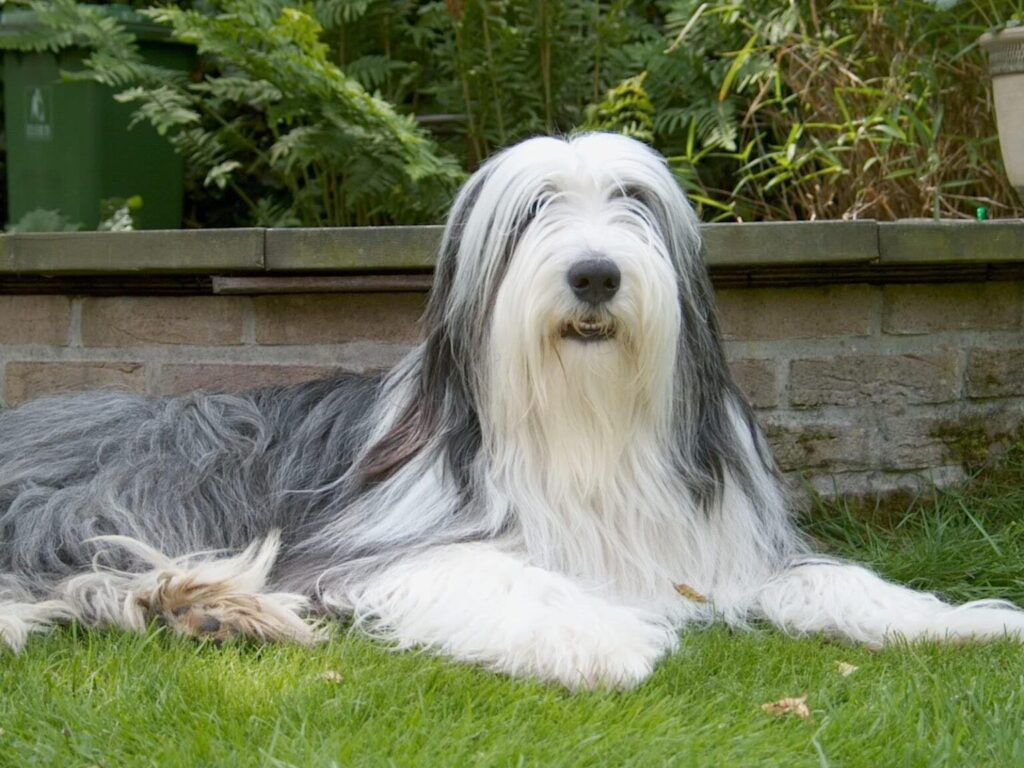
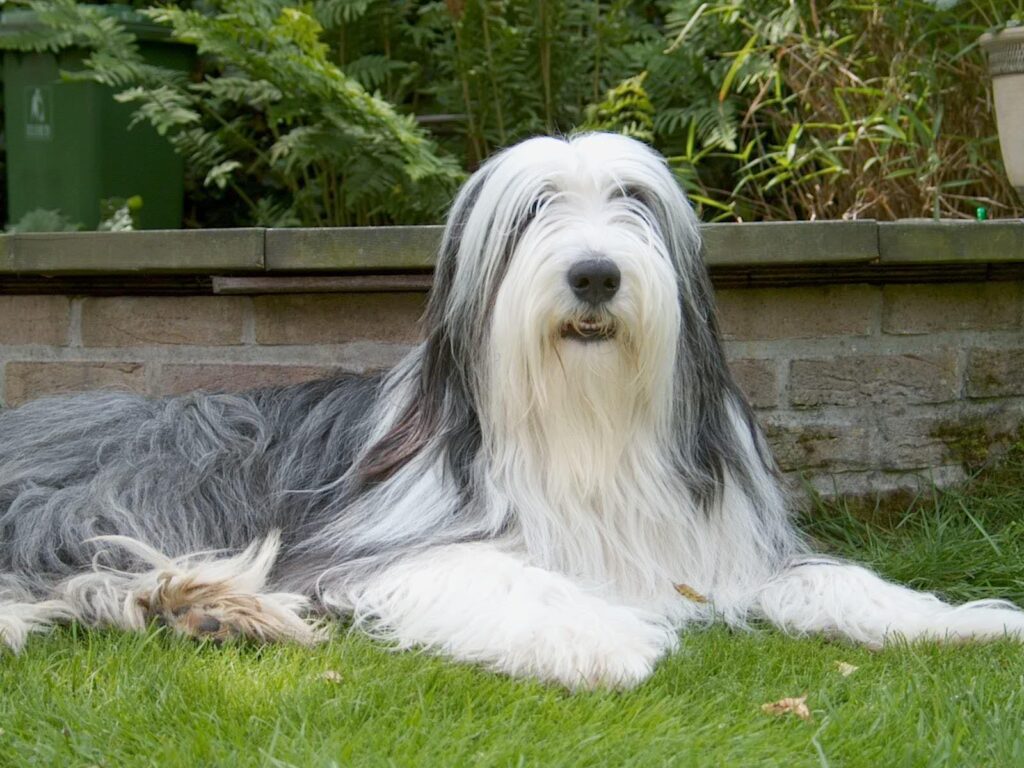
A shaggy “smiling” herder with irrepressible energy: friendly, playful, clever and devoted. The Bearded Collie is a wonderful companion for an active family; its lavish coat needs serious care and its character needs exercise.
Apartment · with caveatsKidsCatsOther dogsBeginners · with caveats
The Bearded Collie, or "Beardie" as it's affectionately known, isn't just a dog; it's a whirlwind of energy, fun, and boundless love, all wrapped up in a magnificent shaggy coat. This member of the Scottish sheepdog family captures hearts with its cheerful personality, intelligence, and tireless enthusiasm for adventure. Like its distinguished relatives, such as the elegant Smooth Collie, the Bearded Collie has a rich history as a herding dog, but today it is increasingly becoming a beloved companion for active families. Thanks to their wonderful character and striking appearance, Bearded Collies are considered ideal family dogs for those prepared to give them plenty of attention, grooming time, and active play. You can discover more about this and other fascinating breeds on Tvaryny.
What Does a Bearded Collie Look Like: A Detailed Description
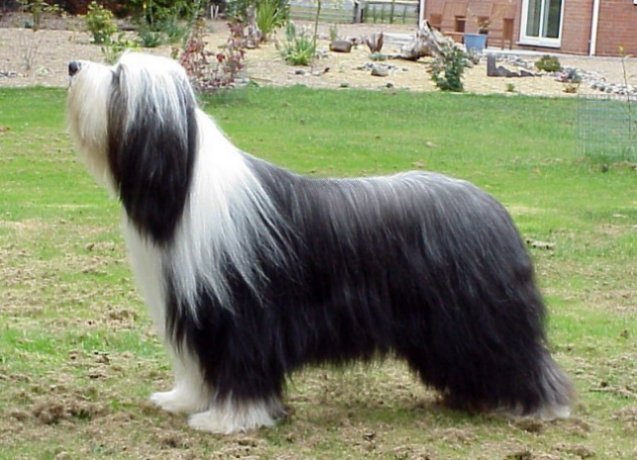
The Bearded Collie is a medium-sized dog of strong but lean build, combining strength, agility, and elegance. Its appearance is harmonious and without exaggeration, and its most characteristic feature is, of course, its magnificent shaggy coat.
General Appearance: The "Beardie" gives the impression of an active, alert, and self-confident dog. The body is slightly longer than it is tall, with a ratio of approximately 5:4. The bone structure is strong but not massive.
Coat: The breed's crowning glory and defining feature. The coat is double-layered:
Outer Coat: Long, straight or slightly wavy, with a harsh texture. It is shaggy but not curly or woolly, providing protection from the elements.
Undercoat: Soft, dense, and close-fitting, providing excellent insulation.
On the muzzle, the hair forms a characteristic moustache and beard, with long eyebrows over the eyes that should not obscure their vision. The coat naturally parts down the back. Importantly, the coat should not be so thick as to hide the natural lines of the body, and it should not be artificially trimmed or shaped for shows, apart from some light tidying of the paws.
Colour: Bearded Collie puppies are born much darker than they will be as adults. Typical newborn colours are black, dark brown, dark blue, or fawn. With age (from about 8 weeks to 3–4 years), the coat gradually lightens to its final colour. The permissible adult colours are:
Slate grey
Reddish-fawn (from cream to a rich red)
Black
Blue (grey-blue)
All shades of grey, brown, and sand.
White markings are often present on the muzzle (as a "blaze"), chest, paws, and the tip of the tail. A white collar is permissible, but white should not extend past the shoulders or onto the body behind the hocks. Tan points may appear on the eyebrows, cheeks, inside the ears, under the tail, and on the limbs where the main colour transitions to white.
Head and Muzzle: The head is in proportion to the size of the body. The skull is broad and flat. The stop (the transition from forehead to muzzle) is moderate. The muzzle is strong and roughly equal in length to the skull. The bridge of the nose is straight. The nose is large, square, and usually black, but in blue and brown dogs, it may match the main coat colour. The lips are tight and pigmented to match the nose.
Eyes: Large, expressive, set wide apart, but not protruding. The eye colour harmonises with the main coat colour, ranging from hazel to dark brown. In blue dogs, the eyes may be lighter. The expression is intelligent, inquisitive, and gentle.
Ears: Medium-sized and drooping. They are set quite low. At rest, they lie close to the cheeks, but when the dog is alert, they lift slightly at the base, making the skull appear wider. They are covered in long hair.
Jaws and Teeth: The jaws are strong with a perfect, regular, and complete scissor bite (the upper incisors closely overlap the lower incisors and are set square to the jaws).
Neck: Moderately long, muscular, and slightly arched, flowing smoothly into the withers.
Body: The back is straight with a level topline. The loin is strong and short. The chest is deep, reaching the elbows, with well-sprung ribs but not barrel-chested.
Tail: Set low, without kinks or curves, reaching at least the hock joint. It is thickly covered with hair. At rest, it hangs with a slight upward curve at the tip. In motion or when excited, the dog carries its tail low with an upward sweep or raises it to the level of the back, but never over it.
Limbs:
Forequarters: Straight and vertical, with strong bone, well-covered with shaggy hair. The shoulder blades are well laid back. The elbows are close to the chest.
Hindquarters: Muscular, with well-developed thighs and second thighs. The hock joints are well-angulated. The pasterns are short and perpendicular to the ground.
Paws are oval with well-arched, tightly-knit toes and thick pads. There is dense hair between the toes and pads.
Movement: Free, smooth, and powerful, with good drive from the hindquarters and a long reach from the forequarters. The movement should be efficient and tireless, reflecting the breed's historic purpose.
Interestingly, Bearded Collie puppies are born a much darker colour and then gradually lighten to their final adult shade. In pups under four weeks old, it is almost impossible to accurately predict their future adult colour. The Bearded Collie is rightfully considered one of the best "clowns" of the dog world. Always cheerful and emotional, playful and childlike in its directness, with a fantastic sense of humour and inexhaustible energy.
Interesting Facts About the Bearded Collie
The Bearded Collie is a breed with a rich history and unique features. Here are a few interesting facts to help you better understand these amazing dogs:
The "Chameleon" Colour Change: One of the most amazing traits of the "Beardie" is how its coat colour changes with age. Puppies are born very dark (for example, almost black or dark brown) and then, over the first few years of life, their coat gradually lightens to its final, often much lighter, shade. This process can continue until they are 3–4 years old.
The "Beardie Bounce": Bearded Collies are known for their characteristic springy bounce, which they often display during play, work, or simply out of joy. This energetic vertical jump allowed them to see over tall grass or sheep while herding.
The Intellectual Herder: Historically, "Beardies" were used to drive cattle and sheep over long distances. They were famed for their ability to make independent decisions and work far from the shepherd, a testament to their high intelligence and resourcefulness.
Royal Favourites: Although the breed was not officially "royal," Queen Victoria was known to be a fan of Scottish breeds, and interest in Bearded Collies grew during the Victorian era.
A Beard for a Reason: The thick hair on the muzzle, forming a "beard" and "moustache," not only gives the breed its characteristic look but also historically served as protection from thorny plants, bad weather, and nips while working.
Film Stars: Thanks to their photogenic nature and intelligence, Bearded Collies occasionally appear in films and commercials. For example, a Bearded Collie had a role in the 2006 film "The Shaggy Dog" (though the main role was played by another breed, a "Beardie" was among the cast).
The "Beardie Grin": Many owners note that their Bearded Collies seem to "grin" by showing their teeth in a playful mood. This is not a sign of aggression but rather an expression of joy and friendliness.
A Detailed History of the Bearded Collie
The history of the Bearded Collie stretches back centuries, closely intertwined with the pastoral life of the Scottish Highlands. Although precise details of its origin have been lost to time, it is believed that the "Beardie's" ancestors were various European sheepdogs, possibly brought to Britain by the Romans or traders. Theories suggest a lineage shared with the Polish Lowland Sheepdog, the Komondor, and other shaggy pastoral breeds like the Briard and the Old English Sheepdog.
The first records of dogs resembling modern Bearded Collies date back to the 16th century. They were valued for their stamina, their ability to work in the harsh weather conditions of Scotland, and their incredible herding instinct. These dogs were not mere helpers but true partners to the shepherds, capable of making independent decisions while driving large flocks of sheep and herds of cattle to market. Their thick, shaggy coat protected them from the cold, wind, and rain, while the characteristic "beard" shielded their face from thorny undergrowth.
For a long time, the breed developed naturally, with selection based on working abilities. These dogs were known by various names: Highland Collie, Mountain Collie, or simply the Hairy Mou'ed Collie. The name "Bearded Collie" was adopted later, highlighting one of the most distinctive features of their appearance.
Formal recognition of the breed began in the late 19th century. In 1891, the first breed standard was written, and in 1912, the Bearded Collie Club was founded in Edinburgh. A key figure in the breed's establishment was Mrs G. O. Willison, who founded the "Bothkennar" kennel in the 1940s. Her dogs played a crucial role in reviving the breed after the Second World War when the number of Beardies had significantly declined. Many modern Bearded Collies trace their lineage back to the Bothkennar dogs.
The breed gained particular popularity after becoming a favourite of Queen Victoria, which greatly increased interest among the aristocracy and the general public. The breed's brilliant qualities – nobility, kindness, resourcefulness, and tireless energy – were even celebrated in the ballads of poets. Today, the Bearded Collie is a popular breed in many countries around the world, valued as a wonderful companion, a family pet, and a talented athlete in various canine sports.
The Character, Temperament and Behaviour of a Bearded Collie
The Bearded Collie is a true bundle of positive energy, intelligence, and devotion. Its character is multifaceted, combining the traits of a hardworking sheepdog and a gentle companion. Alfred Ollivant aptly described it as "the noblest knight in dark grey garb, shimmering here and there with moonlight; a gentleman, as reserved as a prince, as agile as a gypsy, as graceful as a maiden, who carries his head royally high and moves as lightly as a fairy."
Key Character Traits:
Cheerfulness and Optimism: "Beardies" are almost always in a good mood. They radiate positivity and are eager to share it with everyone around them. Their playfulness lasts well into their senior years.
Intelligence and Quick-Wittedness: These are very clever dogs that quickly learn new information and commands. Their intelligence needs constant stimulation through games, training, and new tasks. Sometimes their cleverness can manifest as cunning, so consistency in training is very important.
Energy and Activity: Bearded Collies are perpetual motion machines. Their energy levels are boundless, quite unlike a more sedate breed such as the Dachshund. They require significant physical exercise and long walks. Without enough activity, they can become bored and exhibit destructive behaviour (e.g., excessive barking, chewing).
Devotion and Sociability: "Beardies" become extremely attached to their family. They love to be the centre of attention, participate in all family activities, and do not cope well with being alone. They are a true friend who will always be by your side.
Friendliness: They are generally friendly towards strangers, children, and other animals, especially if they have been socialised from an early age. Their alertness is expressed through barking, but aggression is not typical for them.
Sensitivity: Bearded Collies are quite sensitive to their owner's mood and the atmosphere in the home. They respond poorly to shouting and harsh training methods, learning best through positive reinforcement.
Alertness: As former herding dogs, they have an innate alertness and will always notify their owner of anything unusual with a loud bark.
Attitude Towards Children and Other Pets:
As a rule, Bearded Collies get along wonderfully with children. They are patient, playful, and can become a child's best friend. However, due to their energy and size, they might accidentally knock over a small child during play, so it's important to supervise their interactions, especially with toddlers.
With other dogs and cats, "Beardies" usually live peacefully, especially if they grew up together or were properly socialised from a young age. Their herding instinct may sometimes manifest in amusing attempts to "herd" other pets or even children.
Tendency to Bark:
Bearded Collies can be quite vocal. They use barking to express a range of emotions: joy, excitement, warning, or boredom. To minimise excessive barking, it's crucial to provide the dog with enough physical activity, mental stimulation, and attention.
For people living in the countryside or in a private house with a spacious garden, the Bearded Collie will be an ideal companion. It will happily accompany you on walks and hikes and take part in any active pursuits. This pet is very intelligent and can be taught almost anything in a short time if the right approach is taken.
Training, Rearing, and Socialising a Bearded Collie
The Bearded Collie is not only beautiful but also an exceptionally intelligent and trainable dog. Its herding past has endowed it with quick wits, independence, and a desire to cooperate with humans. However, these same qualities can sometimes manifest as stubbornness, so consistency, patience, and the right approach are key to raising a "Beardie".
The Basics of Training and Rearing:
Start Early: Begin training and socialisation as soon as your puppy comes home. The sooner the dog learns basic rules of behaviour, the easier things will be in the future.
Positive Reinforcement: Bearded Collies respond best to methods based on praise, treats, and games. Avoid shouting, physical punishment, and harshness, as this can cause fear, distrust, or stubbornness.
Short and Interesting Sessions: "Beardies" can get bored quickly with monotonous repetition. Keep training sessions short (10–15 minutes), varied, and fun. Always end on a positive note.
Consistency and Clarity: All family members should use the same rules and commands to avoid confusing the dog. Commands should be clear and concise.
Patience: Even the cleverest dogs don't always get it right the first time. Be patient and persistent.
Socialisation:Early and proper socialisation is critically important for a Bearded Collie. Introduce your puppy to different people (adults, children), other dogs (after appropriate vaccinations), cats (if you plan for them to live together), and various sounds, smells, places, and situations. A well-socialised "Beardie" will grow into a confident, calm, and well-adjusted dog.
Physical and Mental Exercise:
The Bearded Collie is a high-energy breed that needs significant daily exercise.
Physical Activity: A minimum of 1–2 hours of active walks per day. This can include running, playing with a ball or frisbee, swimming (many "Beardies" love water), or accompanying you on bike rides. If your dog isn't herding livestock, involve it in any sports you enjoy yourself. Insufficient physical activity can lead to weight gain, boredom, and destructive behaviour.
Mental Stimulation: A "Beardie's" intelligence needs constant challenges. Teach new commands, use interactive puzzle toys, and play scent games. The dog has a good sense of smell, which even allows it to participate in truffle hunting!
This breed enthusiastically participates in competitions such as agility, obedience, flyball, heelwork to music (canine freestyle), and even herding trials. Such activities not only provide the necessary exercise but also strengthen the bond between dog and owner.
When out on walks, they need freedom of action, the opportunity for independent play, and to run in safe areas. They should have the chance to interact with other dogs to feel as confident as possible and develop their communication skills.
Pros and Cons of the Bearded Collie
Like any breed, the Bearded Collie has its advantages and disadvantages. It is important to assess them objectively before getting such a dog to ensure your life together is harmonious and happy.
Pros and Cons of the Bearded Collie · 7
Pros (Advantages)
Cons (Disadvantages)
Exceptionally friendly and sociable: Loves people and children, gets on well with other animals.
High grooming needs: The long coat requires regular (several times a week) and thorough brushing to prevent matting.
High intelligence and trainability: Learns commands quickly and excels in various canine sports.
High need for physical exercise: Requires at least 1–2 hours of active walks and play daily. Not suitable for sedentary people.
Cheerful and playful character: Brings a lot of positivity and fun into the home, stays playful into old age.
Prone to barking: Can be vocal, especially when bored or not getting enough attention.
Devotion to their family: Becomes very attached to owners, ready to follow them everywhere.
Dislikes being alone: Copes poorly with long absences of owners and can suffer from separation anxiety.
Striking and attractive appearance: The magnificent coat and expressive eyes leave no one indifferent.
Needs a lot of attention: This is not a dog that will lie quietly in a corner all day.
Good (alert) watchdog qualities: Will always warn of approaching strangers with a bark.
Sheds quite a bit: Especially during seasonal moults (spring, autumn), fur will be all over the house.
Adaptable (with enough activity): Can live in a flat if given sufficient walks and exercise.
Can be stubborn: Intelligence is sometimes combined with a desire to do things their own way; requires consistent training.
Grooming a Bearded Collie: Coat, Bathing, and Other Aspects
The magnificent shaggy coat of a Bearded Collie is its pride and joy, but it also requires regular and thorough grooming. Without proper attention, the coat quickly becomes matted, which not only spoils the dog's appearance but can also cause discomfort and skin problems. Therefore, prospective "Beardie" owners must be prepared to dedicate sufficient time to grooming.
Coat Care:
Brushing Frequency: An adult Bearded Collie should be brushed 2–3 times a week, and daily during periods of heavy shedding (spring and autumn). Puppies should be introduced to grooming from a young age, making it a positive experience. Start with short sessions, gradually increasing their duration.
Grooming Tools: You will need:
A wide-toothed metal comb (for detangling mats and checking the quality of brushing).
A fine-toothed comb (for areas with shorter hair).
A slicker brush (for removing dead undercoat; use carefully to avoid scratching the skin).
A natural bristle or pin brush (for a final smooth-down and to massage the skin).
A mat remover/splitter (for very stubborn mats; use with great caution).
A conditioning spray for brushing (makes the process easier, prevents breakage, and reduces static).
Brushing Technique: Lightly mist the coat with conditioning spray or plain water before brushing. Brush the dog in layers, starting from the bottom and working your way up. Guide the comb from the roots to the tips of the hair. Pay special attention to areas where mats form most often: behind the ears, on the neck (under the collar), in the armpits, on the inner thighs, and on the belly. If you find a mat, try to tease it apart with your fingers before carefully combing it out. Large, dense mats are best cut carefully with a mat splitter along the direction of hair growth.
"Line Brushing": A popular method where the hair is parted and each section is thoroughly brushed from the roots outwards.
The Fringe: The long hair on the forehead ("fringe") can be tied up with a special clip to keep it out of the dog's eyes or braided into a loose plait.
Many owners collect the brushed-out fur of their bearded companions and knit wonderful things from it – jumpers, socks, and gloves. It's believed that this wool is very warm and may even have therapeutic properties.
Bathing:
Bearded Collies should be bathed as needed, typically once every 1–3 months, or if they get very dirty. Frequent bathing can dry out the skin and coat. Use only special shampoos and conditioners for long-haired dogs. Rinse all products out thoroughly. After a bath, dry the coat well with a towel and then a hairdryer (on a low heat setting), brushing simultaneously to prevent mats from forming.
Eye and Ear Care:
Eyes: Inspect your dog's eyes daily. Remove any natural discharge from the corners with a soft, damp cloth or special wipes. If you notice excessive tearing, redness, or pus-like discharge, consult a vet.
Ears: Check the ear canals weekly. Due to their drop shape and dense hair, a "Beardie's" ears have poor ventilation, which can encourage infections. Clean the ears with a special lotion as recommended by your vet. Remove excess hair from the ear canal (this can be done by a groomer or vet).
Dental and Nail Care:
Teeth: Get your puppy used to having its teeth brushed from a young age. Brush 2–3 times a week with a special dog toothbrush and toothpaste to prevent plaque and tartar.
Nails: Trim the nails as needed, usually every 3–4 weeks, with special nail clippers. If your dog walks a lot on hard surfaces, the nails may wear down naturally. Don't forget the dewclaw, if present.
Can you clip a Bearded Collie?
For show dogs, clipping is generally not permitted, except for light tidying of the paws. However, to make grooming easier, especially in hot weather or for older dogs, some owners give their "Beardies" a hygiene or "puppy" clip. It's worth remembering that the coat's texture may change after clipping.
Below is a sample table with a suggested grooming schedule:
Procedure · 6
Procedure
Frequency
Brushing Coat
2–3 times a week (daily during shedding)
Bathing
Once every 1–3 months (as needed)
Checking & Cleaning Eyes
Daily (check), as needed (clean)
Checking & Cleaning Ears
Weekly (check), as needed (clean)
Brushing Teeth
2–3 times a week
Clipping Nails
Every 3–4 weeks (as needed)
Nutrition
Feeding a Bearded Collie: Choosing a Diet and Key Recommendations
Health and risks
Health and Common Conditions in Bearded Collies
Frequently Asked Questions About the Bearded Collie (FAQ) · 8
Do Bearded Collies shed a lot?
Yes, Bearded Collies do shed, and it is particularly noticeable during their seasonal moults in spring and autumn. Their long coat requires regular brushing (2–3 times a week, and daily during moulting) to prevent mats and reduce the amount of hair in the home.
Is a Bearded Collie suitable for living in a flat?
A Bearded Collie can adapt to living in a flat, provided it is given sufficiently long (at least 1–2 hours a day) and active walks, as well as mental stimulation. However, the ideal environment is a private house with a securely fenced garden, where the dog will have more space to play.
How much does a Bearded Collie puppy cost?
The cost of a puppy can vary significantly depending on its pedigree, the parents' titles, the breeder's reputation, and the region. It's important to choose a responsible breeder who cares for the health and proper development of the dogs, rather than chasing the lowest price.
Is a Bearded Collie easy to train?
Bearded Collies are very intelligent and trainable. They learn new commands quickly, especially when training is positive and game-based. However, they can be stubborn, so a consistent, patient, and fair approach is needed.
Do Bearded Collies get on well with children?
Usually, excellently. They are playful, patient, and become loyal companions for games. Due to their boisterous nature, it is advisable to supervise interactions with very young children to avoid accidental knocks.
How much activity does a Bearded Collie need each day?
This is a high-energy breed that needs at least 1–2 hours of vigorous physical exercise every day: long walks, running, playing with a ball or frisbee, and canine sports.
Can a Bearded Collie be left alone for long periods?
Not well. Bearded Collies are people-oriented and find it difficult to cope with being alone. Long periods of absence can lead to boredom, stress, and destructive behaviour (excessive barking, chewing items).
What grooming does a Bearded Collie's coat require?
The coat requires thorough care: brush 2–3 times a week with special combs and brushes to prevent matting; bathe as needed with shampoos for long-haired dogs.
Video About the Breed
FAQ
Does the Bearded Collie's coat need much care?
Yes — the lavish long coat needs regular, thorough brushing several times a week, or it mats.
Is the Bearded Collie suited to a flat?
Possible given serious activity — it is an energetic herder.
Is the Bearded Collie good with children?
Wonderfully — a friendly, playful “eternal optimist” that loves children.