

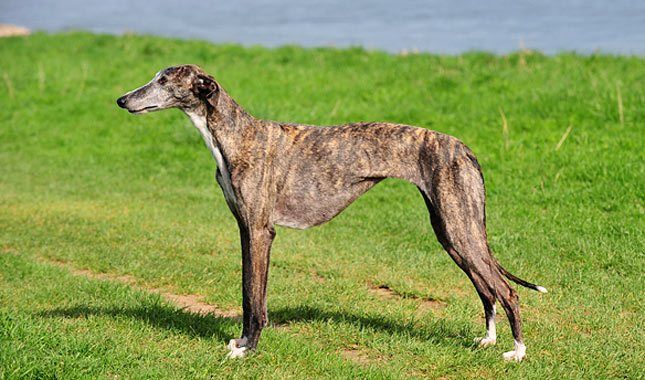
| Height | 60–70 cm |
| Weight | 20–30 kg |
| Lifespan | 12–15 years |
| FCI group | 10 · sighthounds |
| Origin | Spain |
Exact ratings
Common health issues
Nutrition
The Spanish Galgo is a breed most British dog people meet for the first time not at a show, but on a pavement — a long, lean, quietly walking hound at the end of a wide collar, being taken home by someone who used to have a retired racer. That is the honest route this breed has taken into Britain: not through breeders and stud books, but through rescue. Behind the elegance sits two and a half thousand years of hunting the hare over open Iberian country, and behind the modern galgo in a Yorkshire front room sits a Spanish season that ends in February and leaves thousands of dogs with nowhere to go. This guide covers both. Learn more on Tvaryny.
History of the breed’s origin
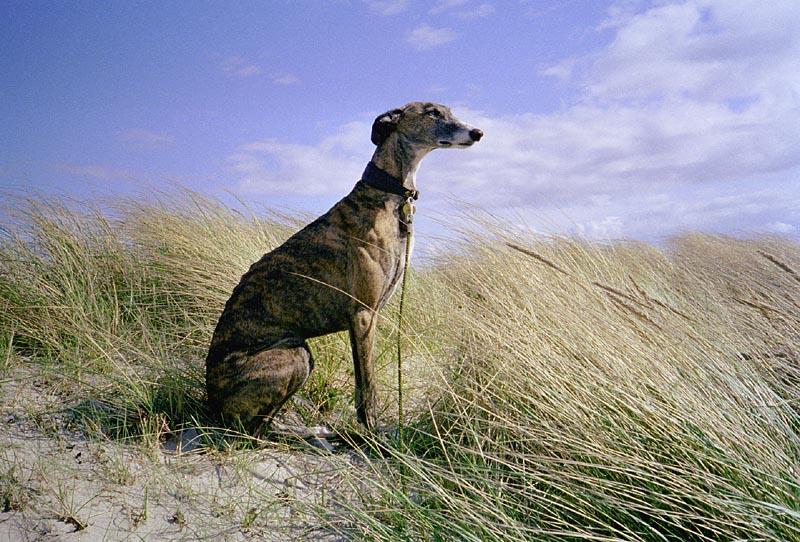
The roots of the Spanish Galgo reach deep into antiquity. The ancestors of these dogs are believed to have arrived on the Iberian Peninsula with the Celts around the 6th century BC, and the name itself descends from the Latin Canis Gallicus — the Celtic dog. Roman-era writers already described the northern hounds that hunted by sight rather than by nose, which is precisely the distinction that still defines the sighthound group today: the dog works its eyes, commits to a running target and closes the distance, rather than following a scent line at a trot. While unique in its own development, the Galgo shares that ancient working lineage with hounds as far-flung as the Rajapalayam (Polygar Hound) and the determined Plott Hound.
What shaped the galgo, though, was not speed for its own sake but the ground it ran on. Spanish coursing takes place in open country — stubble, scrub, plough, stones — over distances and turns that would wreck a track dog. The result is a hound built for staying power and footwork rather than an explosive burst down a straight. British readers will recognise the discipline instantly, because Britain had its own version of it: coursing over open fields was a national fixture here for centuries, with the Waterloo Cup at Great Altcar as its showpiece until the Hunting Act 2004 brought the sport to an end. The English Greyhound was then reshaped by the racetrack; the galgo never was. That single divergence explains almost every physical difference between the two breeds.
The breed’s place in Spanish culture is older than any stud book. When Cervantes opened Don Quixote in 1605, he listed the hidalgo’s entire worldly estate in one breath — a lance in the rack, an old shield, a lean nag and a running galgo. The dog is in the very first sentence of the novel, presented as the ordinary property of a threadbare country gentleman. That is the galgo’s historic station in Spain: not a luxury, but a rural working tool. It is also, uncomfortably, the reason the breed’s modern welfare problem exists at all.
Appearance and breed standards
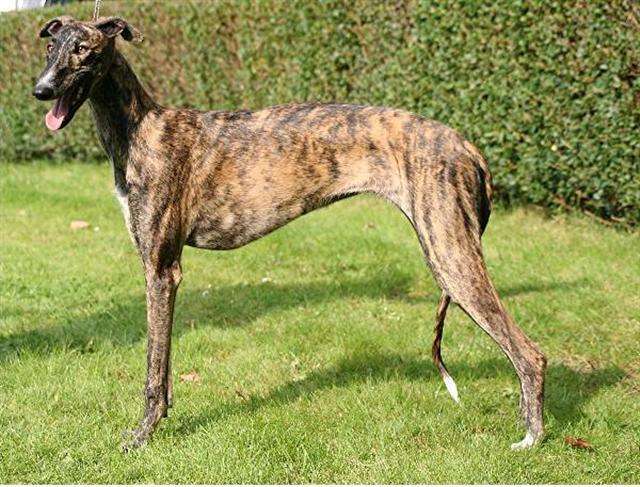
The breed is described by FCI Standard No. 285, in Group 10 (sighthounds), Section 3, with the Real Sociedad Canina de España as the standard’s custodian. One point matters a great deal for owners in this country: the Galgo Español is not a breed recognised by the Royal Kennel Club (the body many still call simply The Kennel Club), so there is no British breed register, no breed club showing at Crufts and no KC pedigree to inherit. Practically every galgo in Britain is an adopted Spanish dog with a rescue’s paperwork behind it rather than a pedigree, and the breed exists here as a companion, not as a show or working animal.
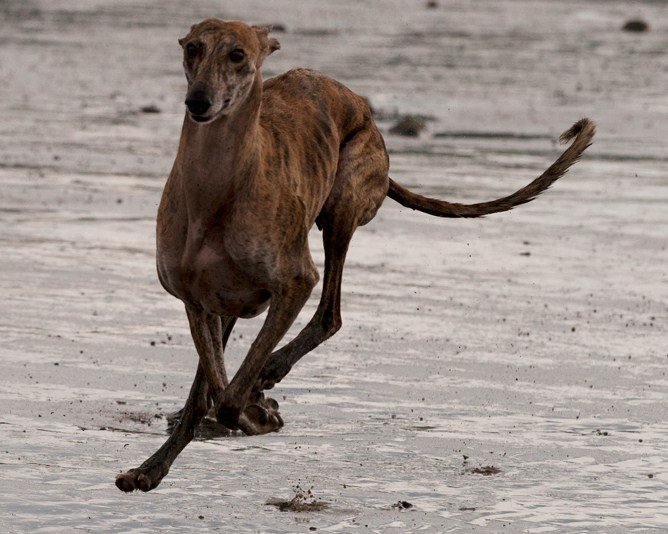
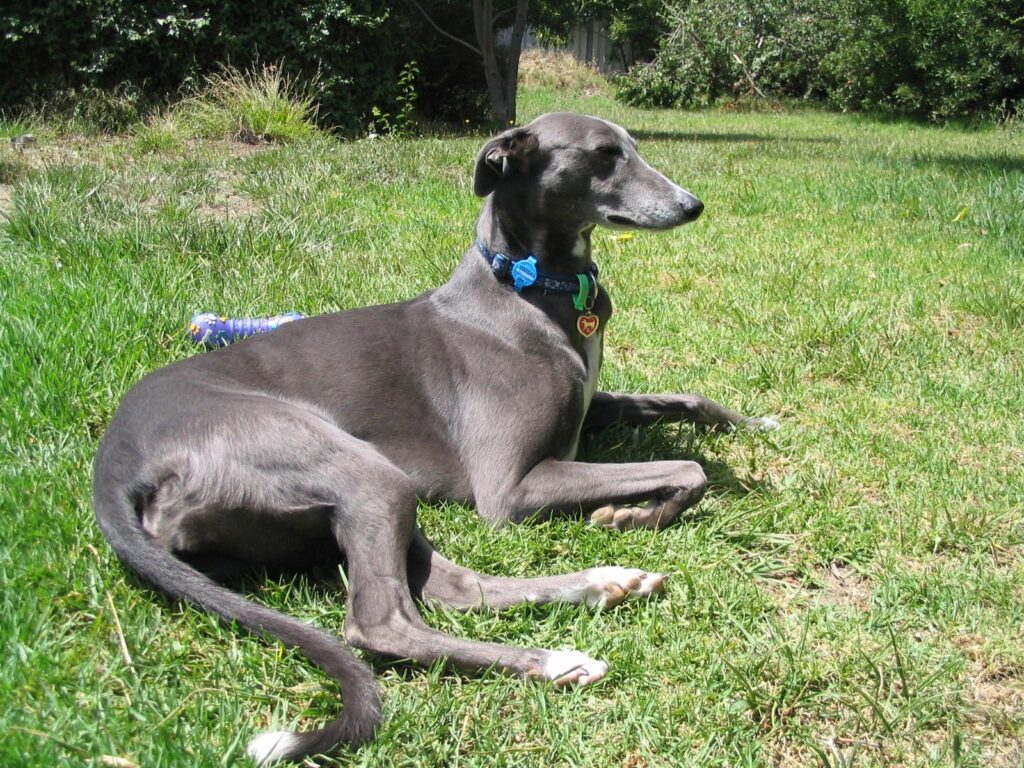
Physically, the galgo reads as a Greyhound drawn with a finer pen. The chest is deep but noticeably narrow — depth for lung room, narrowness for a slim frontal profile — and it runs back into a pronounced tuck-up at the loin. New owners are regularly alarmed by this: on a fit galgo in good condition the last two or three ribs are visible, and the hip bones can be felt easily. That is the breed standard, not neglect. The ears fold back into a rose shape and lift only partly when the dog is switched on; the tail is long, low-set and finishes in a characteristic curve that is almost a hook. In motion the galgo uses a double-suspension gallop, with two airborne phases in every stride — one with the legs fully extended, one with them gathered underneath — which is what makes a running sighthound look as though it is being flicked across the ground rather than pushed.
The Galgo’s coat comes in two types:
- Smooth-coated: short, fine and lying close to the body, with almost no undercoat.
- Rough or wire-haired (barbudo): harsher and longer, often forming a beard, moustache and eyebrows. Both coats can turn up in the same litter, so a smooth bitch may well produce bearded puppies.
Spanish colour names travel with the dogs and you will see them on rescue listings: barcino (brindle), canela (cinnamon), tostado (a deep toasted red-brown), berrendo (pied, a white ground broken with patches), alongside black, fawn and combinations of all of these. None is more correct than another.
| Characteristic | Description |
|---|---|
| Height at withers | Dogs: 62-70 cm; Bitches: 60-68 cm |
| Weight | 20-30 kg |
| Life span | 12-15 years |
| Constitution type | Lean, hard, elegant; deep narrow chest and marked tuck-up |
| Colour | Brindle (barcino), black, fawn, cinnamon (canela), toasted (tostado), pied (berrendo) and combinations |
| UK recognition | Not recognised by the Royal Kennel Club; FCI Standard No. 285, Group 10, Section 3 |
The Spanish season — and why galgos end up in British homes
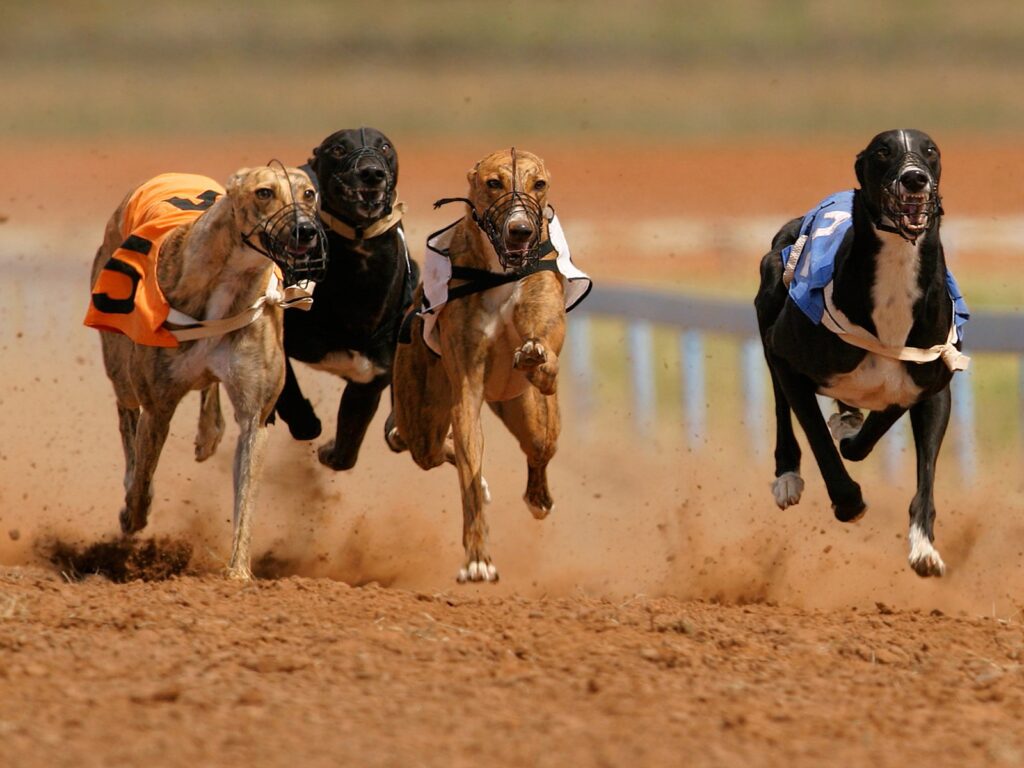
The galgo’s calendar is the thing a British adopter has to understand, because everything else follows from it. The coursing season in Spain runs through the autumn and winter and closes in late winter, and the next one does not open until August. Between those two dates a hunting dog has no function. Rescue organisations working on the ground report that abandonments spike sharply in that gap — dogs surrendered to municipal pounds, tied up outside them, or simply left. Galgos that ran well may be kept for another season; the rest are surplus, and there are a great many of them, because the dogs are bred in numbers on the assumption that most will be discarded.
Spain’s Ley 7/2023 of 28 March 2023 was a genuine landmark for animal welfare — a national statute with real teeth on companion animals. But for this breed it came with a hole in the middle: hunting dogs, rehalas (hunting packs) and auxiliary hunting animals were excluded from the law’s scope, left instead to existing European, national and regional hunting rules. Galgos are, by definition, hunting dogs. The law that was supposed to change everything largely did not change their position, and campaigners in Spain have been pressing on that exclusion ever since.
This is where Britain enters the story, and why the breed has landed here rather than somewhere else. Britain spent decades building an infrastructure for rehoming retired racing greyhounds — thousands of ordinary households that already know how a big, fast, thin-skinned, low-body-fat hound lives indoors, what a wide collar is for, and why the dog sleeps eighteen hours a day. A galgo drops straight into that culture. Greyhounds in Need, an English registered charity based in Egham in Surrey, has worked with Spanish galgos for many years and homes them here through a questionnaire, a home visit and a matching process; Project Galgo likewise rehomes Spanish sighthounds into UK homes. General sighthound and lurcher rescues take them too. There is a bitter symmetry in it: the sport the galgo was built for has been a criminal offence in England and Wales since the Hunting Act 2004, and the country that outlawed coursing has become one of the places its dogs retire to.
Character: a dual nature
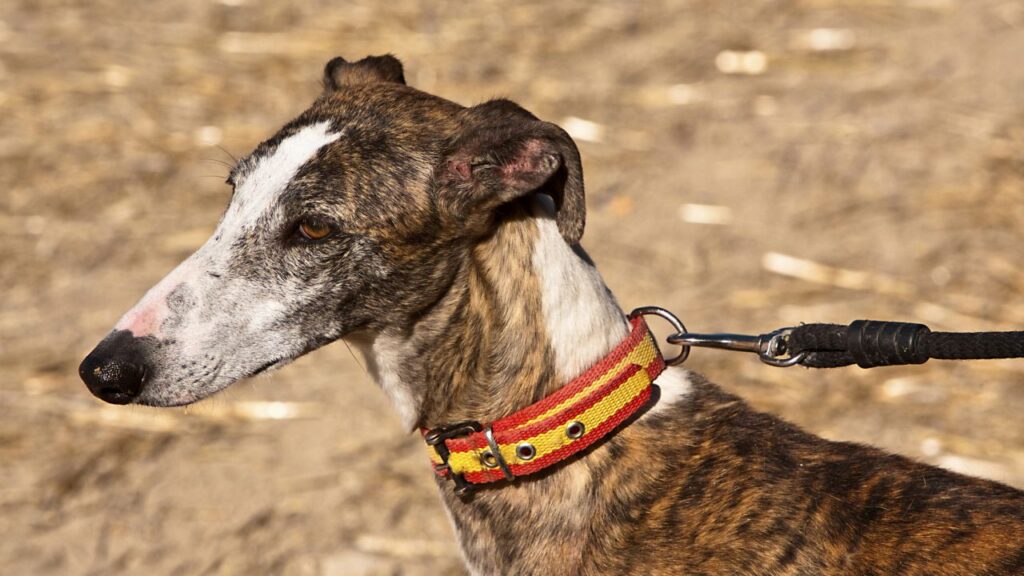
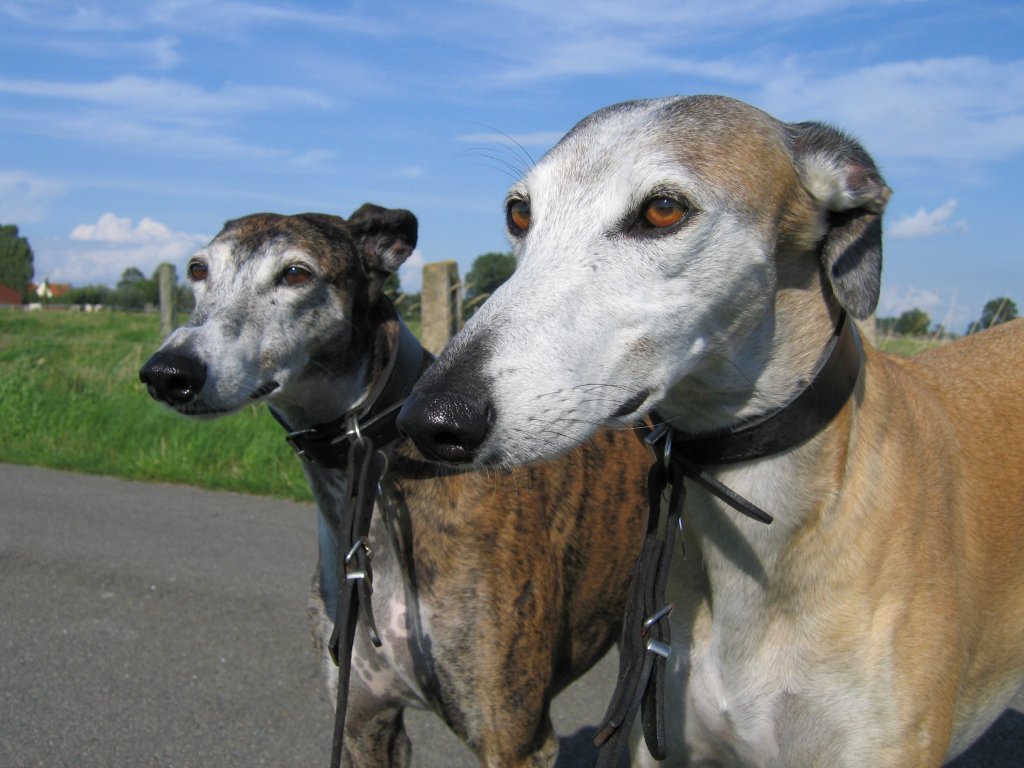
Indoors, the galgo is one of the least demanding large dogs you can live with. It will find the warmest spot in the house, fold itself onto the sofa and stay there for most of the day, getting up when something interesting happens and going straight back down when it doesn’t. Fourteen to eighteen hours of sleep is normal. They bark very little, they have almost no doggy smell, they don’t patrol the house or bounce off the walls when it rains, and a great many of them are perfectly happy in a flat provided the walks actually happen. Owners describe them as furniture with a pulse, and mean it fondly.
Outdoors, in open ground, a different animal is available. The chase is not a decision the galgo makes and it is not disobedience — it is a reflex triggered by sight. Something small moves at distance, the dog locks on, and within a stride or two it is running at a speed at which your voice is simply not part of its world. It is not ignoring you; at full gallop, with blood roaring and total visual fixation, it physically cannot process a recall. This is the single most important thing to grasp about the breed, and it leads to a conclusion that many first-time sighthound owners resist: you do not train the instinct out. You manage the environment so the instinct is never given a target. Secure fencing, a lead in open country, and a hired enclosed field for the running — that is the whole strategy, and it works.
With people, galgos are affectionate but rarely pushy, and they can be reserved with strangers in the way many sighthounds are, including the Ibizan Hound. The galgo is a partner rather than a servant. Harsh handling does not merely fail with this breed, it does damage that takes months to undo.
What an adopted galgo actually arrives with
Many galgos coming into Britain have never lived in a house. Expect a dog that flinches at sudden noise — a dropped pan, a slammed door, fireworks in November — and at a hand raised quickly, even to reach a shelf. Stairs may be an entirely novel object, and a laminate or tiled floor a genuinely frightening one, because a sighthound’s legs go in four directions the moment it loses grip. Some are hesitant about men, or about brooms, or about being approached while lying down. None of this is permanent. Galgos settle in weeks and months, not days, and what accelerates it is not sympathy but predictability: same route, same mealtimes, same bed, low voices, no crowding, and the dog allowed to approach you rather than the reverse. Pity makes people hover and fuss, which is exactly what a frightened sighthound does not want.
Care and maintenance in a British home
Coat care is close to nothing — a rubber mitt once a week and the dog is done. Everything else about galgo husbandry follows from one fact: there is almost no fat and almost no coat between the skeleton and the outside world.
The bed is not optional
A galgo needs a thick orthopaedic bed, and needs it from day one. With so little padding over the elbows, hocks and hip bones, a hound that sleeps on a thin cushion or a hard floor develops pressure sores and hygromas — fluid-filled swellings over the elbow joint that are slow, expensive and miserable to resolve. Deep memory foam, big enough for the dog to stretch out fully sideways, in a draught-free corner. Most galgos will then also claim the sofa; this is a battle you may as well concede in advance.
Coats, and the British problem of wet
The galgo feels the cold, and the British version of cold is a particular nuisance because it is wet rather than severe. A dry Castilian frost is easier on this dog than four degrees of Manchester drizzle. Plan a small wardrobe:
- Autumn and spring: a light fleece for dry days and a properly waterproof coat for the rest of the week.
- Winter: an insulated, water-resistant coat cut long over the loin, plus a snood — that long thin neck sheds heat faster than any other part of the dog, and a covered neck makes a visible difference to how long the hound will tolerate a walk.
- Indoors: many galgos wear a fleece in the house through winter, especially in older, draughtier British housing stock. If the dog is curled tight in a ball, it is cold.
- Summer: heatstroke and sunburn are the risks, not the cold. Pale and pied dogs burn on the nose, ear tips and thinly furred belly; walk early and late in a heatwave and keep a light-coloured dog out of full midday sun.
The martingale collar: the one piece of kit you cannot skip
A sighthound’s head is narrower than its neck. That single anatomical fact means an ordinary buckle collar, fitted at any tension you would consider humane, can be reversed out of by a frightened dog in about half a second — the hound plants its feet, throws its weight backwards, and the collar slides straight off over the skull. It is the commonest single cause of a lost sighthound in this country, and it almost always happens in the first fortnight, when a newly arrived dog is startled by traffic, a bin lorry or a firework.
The answer is a martingale — the wide, limited-slip collar British rescues usually just call a greyhound collar. It sits loosely at rest and tightens only to the width of the neck under pressure, so it cannot be backed out of and cannot choke. Sensible additional practice, and what most UK galgo adopters do by default: a martingale and a well-fitted harness, joined to a double-ended lead so there are two independent points of attachment. Remember too that under the Control of Dogs Order 1992 a dog in a public place must wear a collar bearing the owner’s name and address, and microchipping is a legal requirement for dogs in England, Scotland and Wales with the registered details kept up to date — for an imported dog, that means transferring the chip record out of the Spanish or rescue registration into your own name as soon as it arrives.
Galgos and British law: livestock, leads and the countryside
Training specifics
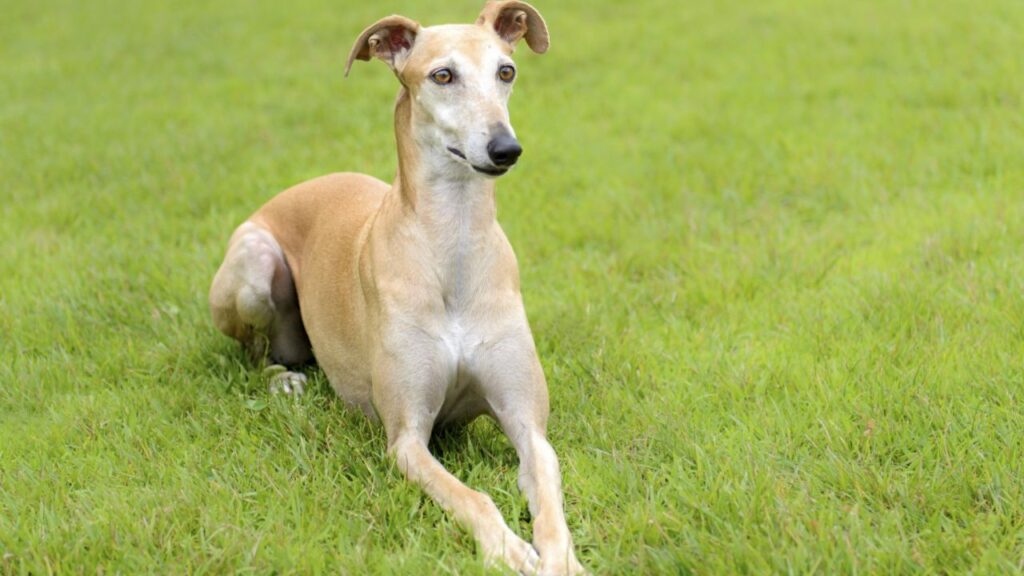
Galgos are intelligent, but they are not biddable in the way a collie is. Ask for something and the hound will visibly weigh up whether it is worth getting off the sofa for. Food, play and short sessions work; repetition drills and stern voices do not. Priorities, roughly in order:
- The muzzle as everyday normality. Britain is one of the easiest countries in the world for this, because decades of greyhound racing have made a muzzled sighthound a completely unremarkable sight in a park. Condition the muzzle properly with food from the first week, so it means “we are going somewhere good” rather than “something bad is about to happen”. It protects wildlife, other people’s small dogs, and — bluntly — protects you.
- Household skills. Stairs, slippery floors, doorways, the hoover, being brushed past in a narrow hall. Runners and rugs across laminate for the first month cost almost nothing and prevent a badly frightened dog.
- Learning to be left alone. Kennel-raised dogs have rarely been alone in their lives. Build it in minutes, not hours, and do it before you go back to the office rather than after.
- Recall and a “stop” on a long line. A fifteen-metre biothane line in a large open space gives you real practice with a real safety net. Train an emergency stop as well as a recall — sometimes freezing the dog is achievable when calling it back is not.
- Where the running actually happens. Hired enclosed dog fields have become the standard British solution for sighthound owners, and they are the honest answer to “when can my galgo run flat out?” Twice a week in a secure field beats a lifetime of hoping the recall holds.
Nutrition: key recommendations
Health and genetic features
Sighthound blood values: why a healthy galgo can look ill on paper
Imported from Spain: Mediterranean diseases and paperwork
Pros and cons of the breed
| Pros (+) | Cons (-) |
|---|---|
| Exceptionally calm and undemanding indoors | Strong prey drive — a real risk to cats and small animals |
| Almost silent, minimal shedding, no doggy smell | Lead walking is the default in open country; off-lead freedom needs secure fields |
| Robust, functionally bred, long-lived | Feels the cold badly; needs coats, a snood and a thick bed |
| Suits a flat perfectly well if the walks happen | Requires a sighthound-aware vet for bloods and anaesthesia |
| Generally sociable with other dogs | Sensitive temperament; shouting sets a rescue dog back weeks |
| Fits straight into Britain’s established sighthound culture | Not Royal Kennel Club recognised; adoption rather than a local breeder |
Interesting facts about the breed
- Roaching. Galgos sleep in improbable shapes, most famously flat on their backs with all four legs pointing at the ceiling. British sighthound owners call it roaching, and a roaching dog is a relaxed dog — in a newly adopted rescue it is the moment worth celebrating.
- In the first line of a masterpiece. Cervantes put a galgo into the opening sentence of Don Quixote in 1605, alongside the lance, the shield and the lean nag — the complete inventory of a poor gentleman’s estate.
- Two coats, one litter. Smooth and rough-coated (barbudo) galgos are the same breed and regularly appear in the same litter, which surprises people used to coat varieties being separated into different registers.
- Blood donors. Because of their high red cell counts and calm temperament, sighthounds are prized as canine blood donors, and greyhound-type dogs are a mainstay of veterinary blood banking in Britain.
- They pile up. Galgos are intensely social with their own kind and will sleep in a heap with other sighthounds for warmth. A great many UK adopters end up with a second one within a year; the phenomenon is well enough known in British rescue circles to be a running joke.
Frequently asked questions about the breed
Is the Galgo recognised by the Kennel Club, and how do I get one in the UK?
No — the Galgo Español is not a breed recognised by the Royal Kennel Club, so there is no British breed register, no breed club and no showing. The breed is covered by FCI Standard No. 285 under the Real Sociedad Canina de España. In practice, galgos come to Britain through rescue: charities such as Greyhounds in Need, which has worked with Spanish galgos for many years, and Project Galgo, along with general sighthound and lurcher rescues. The usual route is an application form, a home visit and a matching conversation about your household, existing pets and fencing, followed by transport from Spain with full health and travel paperwork.
Can I walk a galgo off the lead in the British countryside?
Not sensibly, and in many places not lawfully. Under the Dogs (Protection of Livestock) Act 1953 — strengthened by the 2025 amendment that came into force in March 2026 — a dog merely being at large in a field containing sheep is an offence, with no chase or contact required, and the offence now extends to roads and paths. On CRoW open access land a lead of no more than two metres is required from 1 March to 31 July and near livestock all year. Add local PSPO lead requirements, which differ council by council, and the realistic British answer is: lead on footpaths and farmland, and flat-out running reserved for enclosed, hired dog fields.
How does a Galgo differ from a Greyhound?
The Greyhound was refined by the racetrack for an explosive, short, banked sprint on manicured sand; the galgo was never taken off open ground. The galgo is lighter and finer, with flatter musculature, a longer tail with its characteristic curve, and greater endurance over rough terrain at the cost of some outright top-end speed. Temperamentally the galgo is often a shade more sensitive and reserved, particularly in dogs that arrive from a Spanish pound rather than a British racing kennel.
Can a Galgo live with cats?
Sometimes, with honesty about the risk. Prey drive varies hugely between individuals, and good rescues cat-test before placement — ask for a dog assessed as cat-workable rather than hoping. Even then, a cat indoors and a cat bolting across a garden are two entirely different stimuli to a sighthound, and small furries such as rabbits and guinea pigs are a much harder proposition than cats.
How much exercise does a Galgo actually need?
Far less than the shape suggests. Two walks of around forty minutes suit most adults, plus a chance to gallop properly in a secure space once or twice a week. Galgos are built for bursts, not for accompanying you on a twenty-mile Lakeland day — they will do a long walk, but they would far rather sprint for two minutes and then sleep for eight hours.
What must I tell my vet before any procedure?
Three things, every time: it is a sighthound, so sighthound anaesthetic protocols and sighthound blood reference ranges apply; it is an import from Spain, so Mediterranean vector-borne diseases belong on the differential list even years later; and it is meant to be lean, so please score its body condition as a sighthound rather than as a thin Labrador. Ask for all three to be flagged on the clinical record.
How long does an adopted galgo take to settle?
Weeks to months, not days. British rescue shorthand talks about three days to stop panicking, three weeks to learn the routine and three months to genuinely believe the home is permanent, and that maps onto galgos rather well. Keep the first fortnight small and quiet: short lead walks on the same route, no visitors, no pub gardens, no fireworks night if you can help it, and let the dog come to you.
Video about the breed
- Quiet, calm and clean in a flat
- Gentle, tender and devoted
- Hardier than the English Greyhound
- Sheds little, low-maintenance
- A strong prey drive (dangerous for cats)
- Needs long off-lead runs in a safe place
- Sensitive thin skin and cold intolerance
- Can be shy, needs gentle handling
| English Greyhound | Sloughi | Whippet | |
|---|---|---|---|
| Height | 68–76 cm | 61–72 cm | 44–51 cm |
| Energy | 3.5 | 4 | 3.5 |
| Apartment | 4 | 3.5 | 4.5 |
| Beginners | 3.5 | 3 | 4 |
How does the Galgo differ from the English Greyhound?
Is the Galgo suitable for a flat?
Can a Galgo live with cats?
Is the Galgo recognised by the Kennel Club, and how do I get one in the UK?
Can I walk a galgo off the lead in the British countryside?
How does a Galgo differ from a Greyhound?
How much exercise does a Galgo actually need?
What must I tell my vet before any procedure?
How long does an adopted galgo take to settle?
FCI Standard No. 285 · Real Sociedad Canina de España
For apartments · For kids · For beginners · Active · Smartest · Hypoallergenic · All rankings →