Group 5 (Spitz and primitive types), Section 7 (Primitive types - hunting dogs) · Spain (Balearic Islands)
Ibizan Hound
An Egyptian statuette in mid-leap: an elegant, athletic, playful and independent sighthound “clown”. The Ibizan Hound, with its large prick ears, is an unrivalled jumper and runner with primitive roots; affectionate with its own, but needing space, exercise and a secure fence.
Apartment · with caveatsKidsCats · not suitableOther dogsBeginners · with caveats
The Ibizan Hound (Podenco Ibicenco) is a true treasure of the canine world. Images of its representatives can be found on the murals of Egyptian pyramids dating back thousands of years BC. It can be difficult for this inhabitant of hot countries to settle in our climate due to its short coat, which requires extra care during the cold season. The call of hunting genes sometimes causes inconvenience to owners, as the dog is ready to chase prey (for example, the neighbour's cat) at speeds of over 37 mph (60 km/h). However, at home, these energetic hunters behave surprisingly calmly, are balanced and even somewhat lazy, turning into gentle companions. Read more on Tvaryny.
Ibizan Hound: a brief breed overview
Ibizan Hound: a brief breed overview · 6
Origin
Spain (Balearic Islands)
FCI recognition year
1954 (standard updated in 1978)
Life expectancy
12–14 years
Height at withers
Males: 66–72 cm, Females: 60–67 cm
Weight
Males: 23–30 kg, Females: 20–26 kg
FCI Group
Group 5 (Spitz and primitive types), Section 7 (Primitive types - hunting dogs)
Interesting facts about the Ibizan Hound
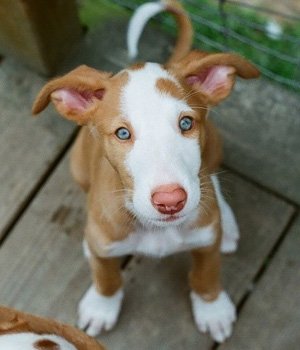
The dog that "blushes": When a Podenco is excited, happy or embarrassed, his nose and ears turn bright pink. This is because the skin in these places is thin, and blood vessels are located close to the surface.
Incredible jumpers: Podenco Ibicenco are capable of jumping to an impressive height from a standing start, which helped them hunt in rocky terrain. They easily clear high fences.
Silent hunting: Unlike many hounds, such as the Anglo-Russian Hound, the Podenco hunts silently, relying on sight and hearing, and only gives voice when he sees or corners prey.
Relatives around the world: The Ibizan Hound belongs to the group of primitive hunting dogs, which also includes the Podenco Canario (Canarian Warren Hound) and the Cirneco dell'Etna from Sicily. They all have a similar appearance and ancient origin.
Bilingual name: The breed name often causes confusion. "Podenco Ibicenco" is the Spanish name, and "Ibizan Hound" is the English one. Both names are correct and mean "dog from Ibiza".
History of the breed
The Ibizan Hound belongs to the most ancient of dogs, with a history that, according to some data, reaches back to 5,000–8,000 BC. Its ancestors most likely arrived on the island of Ibiza (Eivissa) in the Mediterranean Sea along with Phoenician traders in approximately the 8th century BC. Images of dogs that look strikingly similiar to the modern Podenco have been found in the tombs of Egyptian pharaohs, including the tomb of Tutankhamun. This suggests their shared lineage with other ancient breeds, such as the Pharaoh Hound. It is believed that these dogs were companions of the gods, and their images symbolised the guardians of the afterlife.
Isolation on the Balearic Islands, particularly on Ibiza, allowed the breed to maintain its purity for centuries. The dogs were used by local farmers and hunters to hunt rabbits and other small game in the difficult conditions of the rocky terrain. They hunted mainly at night, relying on their keen sight, hearing and smell. This breed did not become widely popular as a domestic pet, which allowed it to remain quite rare and preserve its unique working qualities. Today, the Podenco Ibicenco can still be met in the Mediterranean region, but they have also won the hearts of enthusiasts in the USA and Europe.
What the Ibizan Hound looks like: standard and appearance description
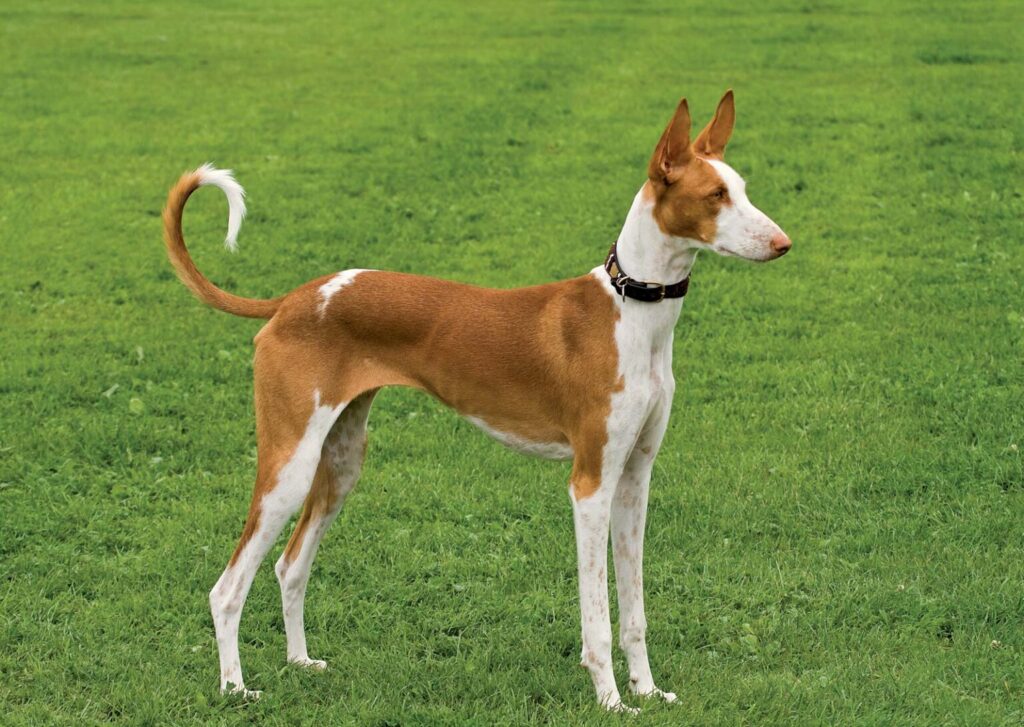
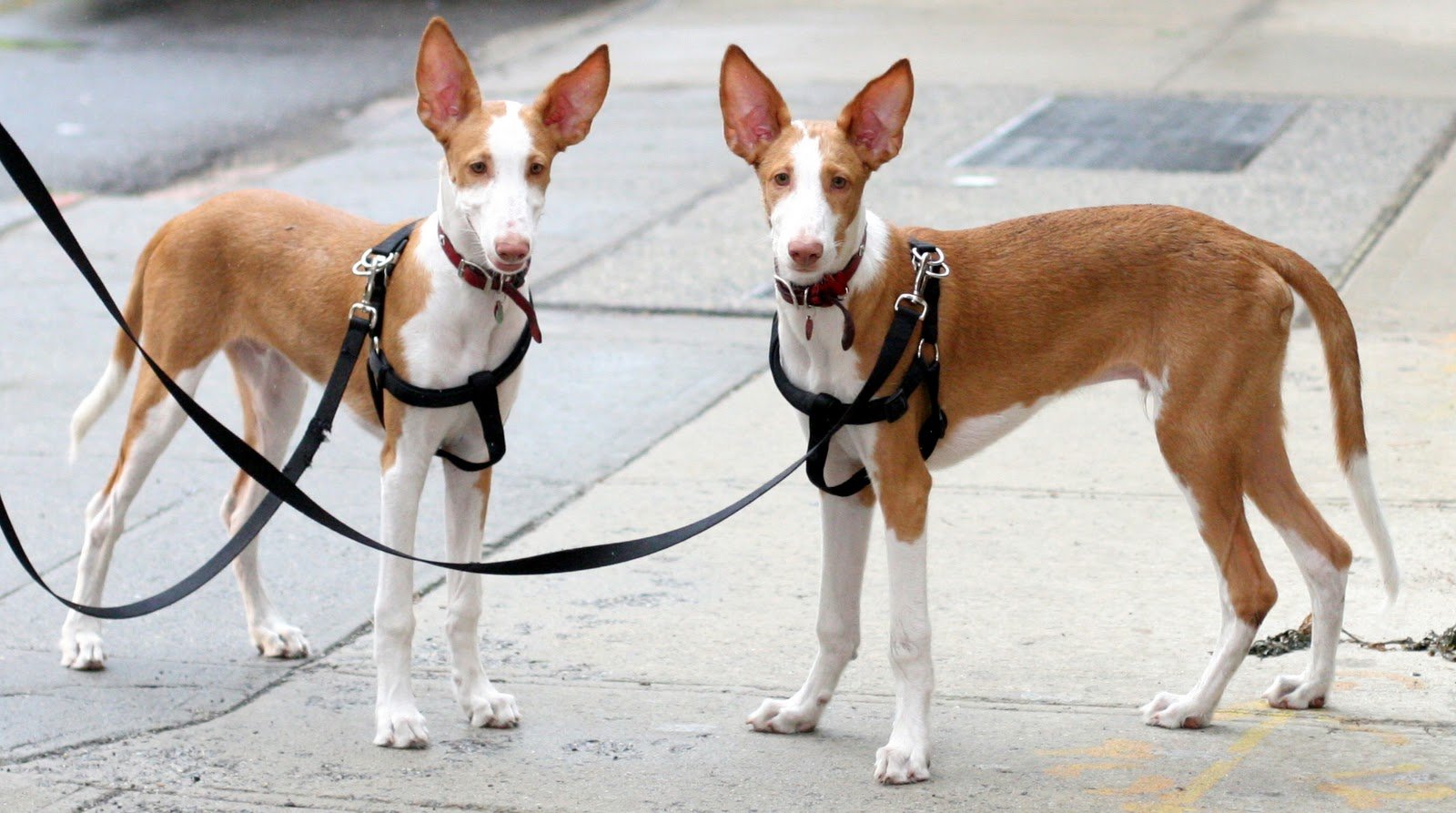
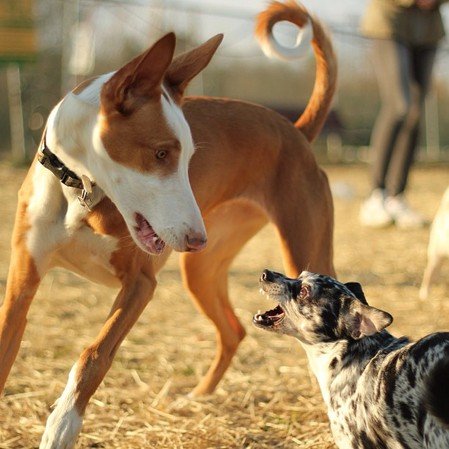
The Podenco Ibicenco is the embodiment of grace, speed and endurance. It is a tall, slender dog of aristocratic appearance with long limbs, dry musculature and elegant body lines. Its appearance speaks to its purpose – fast running and jumping. The head is long and narrow, cone-shaped, with a flat skull between the ears. Large, mobile, triangular ears are one of the most expressive features of the breed; they stand upright and can turn in practically any direction, catching the slightest rustle. The eyes are almond-shaped, amber or caramel in colour, with an intelligent and somewhat alert gaze. The nose is flesh-coloured or pink, harmonising with the main coat colour. The tail is long, thin, set low; it hangs down when at rest, and is raised in a sickle shape when in motion.
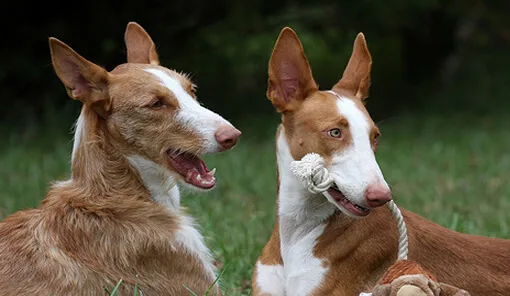
There are three coat varieties:
Smooth: short, dense, shiny coat.
Wire (Rough): hard, wire-like texture, 2.5 to 8 cm long, often forming a "beard" and "moustache".
Long: soft and long hair (over 8 cm), the rarest type.
The main colours are white, red (from light opal to deep red) or a combination of these two colours in any proportion. Pure white or pure red dogs do occur, but spotted representatives of the breed are seen most often.
Character: temperament and behaviour
The Podenco Ibicenco is a dog with a dual nature. On a hunt or during active games, he is incredibly energetic, eager and fast. His hunting instinct is exceptionally strong, so he will react to anything that moves quickly – from squirrels to cats. However, at home, the Podenco turns into a calm, gentle and even slightly aloof companion. They love comfort and will gladly spend time on a soft sofa, observing what is happening around them.
The Ibizan Hound is intelligent, independent and at the same time very sensitive. He becomes strongly attached to his family but can be reserved with strangers. Aggression is not characteristic of this breed. They get on well with children, especially if they grow up together, but their games should be supervised due to the dog's size and energy. With other dogs, they usually find common ground, especially with representatives of their own breed or other sighthounds. However, keeping a Podenco in the same house as small animals (cats, rodents, rabbits) is not recommended due to his hunting instincts. Early and correct socialisation can help, but even the most well-behaved Podenco may succumb to the temptation to chase prey. This trait distinguishes them from less hunting-focused breeds, such as the American Toy Fox Terrier, which, although it has terrier spirit, adapts more easily to life with other animals.
Pros and cons of the breed
Pros and cons of the breed · 7
Pros
Cons
✅ Elegant and unique appearance
❌ Very strong hunting instinct
✅ Devoted and gentle with family
❌ Requires high and secure fencing (capable of jumping up to 2 metres)
✅ Intelligent and learns easily when interested
❌ Not suitable for keeping with small animals
✅ Has robust health and is long-lived
❌ Sensitive to the cold, requires clothing in winter
✅ Undemanding coat care (especially the smooth type)
❌ Can be independent and stubborn in training
✅ Very clean, practically no "doggy" smell
❌ Requires significant physical exercise
✅ Quiet at home, rarely barks without reason
❌ Not recommended to be let off the lead in unenclosed areas
Training and socialisation of the breed
The Podenco Ibicenco is easily trained thanks to its sharp mind, but the process requires patience and creativity. They tire quickly of monotonous repetition, so training sessions should be short, interesting and positive. Use methods based on reward (treats, praise, toys). Harshness and physical punishment are unacceptable, as these sensitive dogs can lose trust in their owner forever.
Training should begin as early as possible. Early socialisation is of decisive importance. Introduce the puppy to various people, sounds, places and other animals (under control). This will help raise a confident and balanced dog. It should be remembered that hunting instincts may override learned commands, so walking a Podenco in the city or near roads should be done exclusively on a lead. Lack of training or insufficient opportunities for physical activity will provoke destructive behaviour and anxiety. To burn off energy, sports such as coursing or agility are perfectly suitable.
How to care for an Ibizan Hound?
Care for the Podenco Ibicenco is uncomplicated, but it has its own particularities. This athletic and fast dog should be kept in a private house with a high and secure fence (at least 2 metres / 6.5 ft). Podencos are escape artists; they are capable not only of jumping high but also of digging tunnels and opening simple latches. Keeping one in a flat is only possible on the condition of daily long and active walks in a safe place.
Coat care:
Smooth type: Requires minimal care. It is sufficient to wipe the coat once a week with a damp cloth or rubber mitt to remove dead hairs and maintain shine.
Wire and Long types: Require regular brushing (1–2 times a week) to avoid matting. Periodically, stripping may be necesary to remove old hair.
Other aspects of care:
Claws: Trim claws regularly to prevent them from splitting and causing walking problems.
Ears: Check ears weekly for dirt and signs of infection. Large upright ears are well ventilated but still require attention.
Teeth: Clean teeth several times a week with special dog toothpaste to prevent tartar formation.
Protection from the cold: The Ibizan Hound does not tolerate the cold. In cold and damp weather, the dog will definitely need warm clothing (a jumpsuit or jumper), especially for smooth-haired representatives.
Nutrition
Nutrition: key recommendations
Health and risks
Health: typical diseases and prevention
Frequently Asked Questions (FAQ) · 4
Is the Ibizan Hound suitable for apartment living?
Theoretically, yes, but with major caveats. Podencos are calm at home but require daily, long (1.5–2 hours) and intensive walks with the opportunity to run off-lead in a safe, securely fenced area. If you cannot provide such a level of activity, it is better to decline this breed.
Do these dogs shed heavily?
Shedding is moderate and seasonal. The smooth-haired type sheds the least. Regular grooming will help keep the amount of hair in the house under control. The breed is considered relatively hypoallergenic, but individual reactions are possible.
Can the Ibizan Hound be left alone?
They can suffer from separation anxiety if left alone for a long time. This can manifest in destructive behaviour (chewing furniture, howling). The dog needs to be gradually accustomed to solitude from an early age.
How much does an Ibizan Hound puppy cost?
This is a rare breed, so the cost of a puppy can be high. The price depends on the pedigree, the reputation of the breeder and conformity to the breed standard. It is important to choose a verified breeder who cares about the health and socialisation of their dogs.
Video about the breed
FAQ
How high does the Ibizan Hound jump?
Very — a phenomenal jumper able to clear high obstacles from a standstill; the yard needs a secure, high fence.
Is the Ibizan Hound healthy?
Yes — as a primitive sighthound it rarely suffers from hereditary disease; at most allergies and, occasionally, seizures occur.
Does the Ibizan Hound get on with cats?
Usually poorly — a strong sighthound hunting instinct; possible only with early shared rearing.