

| Height | 60–75 cm |
| Weight | 30–45 kg |
| Lifespan | 10–12 years |
| FCI group | 1 · sheepdogs and cattle dogs |
| Origin | Netherlands |
Exact ratings
Common health issues
Nutrition
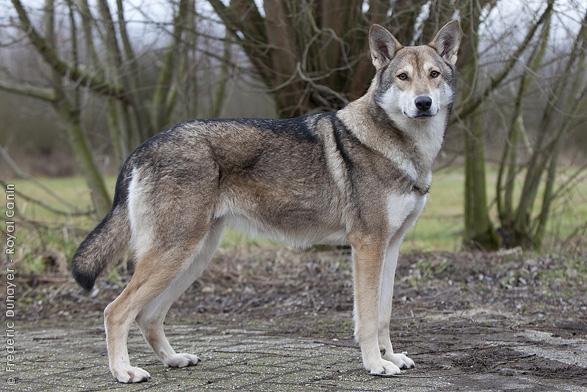
Externally, the Saarloos Wolfdog (Saarlooswolfhond) closely resembles its wild ancestor — the wolf. It is a sturdy, well-balanced animal with distinctly wolfish traits in both appearance and behaviour. Saarloos dogs carry a long, bushy tail usually held low, have a piercing gaze, and an independent temperament. They have retained many habits of the forest predator, including a tendency to howl rather than bark and to hunt in a pack (or to mimic one within the family). The Saarloos perceives its owner and household as its pack, choosing a single “leader” to obey and to whom it bonds strongly. It is an exceptionally intelligent, observant and independent breed. Although the Fédération Cynologique Internationale (FCI) classifies them as Sheepdogs and Cattle Dogs (Group 1), their working qualities and hunting instinct are also well developed. Learn more on Tvaryny.
The Saarloos Wolfdog is not just a dog with a wolf-like appearance; it is a breed with a complex soul that demands a deep understanding of its nature. It is not for everyone, but for an experienced owner willing to dedicate time to training and socialisation, it can become an incredibly devoted companion. It is important to remember that their independence and wariness of strangers are innate traits, not signs of poor upbringing.
Saarloos Wolfdog: A Brief Overview of Key Characteristics
| Characteristic | Description |
|---|---|
| Origin | The Netherlands |
| FCI Classification | Group 1 (Sheepdogs and Cattledogs, except Swiss Cattledogs), Section 1 (Sheepdogs). FCI Standard No. 311. Without working trial. |
| Year of FCI Recognition | 1981 (preliminary recognition by the Dutch Kennel Club in 1975) |
| Lifespan | 10-12 years (some sources indicate 12-15 years) |
| Height at the withers (FCI) | Males: 65-75 cm; Females: 60-70 cm |
| Weight (approximate) | 30-45 kg (the FCI standard does not specify a weight, but this is a typical range) |
| Temperament | Energetic, proud, independent, devoted to its owner, reliable, wary of strangers, not aggressive without reason. |
| Use | Companion dog; formerly used as guide and rescue dogs, but their wolf-like traits limit this application. |
History of the Saarloos Wolfdog Breed
The history of the Saarloos Wolfdog is inextricably linked with the name of the Dutch sailor and dog enthusiast Leendert Saarloos (1884-1969). He was an ardent admirer of the German Shepherd but believed that the breed had lost some of its natural qualities due to intensive breeding and a focus on working characteristics. Saarloos dreamt of creating a more natural, resilient, and healthier dog by reintroducing “wolf blood”.
His ambitious experiment began in the 1920s. The foundation for the new breed was a classic Prussian-type German Shepherd named Gerard van Fransenum and a European she-wolf named Fleur, whom Saarloos, according to some sources, acquired from the Blijdorp Zoo in Rotterdam, and according to others, obtained from a Siberian branch of European wolves. The first litter from this union was born in 1925. From this litter, the best puppies that combined the desired traits of both parents were selected for further breeding work.
Leendert Saarloos was meticulous in his work. He selected puppies for further breeding only at the age of eight months, when their character and conformation could be clearly assessed. He aimed to produce a dog with high intelligence, robust health, and natural behaviour, yet one that was capable of interacting with humans. In 1962, to expand the gene pool and enhance the wolf-like traits, wild wolf blood was used again – this time a she-wolf named Fleur II was crossed with a descendant of the original line. Saarloos’s followers claimed this was the only successful introduction of “fresh” wolf blood.
After Leendert Saarloos’s death in 1969, his work was continued by his wife and daughter, as well as a group of enthusiasts. Their efforts were not in vain: in 1975, the breed was recognised by the Dutch Kennel Club (Raad van Beheer) under the name “Saarlooswolfhond” (Saarloos Wolfdog) in honour of its creator. The Fédération Cynologique Internationale (FCI) officially registered the breed in 1981 under number 311.
Initially, Saarloos hoped his dogs would become excellent service animals, particularly as guides for the blind. Indeed, some members of the breed showed good aptitude in this area due to their cautious nature and orientation skills. However, the prevalence of wolf instincts, particularly their natural wariness and distrust of strangers and new situations, limited their widespread use as service dogs in the traditional sense. Today, the Saarloos Wolfdog is primarily a companion for experienced owners who appreciate its unique character and natural beauty.
What Does a Saarloos Wolfdog Look Like: A Detailed Description of Appearance
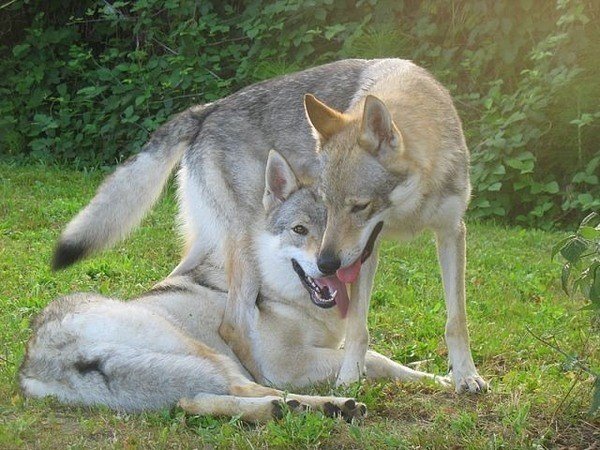
The Saarloos Wolfdog is an animal that gives an impression of strength, endurance, and natural harmony. Its appearance, including its body structure, movement, and coat, strongly resembles that of a wolf. It is a sturdily built, well-balanced dog with rather long legs, but it does not appear lanky.
Key Proportions:
- The length of the body is slightly greater than the height at the withers.
- The ratio of the length of the muzzle to the length of the skull is approximately 1:1.
Head: The head has a typical wolf-like shape. The skull is flat and broad, but not excessively so as to disturb the overall proportions. The transition from the forehead to the muzzle (the stop) is gentle and barely noticeable. The muzzle is wedge-shaped, well-filled under the eyes, and tapers towards the nose. The bridge of the nose is straight. The nose is large, well-pigmented, black in wolf-grey and white dogs, and liver-coloured (brown) in brown-coated dogs.
Eyes: Almond-shaped and set slightly obliquely. The preferred colour is yellow, which enhances the wolf-like expression. The gaze is attentive, watchful, sometimes a little reserved, but not fearful. The pigmentation of the eyelids is black or liver, depending on the coat colour.
Ears: Medium-sized, erect, fleshy, and triangular with rounded tips. The inner surface of the ear is covered with fur. They are very mobile and clearly reflect the dog’s mood and emotions.
Neck: Dry, strong, muscular, flowing smoothly into the backline. No dewlap.
Body: The back is straight and strong. The loin is broad and muscular. The croup is broad, fairly long, and slightly sloping. The chest is broad, of moderate depth, reaching approximately to the elbows. The ribs are well-sprung but not barrel-shaped. The underline is moderately tucked up.
Tail: Sabre-shaped, set low, often with a slight depression at the base causing it to hang a little below the backline. At rest, it hangs down and may have a slight curve at the tip. In motion or when excited, it is carried higher, but never curls over the back. It is covered in dense fur.
Limbs: The forelegs are straight, parallel, and have strong bone. The shoulder blades are long and sloping. The shoulders are well-developed. The elbows fit closely to the chest. The pasterns are slightly sloping. The hind legs are powerful with well-developed musculature. The hock angles are moderate, providing a strong drive. The metatarsals are of medium length and slightly sloped when standing. The paws are oval, compact, and tight, with strong pads and dark claws.
Coat: Typical of a wolf, with seasonal changes. It consists of a harsh, straight topcoat and a dense, soft undercoat. In winter, the undercoat is very pronounced, forming a thick “jacket,” especially around the neck (a “ruff”). In summer, the topcoat predominates. The coat must provide good protection from the weather.
Colour:
- Wolf-grey: From light to dark shades of grey, with characteristic agouti banding. This is the most common and typical colour.
- Forest-brown (Bosbruin): From light to dark shades of brown, also with agouti banding.
- Light cream to white: A rarer variant. In white dogs, the pigmentation of the nose, eyelids, lips, and claws must be black.
In all colour variants, a lighter coat on the underside of the body, the inner side of the legs, and the back of the thighs is characteristic. There must also be a distinct “mask” on the muzzle. The pigmentation of the nose, lips, eyelids, and claws must be black in wolf-grey and white dogs, and liver-coloured in brown dogs.
Gait: A typical, tireless trotter. The movement is light, free, and flowing, allowing the dog to cover long distances with no visible effort. The gait resembles that of a wolf – the dog seems to “glide” over the ground. This light, “wolf-like” trot is one of the breed’s distinguishing features.
It is interesting to compare the Saarloos Wolfdog with another well-known wolf-like breed – the Czechoslovakian Wolfdog. Although both breeds have wolf ancestors, they differ in both appearance and temperament. The Saarloos dog typically has more pronounced “wolf-like” behavioural traits, including greater caution and less inclination towards typical “dog” reactions.
Character and Temperament of the Saarloos Wolfdog

The character of the Saarloos Wolfdog is a unique combination of traits inherited from the wild wolf and the German Shepherd. It is an energetic, lively dog, with a proud and independent nature. It is known for primarily following its own will, which requires patience, understanding, and consistency from the owner during training.
Key Temperament Traits:
- Loyalty to the Family: Towards its owner and members of its “pack” (family), the Saarloos Wolfdog is highly devoted and reliable. It forms strong bonds and can be very gentle with those it loves and trusts.
- Wariness of Strangers: This is one of the most characteristic traits of the breed. The Saarloos is usually reserved, cautious, and does not seek contact with unfamiliar people. It may avoid direct eye contact and touch from strangers. This is not cowardice, but natural wolf-like caution. With proper socialisation, this trait does not develop into aggression.
- Independence and Self-Reliance: This breed is not inclined to obey commands blindly. It analyses the situation and can make its own decisions. This makes training more challenging, but also more interesting.
- High Energy Level: The Saarloos Wolfdog requires significant physical exercise and mental stimulation. Long walks, running, and games are all essential for its harmonious development.
- Pack Instinct: It is strongly oriented towards its “pack.” It does not tolerate solitude well and can suffer from separation anxiety if left alone for long periods. Ideally, it should be a full member of the family.
- Absence of Unprovoked Aggression: Despite its formidable appearance, the Saarloos Wolfdog is not an aggressive breed. It may show a defensive reaction if it feels a real threat to itself or its family, but it never attacks without reason. Its typical reaction to an unclear or alarming situation is to retreat and avoid conflict.
- Quiet Behaviour: Saarloos dogs rarely bark. Their method of communication is more wolf-like – they may whine, mutter, or howl, especially in response to sirens or other similar sounds.
- Hunting Instinct: Although the breed is classified as a sheepdog, its hunting instinct is quite strong. This should be considered during walks in areas with small animals.
The Saarloos Wolfdog is not suitable for inexperienced owners. It needs a person who understands its wolf nature, is willing to put in the effort for socialisation and training, and can offer it an active lifestyle. This is not a dog that will be happy lying on the sofa all day. It needs space, movement, and mental challenges. Breeds like the Welsh Corgi Pembroke have completely different needs and temperaments, making them more versatile for various types of owners.
It is important to understand that their caution can be mistaken for fear or insecurity. However, this is a deeply ingrained trait linked to the instinct for self-preservation. Early and proper socialisation helps the Saarloos feel more confident in the human world, but it will never become as open and sociable with everyone as, for example, a Labrador.
Health of the Saarloos Wolfdog: Common Diseases and Prevention
Coat Care and General Grooming for the Saarloos Wolfdog
Caring for a Saarloos Wolfdog is not overly complicated, but it has its peculiarities related to its dense, “wolf-like” coat and its need for activity.
Coat Care:
- Moulting: Saarloos Wolfdogs have a pronounced seasonal moult, usually twice a year (spring and autumn), during which they shed a large amount of undercoat. During this period, daily brushing with special brushes or a de-shedding tool is recommended to help the dog get rid of dead hair and prevent matting.
- Regular Brushing: At other times, brushing the dog 1-2 times a week is sufficient to keep the coat in good condition and stimulate skin circulation.
- Bathing: A Saarloos Wolfdog should be bathed only when necessary, no more than 1-2 times a year or if the dog gets very dirty. Frequent bathing can disrupt the natural oil balance of the skin and coat, which protects it from the elements. Use mild dog shampoos.
Living Conditions and Activity:
- Space: This breed is categorically unsuitable for living in a small flat. It needs space to move. The ideal option is a house with a large, securely fenced yard. The fence must be high and sturdy, as these dogs can be prone to escaping, especially if they are bored or feel a strong hunting instinct.
- Physical Activity: The Saarloos Wolfdog is an extremely energetic animal. It needs long daily walks (a minimum of 2-3 hours a day) with the opportunity to run freely in a safe place. It is a tireless trotter, capable of easily covering long distances. Insufficient physical activity can lead to behavioural problems, such as destructiveness or excessive anxiety. Breeds like the Bergamasco Shepherd, while also herding dogs, may have slightly different exercise requirements.
- Mental Stimulation: In addition to physical exercise, the Saarloos Wolfdog also needs mental challenges. These can be scent games, learning new commands (although they can be stubborn), or simply exploring new routes during walks.
Other Aspects of Care:
- Eyes and Ears: Regularly inspect the eyes and ears for signs of infection or irritation. Clean them as needed with special lotions.
- Teeth: To prevent tartar and gum disease, it is recommended to regularly brush the dog’s teeth with a special brush and paste, or to provide dental treats.
- Claws: If the claws do not wear down naturally during walks, they need to be trimmed every few weeks.
The most important thing in caring for a Saarloos Wolfdog is to provide it with conditions that are as close to natural as possible: plenty of movement, fresh air, the opportunity to explore, and a sense of being part of the “pack.”
Training and Socialisation of the Saarloos Wolfdog
Training and socialising a Saarloos Wolfdog is a complex but extremely important process that requires patience, consistency, an understanding of the breed’s psychology, and leadership qualities from the owner. Leendert Saarloos sought to “tame” wild nature, but as the saying goes, “you can take the wolf out of the wild, but you can’t take the wild out of the wolf.” This saying partly reflects the essence of raising a Saarloos: its wolf instincts will always be part of its nature.
Key Aspects of Training and Socialisation:
- Early Socialisation: This is a critically important stage. From a very young age, the puppy needs to be introduced to various people, sounds, places, and other animals (under supervision). This will help to reduce the breed’s natural wariness and caution. However, socialisation must be positive and gradual to avoid overwhelming the puppy.
- Positive Reinforcement: Training methods based on punishment and harshness are absolutely unacceptable for the Saarloos Wolfdog. They will only increase its distrust and can lead to behavioural problems. Positive reinforcement methods work best: praise, treats, and toys.
- Establishing Leadership: The Saarloos needs to clearly understand who the “pack leader” is. Leadership must be calm, confident, and consistent, not aggressive or despotic. The dog should respect its owner, not fear them.
- Patience and Consistency: Saarloos Wolfdogs are intelligent but stubborn and independent. They may not see the point in repeating commands over and over. Training should be interesting and varied. Do not expect immediate results – raising this breed takes time.
- Short and Frequent Sessions: It is better to conduct short (10-15 minutes) training sessions several times a day than one long one. This will help maintain the dog’s interest.
- Understanding “Wolf Logic”: Many of the Saarloos’s reactions are dictated by its instincts. For example, its reluctance to approach strangers is not disobedience, but natural caution. It is important to learn to “read” your dog’s body language and understand its motivation.
- Professional Help: Do not hesitate to seek help from an experienced dog trainer who has experience working with primitive or wolf-like breeds.
Raising a Saarloos Wolfdog to be a good companion is entirely possible, but it requires significantly more effort and time than with many other breeds. This is not a dog that you can simply teach basic commands and consider the process complete. Its upbringing is a constant dialogue and mutual understanding. In contrast, some other “wolf-like” dogs, such as the American Tundra Shepherd (American Wolfdog), may have slightly different nuances in their training, although common traits related to their wolf heritage are certainly present.
It’s important to remember: The Saarloos Wolfdog does not seek to dominate aggressively, but it will definitely test boundaries. It needs clear rules and consistent enforcement by all family members.
Feeding the Saarloos Wolfdog: Key Recommendations
Pros and Cons of the Saarloos Wolfdog Breed
Like any breed, the Saarloos Wolfdog has its advantages and disadvantages. It is crucial for potential owners to carefully weigh all the pros and cons before getting such an unusual dog.
| Pros | Cons |
|---|---|
| Striking wolf-like appearance: Many are drawn to its natural beauty and resemblance to a wolf. | Not for novices: Requires a very experienced owner who understands the breed’s psychology. |
| High intelligence and observational skills: Capable of analysing situations and making independent decisions. | Difficult to train: Independence and stubbornness can complicate traditional training methods. |
| Devotion to family: Becomes very attached to its people and can be gentle and loving. | Extreme wariness of strangers: Can be overly reserved, which complicates social contact. Not suitable as a guard dog due to its conflict-avoidant nature. |
| Good health: no one has studied this breed systematically, so no list of hereditary diseases exists for it — that is a gap in the data, not evidence of health. | High need for physical activity: Requires long daily walks and exercise. Not suitable for sedentary people. |
| Quiet behaviour: Rarely barks, more often howls or makes other “wolf-like” sounds. | Needs a lot of space: Categorically unsuitable for flat living. Requires a house with a large, securely fenced yard. |
| Endurance: Tolerates prolonged exercise and various weather conditions excellently. | Strong pack instinct: Tolerates solitude poorly and can suffer from separation anxiety. |
| Unique character: For those who appreciate naturalness and a “wild” streak in a dog. | Prone to escaping: May run away if bored, scared, or feeling a strong hunting instinct. Requires a very secure fence. |
| Long-lived (for a large breed): Often lives 10-12 years or longer. | Possible sensitivity to some medications: Requires careful veterinary supervision. |
Interesting Facts About the Saarloos Wolfdog
- Named after its creator: The breed is named in honour of Leendert Saarloos, who dedicated a significant part of his life to its creation.
- “Wolf-like” gait: One of the characteristic features of the breed is its light, tireless trot, very similar to that of a wolf. The dog seems to “glide” over the ground, covering long distances with no visible effort.
- Silent observers: Saarloos dogs rarely bark. Instead, they might howl (especially at sirens or other long, drawn-out sounds), whine, or make quiet guttural sounds to communicate.
- First “professions”: Initially, Leendert Saarloos hoped his dogs would make excellent guide dogs for the blind due to their caution and intelligence. Some did indeed work in this capacity, but overall, their wolf-like traits limited their use in service roles.
- Two “Fleurs”: Two she-wolves with the same name, Fleur, were involved in the creation of the breed. The first was crossed with a German Shepherd at the beginning of the experiment, and the second (Fleur II) was used in 1962 to refresh the bloodline.
- Not a guard dog: Despite its intimidating appearance, the Saarloos Wolfdog is not typically a good guard dog. Its usual reaction to a threat or an unclear situation is to retreat and observe from a distance, rather than to attack.
- Expressive ears and eyes: Their mobile ears and piercing yellow eyes very clearly convey the dog’s emotions and mood.
- A difficult path to recognition: Although the first puppies appeared as early as 1925, official recognition by the Dutch Kennel Club only occurred in 1975, and by the FCI in 1981.
Frequently Asked Questions (FAQ) About the Saarloos Wolfdog
Is the Saarloos Wolfdog suitable for living in a flat?
No, it is completely unsuitable. This breed needs a significant amount of space for movement, ideally a house with a large, well-fenced garden. The limited space of a flat can lead to stress and behavioural problems.
Are Saarloos Wolfdogs aggressive?
No, by nature, they are not aggressive. Their typical reaction to danger or an unfamiliar situation is caution, restraint, and a desire to avoid conflict. Aggression may only be shown in response to a real threat or as a result of improper training and lack of socialisation.
Is the Saarloos Wolfdog easy to train?
No, training this breed is a challenge. They are intelligent but very independent and stubborn. They require an experienced owner who uses positive reinforcement methods, patience, and consistency. Harsh methods are unacceptable.
Do Saarloos Wolfdogs get along with children?
If the dog has grown up with children and is properly socialised, it can be tolerant and even gentle with them. However, due to their size, strength, and natural caution, interactions with small children must always be supervised. Children should be taught to respect the dog’s personal space. This breed is not recommended for families with very young children if the parents do not have significant experience with similar dogs.
Do Saarloos Wolfdogs get along with other animals?
This depends on the individual dog’s temperament and early socialisation. They can live with other dogs, especially if they have grown up together. However, due to their strong hunting instinct, they can pose a threat to small animals (cats, rodents, birds) if they have not been accustomed to them from a young age. Even then, supervision is always required.
How much does a Saarloos Wolfdog puppy cost?
The price of a Saarloos Wolfdog puppy can vary significantly depending on the pedigree, the breeder’s reputation, and the region. It is a relatively rare breed, so puppies are usually not cheap. It is important to choose a responsible breeder who cares for the health and temperament of their dogs, rather than chasing a low price.
Do Saarloos Wolfdogs shed a lot?
Yes, they have a pronounced seasonal moult twice a year (in spring and autumn), during which they shed a large amount of undercoat. Daily brushing is required during this period.
Video about the breed
- Deeply devoted and reliable to its own
- Little aggression toward people
- Social with dogs (with socialisation)
- Hardy, healthy, of the wolf type
- Independent, “obeys only of its own will”
- Cautious and suspicious of strangers; prone to bolting
- A strong hunting instinct (dangerous to cats)
- Absolutely not for a novice or a flat
| Czechoslovakian Wolfdog | American Tundra Shepherd | Siberian Husky | |
|---|---|---|---|
| Height | 60–70 cm | 63–84 cm | 51–60 cm |
| Energy | 4.5 | 4 | 4.5 |
| Apartment | 1 | 1 | 2 |
| Beginners | 1 | 1 | 2.5 |
Is the Saarloos Wolfdog a wolf?
Is the Saarloos Wolfdog aggressive?
Is the breed suited to a novice?
FCI Standard No. 311 · Raad van Beheer
For apartments · For kids · For beginners · Active · Smartest · Hypoallergenic · All rankings →