

| Height | 60–70 cm |
| Weight | 20–36 kg |
| Lifespan | 12–15 years |
| FCI group | 1 · sheepdogs |
| Origin | Czechoslovakia |
Exact ratings
Common health issues
Nutrition
The Czechoslovakian Wolfdog (Československý vlčák) is a breed that captivates with its wild beauty and unique origin. In its body shape, movement, coat texture, and colouring, the Czechoslovakian Wolfdog remarkably resembles the wolf, its direct ancestor. Czechoslovakian Wolfdogs are reliable guard dogs and excellent trackers, capable of fiercely defending their home and territory. Their stamina is astonishing: a wolfdog on a lead next to a runner can cover a 100 km (approx. 62 miles) at a speed of about 12 km/h (approx. 7.5 mph) with little to no harm to itself. After about 30-40 minutes of such a run, a person may be out of breath, while their dog is still full of strength and energy, panting easily and freely with an open mouth. The official name of the breed is the Czechoslovakian Wolfdog; however, in its homeland, the Czech Republic and Slovakia, the breed is called the “Československý vlčák”, a name by which it is also known in the United States. Learn more on Tvaryny.
Czechoslovakian Wolfdog: A Brief Breed Overview

| Characteristic | Description |
| Origin | Czechoslovakia (modern-day Czech Republic and Slovakia) |
| FCI Recognition | 1989 (Provisional), 1999 (Definitive) |
| Lifespan | 10-16 years |
| Height at withers | Males: minimum 65 cm, Females: minimum 60 cm |
| Weight | Males: minimum 26 kg, Females: minimum 20 kg |
| Temperament | Lively, active, resilient, obedient with quick reactions, fearless, courageous, suspicious, and extremely loyal to its owner. |
| Use | Formerly – border patrol service, now – companion dog, sports dog, search and rescue. |
History of the Czechoslovakian Wolfdog’s Origin
The history of the Czechoslovakian Wolfdog is a unique experiment that began in 1955 in what was then Czechoslovakia. The breed’s creation was initiated by Lieutenant Colonel Karel Hartl of the Border Guard. The goal was to improve the working qualities of dogs serving on the border, in particular, German Shepherds, by crossbreeding them with the Carpathian wolf (Canis lupus lupus). It was believed that this would produce animals with better health, stamina, a keener sense of smell, and superior vision, especially at night, while retaining the manageability of a dog.
The first successful crossbreeding occurred on 26th May 1958 in Libějovice, when a she-wolf named Brita gave birth to puppies sired by a German Shepherd named Cézar z Březového háje. The first-generation (F1) puppies had a predominantly wolf-like appearance and behaviour and were more difficult to train. Further work involved backcrossing the hybrids with German Shepherds to establish desirable canine traits and reduce wildness. Three more wolves were used in the project: two females (Brita and Bela) and two males. The last infusion of wolf blood occurred in 1983.
Years of hard work, careful selection of the best specimens, and analysis of their qualities and behaviour led to the birth of a new breed. In 1965, after the experimental phase was complete, a breeding plan was developed to consolidate the breed’s characteristics. The main task was to combine the useful qualities of the wolf with the favourable qualities of the dog. The Czechoslovakian Wolfdog was officially recognised as a national breed in Czechoslovakia in 1982. The Fédération Cynologique Internationale (FCI) provisionally recognised the breed in 1989, with full recognition following in 1999. The breed belongs to Group 1 (Sheepdogs and Cattledogs), Section 1 (Sheepdogs).
What the Czechoslovakian Wolfdog Looks Like: Standard and Appearance

The Czechoslovakian Wolfdog is a strongly built animal, of above-average height, with a rectangular body frame. Its appearance, movement, coat texture, and mask are all reminiscent of a wolf. Sexual dimorphism is clearly pronounced: males are larger and more massive than females.
- Head: Symmetrical and well-muscled. When viewed from the side and above, it forms a blunt wedge. The skull is slightly arched with no pronounced frontal furrow. The stop is moderate. The muzzle is lean, not broad, and straight. The lips are dry, tight-fitting, and black. The jaws are strong and symmetrical; the teeth are well-developed, especially the canines. A scissor or pincer bite is correct.
- Eyes: Small, slanting, and amber in colour. The gaze is lively, bold, very expressive, and often alert.
- Ears: Pricked, thin, triangular, and short (no longer than 1/6 of the height at the withers). They are very mobile, indicating their wolf heritage. The outer point of the base of the ear is in line with the outer corner of the eye.
- Neck: Dry and well-muscled, forming an angle of up to 40 degrees with the horizontal when at rest. It is long enough for the dog to easily reach the ground with its nose.
- Body: The top line is flowing and slightly sloping. The withers are well-pronounced. The back is firm and straight. The loin is short, well-muscled, and not broad. The croup is short and gently sloping. The chest is voluminous and pear-shaped, not reaching the elbows. The belly is tucked up but not gaunt.
- Tail: Set on high, hanging freely. When excited, the dog raises it in a sickle shape. It is covered in a thick coat. At rest, it reaches the hocks.
- Limbs: The forelegs are straight, strong, and lean, turning slightly outwards to provide stability. The shoulder blades are long and slanting. The elbows are close to the body. The hind legs are powerful and parallel. The thighs are long and muscular. The hocks are set low, dry, and strong. The paws are large, with long, arched toes and strong, dark nails.
- Gait: Harmonious, light, and ground-covering. The characteristic gait is a low trot, during which the dog can cover long distances without tiring. The strides are long.
- Coat: Straight, thick, and close-fitting. The winter and summer coats differ significantly. In winter, a massive undercoat predominates, which, together with the guard hairs, forms a thick protective layer over the entire body. In summer, the undercoat is much less dense. The coat covers the entire body, including the inner surface of the ears, the belly, and the areas between the toes.
- Colour: Typically ranges from yellowish-grey to silver-grey with a characteristic light “mask” around the muzzle, on the chin, and on the lower part of the neck. Light-coloured fur is also present on the inside of the neck and the front of the chest. A dark grey colouration with a light mask is also permissible.
The Czechoslovakian Wolfdog’s Character: Temperament and Behaviour
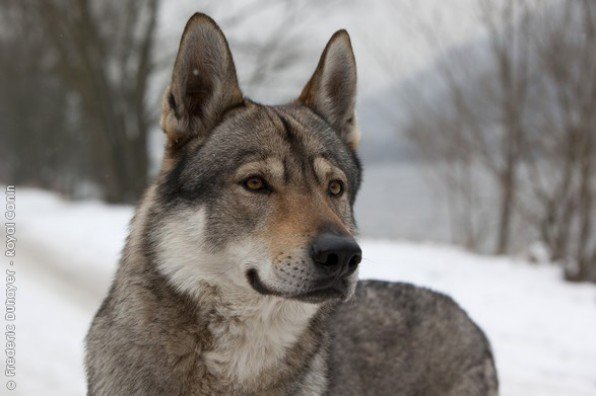
The Czechoslovakian Wolfdog possesses a complex but fascinating character, blending the traits of a dog and a wolf. It is energetic, active, highly resilient, and always distinguished by its quick reactions. Its movements are light and harmonious, and its ability to cover great distances is impressive. Among this breed’s strengths are its incredible fearlessness and intelligence. They are built to protect and excel at this task, showing a marked suspicion of strangers but never attacking without reason.
Loyalty to the family is one of the key traits of the Czechoslovakian Wolfdog. They form a very strong bond with their owner and family members. However, their independence and strong character require an authoritative, consistent, and experienced owner. This dog will not do anything “just because”; it needs clear motivation and an understanding of the task’s purpose. It is highly observant and learns quickly but can be stubborn if it sees no point in the commands. This is not a breed that will obey blindly.
Czechoslovakian Wolfdogs have highly developed pack behaviour. Within the family, they clearly establish a hierarchy. It is crucial that the human holds the position of leader. Relationships with other dogs can be difficult, especially with those of the same sex, if the dog has not been properly socialised from an early age. Small domestic animals may be treated as prey due to a strong hunting instinct, so introductions and cohabitation require great care and control.
An interesting feature is their vocal range. Czechoslovakian Wolfdogs rarely bark in the conventional sense. Their method of communication is more wolf-like: they can whine, grumble, and, of course, howl. The howl can be very melodic and is used for long-distance communication or expressing emotions. This is worth considering if you have sensitive neighbours. Similar to the Saarloos Wolfdog, which also has wolf ancestors, the Czechoslovakian Vlčák retains many natural instincts.
Health of the Czechoslovakian Wolfdog: Common Diseases and Prevention
Caring for a Czechoslovakian Wolfdog
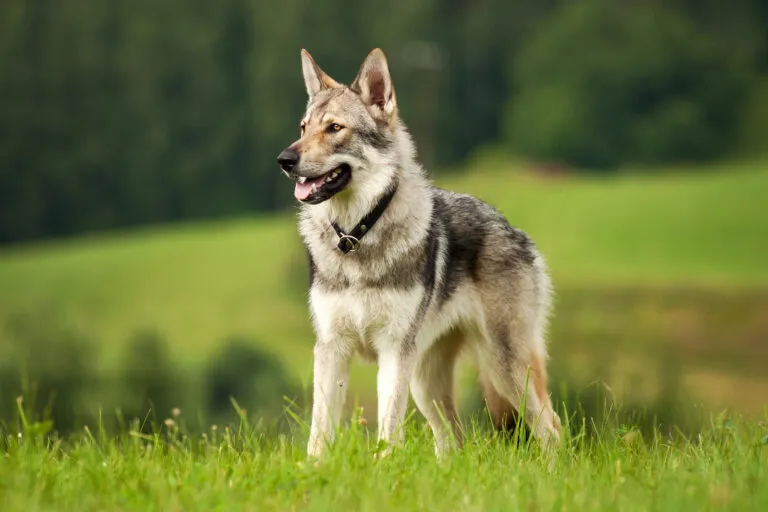
Caring for a Czechoslovakian Wolfdog has its own specifics, related to its origin and physical characteristics. It is not overly complicated but requires regularity and attention to detail.
Coat Care
The coat of a Czechoslovakian Wolfdog has natural protection and does not require frequent washing. In fact, frequent washing can be harmful by stripping away the natural oily layer that protects the skin and coat from moisture and dirt. It is recommended to wash the dog only when absolutely necessary, using special dog shampoos.
The main aspect of coat care is regular brushing. The Czechoslovakian Wolfdog has a pronounced seasonal shed, especially in spring when it loses its thick winter undercoat. During this period (usually 2-4 weeks), the dog needs to be brushed daily to remove dead hair and prevent mats from forming. At other times, brushing once or twice a week is sufficient. A wide-toothed comb and a slicker brush are suitable for this purpose.
| Season | Coat Type | Brushing Frequency | Notes |
|---|---|---|---|
| Winter | Thick undercoat, dense guard coat | 1-2 times a week | The coat provides reliable protection from the cold |
| Spring (Shedding) | Intensive shedding of the undercoat | Daily | Dead undercoat must be thoroughly removed |
| Summer | Significantly less undercoat, guard coat | Once a week | The coat is lighter but still protects from the sun |
| Autumn | Gradual growth of the undercoat | 1-2 times a week | Preparation for the winter season |
Other Aspects of Care:
- Nails: Inspect the nails regularly. If they do not wear down naturally during walks on hard surfaces, they need to be trimmed with special dog nail clippers about once a month. Overly long nails can cause discomfort and deform the paw.
- Ears: Periodically check the ears for dirt, redness, or an unpleasant smell. Clean the ears only as needed, using special ear-cleaning lotions for dogs and cotton pads. Do not use cotton buds, as they can damage the ear canal.
- Eyes: The eyes usually do not require special care. Ensure there is no excessive discharge or redness. If necessary, you can wipe the corners of the eyes with a clean, damp cloth or a special lotion.
- Teeth: To prevent the build-up of plaque and tartar, it is recommended to regularly brush the dog’s teeth with a special toothbrush and toothpaste for dogs. You can also give the dog special dental chews.
It is worth noting that the Czechoslovakian Wolfdog is not recommended for people who lack sufficient experience with dogs. This breed is for individuals who are not daunted by their pet’s fantastic stamina – daily hours-long walks in the fresh air, active games, and the opportunity to express its hunting instinct. However, it is important to remember that this wolf descendant has a complex character – walks must be managed, either in remote areas or on a lead and with a muzzle, especially in public places. For comparison, the Affenpinscher, though small, also requires attention to grooming, albeit of a different kind.
Training and Socialisation of the Czechoslovakian Wolfdog
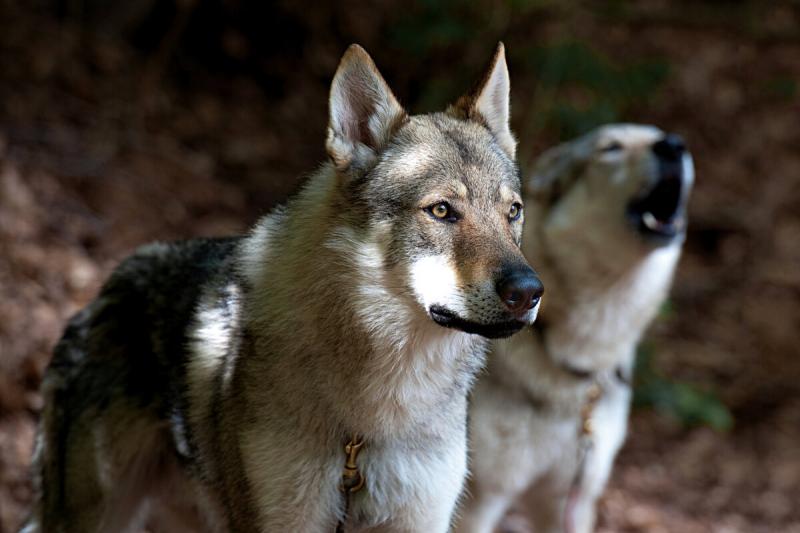
Training and socialisation are key aspects of raising a Czechoslovakian Wolfdog, requiring patience, consistency, an understanding of the breed’s psychology, and significant experience. Due to their wolf heritage, these dogs have an independent mind, high intelligence, and can be quite stubborn. They will not blindly follow commands if they do not understand their purpose or respect their handler.
- Early Socialisation: This is critically important. A Czechoslovakian Wolfdog puppy must be introduced to various people, animals (under control!), sounds, places, and situations from a very early age (after the quarantine period). The more positive experiences the puppy has, the more confident and well-adjusted it will become as an adult. Insufficient socialisation can lead to fear, aggression, or excessive suspicion.
- Positive Reinforcement: The best approach is training based on positive reinforcement (treats, praise, play). Harsh methods, shouting, or physical punishment are counterproductive and can destroy the trust between the dog and owner, as well as provoke aggression.
- Consistency and Patience: All family members must adhere to the same rules and commands. Training sessions should be regular but not too long, to keep the dog engaged. It’s important to remember that these dogs mature slowly, both physically and mentally, so one should not expect immediate results.
- Establishing Leadership: The dog must clearly understand who the leader of the “pack” is. This is achieved not through force, but through the owner’s confident, calm, and fair behaviour.
- Variety of Activities: Czechoslovakian Wolfdogs are intelligent and need mental stimulation. Monotonous training quickly bores them. Use a variety of exercises, games, obedience tasks, and tracking work. Many members of the breed successfully compete in various dog sports (obedience, agility (with size considerations), search and rescue).
- Managing Instincts: A strong hunting instinct and territorial nature require control. A reliable recall command (“come”) is vital. On walks in unfenced areas, it is better to use a long lead.
- Professional Help: Do not hesitate to seek help from an experienced dog trainer who is familiar with the characteristics of primitive breeds. This can help avoid mistakes in upbringing and establish the right connection with your dog.
This dog must not be kept on a chain. It needs close interaction with its family, lots of attention, and communication. Isolation can lead to destructive behaviour and psychological problems.
Feeding a Czechoslovakian Wolfdog: Key Recommendations
Pros and Cons of the Czechoslovakian Wolfdog Breed
| Pros | Cons |
|---|---|
| Striking appearance: Resemblance to a wolf makes them unique and beautiful. | Requires an experienced owner: Not suitable for beginners due to a complex character and wolf instincts. |
| High intelligence: Capable of learning quickly with the right motivation and approach. | Tendency towards dominance and stubbornness: Needs a firm but fair leader. |
| Extraordinary stamina: An ideal companion for active people, long hikes, and running. | Needs intensive and early socialisation: Requires a lot of effort to adapt to different situations and people. |
| Strong bond with family: Very loyal and devoted to their “pack”. | Possible aggression towards other dogs (especially of the same sex) and small animals: Strong hunting instinct. |
| Good guarding qualities: Natural suspicion of strangers and protection of territory. | Requires significant physical and mental exercise: A bored dog can become destructive. |
| Robust health: Generally a healthy breed with good genetics from wolves. | Dislikes being alone: Can suffer from separation anxiety, howl, or destroy things. |
| Unusual communication: Howling and other wolf-like sounds instead of frequent barking. | Howling can be a problem for neighbours. |
| Long-lived for a large breed: Lifespan of 10-16 years. | Slow to mature: Develops mentally and physically over a long period. |
Interesting Facts About the Czechoslovakian Wolfdog
- Experimental Origin: The breed was created as the result of a scientific experiment to improve the qualities of working dogs.
- Wolf Blood: The blood of Carpathian wolves flows in the veins of the Czechoslovakian Wolfdog. According to various estimates, the percentage of wolf blood can be up to 30%.
- Late Recognition: Despite work on the breed starting in the mid-20th century, final international recognition by the FCI only came in 1999.
- “Silent” Dogs: They rarely bark without reason. Their main form of vocal communication is howling, whining, and grumbling, just like wolves.
- Incredible Stamina: Capable of covering huge distances. There have been recorded cases of a Czechoslovakian Wolfdog running 100 km (approx. 62 miles) in 8 hours.
- Seasonal Coat: Their coat changes dramatically with the seasons. In winter, they have a very thick undercoat that almost completely disappears in summer.
- Strong Pack Instinct: They are very oriented towards their “pack” (family) and do not tolerate loneliness well.
- Not for Everyone: Due to its special characteristics, the breed is not suitable for everyone. It demands a lot of time, knowledge, patience, and a specific approach.
- Use in Films: Thanks to their wolf-like appearance, these dogs are sometimes cast in films where “wolves” are needed but are more manageable.
- Escape Artists: Czechoslovakian Wolfdogs are very resourceful when it comes to escaping. They can jump high fences, dig under them, and open simple latches. Therefore, the area where the dog is kept must be securely fenced.
Frequently Asked Questions (FAQ) about the Czechoslovakian Wolfdog
Is the Czechoslovakian Wolfdog suitable for families with children?
This is a complex question. If the dog has grown up with children and is properly socialised, it can be patient and gentle with them. However, due to its size, strength, and sometimes rough play style, interactions with small children must always be supervised by an adult. It is important to teach children to respect the dog and its personal space. Leaving small children alone with this breed is not recommended. The breed may not be the best choice for families with very young children due to its high energy and potential “wolf-like” behaviour.
Can a Czechoslovakian Wolfdog be kept in a flat?
In theory, yes, but it is very difficult and not recommended. These dogs need a lot of space and very intense physical exercise daily (a minimum of 2-3 hours of active walks, running, and games). Providing this in a flat is significantly harder. A bored wolfdog in a confined space can become destructive (chewing furniture, howling). The ideal option is a private house with a large, securely fenced garden.
How aggressive are they?
According to the breed standard, a Czechoslovakian Wolfdog should not be aggressive without reason. They are suspicious of strangers, which is part of their guarding nature, but should not show aggression without provocation. However, due to strong instincts and potential dominance, improper upbringing, lack of socialisation, or fear can lead to aggressive behaviour. Aggression towards other dogs, especially of the same sex, or towards small animals is also possible.
Do they shed a lot?
Yes, Czechoslovakian Wolfdogs have a pronounced seasonal shed, usually twice a year (in spring and autumn). The spring shed is particularly intense as they lose their thick winter undercoat. During this period, daily brushing is essential. At other times, shedding is moderate.
Are they easy to train?
No, training a Czechoslovakian Wolfdog is a challenge. They are very intelligent and learn quickly, but at the same time, they are independent and stubborn. They will not mechanically perform commands if they do not see the point or respect the trainer. It requires experience, patience, consistency, positive reinforcement, and the ability to “negotiate” with the dog. Harsh methods are unacceptable.
How much does a Czechoslovakian Wolfdog puppy cost?
The price of Czechoslovakian Wolfdog puppies can vary significantly depending on the pedigree, the breeder’s reputation, the parents’ titles, and other factors. In general, this is quite an expensive breed. It is important to choose a puppy from a responsible breeder who cares for the health and temperament of their dogs.
Video About the Breed
- Extremely hardy and athletic
- Clever and devoted to its handler
- Generally robust health
- A striking wolf-like appearance
- Absolutely not for a novice
- A huge need for exercise and work
- Independent, wary of strangers
- A strong chase instinct
| German Shepherd | Saarloos Wolfdog | Malinois | |
|---|---|---|---|
| Height | 55–65 cm | 60–75 cm | 56–66 cm |
| Energy | 4.5 | 4.5 | 5 |
| Apartment | 3 | 2 | 2 |
| Beginners | 2.5 | 1.5 | 1.5 |
Is the Czechoslovakian Wolfdog suited to a novice?
Is it a real wolf?
Does it get on with cats and small animals?
FCI Standard No. 332 · The Kennel Club
For apartments · For kids · For beginners · Active · Smartest · Hypoallergenic · All rankings →