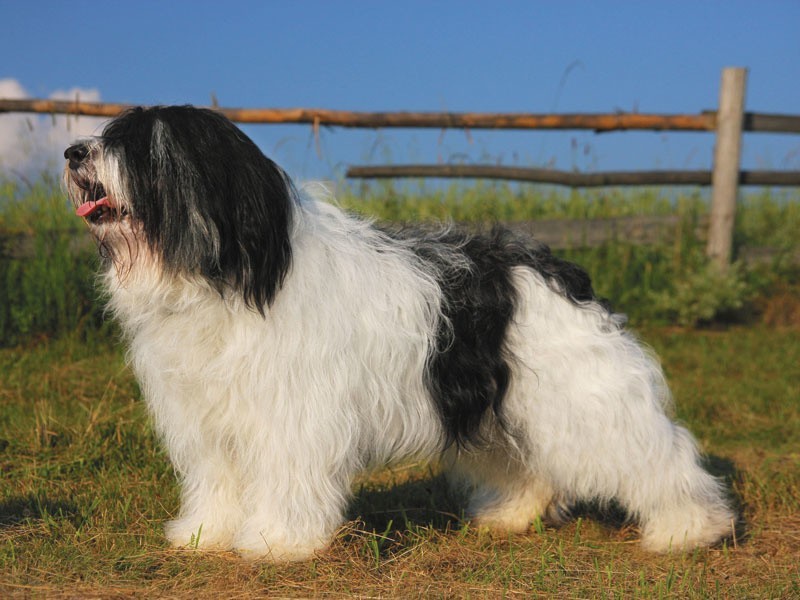
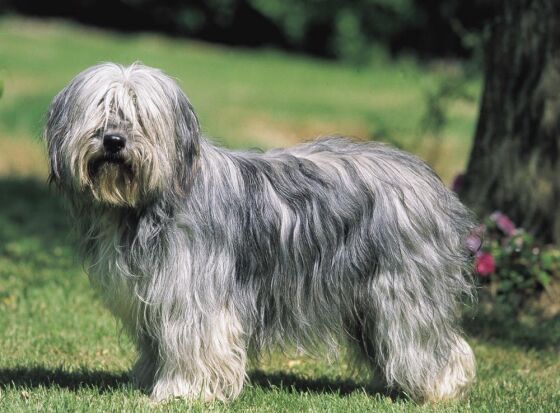
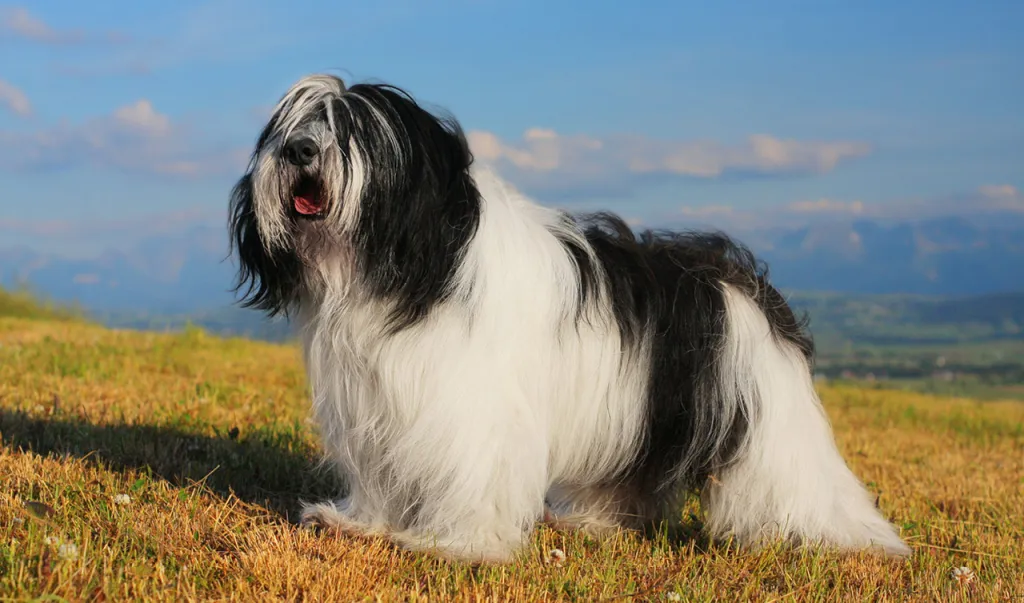
A shaggy Polish brain with a herder's heart — hardy and clever: devoted, watchful, steady and adaptable. The Polish Lowland Sheepdog (PON) is a medium shaggy herding breed with an excellent memory and high intelligence; good-natured and attached to its family, an excellent guard, but it may “walk all over” a weak owner, so it needs consistent training.
Apartment · with caveatsKidsCatsOther dogsBeginners · with caveats
The Polish Lowland Sheepdog(Polski Owczarek Nizinny (PON)) isn't just a dog with a memorable shaggy appearance; it's an exceptionally intelligent, loyal, and hard-working companion. Thanks to its stamina, quick wit, and adaptability to various conditions, this breed has captured the hearts of dog lovers worldwide. We'll explore all the features of this breed more on this on Tvaryny.
Polish Lowland Sheepdogs are excellent guards - hardy, adaptable to any conditions, and good-natured dogs. They adjust perfectly to life in a city flat, provided they get enough exercise, as well as to the space of a private home. Playful and affectionate with their family, yet watchful of strangers, they embody the ideal family protector. Thanks to their high intelligence and amenable nature, they are highly trainable, combining the qualities of a working dog and a beloved pet.
General Characteristics of the Polish Lowland Sheepdog
General Characteristics of the Polish Lowland Sheepdog · 14
Breed Name
Polish Lowland Sheepdog (Polski Owczarek Nizinny)
Other Names
Polish Lowland Sheepdog
Country of Origin
Poland
FCI Classification
Group 1 (Sheepdogs and Cattledogs), Section 1 (Sheepdogs). Standard No. 251.
Recognition
FCI, AKC, KC, UKC, ANKC, CKC
Lifespan
12–15 years
Height (at withers)
Males: 45–50 cm, Females: 42–47 cm
Weight
14–25 kg (average 15–20 kg)
Temperament
Lively, clever, perceptive, watchful, with an excellent memory, loyal
Grooming
Very high, requires daily thorough brushing
Activity Level
High, needs daily physical and mental stimulation
Trainability
Easy to train, but needs motivation, early socialisation, and consistency
Attitude towards Children
Very good, a patient and caring playmate
Attitude towards Other Animals
Needs early socialisation; may try to dominate or "herd" other animals
Interesting Facts about the Polish Lowland Sheepdog
Thanks to their stamina and thick coat, these dogs are perfectly adapted to working in harsh climatic conditions, including severe frosts and winds.
The pace (amble) (simultaneously moving both left, then both right, limbs) is a characteristic and energy-efficient gait for this breed.
Besides herding and dog shows, they also "work" successfully as therapy dogs, helping the elderly and children with special needs.
Polish Lowland Sheepdogs have an amazing ability to change their coat colour throughout their lives. Many puppies born black or dark will "fade" with age, turning grey or silver.
During World War II, PONs were used to transport ammunition and supplies through the ruins of Warsaw, thanks to their intelligence and endurance.
History and Origin of the Polish Lowland Sheepdog
The history of the Polish Lowland Sheepdog stretches back to ancient times, possibly even before the 1300s. It is beleived its ancestors were shaggy herding dogs brought to Central Europe by Asian nomadic tribes, likely the Huns, thousands of years ago. These dogs interbred with local breeds, giving rise to many modern sheepdogs. Its closest relatives are Hungarian herding dogs like the Puli and, possibly, the Tibetan Terrier. Although the Polish Lowland Sheepdog has a unique history, it shares its pastoral roots with other large sheepdogs from the region, such as the Polish Tatra Sheepdog or the Romanian Mioritic Shepherd Dog, though it differs from them in size and coat type.
A key event in the breed's history occurred in 1514, when a Polish merchant, Kazimierz Grabski, travelled to Scotland to trade grain for sheep. He was accompanied by several Polish Lowland Sheepdogs, which so impressed the Scottish shepherds with their working abilities that one of them traded a ram and a ewe for three of Grabski's dogs. It's thought that these dogs became some of the ancestors of the famous Bearded Collie, highlighting the ancient working qualities of the PON. The similarity in appearance and temperament between these breeds, as well as with the Old English Sheepdog (Bobtail) and the Dutch Schapendoes, points to the common ancestry of European herding dogs.
Unfortunately, the Second World War brought the breed to the brink of extinction. Most of the dogs perished, and it was only through the efforts of enthusiasts, particularly Dr. Danuta Hryniewicz, a doctor and veterinarian from northern Poland, and her "Kordegarda" kennel, that the breed was saved. From her legendary dog Smok, the last representative of the pre-war line, and a few other surviving individuals, she began a meticulous restoration programme. Her work formed the basis of the modern breed standard, which was accepted by the Fédération Cynologique Internationale (FCI) in 1959. Today, the Polish Lowland Sheepdog is not only a national treasure of Poland but also a popular family dog in many countries around the world.
Breed Standard and Appearance
The Polish Lowland Sheepdog is a muscular, stocky, medium-sized dog with a rectangular build (ratio of height to length is approximately 9:10). Its appearance invariably commands attention thanks to its thick, long, and shaggy coat, which covers the eyes and gives the head a distinctive look.
The overall impression is of a dog "all in fur". Its thick, shaggy coat is the breed's calling card. It should not hide its strong, muscular silhouette but rather emphasise it. The movement is free and flowing, often moving with a characteristic pace (amble).
Head: Proportional to the body, medium-sized, not too heavy. The thick fur on the forehead, cheeks, and chin gives the impression that the head is larger than it actually is. A well-defined stop.
Eyes: Oval-shaped, medium-sized, hazel-coloured (from light to dark brown). The expression is lively and perceptive. The eyes are hidden beneath the falling hair.
Ears: Pendant (hanging), medium-sized, heart-shaped, and set quite high.
Nose: The nose leather is large and dark (black or dark brown) appropriate to the coat colour.
Body: Strong, with a level topline, deep chest, and well-sprung ribs. Muscular loin, short croup.
Tail: Can be docked (in countries where permitted) or natural. Some puppies are born with a naturally short tail (bobtail). A natural tail is heavily coated with fur and can be of various lengths.
Coat: The breed's most characteristic feature. The coat is double, consisting of a dense, soft undercoat and a harsh, long, and shaggy topcoat. It is weather-resistant and provides excellent insulation.
The breed standard allows for any coat colour. The most common are white with black, grey, or fawn patches, as well as solid grey, fawn, or black dogs. The colour can change with age, especially in puppies - many dark puppies lighten with age, turning grey or silver.
Parameter
Description
Height at withers
Males: 45–50 cm; Females: 42–47 cm
Weight
14–25 kg
Body Format
Rectangular, body index ~110 (body length slightly greater than height)
Movement
Easy, flowing, "floating". Characteristic gait is a pace (amble).
Character and Temperament of the Polish Lowland Sheepdog
The character of the Polish Lowland Sheepdog is a unique blend of herding intelligence, watchdog alertness, and family devotion. They are renowned for their phenomenal memory (for both good and bad) and their ability to make independent decisions, a legacy from their pastoral past.
It's important to understand that "herding intelligence" is not the same as a simple desire to please. The PON was bred for independent work, often far from the shepherd. This means it can be stubborn, cunning, and may try to outsmart it's owner. It needs an owner who can be "more interesting" than the surrounding world and who will establish clear, consistent rules.
High Intelligence: They are extraordinarily smart dogs. They learn quickly, but their minds require constant stimulation. A bored sheepdog can become destructive.
Devotion to Family: They form strong bonds with their owners (often choosing one "main" person) and become fully-fledged family members. They love to be the centre of attention and take part in all family activities. They do not tolerate loneliness well.
Guarding Instinct: These are natural watchdogs. They are always alert and will announce the approach of strangers with a loud, resonant bark. However, they are not prone to unprovoked aggression but treat strangers with natural suspicion.
Energetic and Playful: This is an active breed that adores games and long walks. They retain their playfulness well into old age and will happily join in any "adventure".
Possessive Nature: They can sometimes show possessive traits towards their toys, food, or even their owners. This can be managed with correct upbringing and early socialisation.
Tendency to Bark: As a watchdog, this breed uses its voice. They bark to warn, bark out of excitement, and sometimes out of boredom. This should be considered, especially when living in a flat.
Pros and Cons of the Breed
Like any breed, the Polish Lowland Sheepdog has its advantages and disadvantages. It's important to assess them objectively before getting such a dog.
Pros and Cons of the Breed · 8
✅ Pros
❌ Cons
High intelligence and trainability
Requires complex and daily grooming
Boundless devotion to the family and love for its owner
Very strong tendency to bark loudly
Excellent watchdog qualities, alertness
Needs a high level of physical and mental stimulation
Good with children, a patient "nanny"
Can be stubborn and try to dominate (needs an experienced owner)
Adaptable to different living conditions (flat/house)
Sheds heavily, especially seasonally
Robust health and longevity
Suspicious of strangers (requires strong socialisation)
Exceptional memory
Prone to separation anxiety, does not tolerate being alone well
Compact medium size
Prone to weight gain
Socialisation and Upbringing of the Polish Lowland Sheepdog
Early and ongoing socialisation is the key to raising a well-balanced Polish Lowland Sheepdog. Due to their innate guarding instinct and suspicion of strangers, introducing the puppy (ideally between 3 and 16 weeks of age) to various people, sounds, places, surfaces, and other animals is critically important. This will help prevent excessive fearfulness or aggression in adulthood. The dog must learn that not every stranger or loud noise is a threat.
Training must be consistent but gentle. These are sensitive dogs that react poorly to harsh methods or shouting. They remember grievances for a long time. Positive reinforcement works best: praise, games, and treats. The owner must establish clear rules and boundaries from day one, proving themselves to be a confident but fair "pack leader". This dog will constantly test your "mettle", and if you show weakness, it will gladly take on the leadership role.
Training: How to Approach This Intelligent Sheepdog?
Training a Polish Lowland Sheepdog is a fascinating process, as you are working with one of the cleverest breeds. They grasp new commands "on the fly". However, their intelligence has a downside: they get bored quickly with repetitive drills. Training sessions should be short (10–15 minutes), dynamic, and interesting. Use game-based methods and plenty of praise.
Activity and Mental Stimulation
The Polish Lowland Sheepdog is not a couch potato. It needs a "job" to do. This can be physical work (long walks, jogging) or mental work. Without sufficient stimulation, this energy will find an outlet, and you most likely won't like the result (chewed furniture, incessant barking, digging holes).
The following dog sports are ideally suited:
Agility: Their nimbleness and speed make them excellent candidates.
Obedience: Demonstrates their high intelligence, but requires creativity from the trainer to keep the dog engaged.
Nosework: Taps into their innate sense of smell and desire to search.
Herding: If the opportunity is available, this is their true calling.
Even regular walks can be turned into training sessions by practising tricks, hiding toys, or simply letting the dog thoroughly sniff new places.
The Polish Lowland Sheepdog in the Family: Compatibility with Children and Other Animals
The Polish Lowland Sheepdog is often called an excellent family dog, and deservedly so. They are very patient and gentle with their family's children, becoming tireless playmates and reliable protectors for them. Their herding instinct may manifest in attempts to "herd" children - gently nipping at their heels or nudging them with their nose, trying to gather the "flock" in one place. This behaviour is easily corrected, but it's important to teach the dog from a young age that this is unacceptable, and also to teach children how to behave appropriately around the dog.
With other animals, the situation is more complex. With proper socialisation from an early age, a PON can live peacefully with other dogs and even cats that it considers part of its "pack". However, they can be possessive and may try to dominate other dogs, especially those of the same sex. Their strong herding instinct can be a problem when kept with small animals (rodents, birds), as they may view them as objects to be hunted.
Grooming the Breed
Coat Care
The Polish Lowland Sheepdog's coat is its pride and its owner's main chore. To prevent matting, which causes the dog pain and can lead to skin diseases, daily or at least every-other-day grooming is essential. This is not an exaggeration: skipping just a few days can lead to mats that can only be removed by clipping. This can cause pain, skin irritation, and even serious infections. Their thick coat requires daily brushing, especially during shedding season.
Tools: You will need a comb with wide metal teeth (to get down to the skin), a slicker brush to break up small tangles, and a spray-on conditioner to make brushing easier.
Process: Brush the dog in layers, starting from the roots and working towards the ends of the hair. Moisten the coat with the spray. Pay special attention to areas where mats form most often: behind the ears, in the armpits, on the belly, and on the "trousers".
Clipping: PONs do not require professional show trims, but a "hygiene trim" (around the eyes, paw pads, and anal area) is essential. Some owners clip their dogs shorter for summer to make grooming easier, but never shave them bare - the coat also protects them from the heat.
Bathe a Polish Lowland Sheepdog only as needed, usually no more than once every 2–3 months. Frequent washing can disrupt the skin's natural oil balance. Use high-quality shampoos and conditioners for long-haired dogs. After a bath, the coat must be thoroughly dried with a hairdryer while brushing simultaneously to prevent tangling.
Other Aspects of Hygiene
Regularly inspect the eyes and ears. The hair around the eyes should be trimmed or tied up in a topknot so it doesn't irritate the cornea. Ears should be cleaned with a special lotion 1–2 times a week, and excess hair from the ear canal should be gently removed (plucked) to ensure ventilation and prevent infections. Nails should be trimmed every 3–4 weeks if they don't wear down naturally.
Nutrition
Diet and Nutrition for the Polish Lowland Sheepdog
Health and risks
Health and Common Breed Illnesses
Frequently Asked Questions (FAQ) about the Breed · 8
Is the Polish Lowland Sheepdog suitable for living in a flat? Yes, this breed can live in a flat, but with one crucial condition: it must receive sufficient physical and mental stimulation. Daily long walks (minimum 1.5–2 hours), games, and training are mandatory. Without this, the dog can become restless and destructive.
Does the Polish Lowland Sheepdog shed a lot? Yes, they shed quite heavily, especially during seasonal periods (spring and autumn) when the dog changes its undercoat. Regular brushing helps control the amount of hair in the home, but it's impossible to eliminate it completely. Their hair tends to get caught in the topcoat rather than falling on the floor, which leads to matting.
Is the Polish Lowland Sheepdog hypoallergenic? No, this is a common myth. Although they have hair rather than fur, they shed quite a bit (especially seasonally) and produce dander, which is the main allergen. They are not recommended for people with allergies.
Is their coat difficult to care for? Yes, grooming requires time, patience, and consistency. If you are not prepared to spend 15–30 minutes every day or every other day brushing your dog, this breed is not for you. A neglected coat quickly becomes matted, which can lead to pain and skin problems.
Are these dogs noisy? Yes, they are prone to barking. It's part of their watchdog instinct. They will bark to warn of guests, suspicious noises outside the door, or simply out of boredom. Proper training and sufficient exercise can partially correct this behaviour, but you won't be able to "switch off" the barking completely.
Is this breed suitable for a novice owner? The Polish Lowland Sheepdog can be a challenge for an inexperienced owner due to its high intelligence, stubbornness, need for constant stimulation, and complex grooming. It is best suited for an active person or family with previous dog experience who is willing to dedicate a lot of time to training and care.
Can they be left alone while I am at work? This is difficult for them. PONs are very human-oriented dogs and are prone to separation anxiety. They are not suitable for people who spend the entire day away from home, unless company or doggy daycare can be provided.
How do Polish Lowland Sheepdogs handle the heat? Their double coat acts as a thermos - insulating from both cold and heat. Never shave this breed in the summer! This will disrupt their natural thermoregulation. However, in extreme heat, they need shade, cool water, and limited activity, as they can overheat.
Video of the Breed
FAQ
Is the Polish Lowland Sheepdog easy to train?
It is very clever and has an excellent memory, so it learns fast; but it may “walk all over” a soft owner, so consistency and calm, firm leadership are needed.
Is the PON good for a family?
Very — a good-natured, devoted and family-attached dog, good with children and animals, and an excellent guard that warns calmly, without needless aggression.
Does the coat need much care?
Yes — the dense shaggy coat must be brushed regularly to avoid matting; shedding is moderate but care is constant.