

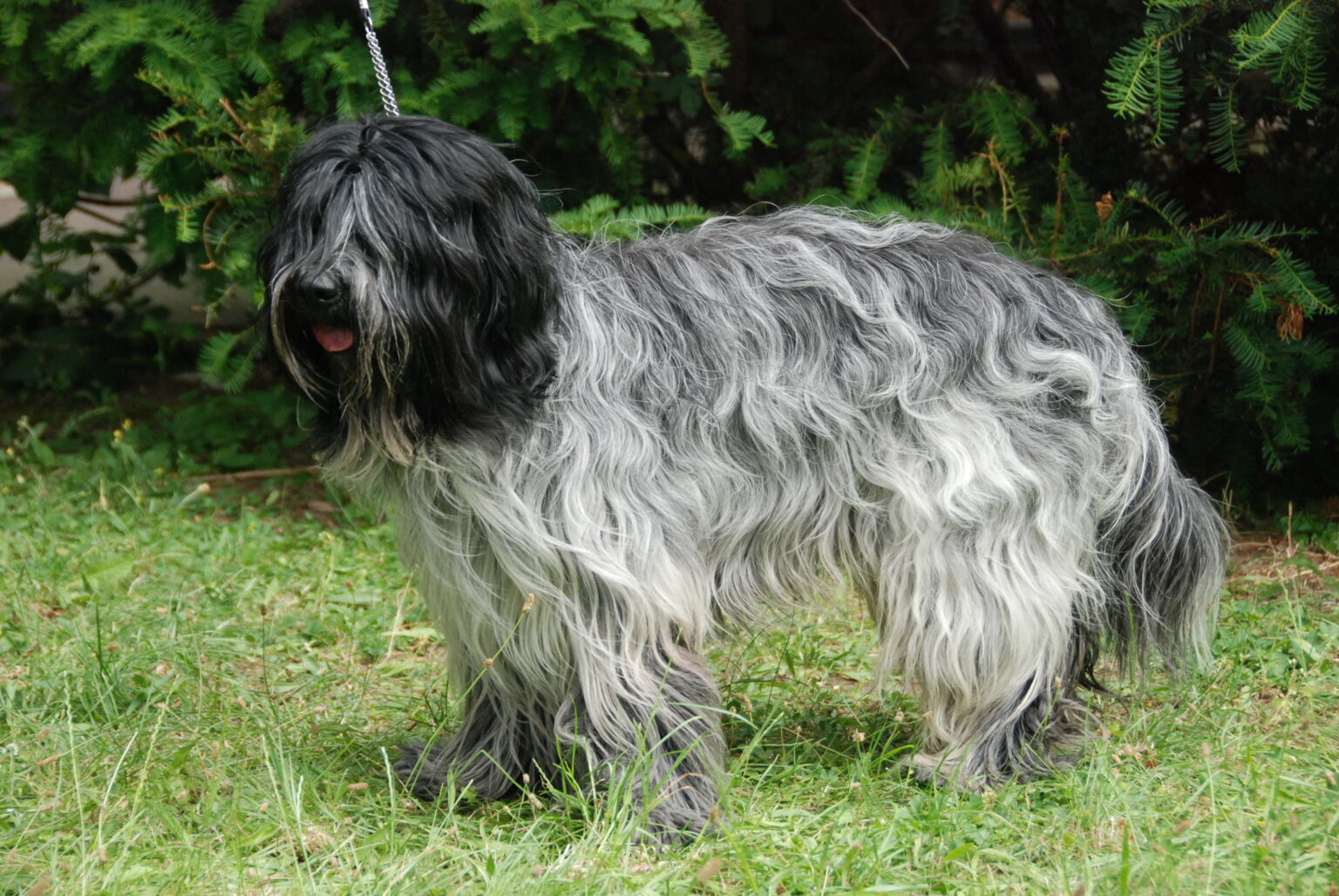
| Height | 40–50 cm |
| Weight | 12–20 kg |
| Lifespan | 12–15 years |
| FCI group | 1 · sheepdogs and cattle dogs |
| Origin | Netherlands |
Exact ratings
Common health issues
Nutrition
If you’re an active person who loves getting out into nature, the Schapendoes will be your loyal companion, a soulful friend, and if needed, a good shepherd and watchful guard dog. Representatives of this breed are also used as sniffers and rescue dogs. They have a friendly disposition and become deeply attached to their owners, almost equally to all family members.
The Dutch name of the breed – Schapendus – “enciphers” the appearance of this cheerful, playful dog. An attentive gaze from intelligent eyes, a “shaggy” head that appears very large and broad due to its whiskers, beard, and eyebrows, effortless movement, and exceptional endurance – these are the distinguishing features of the breed. The rare combination of developed intelligence and an amenable character makes the Schapendoes straightforward to train and maintain. Your pet will easily get along with other domestic animals, make friends, and play for hours with children, and will happily join you on your morning run. And if this “shaggy shepherd” finds work with a flock, he’ll be a wonderful herder. You can read more about this fascinating breed on Tvaryny.
Schapendoes: A Brief Overview of the Breed
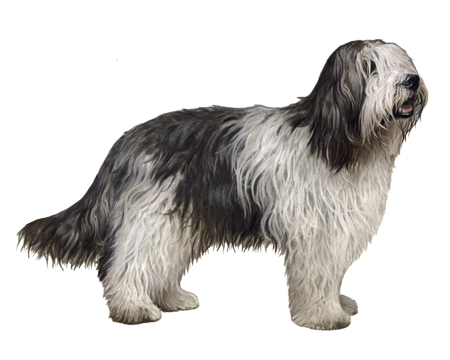
- Origin: Netherlands
- Year of first mention: 1953 (systematic breeding began 1940-1945)
- Purpose: Herding dog, companion dog, sports dog
- Lifespan: 12-15 years
- Height at Withers: 42-50 cm (males), 40-47 cm (females)
- Weight: 13-20 kg (proportional to height)
- Colour: Any, blue-grey with a black tinge preferred
History of the Schapendoes Breed
The history of the Schapendoes breed, also known as the Dutch Sheepdog, is closely linked to the agricultural traditions of the Netherlands, particularly the swampy and peatland areas of the Drenthe and Veluwe provinces. For centuries, this dog was an indispensable helper to farmers and livestock breeders, serving as a shepherd for sheep and cattle. Its origin is somewhat mysterious, but it’s believed that the Schapendoes is a descendant of ancient European long-haired herding dogs. Its ancestors might have been various local sheepdogs that lived in the Netherlands and neighbouring regions.
In the early 20th century, with changes in agriculture and a decrease in sheep populations, the demand for herding dogs significantly declined, and the Schapendoes breed found itself on the brink of extinction. During the Second World War, its population plummeted to a critically low level. It was at this point that enthusiasts, notably the prominent Dutch cynologist Mr. Pieter Toepoel, took on the task of preserving this unique breed. Mr. Toepoel began systematic breeding of the Schapendoes between 1940 and 1945, gathering the remaining purebred representatives he could find.
The dedicated work to restore the population bore fruit. In 1952, the breed received preliminary recognition from the Dutch Kennel Club (Raad van Beheer op Kynologisch Gebied in Nederland). This was a crucial step towards official recognition and standardisation. The first official Schapendoes breed standard was approved in 1954, and simultaneously, a studbook was established where purebred dogs began to be registered. Since then, only officially registered individuals have been used for breeding, which allowed for the controlled restoration and development of the breed.
International recognition came to the Schapendoes breed in 1971, when it was officially registered by the Fédération Cynologique Internationale (FCI) under number 313 (Group 1, Section 1: Sheepdogs without working trials). This recognition contributed to the breed’s growing popularity outside the Netherlands and attracted the attention of dog fanciers from other countries. Despite significant progress in its recovery, the Schapendoes breed is still considered to be in a developing stage, and breeding is carried out with
The Schapendoes shares common roots with many other European herding breeds, also known for their long coats and endurance. These include the Bearded Collie, the Polish Lowland Sheepdog, and some varieties of Belgian Shepherds, notably the Malinois (as a working branch with similar instincts) and the Tervuren (as a long-haired relative). Despite these shared traits, the Schapendoes has maintained its unique characteristics, making it truly special.
Official Schapendoes Breed Standard and Appearance Description
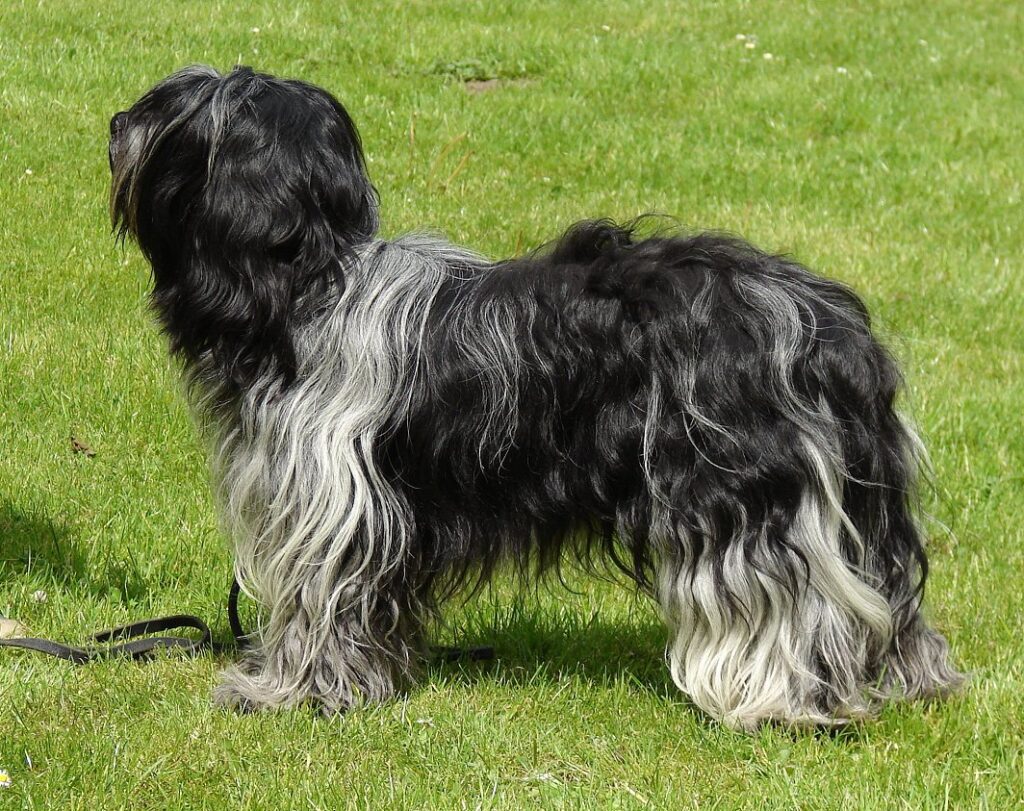
The Schapendoes is a medium-sized, long-haired dog with a light and agile build. According to the FCI standard, it’s a dog that exudes alertness, joy, and energy. It doesn’t appear heavy or cumbersome; its movements are light, springy, and quick. The dog’s weight should be proportionate to its height, typically ranging from 13-20 kg. The height at the withers for males is 42-50 cm, and for females, it’s 40-47 cm. Deviations from these parameters are considered undesirable.
The head of the Schapendoes appears large due to the abundant hair on its muzzle. The skull is broad, and the forehead is slightly rounded. The stop (transition from forehead to muzzle) is pronounced but not abrupt. The muzzle gradually tapers towards the nose and should not be pointed. A distinctive feature is the dense whiskers, beard, and eyebrows, which give the head a characteristic “shaggy” look. The nose is black, with well-developed nostrils.
The eyes of the Schapendoes are one of the breed’s most expressive features. They are large, round, dark brown, set straight and not deeply. The gaze is lively, intelligent, open, and sincere, reflecting the dog’s friendly character. The gaze itself is considered one of the breed’s key characteristics.
Ears are medium-sized, hanging, triangular in shape, and covered with long hair. When alert, the base of the ears may lift, giving the dog an attentive appearance.
The neck is strong, muscular, of medium length, and well-set.
The body is strong but not heavy. The back is straight and firm. The loin is short and muscular. The croup is slightly sloping. The chest is deep but not too broad, and the ribs are well-sprung. The underline is moderately tucked up.
Limbs are strong, straight, and parallel. Shoulders are sloping, elbows are close to the body. Forearms are straight. Paws are oval-shaped, compact, with firm pads. Toes are tightly knit. The movements of the Schapendoes are light, springy, and sweeping, reflecting its herding abilities.
The tail is long, reaching the hock or below. When at rest, it hangs down or is slightly raised. During movement or excitement, it is carried high over the back, forming an arc, but it should not curl into a ring. The tail is well-covered with hair.
Coat – this is the main distinguishing feature of the Schapendoes. It is long, dense, slightly wavy, but not curly or silky. On the head, muzzle, and limbs, the hair is particularly long, forming whiskers, a beard, eyebrows, and “trousers” on the hind legs. The undercoat is well-developed. The coat should be natural, without excessive trimming. Matting is permissible in adult dogs, but it should not hinder movement. The coat provides protection from the elements.
Colouring in the Schapendoes can be any, but blue-grey with a black tinge is preferred. Patches of any colour are acceptable.
| Parameter | Standard |
|---|---|
| Height (males) | 42-50 cm |
| Height (females) | 40-47 cm |
| Weight | 13-20 kg (proportional to height) |
| Eyes | Large, round, dark brown, direct gaze |
| Coat | Long, dense, slightly wavy, with undercoat |
| Colouring | Any (blue-grey preferred) |
| Tail | Long, carried high when moving |
Schapendoes Character: Temperament and Behaviour
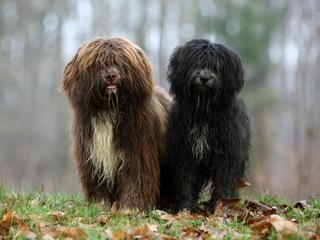
One of the main reasons for the Schapendoes’ growing popularity is its wonderful temperament and always cheerful, friendly disposition. It’s a highly active, joyful, and playful dog that retains its “puppy-like” characteristics throughout its life. The Schapendoes is exceptionally devoted to its family and strives to participate in all family affairs. It easily obeys commands if it understands their purpose and receives positive reinforcement, yet it maintains a degree of independence and initiative – traits inherited from its herding past.
The Schapendoes is renowned for its friendliness towards children. It’s patient, playful, and can entertain youngsters for hours, acting as their “shaggy nanny”. It’s crucial that children understand how to behave around a dog, and that interactions always take place under adult supervision. Typically, the Schapendoes gets on well with other household pets, especially if raised alongside them. Early socialisation plays a key role in shaping its attitude towards strangers and other animals.
While a Schapendoes can be an excellent guard dog, signalling the approach of strangers with a clear bark, it’s not prone to excessive barking without cause. Its guarding qualities manifest more in vigilance and alerting rather than aggression. Towards friends and family acquaintances, it usually behaves affably once the owner indicates that everything is in order.
It’s important to understand that while the Schapendoes is very people-oriented, it is also a working dog with a high level of energy and intelligence. Dogs actively used in herding work or dog sports may display greater independence in decision-making compared to those living solely as companions. However, even “pet” Schapendoes require significant physical and mental stimulation, otherwise, they might find their own “work” to do, which the owner might not always appreciate (e.g., digging or chewing).
The Schapendoes is a dog that hates loneliness. It craves constant contact with its owner and family. If left alone for extended periods, it may suffer from separation anxiety and develop destructive behaviours. This isn’t a dog suited for people who are out of the house all day. The ideal owner for a Schapendoes is an active individual or family willing to dedicate plenty of time and attention to the dog, providing it with sufficient exercise and mental stimulation.
Ideal Living Environment and Physical Activity
Thanks to its herding background and high energy levels, the Schapendoes thrives best in a private house with a well-fenced garden, where it can move freely and expend some of its energy. Even with a garden, it still needs regular and lengthy walks outside. If you keep a Schapendoes in a flat, be prepared to provide it with several hours of active walks every day. A simple 15-20 minute outing for a “quick errand” is categorically insufficient for this breed.
Physical activity for the Schapendoes should be varied and intense. This can include:
- Long walks or hikes: A Schapendoes will happily join you for a run or a bike ride (after reaching full physical development).
- Outdoor games: Fetch, frisbee, active ball games. They adore running and jumping.
- Dog sports: Schapendoes excel at agility, flyball, herding trials, obedience, and search and rescue work. These activities satisfy not only the dog’s physical but also its mental needs.
- Swimming: Many Schapendoes enjoy swimming, which is a wonderful low-impact way to burn off energy.
Lack of physical and mental stimulation can lead to problematic behaviours such as hyperactivity indoors, destructive tendencies, or excessive barking. Remember, a tired Schapendoes is a happy Schapendoes and a happy owner.
Schapendoes Coat Care

The long, dense coat is one of the most noticeable features of the Schapendoes, and it requires regular grooming, though perhaps not as complex as it might initially seem. It’s important to remember that the Schapendoes’ coat should look natural, without excessive trimming or intricate cuts. Its main function is to protect the dog from cold, heat, and moisture.
Brushing: The primary care involves regular brushing to prevent matting and remove dead hair. Use a metal brush with long, blunt teeth or a wide-toothed comb. Brush gently, ensuring the brush penetrates to the base of the coat without scratching the skin. Special attention should be paid to areas prone to matting: behind the ears, under the armpits, on the inside of the thighs, on the “trousers,” and on the tail. The frequency of brushing depends on the individual characteristics of the dog’s coat, but on average, 1-2 times a week is sufficient. During shedding seasons (usually twice a year), you’ll need to brush more often.
Bathing: The Schapendoes doesn’t require frequent bathing. You should only bathe your dog when necessary, when it’s genuinely dirty. Excessive bathing can dry out the skin and coat, disrupting its natural protective layer. Use specialised shampoos designed for long-haired dogs. After bathing, the coat should be thoroughly dried, preferably with a hairdryer on a cool setting, while brushing simultaneously.
Eye and Ear Care: Regularly check your dog’s eyes for discharge and its ears for cleanliness. Long hair around the eyes and on the ears can contribute to dirt accumulation and the development of infections. If necessary, gently remove dirt with a damp cotton pad or a special eye/ear cleaning solution.
Nail Trimming: As with any dog, the Schapendoes’ nails need regular trimming if they don’t wear down naturally during walks. Overly long nails can cause discomfort and paw problems.
- Brush the coat 1-2 times a week with a metal brush.
- Pay special attention to areas prone to matting (behind the ears, under the armpits, etc.).
- Bathe the dog only when necessary.
- Regularly check and clean the eyes and ears.
- Trim nails as they grow.
Training and Socialisation of the Schapendoes

Schapendoes are exceptionally intelligent and quick-witted dogs, which makes them easy to train, especially for experienced owners. They quickly grasp new commands and are eager to please their owner. However, thanks to their independence, inherited from their herding work, they can also show stubbornness if they don’t see the point in a task or if training becomes monotonous. Therefore, the key to success is consistency, patience, and the use of positive methods.
Positive Reinforcement: Schapendoes are very sensitive and respond wonderfully to praise, treats, games, and other forms of positive reinforcement. Harsh compulsion, shouting, or physical punishment are strictly forbidden, as they can destroy the dog’s trust in its owner and negatively impact its psyche. They may become fearful or, conversely, more stubborn.
Early Socialisation: As with any breed, early and comprehensive socialisation is critically important for the Schapendoes. From a young age, a puppy should be introduced to different people (of various ages, genders, appearances), places, sounds, other dogs, and animals. This will help to form a well-balanced and confident dog that won’t be fearful or overly wary in new situations.
Variety in Training: To maintain the Schapendoes’ interest, make training varied and engaging. Include games, problem-solving tasks, and trick training. Their high energy and jumping ability make them ideal candidates for dog sports such as agility, flyball, and obedience. These activities not only strengthen the bond between dog and owner but also provide the necessary physical and mental stimulation.
Herding Instincts: Despite the fact that many Schapendoes today live as companions, their herding instincts remain strong. They may try to “herd” children, other pets, or even you. It’s important to teach the dog to redirect these instincts towards permitted objects or activities if you don’t plan to engage in herding sports with them.
Schapendoes Health: Typical Ailments and Prevention
Schapendoes Nutrition: Key Recommendations
The Schapendoes as a Family Dog
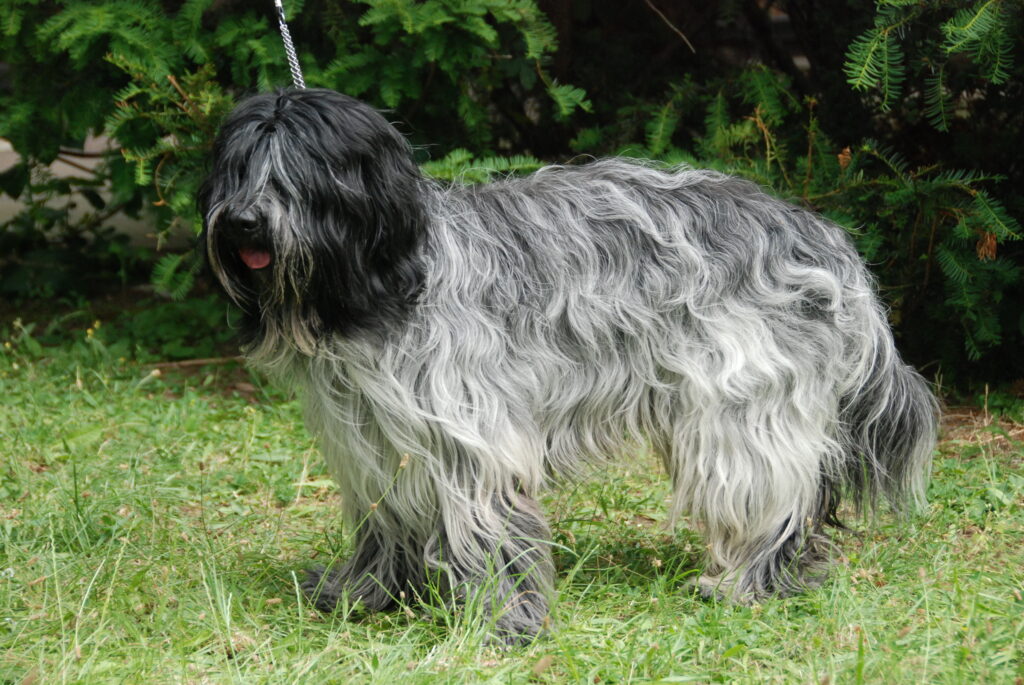
The Schapendoes isn’t just a working dog; it’s a wonderful family companion for active individuals. Thanks to its friendly disposition, playfulness, and extraordinary attachment to its owners, it fits wonderfully into family life. As already mentioned, they get along brilliantly with children, becoming patient and cheerful playmates for them. Their energy matches that of children, and they’ll happily participate in any activities.
This breed is very people-oriented and craves constant interaction. A Schapendoes wants to be by its family’s side, participating in household chores, and relaxing at its owner’s feet in the evening. It forms strong bonds with all family members, not just one person, making it an ideal choice for a large household.
However, it’s worth remembering that a Schapendoes is not a “couch potato” dog. It needs an active lifestyle and sufficient physical and mental stimulation. A family considering getting a Schapendoes should be prepared to dedicate significant time to walks, games, training, and shared activities. For less active people or those who spend a lot of time away from home, a Schapendoes might not be the right fit.
With proper socialisation, a Schapendoes generally welcomes guests and can coexist with other household pets. Its natural alertness makes it a good “doorbell” that announces the arrival of strangers, but it’s not prone to unprovoked aggression.
Working Abilities: Shepherd and Beyond
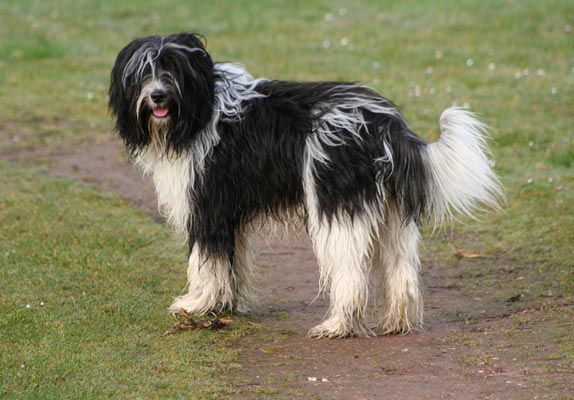
While most Schapendoes today live as companion dogs, their herding past has left a deep imprint on their character and abilities. They were bred to work with large flocks of sheep in open spaces, which demanded independence, initiative, stamina, and the ability to react quickly to changing situations. Unlike some other herding breeds that work predominantly with their gaze (“eye dogs”), the Schapendoes uses its movement and voice to control the flock.
Even in a home environment, herding instincts can manifest in a tendency to “gather” family members or other animals. These instincts can be successfully channeled into dog sports such as Herding. Engaging in herding activities allows the dog to realise its natural aptitudes, get physical and mental exercise, and helps the owner better understand their beloved pet’s behaviour.
In addition to herding work, Schapendoes have proven themselves to be excellent dogs for agility. Their speed, agility, jumping ability, and desire to work as a team with their owner make them some of the best athletes in this sport. They also successfully participate in obedience competitions, flyball, and are involved in search and rescue activities thanks to their developed sense of smell and endurance.
Providing a Schapendoes with the opportunity to utilise its working abilities, even if it’s not classic sheep herding, is an important condition for a happy and fulfilling life. This could involve regular obedience training, engaging in sports, or simply intellectual games that mimic working tasks.
Pros and Cons of the Schapendoes Breed
Like any breed, the Schapendoes has its advantages and disadvantages, which a potential owner should consider before deciding to get such a dog.
| Pros of the Schapendoes | Cons of the Schapendoes |
|---|---|
| Extremely friendly and family-oriented | High energy level, requires lots of activity |
| Gets along excellently with children | Doesn’t tolerate loneliness, can suffer from separation anxiety |
| Intelligent, easily trained with positive methods | Requires early and comprehensive socialisation |
| Generally a healthy breed with a good lifespan | Grooming of the long coat requires regularity |
| Joyful and playful, retains its “puppy-like” qualities | May exhibit herding instincts (“herding” family members) |
| Wonderful partner for active sports and recreation | Not suitable for inactive people or life exclusively in a kennel/on a leash |
| Good watch dog (alerts) | Can be stubborn if training is monotonous |
| Gets along well with other animals with early socialisation | Slight predisposition to some genetic diseases (eyes, joints) |
Interesting Facts about the Schapendoes
- The name “Schapendoes” comes from the Dutch word “schapendoes”, which literally means “sheepdog” or “shaggy sheepdog”.
- After World War II, the breed was so rare that its population had to be rebuilt almost from scratch. Mr. Pieter Toepoel played a key role in this process.
- Schapendoes are known for their “jumping” abilities. They can jump quite high, especially when working with a flock or doing agility.
- The gaze of the Schapendoes is considered one of the breed’s hallmarks – large, round, dark brown eyes that radiate intelligence, kindness, and sincerity.
- Despite the long coat, its care is not overly complicated; the key is regularity. The coat should remain natural.
- The Schapendoes is one of the lesser-known Dutch herding breeds outside the Netherlands, compared to the more popular Dutch Shepherds (Nederlandse Herdershond) of various coat types.
- This breed is very popular in Scandinavian countries, where it is actively used in dog sports.
Frequently Asked Questions about the Schapendoes Breed
- Do Schapendoes shed? Yes, Schapendoes shed seasonally, usually twice a year. During shedding, you’ll need to brush the dog more frequently to remove dead undercoat.
- Is the Schapendoes suitable for apartment living? A Schapendoes can live in a flat, but only if they are provided with sufficient physical exercise and long daily walks. This is not a dog for a “couch potato” lifestyle.
- Is it difficult to train a Schapendoes? Schapendoes are intelligent and learn easily with positive methods. They aim to please their owner. However, their independence requires consistency and patience in training.
- Do Schapendoes get along well with children? Yes, Schapendoes usually get along very well with children; they are patient and playful. It’s important to teach children how to behave around a dog and supervise their interactions.
- How much does a Schapendoes puppy cost? The cost of a Schapendoes puppy can vary depending on its lineage, the breeder’s reputation, region, and other factors. Generally, the price for a purebred puppy with papers falls within the mid-range for FCI breeds.
- How long do Schapendoes live? The average lifespan of a Schapendoes is 12-15 years, which is considered a good lifespan for a medium-sized dog.
- Does a Schapendoes need professional grooming? Professional grooming is not essential for a Schapendoes if the owner is willing to dedicate enough time to regular at-home coat care (brushing, bathing when necessary).
Video About the Breed
- Friendly, cheerful, good with children
- Clever, agile, easy to train
- Versatile: herder, guard, rescuer
- Very robust health
- A high need for exercise and activity
- The shaggy coat needs regular brushing
- Cannot bear being alone
- Prone to barking
| Bearded Collie | Polish Lowland Sheepdog | Puli | |
|---|---|---|---|
| Height | 51–56 cm | 42–50 cm | 36–45 cm |
| Energy | 4 | 4 | 4 |
| Apartment | 2.5 | 3 | 3 |
| Beginners | 3 | 3 | 2.5 |
Is the Schapendoes good for a family?
What can the Schapendoes do?
Does the coat need much care?
FCI Standard No. 313 · Raad van Beheer
For apartments · For kids · For beginners · Active · Smartest · Hypoallergenic · All rankings →