A phlegmatic English gentleman: calm, devoted, an ideal stay-at-home dog for a flat. But it is also one of the most health-challenged breeds — the flat face causes laboured breathing (BOAS), overheating and a short life, so a responsible breeder is critical.
ApartmentKidsCatsOther dogs · with caveatsBeginners
The English Bulldog is not merely a dog; it is a genuine symbol of England, embodying aristocracy and unshakeable calm. This "true gentleman" - conservative, imposing, and somewhat phlegmatic - has won the hearts of millions across the globe. He makes a wonderful companion who causes no unneccessary trouble and requires neither intense physical exertion nor long walks, making him the ideal choice for people with a measured lifestyle and those living in city flats. Although the ancestors of modern bulldogs were serious fighting dogs, today's representatives of the breed are primarily decorative pets, devoid of aggression, which makes them excellent family members. Find out more on Tvaryny.
English Bulldog: A Brief Breed Overview
English Bulldog: A Brief Breed Overview · 6
Origin
Great Britain
First Mentioned
17th Century (modern type - 1817)
Lifespan
8–10 years
Height at Withers
31–40 cm
Weight
Males: 24–25 kg, Females: 22–23 kg
FCI Group
Group 2 (Pinscher and Schnauzer, Molossoid and Swiss Mountain and Cattledogs), Section 2.1 (Molossoid breeds, Mastiff type)
Interesting Facts About the Breed
National Symbol: The English Bulldog is considered the unofficial national symbol of Great Britain, personifying the resilience and determination of the British spirit, and is often associated with Winston Churchill.
Mascots: Many sports teams, especially in the USA (for example, the Yale University team), have chosen the bulldog as their mascot.
Cannot Swim: Due to their massive body structure, large head, and short legs, most bulldogs cannot swim. They need to be watched carefully near water.
"Noisy" Dogs: The structure of their respiratory system means they constantly make various sounds: snuffling, wheezing, sneezing, and at night - loud snoring.
Caesarean Section: About 80% of bulldog puppies are born via Caesarean section.
History of the Breed
The history of the English Bulldog is closely tied to the bloody pastimes of yesteryear. The ancestors of these dogs were Old English Bulldogs, used for bull-baiting - a popular entertainment in England from the 13th to the 19th century. These were exceptionally durable, fearless dogs insensitive to pain, with powerful jaws and a low centre of gravity, allowing them to latch onto a bull's snout and hold on regardless of the consequences. Their appearance and character were formed exclusively by the functional requirements of this cruel sport.
Cardinal changes in the breed's fate occurred in 1835 when the Cruelty to Animals Act was passed in Great Britain, banning bull-baiting. The need for aggressive fighters vanished, and the breed found itself on the brink of extinction. However, enthusiasts stepped in to save the bulldog by changing its purpose. They began selective breeding aimed at softening the temperament and altering the appearance. Aggression and fighting qualities were gradually eradicated, while calmness, balance, and companionable traits were cultivated instead.
Key figures in the breed's revival were the bulldogs Crib and Rosa, who were entered into the Kennel Club Stud Book in 1817 and became the standards for the new type. It is believed that all modern English Bulldogs are their descendants. In 1858, the legendary bulldog King Dick was born, considered the ideal representative of the breed. A real breakthrough was the founding of the world's first single-breed club in 1875 - The Bulldog Club Inc. This club developed and adopted the breed standard, which, with minor changes, remains in force today, preserving the uniqueness and purity of the English Bulldog.
What the English Bulldog Looks Like: Standard and Appearance
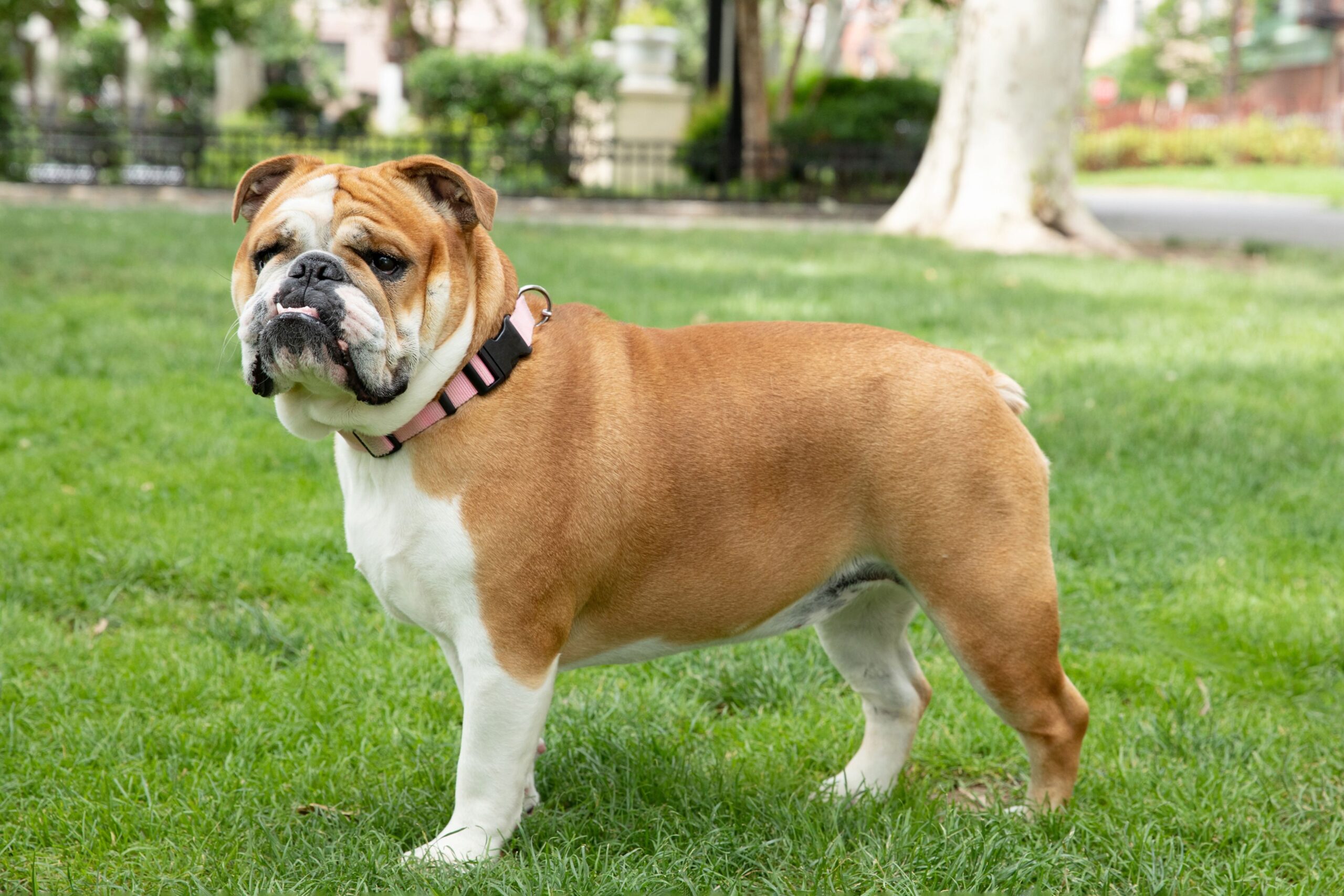
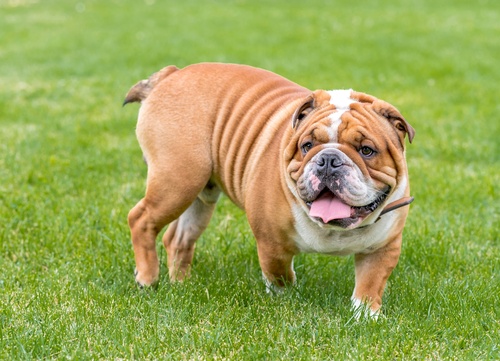
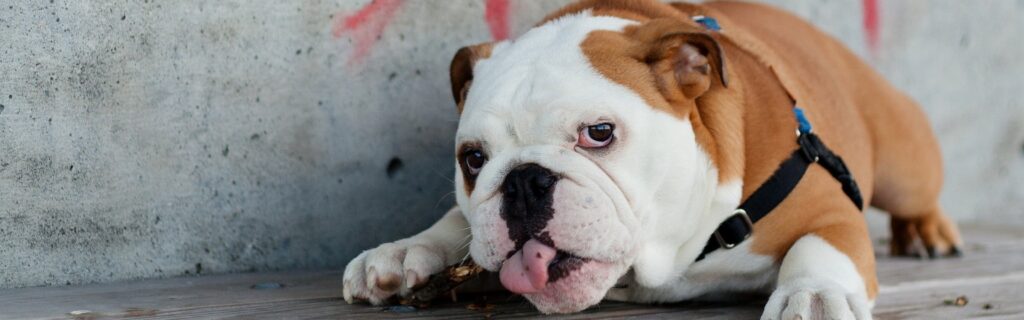
The English Bulldog is a dog whose appearance cannot be confused with any other breed. It is a smooth-coated, stocky, low-stature dog with a powerful, compact body. Its look radiates strength, stability, and dignity.
Head: Very massive, large in proportion to the body. The skull is broad and square. The forehead is flat, covered with numerous skin folds.
Muzzle: Very short, broad, upturned, and deep from the corner of the eye to the corner of the mouth. The lower jaw protrudes noticeably, forming the characteristic undershot bite. The flews (lips) are thick, fleshy, and hang down the sides, completely covering the lower jaw.
Eyes: Set wide apart, round, of medium size, very dark, almost black. The gaze is calm and friendly.
Ears: Small, thin, "rose" type (folding inwards at the back, exposing the burr). Set high and wide.
Body: Short, sturdy, with a broad chest. The back is short, with a slight arch in the loins ("roach back"). The belly is tucked up.
Limbs: Short, very powerful, and muscular. The front legs are set wide apart, giving the dog stability.
Tail: Short, low-set, straight or screwed. It is never carried above the line of the back.
Coat: Short, smooth, close-fitting.
Colour: Solid (white, fawn, red) or piebald (a combination of white with any of the listed colours). Brindle is also accepted. Black and black-and-tan are undesirable.
Although bulldogs look formidable, their appearance is deceptive. They have much in common with other molossers, such as the Bullmastiff, but are significantly smaller in size. It is important not to confuse the English Bulldog with its relatives - the French Bulldog and the American Bulldog, which are separate breeds with their own standards and histories.
Character: Temperament and Behaviour
The English Bulldog is the embodiment of calm and balance. Despite its fighting past, the modern bulldog is a friendly, affectionate, and extremely loyal companion. They form a very close bond with their family and struggle with separation or a change of owner. This is a dog that quite literally lives for humans.
Bulldogs are known for their patience, especially when interacting with children. They are ready to stoically endure childish pranks, making them excellent family dogs. However, as with any breed, the interaction between a dog and a small child should always be supervised.
Representatives of this breed are very intelligent but, at the same time, incredibly stubborn. This is not a dog that will unquestioningly obey commands. A bulldog will always "think" first whether it is worth doing. Therefore, their training requires patience, consistency, and positive reinforcement. They are not prone to barking without reason, but their formidable appearance and low growl can scare off any uninvited guest, making them reasonable watchdogs.
English Bulldogs usually get along peacefully with other animals, especially if raised together. However, some males may show dominance towards other dogs. Early socialisation is key to raising a balanced and friendly dog.
Training and Socialisation
Training a bulldog is a test of your patience. They are clever but very stubborn. Coercion and harsh methods do not work here - you risk ending up with an even more stubborn or even aggressive dog. The best approach is short, interesting sessions using positive reinforcement (treats, praise). Socialisation and teaching basic commands ("come", "sit", "bed") should begin at an early age. It is important to show who is the master in the house, as bulldogs can be prone to dominance. Unlike them, some herding breeds, for example the Aidi (Atlas Mountain Dog), are more independent and require a different approach to upbringing.
Pros and Cons of the Breed
Pros and Cons of the Breed · 7
Pros
Cons
✅ Excellent companion, very loyal to family
❌ Numerous health problems
✅ Calm and balanced character
❌ High maintenance costs (vet fees, quality food)
✅ Gets along well with children
❌ Tolerates heat and cold poorly
✅ Does not require much physical exercise
❌ Snoring, snuffling, flatulence
✅ Suitable for apartment living
❌ Stubborn in training
✅ Rarely barks
❌ Requires daily care of skin folds
✅ Has a unique and recognisable appearance
❌ Short lifespan
Caring for the Breed
Caring for an English Bulldog has its peculiarities, and ignoring them can lead to serious health problems.
Coat and Skin Care
The bulldog's coat is short and does not require complex care. It is enough to brush it with a rubber mitt 1–2 times a week to remove dead hair. The most important aspect is the care of the skin folds. They must be wiped daily with a special lotion or simply a damp cotton pad, and then thoroughly dried. This prevents the development of bacterial and fungal infections. The dog should only be bathed when neccessary, using hypoallergenic shampoos.
Physical Exercise
Bulldogs are not athletes. Two short, leisurely walks a day of 20–30 minutes are sufficient for them. It is strictly forbidden to exercise a bulldog in hot weather! Summer walks are best planned for early morning or late evening. Avoid intense games, running, and jumping so as not to strain the heart and joints. Despite their phlegmatic nature, bulldogs are prone to obesity, so it is important to motivate them to engage in minimal activity. Some large breeds, such as the Leonberger, require significantly more space and movement.
Teeth and Claw Care
Due to the specific structure of the jaw, bulldog teeth require regular cleaning to prevent tartar build-up. Claws should be trimmed every 2–3 weeks if they are not worn down naturally.
Nutrition
Nutrition: Key Recommendations
Health and risks
Health: Typical Diseases and Prevention
Frequently Asked Questions (FAQ) · 5
Are English Bulldogs aggressive? No, modern bulldogs are not aggressive. They are calm and friendly dogs. Aggression can be the result of improper upbringing or genetic problems.
Do bulldogs shed much? They do shed, but since the coat is short, it is not as noticeable as with long-haired breeds. Regular brushing helps to control this process.
How much does an English Bulldog puppy cost? The cost of a puppy from responsible breeders is quite high, as the breed is difficult to breed. The price depends on the pedigree, the parents' titles, and the reputation of the kennel.
Can a bulldog be left alone? They tolerate loneliness poorly and can suffer from separation anxiety, which manifests in destructive behaviour. This breed is not for people who spend a lot of time away from home.
Is a bulldog suitable for an inexperienced owner? Due to stubbornness in training and numerous health issues, this breed can be challenging for a novice. It requires a lot of patience, time, and financial investment.
Video About the Breed
FAQ
Why do English Bulldogs breathe so heavily?
Because of the flat face (brachycephaly) the airways are shortened — this is BOAS. Severe cases need surgery; in the heat the overheating risk is critical.
Can Bulldogs give birth on their own?
Usually not — because of the puppies’ broad heads and the narrow pelvis, most births are by caesarean, and mating is often by artificial insemination.
Is a Bulldog suitable for a flat?
Yes — it is a calm homebody with no need for heavy exercise. The key is to protect it from heat and watch its weight.