

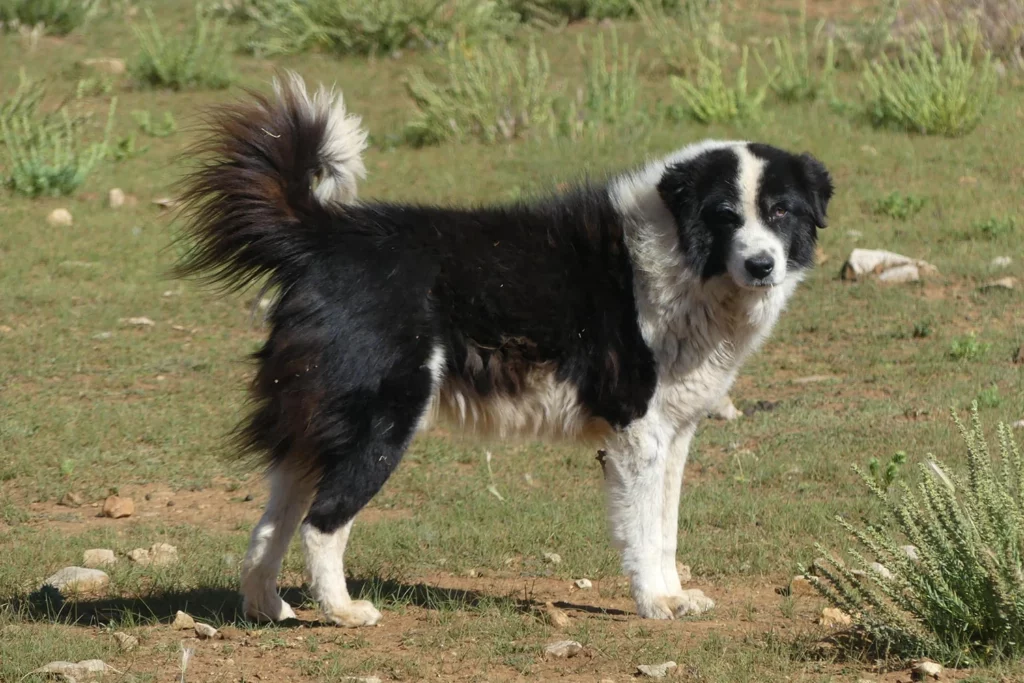
| Height | 52–62 cm |
| Weight | 22–26 kg |
| Lifespan | 12–14 years |
| FCI group | 2 · pinschers, schnauzers, molossoids, mountain dogs |
| Origin | Morocco |
Exact ratings
Common health issues
Nutrition
The Aidi, also known as the Atlas Mountain Dog, is an ancient breed hailing from the Atlas Mountains of North Africa. For centuries, this robust and resilient dog has served nomadic tribes, safeguarding their property and livestock from wild beasts. Today, the Aidi remains a loyal companion and a dependable guardian, though its independent nature and high activity levels mean it is not a breed for everyone. Learn more on Tvaryny.
Aidi (Atlas Mountain Dog): A Brief Breed Overview
| Characteristic | Value |
| Origin | Morocco, Atlas Mountains |
| FCI Classification | Group 2 (Pinscher and Schnauzer, Molossoid and Swiss Mountain and Cattledogs), Section 2.2 (Molossoid, Mountain type) |
| Life Expectancy | 10-12 years |
| Height at Withers | 52-62 cm |
| Weight | 23-27 kg |
| Temperament | Alert, brave, loyal, independent, protectve |
| Usage | Guardian, watchdog, companion |
History of the Breed
The history of the Aidi stretches back to antiquity and is closely interwoven wth the lives of the Berber tribes inhabiting the Atlas Mountains across modern-day Morocco, Algeria, and Tunisia. While no precise written records exist regarding the breed’s inception, it is believed these dogs have existed for several millennia. Their primary task has always been protection and guarding. The Aidi guarded their masters’ camps, families, and herds of sheep and goats from predators such as jackals and other wild animals.
Unlike many European shepherds, the Aidi was never used as a herding dog to manage the flock. It was exclusively a guard breed. Often, they worked in tandem with faster, more agile dogs like the Sloughi (Arabian Greyhound), which tracked down prey while the powerful Aidi stepped in to hold it. This partnership was exceptionally effective in the rugged mountain terrain.
Isolation in mountainous regions helped preserve the breed in its pristine form. The Aidi did not experience significant influence from other breeds, allowing them to retain unique working qualities and robust health. The first breed standard was drawn up in 1963 under the name “Atlas Sheepdog (Aidi)”. Although the breed remains rare outside North Africa, cynologists are making efforts to preserve and popularise it globally.
What the Aidi Looks Like: Standard and Appearance
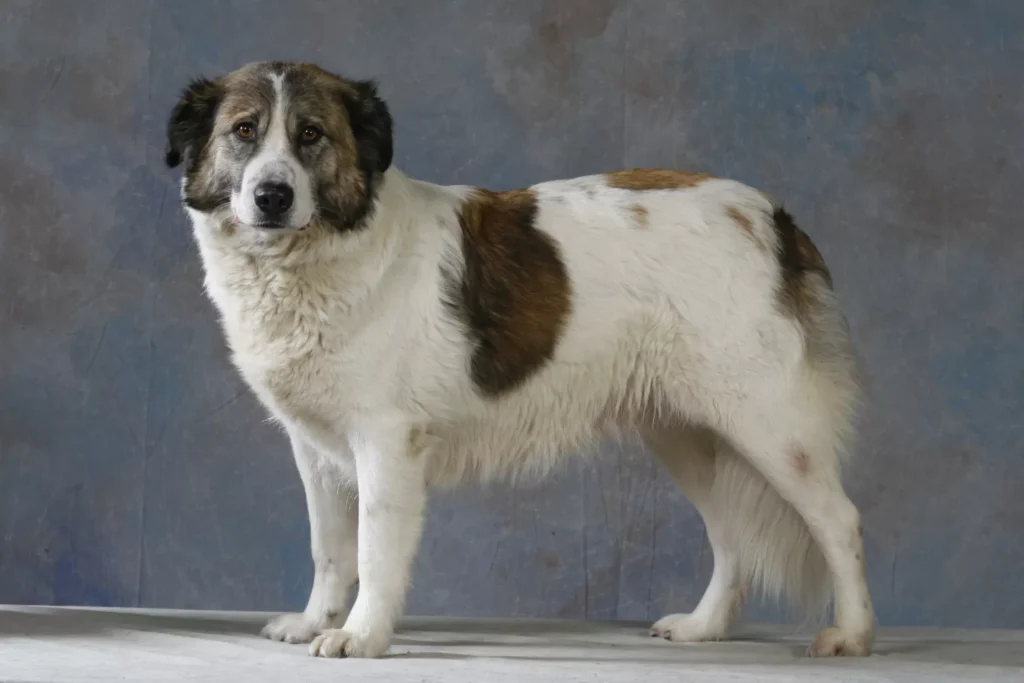
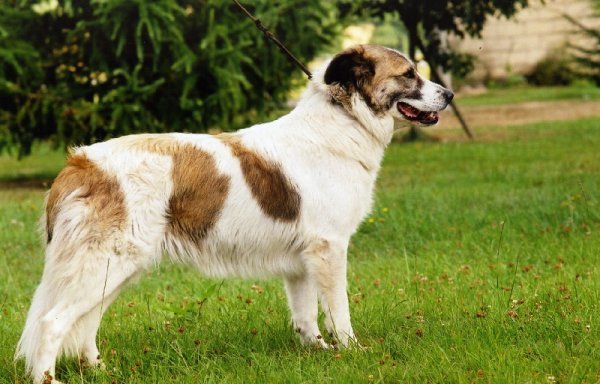
The Aidi is a strong, muscular dog of medium size, with a rugged appearance that testifies to its endurance and ability to survive in harsh conditions. Its look radiates power and a readiness for action.
- Head: Large and bear-like, proportionate to the body. The skull is broad and flat. The stop (transition from forehead to muzzle) is defined but not too abrupt.
- Muzzle: Conical in shape, shorter than the skull. The nose is black or brown, depending on the coat colour.
- Eyes: Medium-sized, dark in colour (ranging from dark amber to brown). The gaze is very expressive, alert, and attentive.
- Ears: Medium length, semi-pricked with slightly rounded tips. At rest, they hang down, but when the dog is alert, they perk forward.
- Body: Sturdy, with well-developed musculature. The back is straight and broad, the loins strong. The chest is deep, providing ample room for the lungs.
- Tail: Long and thickly coated. At rest, it hangs down, but during movement or excitement, it is raised in a sabre shape.
- Coat: Thick, coarse, and of medium length (about 6 cm). It reliably shields the dog from heat, cold, and predator bites. The hair is shorter on the face and ears. The undercoat is dense.
- Colour: Highly varied. It can be sand, fawn, white, red, brindle, black, or tri-colour. White markings are common and not considered a fault.
Character and Temperament
The Aidi’s character is the result of its centuries-old history as a guardian. This is an extremely vigilant, brave, and territorial dog. It is always on watch and ready to defend its family and property from any threat. It treats strangers with great mistrust and suspicion, making it an excellent watchdog.
The Aidi forms a strong bond with its family; it is loyal and affectionate. However, this is not a dog that will constantly demand attention and cuddles. It is quite independent and self-sufficient, capable of making its own decisions. This trait requires consistency and firmness from the owner during upbringing. The Aidi is not prone to unquestioning obedience like some service breeds; it is more of a partner than a subordinate.
High energy levels are another key trait of the breed. The Aidi requires intense daily physical exercise and mental stimulation. Simple walks on a lead are insufficient. This dog needs a job or activities that allow it to fulfil its potential. Without this, it can become destructive and unmanageable. Similar endurance and a need for workload are found in the Anatolian Shepherd Dog (Karabash), which is also a superb guardian.
Relationships with Children and Other Animals
With proper and early socialisation, the Aidi can get along well with children in its own family, treating them as subjects to protect. However, due to its strength and protective instincts, interaction with small children should always be supervised by adults. Relationships with other dogs and animals can be tricky. The Aidi is prone to dominance and may show aggression towards strange dogs, especially those of the same sex.
Training and Socialisation
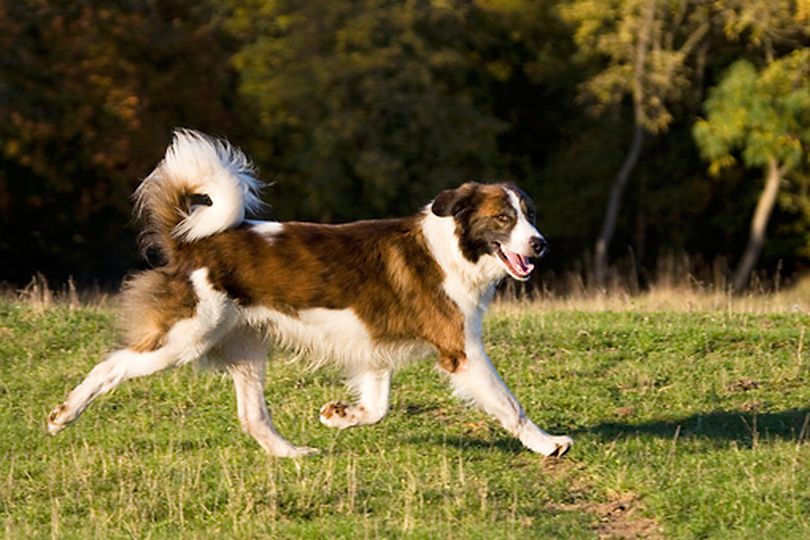
Training an Aidi is a challenge that demands patience, consistency, and an understanding of guard dog psychology. Upbringing and socialisation must begin at a very early age. Due to its independence and tendency to dominate, the Aidi needs an owner who can become an unquestionable “pack leader”.
Methods based on positive reinforcement work best, but with clear boundaries and rules. Roughness and physical punishment are unacceptable, as they can provoke aggression or, conversely, make the dog fearful and insecure. It is vital to establish a relationship of trust where the dog respects you as the leader.
Early socialisation is crucial. The puppy must be introduced to various people, sounds, places, and other animals. This helps reduce its natural mistrust of anything new and raises a more balanced dog. Remember that even a well-socialised Aidi will always remain wary in the presence of strangers.
Care and Maintenance
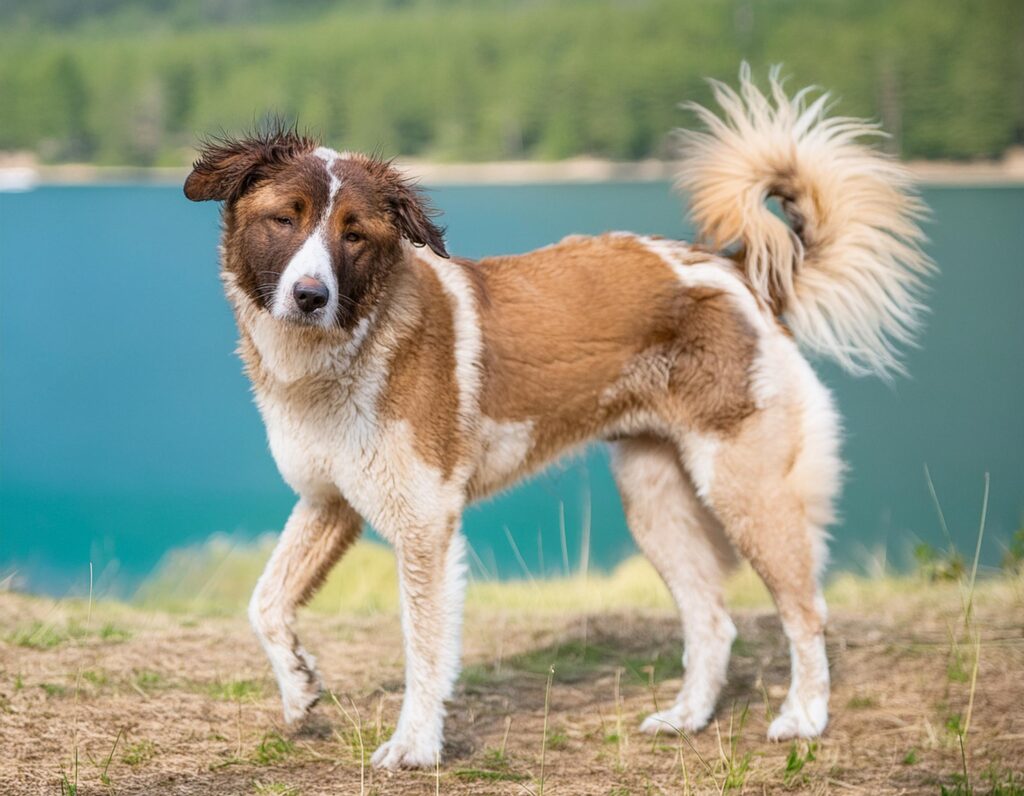
The Atlas Mountain Dog is a breed absolutely ill-suited for life in a city flat. It needs space—a large, securely fenced territory that it can patrol and guard. This is the ideal dog for a country house with a large plot of land.
Coat Care
The Aidi’s thick coat does not require complex grooming. Brushing it once or twice a week is sufficient to remove dead hair and prevent matting. During seasonal moulting (spring and autumn), the procedure will need to be done daily. Bathe the dog only when absolutely necessary, as frequent washing can strip the natural protective layer from the skin. It is also important to regularly check and clean the ears, eyes, and trim the claws.
Physical Exercise
This is a very energetic breed. The Aidi requires at least 1-2 hours of intense exercise daily. This could be long walks, runs, or games, but best of all—give it a “job”. Agility classes, coursing, or simply guarding territory will help the dog stay fit and happy. Lack of activity can lead to behavour problems. Similar activity requirements are shared by the Portuguese Water Dog, which is also historically a working breed.
Health and Common Issues
Diet and Nutrition
Pros and Cons of the Breed
| Pros | Cons |
|---|---|
| Excellent Guardian: Unrivalled watchdog instincts, vigilance, and courage. | Not for Novices: Requires an experienced owner who can establish leadership. |
| Loyal to Family: Becomes very attached to its owners and is ready to protect them. | High Activity Requirements: Needs plenty of physical and mental exertion. |
| Robust Health: A natural breed with strong immunity. | Tendency to Dominate: Can be stubborn and independent. |
| Low Maintenance: Coat does not require complex grooming. | Needs Space: Categorically unsuitable for flat living. |
| High Intelligence: Capable of learning but needs the right motivation. | Mistrust of Strangers: Can be overly suspicious and requires thorough socialisation. |
Interesting Facts About the Atlas Mountain Dog
- The Aidi is one of the few African breeds officially recognised by the Fédération Cynologique Internationale (FCI).
- In Morocco, these dogs are highly valued for their protective qualities and are still used for their original purpose in rural areas.
- Despite the name “Atlas Sheepdog”, the Aidi was never a shepherd. Its job is to guard, not to herd.
- In its homeland, the Aidi is considered part of the cultural heritage.
- Powerful guarding qualities make the Aidi similar to other mountain breeds like the Pyrenean Mountain Dog, although they developed on different continents.
Frequently Asked Questions (FAQ)
Is the Aidi suitable for apartment living?
Categorically no. This is a highly active and territorial breed that needs vast space to live and move. Keeping one in a flat will lead to stress and destructive behaviour in the dog.
Is the Aidi easy to train?
No, training requires experience, patience, and consistency. Aidis are intelligent but very independent and prone to dominance. They are not for newcomers to dog ownership. In terms of character complexity, they may remind you of certain mastiffs, such as the English Mastiff, which also requires a firm hand.
Does the Aidi shed a lot?
Yes, the Aidi has a thick undercoat and sheds heavily twice a year (in spring and autumn). During this period, the coat requires daily brushing.
How much does an Aidi puppy cost?
This is a rare breed, so finding a puppy can be difficult and pricey. The cost depends on the pedigree, the breeder, and the region. It is crucial to contact only verified breeders who care about the health and socialisation of their dogs.
Video About the Breed
- A watchful, devoted guardian
- Hardy, undemanding, energetic
- Affectionate with its own people
- Very robust “natural” health
- Independent, territorial — not for a novice
- Distrustful of strangers
- A very high need for activity — not for a flat
- Dense coat sheds seasonally
| Kangal (Anatolian Shepherd) | Caucasian Shepherd | Canaan Dog | |
|---|---|---|---|
| Height | 71–81 cm | 64–75 cm | 48–61 cm |
| Energy | 3 | 3 | 4 |
| Apartment | 1 | 1.5 | 2.5 |
| Beginners | 1.5 | 1.5 | 2 |
What was the Aidi bred for?
Is the Aidi good for a family?
Is the breed suited to a novice?
FCI Standard No. 247 · Fédération Cynologique Internationale
For apartments · For kids · For beginners · Active · Smartest · Hypoallergenic · All rankings →