An Anatolian guardian giant of millennia-old lineage — self-reliant and unflappable: strong, clever, devoted and calmly watchful. The Anatolian Shepherd Dog (Karabaş) is a powerful Turkish flock-guarding wolfhound able to survive and make decisions on its own; above all it values human company, is calm and devoted to its family, but wary of strangers and needs space and experience.
Apartment · not suitableKidsCats · with caveatsOther dogs · with caveatsBeginners · not suitable
The Anatolian Shepherd Dog, also known as the Karabash, is more than just a canine; it's a living piece of history, an embodiment of strength, intellect, and incredible devotion. This majestic hound, whose ancestors guarded flocks across the Anatolian plateau for millennia, is capable of independent living, survival in harsh conditions, and decisive action. While he might hunt small rodents for sustenance, above all, he cherishes human companionship. In this comprehensive overview, prepared by the Tvaryny team, we'll delve into the world of this unique breed. By welcoming such a dog into your home, you gain not only a loyal friend but also a fearless guardian and a steadfast protector for the entire family.
Anatolian Shepherd Dog (Karabash): Key Breed Characteristics
Anatolian Shepherd Dog (Karabash): Key Breed Characteristics · 9
Origin
Turkey (Anatolian Plateau)
FCI Recognition Year
1989 (Standard No. 331)
Lifespan
11–13 years
Height at Withers (Males)
74–81 cm
Height at Withers (Females)
71–79 cm
Weight (Males)
50–65 kg
Weight (Females)
40–55 kg
Temperament
Calm, confident, independent, protective
Use
Flock guardian, guard dog, companion
Anatolian Shepherd Dog, Kangal, and Akbash: What's the Difference?
Confusion often arises between the Anatolian Shepherd Dog and other Turkish breeds. It's important to understand their distinctions. All of them are indigenous Turkish pastoral dogs, but they have some unique characteristics.
Anatolian Shepherd Dog (Karabash): This is, in essence, a general term for working pastoral dogs from Anatolia. The standard for this breed allows for a variety in coat colour and type. The main requirement is the presence of a black mask ("Karabash" translates to "black head").
Kangal (Kangal Karabash): Considered a national treasure of Turkey. This is a regional variety originating from the Kangal region. The Kangal standard is stricter: only solid fawn-grey or fawn-yellow colouring with an obligatory black mask is permissible. The Kangal is often considered a "purer" and more uniform lineage.
Akbash: Another Turkish guardian, whose name translates to "white head." Unlike the Karabash and Kangal, the Akbash has an exclusively white coat. It's believed to have some admixture of blood from European white sheepdogs, such as the Maremma.
Comparing them with other large guardians, for instance, the Central Asian Shepherd Dog (Alabai), one can note that Anatolians are usually "drier" in constitution and more restrained in expressing aggression, preferring warning and a show of force.
Interesting Facts About the Breed
In Namibia (Africa), Anatolian Shepherd Dogs are successfully used to protect livestock from cheetahs. This has allowed farmers to avoid killing the predators, contributing to the preservation of cheetah populations.
The running speed of an Anatolian Shepherd Dog can reach 50 km/h (approximately 31 mph).
The bite force of this dog is among the most powerful in the canine world.
These dogs have a unique ability to adapt their metabolism and activity level depending on the presence of a threat, allowing them to conserve energy during calm periods.
History of the Anatolian Shepherd Dog
The history of the Anatolian Shepherd Dog stretches back into antiquity, possibly as far as 6,000 years. It's believed their ancestors were powerful hunting dogs from Mesopotamia. These dogs arrived in the territory of modern-day Turkey with nomadic tribes and became indispensable helpers to shepherds on the Anatolian plateau. This region is characterised by a harsh climate: scorching, arid summers and icy, snowy winters. These very conditions shaped the unique traits of the breed: endurance, hardiness, and the ability to make independent decisions.
Unlike many other breeds, the Anatolian Shepherd Dog was not subjected to deliberate selective breeding until the 20th century. Its development occurred naturally, where only the strongest, smartest, and most effective guardians survived. The primary task of these dogs was to protect flocks of sheep and goats from predators such as wolves and bears. They worked in pairs or small groups, patrolling vast territories without constant human supervision. This independence is deeply ingrained in their character even today.
The breed only began to arrive in Europe and the USA in the mid-20th century. Western cynologists were impressed by its working qualities, intelligence, and innate guarding instinct. The breed was officially recognised by the Fédération Cynologique Internationale (FCI) in 1989. Today, Anatolian Shepherds are used not only as livestock guardians but also as excellent guard dogs for private properties and devoted companions for experienced owners.
What an Anatolian Shepherd Dog Looks Like: Standard and Appearance Description
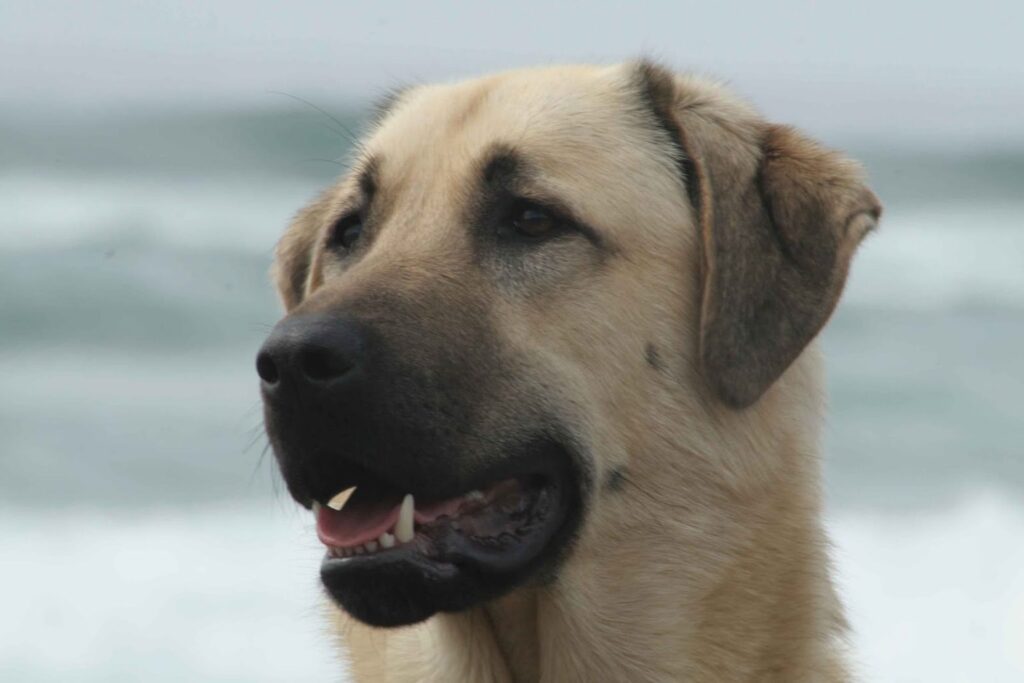
The Anatolian Karabash is a large, muscular, and powerful dog that conveys an impression of strength and endurance. Its build is proportionate, without excessive massiveness, allowing it to be fast and agile.
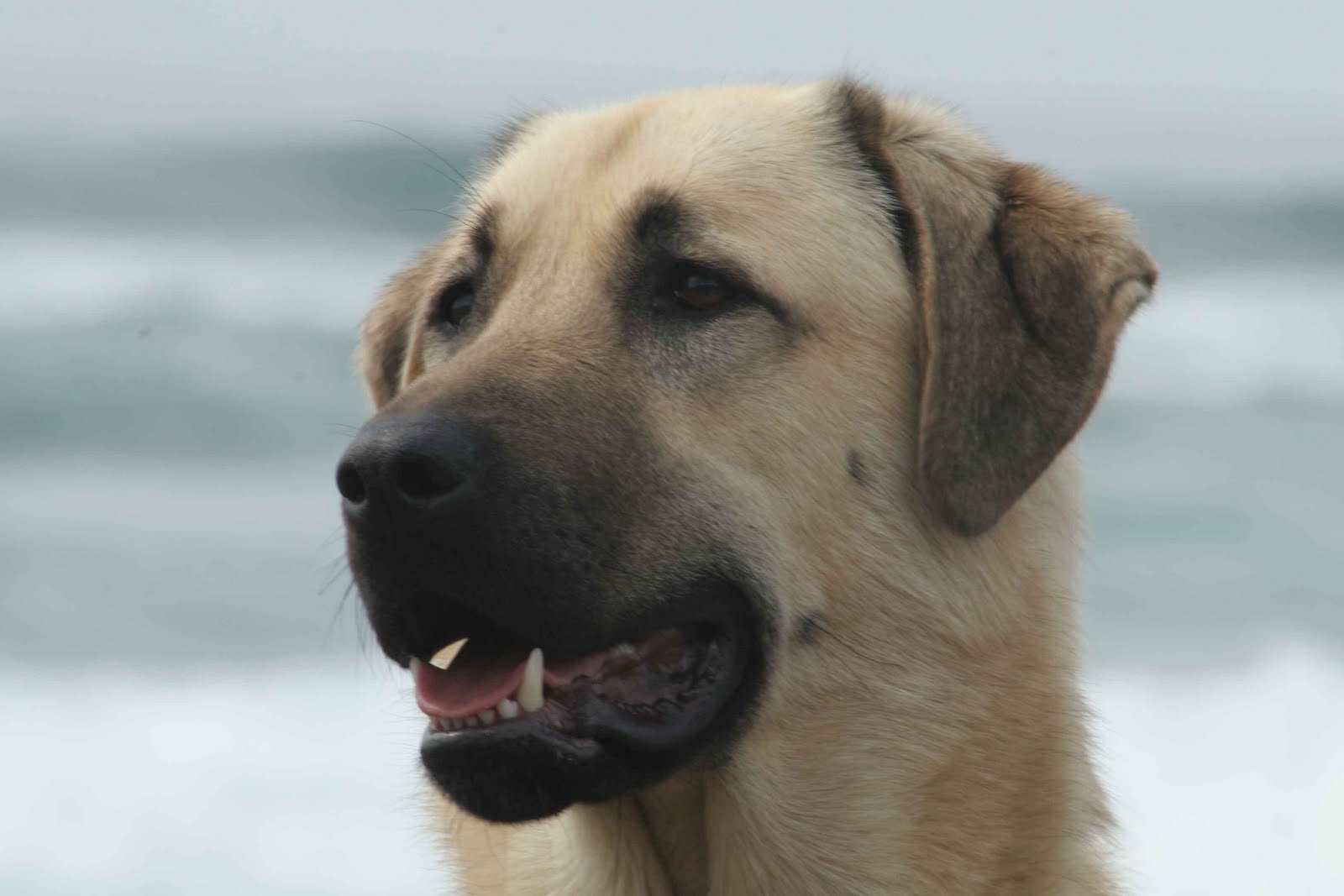
Head: Large, but proportionate to the body, with a broad skull. The muzzle is rectangular. Lips are black, slightly pendulous, but not excessively so.
Eyes: Relatively small, almond-shaped, ranging from golden to dark brown. The gaze is intelligent, calm, and confident.
Ears: Medium-sized, triangular, hanging, with rounded tips. When alert, they rise slightly. Historically, ears were cropped in Turkey, but this is forbidden in most countries.
Body: Powerful, with a deep chest, strong back, and muscular loin.
Tail: Long, set high. When calm, it hangs down and is slightly curved; when excited, it rises high and curls into a ring over the back.
Coat: Short or semi-long, very dense, with a thick undercoat. On the neck, shoulders, and thighs, the fur may be longer, forming a "mane" and "trousers". Such fur reliably protects the dog from extreme temperatures.
Colour: All colours are permissible. The most common are fawn, deer-coloured, and sandy. An essential characteristic of the breed is a black "mask" on the muzzle and black ears. The presence of white "socks" or a patch on the chest is acceptable.
Character: Temperament and Behaviour of the Karabash
The character of the Anatolian Shepherd Dog is the result of millennia of independent work. This is not a dog that will unquestioningly obey every command. Its intelligence is directed towards analysing situations and making its own decisions. The main trait of its character is an innate guarding instinct. It divides the world into "its territory" and "its family" (pack) and everything that lies beyond.
Towards members of its family, the Karabash is gentle and patient. It can be surprisingly affectionate with children, viewing them as objects requiring heightened protection. It gets along well with other pets if raised with them. However, it is wary and distrustful of strangers. It will not show aggression without cause, but its formidable appearance and warning bark will clearly indicate that a stranger is not welcome here. If the warning is ignored, it will not hesitate to use force, but its goal is not to kill, but to neutralise the threat by bringing the opponent to the ground.
These dogs do not require constant attention; they are quite self-sufficient. However, they do appreciate the calm presence of their owner. A leader is important for them – someone who is calm, self-assured, and consistent. Similar traits of independence and protective instincts can be found in other large breeds, such as the Italian Cane Corso or the Brazilian Fila, but the Karabash stands out precisely for its capacity for autonomous work.
Pros and Cons of the Anatolian Shepherd Dog Breed
Before acquiring such a serious dog, it is crucial to soberly assess all its advantages and disadvantages.
Pros
Cons
✅ Outstanding Guardian. Innate instincts make it an ideal watch-dog for large territories.
❌ Tendency to Dominate. Requires an experienced owner who can be the "pack leader".
✅ High Intelligence. Capable of independently assessing situations and making decisions.
❌ Unsuitable for Apartment Living. Needs space and the opportunity to patrol territory.
✅ Family Devotion. Very gentle and patient with "its" people, especially children.
❌ Requires Early and Intensive Socialisation. Without it, may become overly suspicious of strangers.
✅ Robust Health and Hardiness. Adapted to harsh conditions, doesn't require complex care.
❌ Heavy Shedding. Twice a year, the dog intensively sheds its undercoat.
✅ Calm Temperament. Well-balanced and not prone to causeless aggression.
❌ Loud Bark. Its voice is its working tool for warning.
Training and Socialisation: The Key to Success
Training an Anatolian Shepherd Dog is a task for an experienced and patient individual. The main principle is to build a relationship based on respect, not fear. These dogs are prone to dominance, so from the very first days of the puppy's arrival at home, rules and hierarchy must be clearly established. You are the leader – calm and consistent.
They are very intelligent and quickly understand what is expected of them, but they are not always quick to obey commands, first considering their advisability. Rudeness, shouting, and physical punishment are absolutely unacceptable. In response to aggression, you will receive either stubbornness or reciprocal aggression, and the dog will become uncontrollable.
Early socialisation is a key aspect. From puppyhood, introduce the dog to various people, sounds, places, and other animals (under supervision). This will help him grow into a well-balanced adult and react appropriately to new situations, without perceiving everything around him as a potential threat.
How to Care for an Anatolian Shepherd Dog
Caring for a Karabash is not complicated, but it requires an understanding of the breed's peculiarities.
Living Conditions: The best place for an Anatolian Shepherd Dog is a private house with a large, securely fenced territory. Apartment living is absolutely unacceptable for this dog. He needs space to move and the opportunity to exercise his guarding instincts. He can live outdoors all year round if provided with an insulated kennel.
Grooming: The Karabash's dense coat does not require daily care. Brushing it 1–2 times a week is sufficient to remove dead hairs. However, twice a year, during seasonal shedding, the dog "sheds its coat" extensively. During this period, you will need to brush him daily, otherwise your entire property will be covered in fur. Bathe the dog only when absolutely necessary, as frequent bathing disrupts the natural oily layer that protects the skin.
Physical Activity: These dogs do not require intensive training like cycling alongside a bike. Their ideal activity is leisurely patrolling their territory. Ordinary walks in the park will not suffice. They need a job or its simulation.
Nutrition
Anatolian Shepherd Dog Nutrition: Key Recommendations
Health and risks
Health: Typical Ailments and Prevention
Frequently Asked Questions About the Breed (FAQ)
Is the Anatolian Shepherd Dog suitable for an inexperienced owner? No, absolutely not. This breed requires experience, an understanding of guard dog psychology, patience, and the ability to be a confident leader.
Can a Karabash be kept in an apartment? No. This is a large, active dog that needs space to patrol. Keeping it in an apartment will lead to behavioural problems and distress for the animal.
Does it get along with children? Yes, it is very gentle and patient with its own children. However, due to its large size, small children should never be left alone with the dog unsupervised.
Do they bark a lot? Yes, they use a loud and deep bark as their primary tool to warn off strangers. They do not bark without reason, but their concept of "reason" may differ from yours.
How much does an Anatolian Shepherd Dog puppy cost? The cost of a puppy from a responsible breeder can be significant, as it includes expenses for care, veterinary services for the parents, health tests, and proper rearing of the litter. Expect to wait: established breeders have their litters spoken for well in advance.
Video about the Breed
FAQ
Are the Anatolian Shepherd and the Kangal the same breed?
By FCI decision (2018) the Anatolian Shepherd and the Kangal were recognised as one breed (Kangal Shepherd Dog); “Karabaş” is the name of the type with the distinctive black mask.
Is the Anatolian Shepherd good for a family?
Yes — it is calm and devoted to its family, good with children and, with early socialisation, with other animals; but it is wary and territorial with strangers, so space and socialisation are needed.
Is the breed suited to a novice?
No — a self-reliant, independent giant guardian used to making its own decisions; it needs an experienced owner, space and early socialisation.