

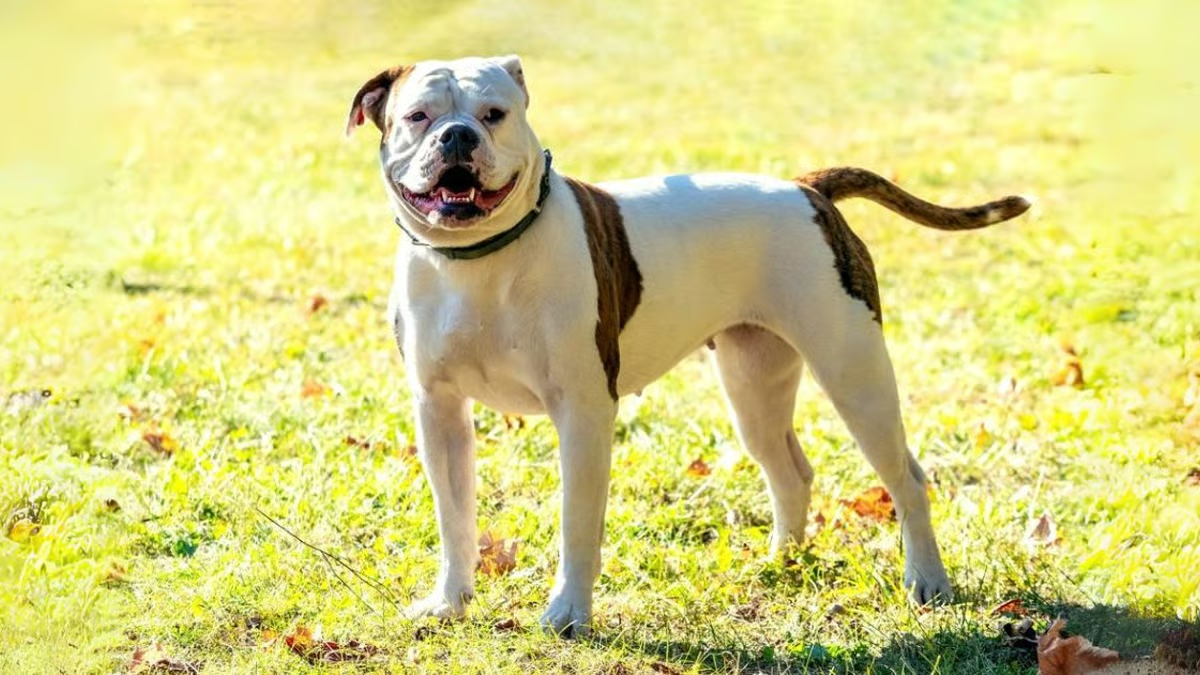
| Height | 52–70 cm |
| Weight | 27–54 kg |
| Lifespan | 10–14 years |
| FCI group | no FCI standard (USA) |
| Origin | USA |
Exact ratings
Common health issues
Nutrition
The American Bulldog is a versatile working breed, distinguished by its incredible strength, power, and iron will. The name “bulldog” comes from the English “bull-dog,” as these remarkably intelligent, hardy, and stubborn dogs were originally used in the bloody sport of bull-baiting. Despite its unyielding and steely temperament, with the right upbringing, the American Bulldog becomes a reliable companion and a wonderful nanny for children. Learn more on Tvaryny.
Even the great writer Leo Tolstoy admired this breed and dedicated a series of short stories in his “Third Russian Reader” to his pet, Bulka, which speaks to the deep intelligence and devotion of these animals.
American Bulldog: A Brief Breed Overview
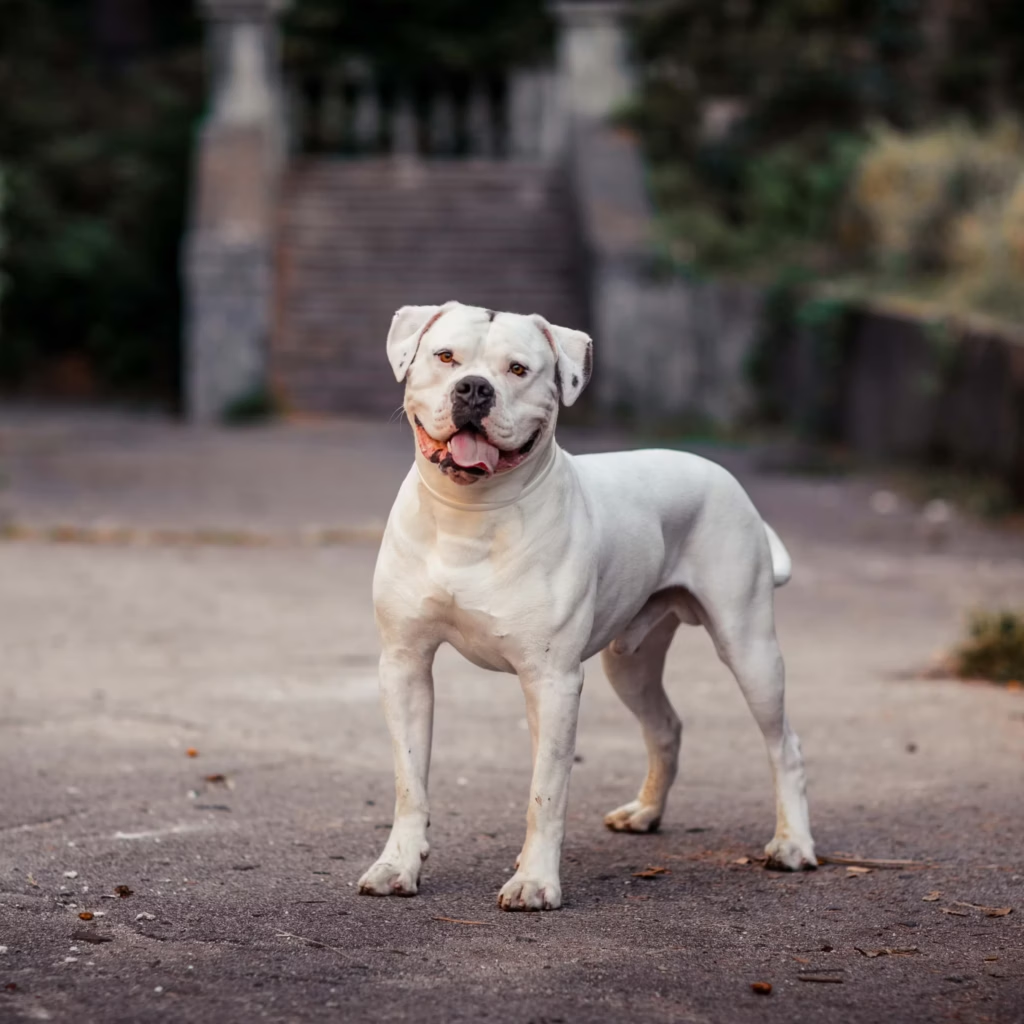
| Origin | United States of America |
| Year of First Mention | 1864 (as a predecessor breed) |
| FCI Classification | Not recognised |
| Lifespan | 10-15 years |
| Height at Withers | Males: 57-68 cm, Females: 53-65 cm |
| Weight | Males: 35-55 kg, Females: 30-45 kg |
| Temperament | Loyal, confident, courageous, strong-willed |
| Need for Activity | Very high |
| Shedding Tendency | Moderate |
History of the Breed
The history of the American Bulldog is closely intertwined with the history of the settlement of America. The breed’s ancestors were Old English Bulldogs, brought by immigrants from England to the “New World” in the 17th and 18th centuries. Unlike their English relatives, who were increasingly being bred as show dogs, the American line was developed as a versatile working breed. Farmers and ranchers in the southern United States needed a strong, hardy, and fearless dog capable of performing a multitude of tasks.
These dogs were indispensable helpers: they guarded homes from predators and intruders, helped herd cattle and pigs, and were also excellent hunters of large game such as wild boar and bears. Thanks to its functionality, the breed retained its original traits. For a long time, it had no official name and was known by various monikers: “English White,” “Old English White Bulldog,” “Southern Bulldog,” or simply “White English.”
In the 20th century, the breed was on the verge of extinction. The Second World War dealt a significant blow to its population. We owe the revival of the breed to two enthusiasts: John D. Johnson and Alan Scott. After the war, they began to gather the surviving representatives of the breed from all over the southern United States and developed two main lines, known today as the Johnson type (Classic) and the Scott type (Standard). The name “American Bulldog” was officially given to the breed only at the end of the 20th century, highlighting its unique development path on the American continent.
What Does an American Bulldog Look Like: Standard and Appearance
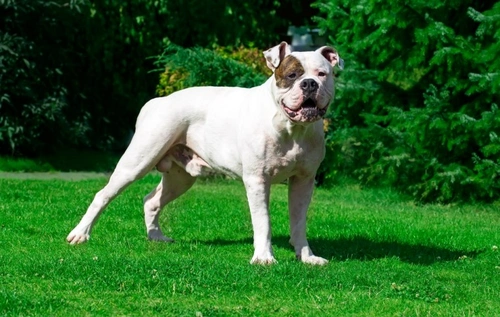
The American Bulldog is a model of athleticism, well-developed musculature, and a balanced body structure. It is a powerful, yet agile and fast dog. There are two main types within the breed, which have some differences in appearance, although both conform to the general standard.
- Johnson Type (Classic or Bully): A more massive, stocky, and heavy dog, with a shorter muzzle and a pronounced underbite. It is often compared to the English Bulldog, but the American version is significantly larger and more athletic.
- Scott Type (Standard or Performance): A lighter, more athletic, and “drier” dog. It has a longer muzzle and a less pronounced underbite. This type is considered more sporty and has greater stamina.
Modern American Bulldogs are often hybrids of these two lines, combining their best features. The dog’s coat is short, smooth, and lies close to the body. The primary colour is white, or white with patches (brindle, red, fawn, brown, black). However, the white colour must constitute at least 10% of the total coat.
| Body Part | Description |
|---|---|
| Head | Large, square, and proportional to the body. Broad skull, pronounced cheeks. |
| Muzzle | Broad and deep. Shorter in the classic type (5-10 cm), longer in the standard type. The lower jaw is powerful; an underbite is a breed characteristic. |
| Eyes | Medium-sized, round or almond-shaped. The colour is predominantly brown, from light to dark. Blue eyes are considered a fault. |
| Ears | Small to medium, set high. They can be drop, semi-prick, or rose-shaped. Cropping is not required. |
| Body | Compact, powerful, with a deep and broad chest. The back is short and strong. |
| Tail | Thick at the base, tapering to the end. In a calm state, it hangs down to the hock. Docking is not permitted. |
| Limbs | Very muscular and strong, with sturdy bones. They provide a powerful drive and speed. |
Character and Temperament
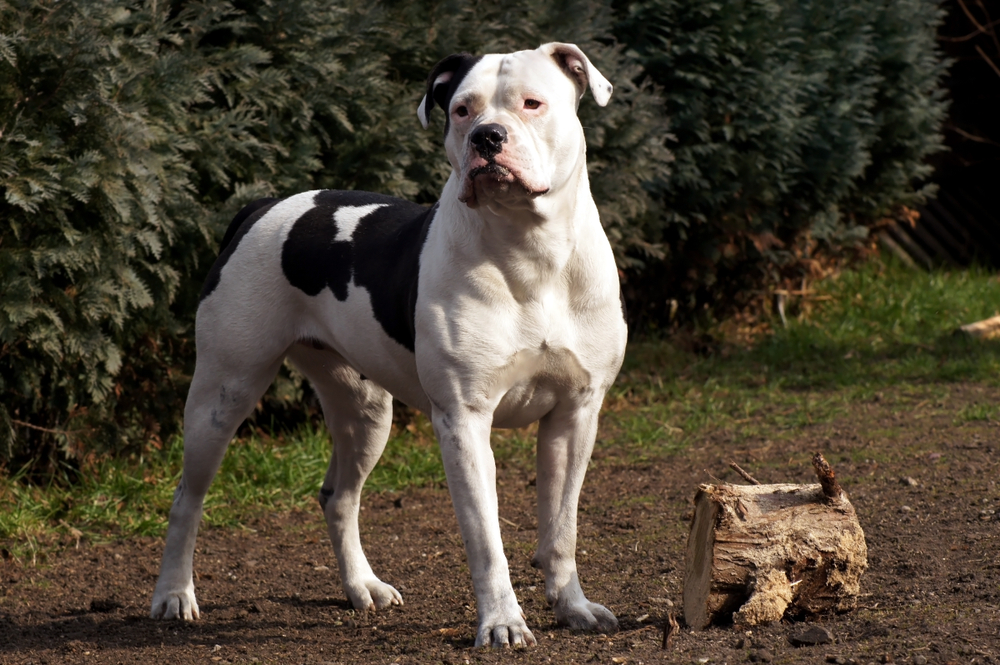
For their brilliant working qualities, such as confidence, uncompromising nature, endurance, strong character, and reliability, the US Marines named the American Bulldog their unofficial mascot. This is a dog of high intelligence, which, according to experienced cynologists, is on par with breeds like the Doberman, Rottweiler, and Mastiff. The American Bulldog is first and foremost a faithful guard and personal protector, always on alert. It will fearlessly defend its family and territory to the very end.
At the same time, within the family circle, it is a gentle and devoted dog. It becomes very attached to its owners and finds solitude difficult to bear. With children it has grown up with, the American Bulldog is usually very patient and caring, acting as a reliable nanny. However, due to its strength and size, play with small children should always be supervised by adults.
This breed needs a strong-willed and confident owner. American Bulldogs are prone to dominance, so the puppy must be taught its place in the family hierarchy from an early age. The owner must become an undisputed leader for it. Relationships with other animals can be challenging, especially with dogs of the same sex. Early and proper socialisation is key to harmonious coexistence. A similar character trait is shared by breeds such as the Boerboel and the Buryat-Mongolian Wolfhound, which is typical for large guardian dogs.
Pros and Cons of the Breed
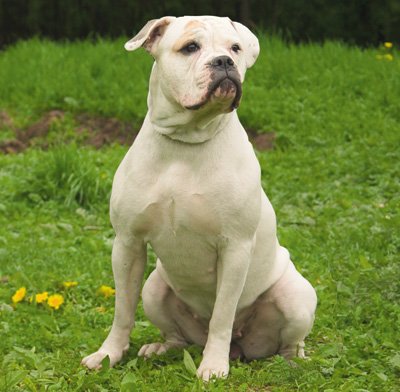
Before getting a dog as serious as the American Bulldog, it is important to soberly assess all its advantages and disadvantages.
| Pros (Advantages) | Cons (Disadvantages) |
|---|---|
| ✅ Outstanding guarding qualities: A natural protector of family and territory. | ❌ Tendency to dominate: Requires an experienced and strong-willed owner. |
| ✅ High intelligence: Easy to train if the right approach is found. | ❌ Needs early socialisation: Can be aggressive towards other animals without proper upbringing. |
| ✅ Loyalty to the family: Loves its owners dearly, gentle with children in the family. | ❌ High need for activity: Not suitable for sedentary people, requires daily exercise. |
| ✅ Robust health: Generally a hardy breed with a good immune system. | ❌ Prone to certain diseases: Dysplasia, allergies, skin problems. |
| ✅ Low-maintenance grooming: Short coat does not require complex grooming. | ❌ Not for flat life: Feels best in a private house with its own territory. |
| ✅ Versatility: Can be a companion, athlete, hunter, or guard. | ❌ Heavy shedding: Fur will be everywhere, especially during seasonal moulting. |
Health: Common Diseases and Prevention
How to Care for an American Bulldog?
Caring for an American Bulldog is not complicated, but it does require consistency.
Coat Care: The short coat of the American Bulldog requires minimal care. Brushing it once a week with a rubber glove or a natural bristle brush is sufficient. This helps to remove dead hair and keep the skin healthy. They shed quite heavily, especially in spring and autumn, so grooming should be done more frequently during these periods. The dog should only be bathed as needed, no more than 2-3 times a year, to avoid stripping the natural protective layer of the skin.
Ear, Eye, and Nail Care: Regularly inspect the ears for dirt and signs of inflammation. Clean them with a special lotion as needed. The eyes also require daily inspection. Nails should be trimmed 1-2 times a month if they do not wear down naturally.
Physical Exercise: This is the most crucial aspect of care. The American Bulldog is a very energetic breed. It needs long daily walks (at least 1.5-2 hours a day) with elements of physical and mental stimulation. This can include running, swimming, playing with a ball, tug-of-war, and participating in dog sports (weight pulling, agility). Insufficient activity can lead to destructive behaviour and obesity.
Training and Socialisation
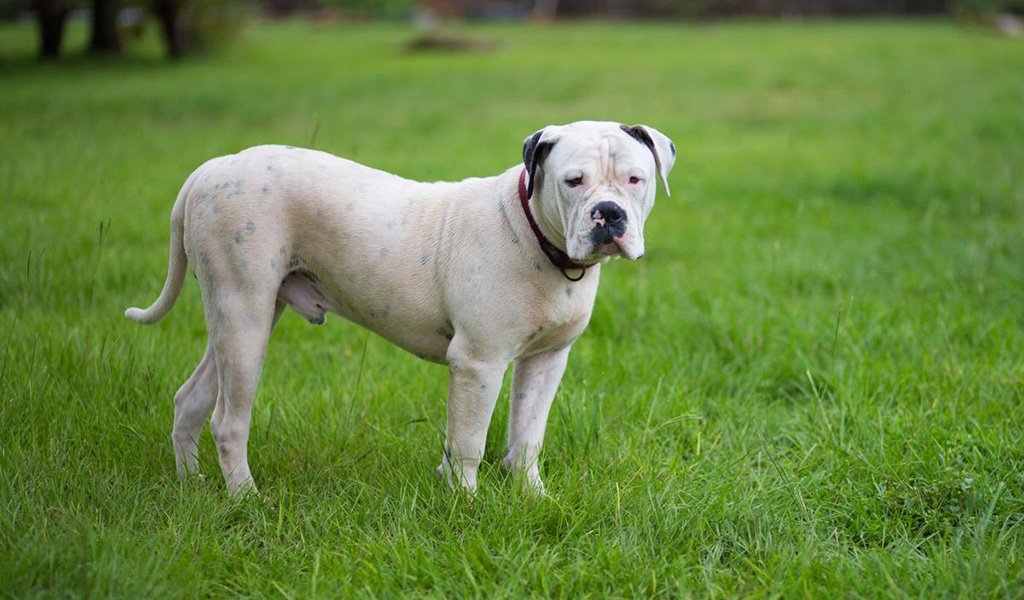
The main principles of successful American Bulldog training are early socialisation, consistency, and establishing clear rules. The breed is naturally self-sufficient and prone to making its own decisions, so your pet’s character must be channelled in the right direction in a timely manner. Puppy socialisation should begin as early as possible: introducing it to different people, sounds, places, and calm, well-behaved dogs.
The owner must become an authoritative leader for the bulldog, but not a tyrant. Training should be based on positive reinforcement, while also being firm and consistent. Any signs of undesirable behaviour, whether it’s attempts to dominate, aggression towards other animals, or destructive chewing, must be addressed strictly and clearly. A basic obedience course is mandatory for this breed. Your confidence, patience, and consistency will help to establish a strong bond with your American Bulldog.
Feeding: Key Recommendations
Interesting Facts About the Breed
- A Canine Actor: An American Bulldog named Chance voiced the main character in the popular film “Homeward Bound: The Incredible Journey” (1993).
- A Champion’s Mascot: The University of Georgia has a live mascot – a white American Bulldog named Uga, who is the symbol of their football team, the Georgia Bulldogs.
- A Mix of Ancestors: It is believed that in the development of the American Bulldog, besides Old English Bulldogs, other breeds may have been involved, particularly Spanish bulldogs. Some features may be reminiscent of dogs like the Alano Español or the Ca de Bou.
- High Pain Threshold: Thanks to their fighting past, these dogs have a very high pain threshold, which can sometimes mask the symptoms of injuries or illnesses.
Frequently Asked Questions About the Breed (FAQ)
Is the American Bulldog suitable for a novice owner?
No, this breed is not recommended for people without experience in handling serious dogs. It requires a confident, consistent, and strong leader.
Can an American Bulldog live in a flat?
Theoretically, yes, but only with very intensive and long daily walks. The ideal place for it is a private house with a well-fenced garden.
How does the American Bulldog get along with children?
They are usually very good with children in their family, showing patience and gentleness. However, due to their large size and strength, any interaction with small children should be supervised.
Do they drool a lot?
Yes, especially representatives of the classic (Bully) type with a shorter muzzle and flews. Be prepared for saliva on your furniture, clothes, and you.
Do they require a lot of attention?
Yes, this is a very human-oriented breed. They do not tolerate loneliness well and need constant contact with their family.
Video About the Breed
- Athletic, powerful and agile
- Devoted, good with children
- Confident, fearless
- Short, easy coat care
- Strength and drive — training needed
- Needs plenty of exercise
- Possible dog aggression — socialisation
- May drool, heat-sensitive
| English Bulldog | Amstaff | Bullmastiff | |
|---|---|---|---|
| Height | 31–40 cm | 43–48 cm | 61–69 cm |
| Energy | 2 | 4 | 3 |
| Apartment | 3.5 | 3 | 2.5 |
| Beginners | 3 | 2.5 | 2.5 |
Is the American Bulldog aggressive?
Is the American Bulldog suited to a novice?
How does it differ from the English Bulldog?
NKC/ABA standards (not FCI) · USA
For apartments · For kids · For beginners · Active · Smartest · Hypoallergenic · All rankings →