not FCI-recognised (aboriginal) · Mongolia / Buryatia
Buryat-Mongolian Wolfhound
The “yard wolf” of the Mongolian steppes — a legendary guardian giant: phlegmatic and level-headed with its own, fearsome to strangers and predators. The Buryat-Mongolian Wolfhound (Khotosho, Bankhar) is an ancient aboriginal breed of Mongolia, Buryatia and Tibet; a multipurpose guard, herder and even nanny for children, it is athletic and tireless, but distrustful of strangers and needing space and an experienced owner.
Distrustful of and aggressive to unfriendly strangers
Self-reliant — not for a novice
Not for a flat — needs space
Dense coat sheds heavily
Size
ToySmallMediumLargeGiant
Compatibility
Apartment · not suitableKidsCats · with caveatsOther dogs · with caveatsBeginners · not suitable
The Buryat-Mongolian Wolfhound(Bankhar Dog), also known by its historical name Khotosho-nokhoi (meaning "yard wolf" or "dog of the yard"), is not just a dog but a true legend that has endured through the ages. This ancient aboriginal breed from the regions of Mongolia, Buryatia, and Tibet is a versatile animal, serving as a fearless guard, a reliable shepherd, a devoted companion, and even a loving nanny for children. Learn more on Tvaryny.
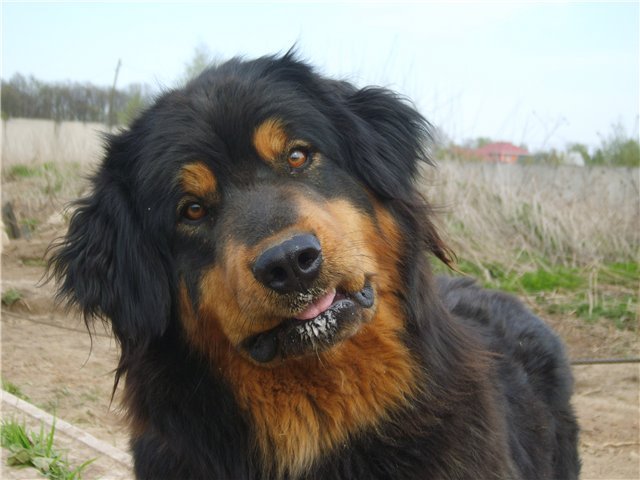
In Buryatia and Mongolia, there is a belief that these stately animals have four eyes (thanks to the distinctive light patches above their eyes) and can see into the spirit world, protecting their owners from evil. They are said to bring happiness and prosperity to the home. Their outstanding intelligence, balanced temperament, and ability to adapt quickly to any conditions make the Buryat-Mongolian Wolfhound a wonderful friend for a responsible family.
Interesting Facts About the Khotosho
The "Four-Eyed" Dog: The legend of the four eyes is linked to the light patches above the eyes. It was believed that when the dog sleeps, these "second eyes" see everything and guard the owner.
The Talisman Dog: In ancient times, Khotosho puppies were not sold. They could only be given as a gift, a sign of great respect and friendship, as it was believed the dog brought good luck.
Family Ties: The Buryat-Mongolian Wolfhound is a close relative of other large Asian shepherd dogs, particularly the Tibetan Mastiff, which is considered one of its ancestors.
The Silent Guardian: Unlike many guard breeds, the Khotosho is not prone to senseless barking. It only gives voice when it deems it necessary.
A Sacred Animal: In the Buddhist monasteries of Tibet and Mongolia, these dogs were revered and often lived at the temples, guarding them.
History of the Breed: From Ancient Nomads to Modern Times
The history of the Buryat-Mongolian Wolfhound stretches back into deep antiquity. It is believed they are descendants of ancient Tibetan dogs and accompanied the nomadic tribes of Central Asia for thousands of years. Archaeological findings, particularly in the Ivolginsky settlement in Buryatia, confirm that dogs of a similar type lived alongside humans before the Common Era. They were an integral part of the nomads' lives: they guarded dwellings (yurts) and livestock from predators, assisted in hunting, and were considered full-fledged members of the family.
During the 20th century, due to changes in the traditional way of life, collectivisation, and uncontrolled cross-breeding, the breed was brought to the brink of extinction. Only a handful of purebred Khotosho remained. A monumental effort to revive the breed was started in the late 1980s by enthusiasts and cynologists Nikolai Batov and Marika Teregulova. They organised expeditions to remote areas of Mongolia and Buryatia, painstakingly gathering the surviving population. Thanks to their efforts, the breed was saved, and a planned breeding programme was initiated.
Although the breed is not yet recognised by the Fédération Cynologique Internationale (FCI), it is rapidly gaining popularity thanks to its exceptional working qualities and stable character.
Breed Standard and Appearance
Breed Standard and Appearance · 6
Characteristic
Details
Other names
Khotosho, Khotosho-nokhoi, Yard Wolf
Country of origin
Russian Federation (Buryatia), Mongolia
Height at the withers
Males: not less than 74 cm Females: not less than 66 cm
Weight
45–70 kg
Lifespan
12–14 years
RKF Classification
Group 2 (Pinscher and Schnauzer, Molossoid breeds, Swiss Mountain and Cattle Dogs)
Detailed description of appearance:
Head: Massive, with a broad skull and a smooth yet noticeable transition from the forehead to the muzzle. The muzzle is voluminous, slightly shorter than the length of the skull.
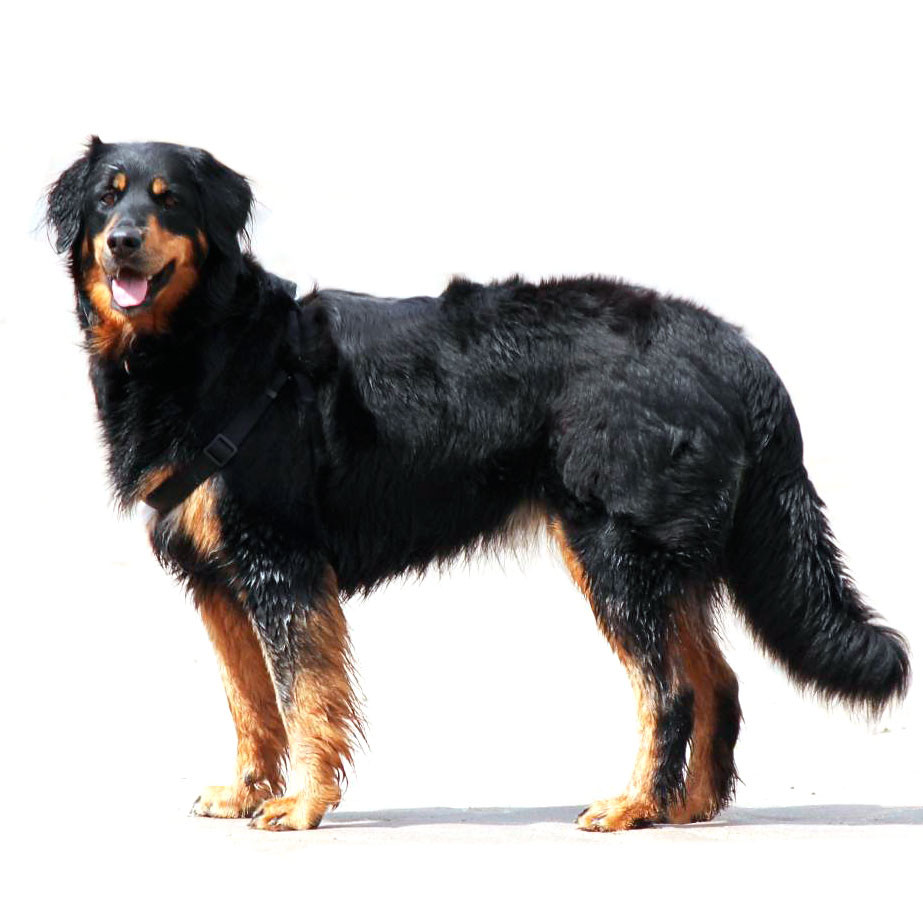
Eyes: Small, oval-shaped, set wide apart. The colour varies from light amber to dark brown. The gaze is intelligent, calm, and confident. A characteristic feature is the presence of light (reddish or grey) patches above the eyes, the so-called "spectacles."
Ears: Medium-sized, triangular, hanging, set at or slightly above eye level.
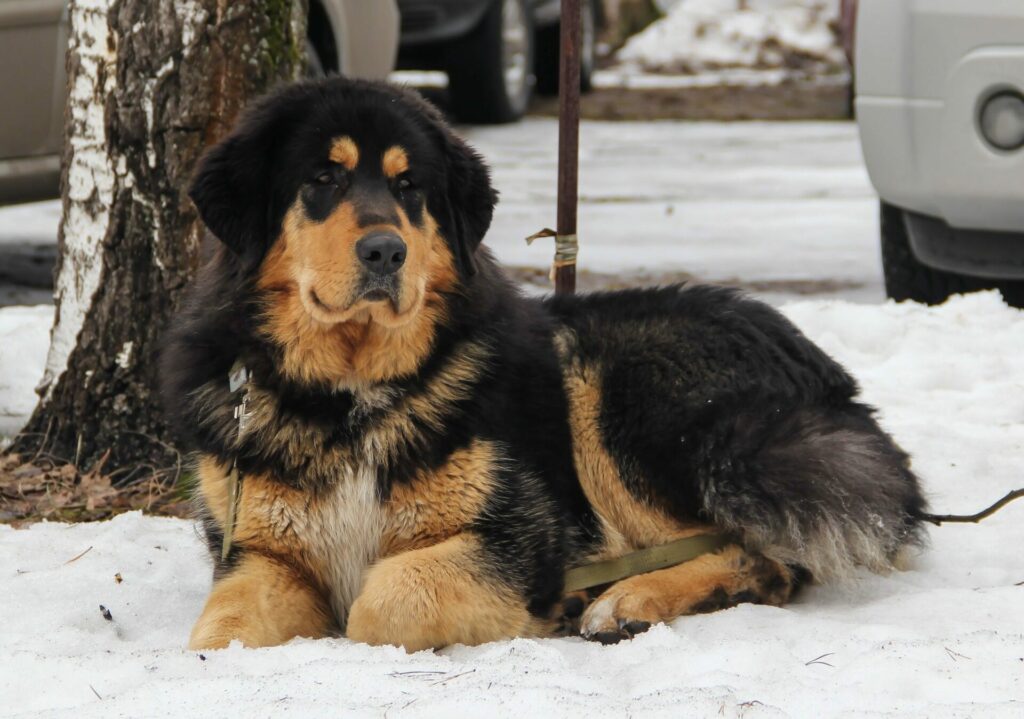
Coat: Very thick with a well-developed undercoat that protects the dog from any weather. There are two coat types: long-haired (the guard hair is long, forming a mane on the neck, feathering on the back of the limbs, and a plume on the tail) and short-haired (the guard hair is short and lies close to the body).
Colour: The most common colours are black, and black and tan, as well as various shades of red, brown, and fawn. For the black and tan colouring, distinct light tan markings are characteristic, forming "spectacles" above the eyes and patches on the muzzle, chest, and limbs.
Character and Temperament of the 'Yard Wolf'
The strong and sturdy Buryat-Mongolian Wolfhound is, above all, an intelligent and well-balanced dog with a stable psyche. Its main purpose is to protect its territory and family members, a task it takes very seriously. This is not a guard dog that barks mindlessly. The Khotosho first assesses the situation, gives a vocal warning, and only resorts to active measures in the event of a real threat.
Its independent decision-making is sometimes compared to that of breeds like the Caucasian Shepherd Dog or the Central Asian Shepherd Dog (Alabai), yet the Khotosho is considered more sociable and human-oriented. For its family, it is a gentle and devoted friend. They are remarkably patient with children, allowing them many liberties and acting as a caring nanny. They usually live peacefully with other pets they have grown up with, viewing them as part of their "pack."
This breed possesses brilliant intellectual abilities and, as owners note, even a peculiar sense of humour. It is not inclined to blindly follow commands but rather to cooperate. A fitting description of the breed is: "It is as independent as a Caucasian, swims like a Newfoundland, and plays like a Labrador." This highlights its versatility.
Pros and Cons of the Breed
Before getting such a serious dog, it is important to soberly assess all its advantages and potential challenges. This will help you understand if this breed is the right fit for you.
✅ Pros
❌ Cons
Outstanding guarding abilities: a natural guardian with a strong territorial instinct.
Requires a lot of space: completely unsuitable for living in a flat.
Stable temperament: well-balanced and not prone to unprovoked aggression.
Needs early socialisation: without it, can be overly wary of strangers.
Devotion to family: deeply loves and protects all members of its "pack," especially children.
Prone to independence: can be stubborn, requires an experienced, leader-like owner.
Robust health: an aboriginal breed with a strong immune system.
Sheds heavily: especially seasonally, requires regular brushing.
Undemanding: adapts well to various climates and does not require complex grooming.
High intelligence: needs mental stimulation and a partnership, not "drilling."
Training and Raising
Training a Buryat-Mongolian Wolfhound is a fascinating yet responsible process. Due to their tendency for independent decision-making, they learn quickly but do not tolerate mindless drills. Training should be built on mutual respect, patience, and consistency. The dog needs to understand why it is performing a particular command.
Early socialisation is a key aspect of their upbringing. From a young age, the puppy should be introduced to different people, sounds, places, and well-behaved dogs. This will help raise a confident and calm dog that can react appropriately to new situations. The approach to training a Khotosho is radically different from training breeds focused on unquestioning obedience, such as the East European Shepherd.
Khotosho excel in complex training courses, such as search and rescue and guard services, passing tests with "excellent" marks. They listen attentively to their owner, but only if they see them as a fair and consistent leader. A raised voice and physical punishment are unacceptable—this can permanently destroy trust.
The approach to training such an intelligent guardian must be different from that for highly specialised breeds, for example, the Lagotto Romagnolo, which is genetically wired for a specific task and close cooperation with a human. The Khotosho, however, assesses the situation itself, so it needs to be taught not so much "what to do" as "how to react correctly."
Living Conditions and Care: Creating a Comfortable Environment
The main requirement for a comfortable life for a Buryat-Mongolian Wolfhound is having its own territory. The ideal option is a private house with a large, securely fenced garden where the dog can move freely and fulfil its guarding instincts. Keeping this breed in a flat is strictly unacceptable.
Coat care. The Khotosho's thick coat has water-repellent properties and is not prone to matting. Grooming is not difficult but must be regular. The dog should be brushed 1–2 times a week, and daily during the seasonal moult (spring and autumn) to remove the dead undercoat. Frequent bathing is not recommended as it disrupts the natural oily layer that protects the skin and coat.
Physical exercise. The Khotosho is not a hyperactive dog that needs hours of running. However, to maintain physical fitness and psychological well-being, it needs daily exercise. This can include long walks outside the garden, calm jogs with the owner, or games. It's important to give the dog opportunities to explore new territories and gain new experiences.
Nutrition
Nutritional Specifics
Health and risks
Health and Common Breed Diseases
Frequently Asked Questions (FAQ) · 5
Is the Buryat-Mongolian Wolfhound suitable for living in a flat? Absolutely not. This is a large, active dog with an innate instinct to guard its territory. It needs space and its own garden. Keeping it in the confined space of a flat will negatively affect its psyche and health.
How aggressive are they towards strangers? The Khotosho is naturally wary of strangers; this is the basis of its guarding qualities. It does not show unprovoked aggression. With proper socialisation, the dog will react calmly to guests who enter the house with the owner's permission, but it will always keep them in sight.
Do they get on well with children? Yes, this is one of the breed's defining traits. They are very patient, gentle, and are excellent protectors of their family's children. However, as with any large dog, interaction with small children should always be supervised by an adult.
Do they shed a lot, and is coat care difficult? They shed very heavily, especially twice a year (spring-autumn) when the undercoat changes. During this period, daily brushing is required. At other times, brushing 1–2 times a week is sufficient. Overall, coat care is not difficult.
Are they difficult to train? They are very intelligent and learn quickly but can be stubborn due to their independence. Training requires an owner with experience, patience, and the ability to build a partnership rather than a "boss-subordinate" relationship. This is not a dog for a novice.
Video About the Breed
FAQ
What does the name “Khotosho” mean?
In Buryat, khotosho-nokhoi means “yard wolf” (dog of the yard), and in Mongolian “bankhar” means “fluffy, stocky”; an ancient aboriginal guardian of flocks that protected nomads for centuries.
Is the Buryat-Mongolian Wolfhound good with children?
Yes — despite its harshness toward strangers, with its own family it is a phlegmatic, level-headed dog that even becomes a gentle nanny for children; but it is distrustful of unfriendly strangers.
Is the breed suited to a novice?
No — a self-reliant giant guardian with a strong instinct; it needs space, an experienced owner and early socialisation, not a flat.