

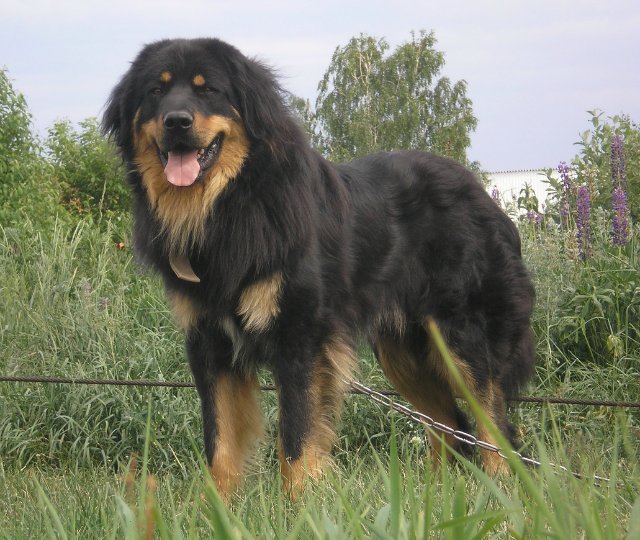
| Height | 64–75 cm |
| Weight | 45–60 kg |
| Lifespan | 12–15 years |
| FCI group | not FCI-recognized (aboriginal) |
| Origin | Mongolia / Buryatia |
Exact ratings
Common health issues
Nutrition
The Buryat-Mongolian Wolfhound (Bankhar Dog), also known by its historical name Hotosho-Nokhoi (meaning “yard wolf” or “yard dog”), is – strictly speaking – more than just a dog. It is a living legend that has survived through the centuries. This ancient aboriginal breed from the regions of Mongolia, Buryatia, and Tibet is a multifunctional animal that serves as a fearless guardian, a reliable shepherd, a loyal companion, and even a loving nanny for children. You can read more about this on Tvaryny.
In Buryatia and Mongolia, there is a belief that these majestic animals have four eyes (due to the expressive light spots above their eyes) and are able to see the spirit world, protecting their owners from evil. They bring happiness and prosperity to the home. Outstanding mental abilities, a balanced character, and the ability to quickly adapt to any enviornment make the Buryat-Mongolian Wolfhound an excellent friend for a responsible family.
Breed History: From Ancient Nomads to Modern Times
The history of the Buryat-Mongolian Wolfhound goes back to ancient times. They are believed to be descendants of ancient Tibetan dogs and have accompanied the nomadic tribes of Central Asia for millennia. Archaeological finds, specifically at the Ivolginsky settlement in Buryatia, confirm that dogs of a similar type lived alongside people even before the Common Era. They were an integral part of nomadic life: guarding the dwelling (yurt) and livestock from predators, helping with hunting, and serving as full-fledged family members.
During the 20th century, due to changes in traditional lifestyles, collectivization, and uncontrolled crossbreeding, the breed found itself on the brink of extinction. Purebred Hotoshos were scarce. A monumental effort to revive the breed began in the late 1980s, led by enthusiasts and cynologists Nikolai Batov and Marika Teregulova. They organized expeditions to remote areas of Mongolia and Buryatia, gathering the surviving population bit by bit. Thanks to their efforts, the breed was saved, and systematic breeding began.
Although the breed is not yet recognized by the Fédération Cynologique Internationale (FCI), it is rapidly gaining popularity due to its exceptional working qualities and stable temperament.
Standard and Appearance of the Buryat-Mongolian Wolfhound
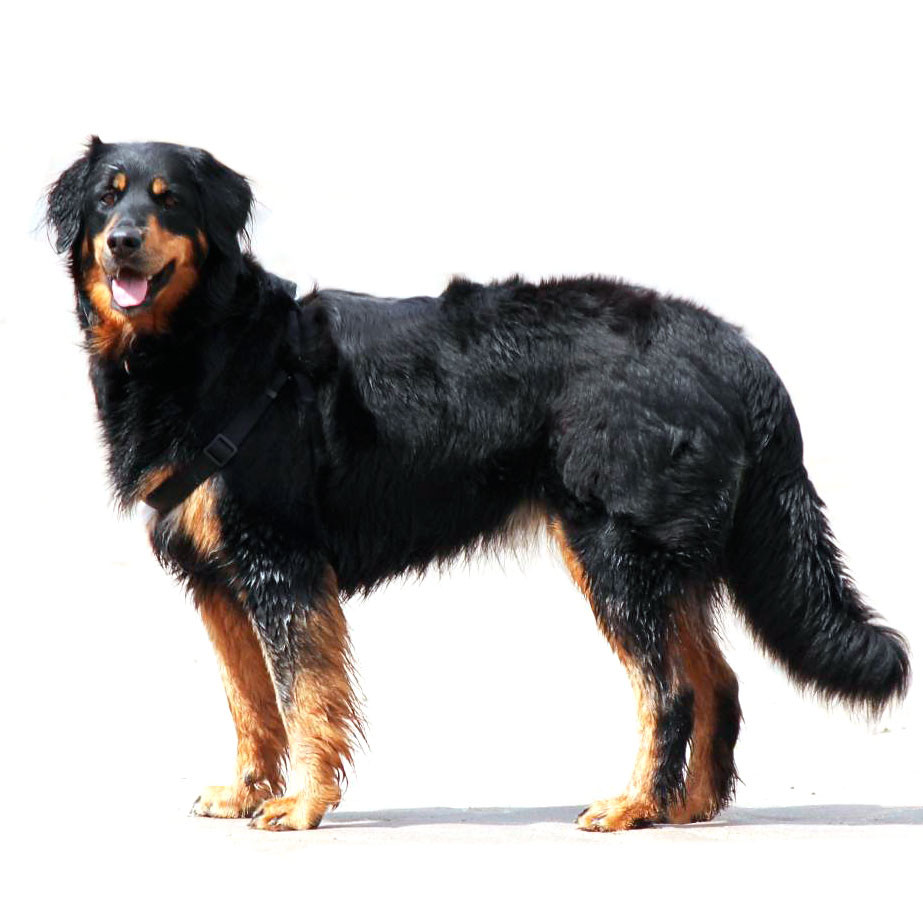
| Characteristic | Value |
|---|---|
| Other Names | Hotosho, Hotosho-Nokhoi, Yard Wolf, Bankhar |
| Country of Origin | Russian Federation (Buryatia), Mongolia |
| Height at Withers | Males: at least 29 inches (74 cm) Females: at least 26 inches (66 cm) |
| Weight | 100–155 lbs (45–70 kg) |
| Lifespan | 12–14 years |
| RKF Classification | Group 2 (Pinscher and Schnauzer, Molossoid and Swiss Mountain and Cattledogs) |
Detailed Appearance Description:
- Head: Massive, with a broad skull and a smooth but noticeable transition from forehead to muzzle. The muzzle is voluminous, slightly shorter than the length of the skull.
- Eyes: Small, oval-shaped, set wide apart. Color varies from light amber to dark brown. The gaze is intelligent, calm, and confident. A characteristic feature is the presence of light (red or gray) spots above the eyes, often referred to as “glasses.”
- Ears: Medium-sized, triangular, hanging, set at eye level or slightly higher.
- Coat: Very thick, with a well-developed undercoat that protects the dog from any bad weather. There are two types of coat: long-haired (long guard hair forming a mane on the neck, feathering on the back of the legs, and a plume on the tail) and short-haired (short guard hair, close-lying).
- Color: Black and black-and-tan are most common, as well as various shades of red, brown, and fawn. Black-and-tan dogs typically have distinct light markings forming “glasses” above the eyes, spots on the muzzle, chest, and legs.
Character and Temperament of the “Yard Wolf”
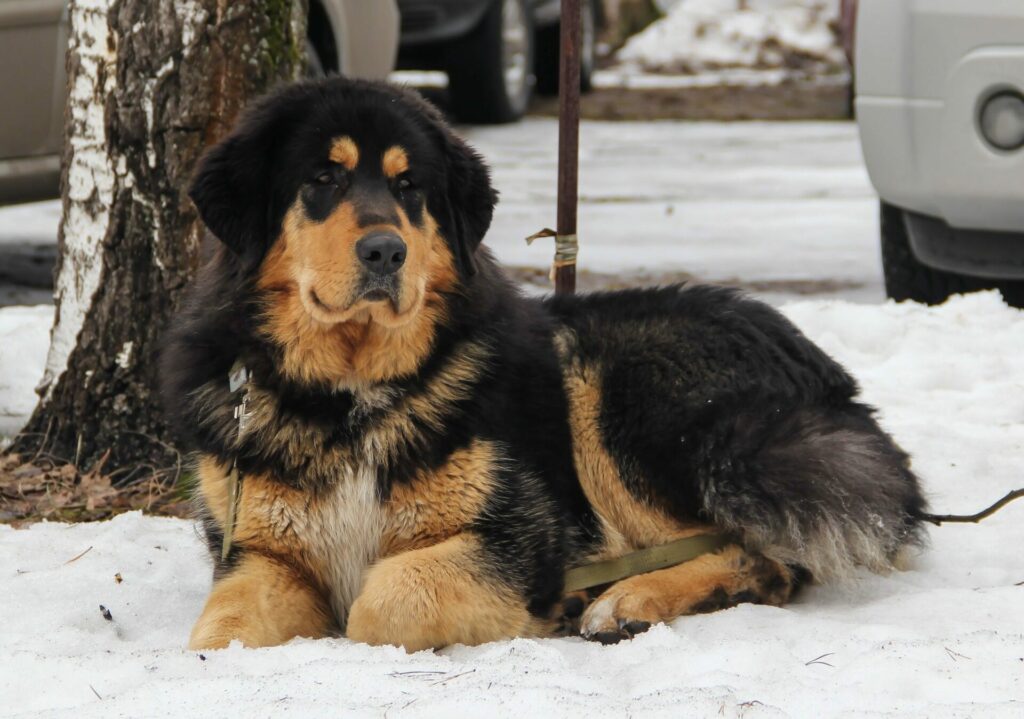
The sturdy and stocky Buryat-Mongolian Wolfhound is, first and foremost, an intelligent and balanced dog with a stable psyche. Its main task is the protection of its territory and family members, and it takes this role very seriously. This is not a guard dog that barks mindlessly. The Hotosho first assesses the situation, gives a vocal warning, and only proceeds to active measures if there is a real threat.
Its independance in decision-making is sometimes compared to breeds like the Caucasian Shepherd Dog or the Central Asian Shepherd Dog (Alabai); however, the Hotosho is considered more contact-oriented and focused on humans. For its family, it is a gentle and loyal friend. They are surprisingly patient with children, allowing them many liberties and acting as a caring nanny. They usually live in peace with other pets they grew up with, perceiving them as part of their “pack.”
A dog of this breed possesses brilliant intellectual abilities and, as owners note, even a unique sense of humor. It is not inclined to blindly follow commands but rather seeks cooperation. There is a fitting description of the breed: “He is independent like a Caucasian, swims like a Newfoundland, and plays like a Labrador.” This highlights his versatility.
Pros and Cons of the Breed
Before getting such a serious dog, it is important to soberly assess all its advantages and potential difficulties. This will help you understand if this breed is right for you.
| ✅ Pros | ❌ Cons |
|---|---|
| Outstanding guard qualities: A natural watchman with a strong territorial instinct. | Need for space: Absolutely unsuitable for apartment living. |
| Stable psyche: Balanced, not prone to unprovoked aggression. | Need for early socialization: Without it, they can be overly suspicious of strangers. |
| Devotion to family: Loves and protects all members of its “pack,” especially children. | Tendency toward independence: Can be stubborn; requires an experienced owner-leader. |
| Robust health: An aboriginal breed with strong immunity. | Heavy shedding: Especially seasonal; requires brushing. |
| Low maintenance: Adapts well to various climates, does not require complex care. | High intelligence: Needs mental stimulation and partnership, not “drilling.” |
Maintenance and Care: Creating Comfortable Conditions
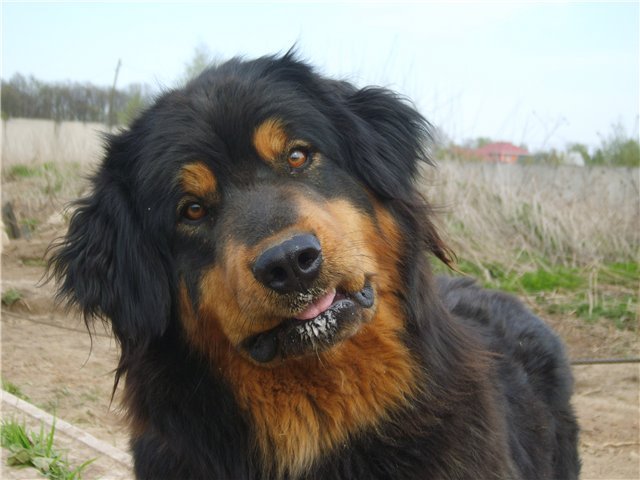
The main condition for a comfortable life for a Buryat-Mongolian Wolfhound is having its own territory. The ideal option is a private house with a large, securely fenced yard where the dog can move freely and exercise its guarding instincts. Keeping this breed in an apartment is categorically unacceptable.
Coat Care. The thick coat of the Hotosho has water-repellent properties and is not prone to matting. Care is simple but must be regular. The dog needs to be brushed 1-2 times a week, and daily during seasonal shedding (spring and autumn) to remove dead undercoat. Frequent bathing is not recommended, as it strips the natural protective oil layer from the skin and coat.
Physical Exercise. The Hotosho is not a hyperactive dog that needs hours of running. However, to maintain physical fitness and mental health, daily exercise is necessary. This can be long walks outside the yard, calm jogs with the owner, or games. It is important to give the dog the opportunity to explore new territories and get new impressions.
Training and Education
Training a Buryat-Mongolian Wolfhound is an exciting but responsible process. Due to their tendency to make independent decisions, they learn quickly but do not tolerate mindless repetition. Training should be built on mutual respect, patience, and consistency. The dog must understand why it is executing a particular command.
Early socialization is a key aspect of upbringing. From puppyhood, the dog needs to be introduced to different people, sounds, places, and well-behaved dogs. This helps raise a confident and calm dog that reacts correctly to new situations. The approach to training a Hotosho differs significantly from training breeds oriented towards unquestioning obedience, such as the East European Shepherd.
Hotoshos pass complex training courses, such as search and rescue and guard duty, with dignity, passing exams with flying colors. They listen attentively to their owner, but only provided they see a fair and consistent leader in them. Raising your voice and physical punishment are unacceptable – this can destroy trust forever.
The approach to teaching such an intelligent guardian must be different from specialized breeds like the Lagotto Romagnolo, which is genetically tuned to search and work closely with humans on a specific task. The Hotosho evaluates the environment himself, so he needs to be taught not so much “what to do,” but “how to react correctly.”
Health and Typical Breed Diseases
Feeding Features
Interesting Facts About the Hotosho
- The “Four-Eyed” Dog: The legend of the four eyes is linked to the light spots above the eyes. It was believed that when the dog sleeps, these “second eyes” see everything and guard the owner.
- Talisman Dog: In ancient times, Hotosho puppies were not sold. They could only be given as a sign of great respect and friendship, as it was believed the dog brought luck.
- Family Ties: The Buryat-Mongolian Wolfhound is a close relative of other large Asian shepherd dogs, specifically the Tibetan Mastiff, which is considered one of its ancestors.
- Silent Guardian: Unlike many watch breeds, the Hotosho is not prone to barking without reason. It voices concern only when it deems it necessary.
- Sacred Animal: In the Buddhist monasteries of Tibet and Mongolia, these dogs were revered and often lived at temples, guarding them.
Frequently Asked Questions (FAQ)
Is the Buryat-Mongolian Wolfhound suitable for apartment living?
Categorically no. This is a large, active dog with an innate instinct to guard territory. It needs space, specifically its own yard. Confinement in an apartment will negatively affect its psyche and health.
How aggressive are they toward strangers?
The Hotosho is naturally suspicious of strangers; this is the foundation of its guarding qualities. It does not show unprovoked aggression. With proper socialization, the dog will react calmly to guests who enter the home with the owner’s permission, but will always keep them in its sights.
Do they get along well with children?
Yes, this is one of the breed’s standout traits. They are very patient, gentle, and make excellent protectors for the family’s children. However, as with any large dog, interaction with small children should always be supervised by an adult.
Do they shed a lot and is coat care difficult?
Shedding is intense, especially twice a year (spring-autumn) when the undercoat changes. Daily brushing is required during this period. At other times, brushing 1-2 times a week is sufficient. Overall, coat care is not difficult.
Are they hard to train?
They are very smart and learn quickly but can be stubborn due to their independence. Training requires experience, patience, and the ability to build a partnership rather than a “boss-subordinate” relationship. This is not a dog for a novice.
Video About the Breed
- A fearless guardian of flock and home
- Phlegmatic, level-headed, gentle with children
- Athletic and hardy despite its size
- Very robust “natural” health
- Distrustful of and aggressive to unfriendly strangers
- Self-reliant — not for a novice
- Not for an apartment — needs space
- Dense coat sheds heavily
| Tibetan Mastiff | Central Asian Shepherd (Alabai) | Caucasian Shepherd | |
|---|---|---|---|
| Height | 61–76 cm | 65–78 cm | 64–75 cm |
| Energy | 2.5 | 3 | 3 |
| Apartment | 1.5 | 1.5 | 1.5 |
| Beginners | 1.5 | 1.5 | 1.5 |
What does the name “Khotosho” mean?
Is the Buryat-Mongolian Wolfhound good with children?
Is the breed suited to a novice?
Aboriginal breed (Bankhar / Khotosho) · regional clubs
For apartments · For kids · For beginners · Active · Smartest · Hypoallergenic · All rankings →