Group 2 · pinschers, schnauzers, molossoids · Argentina, Córdoba Province
Argentine Dogo
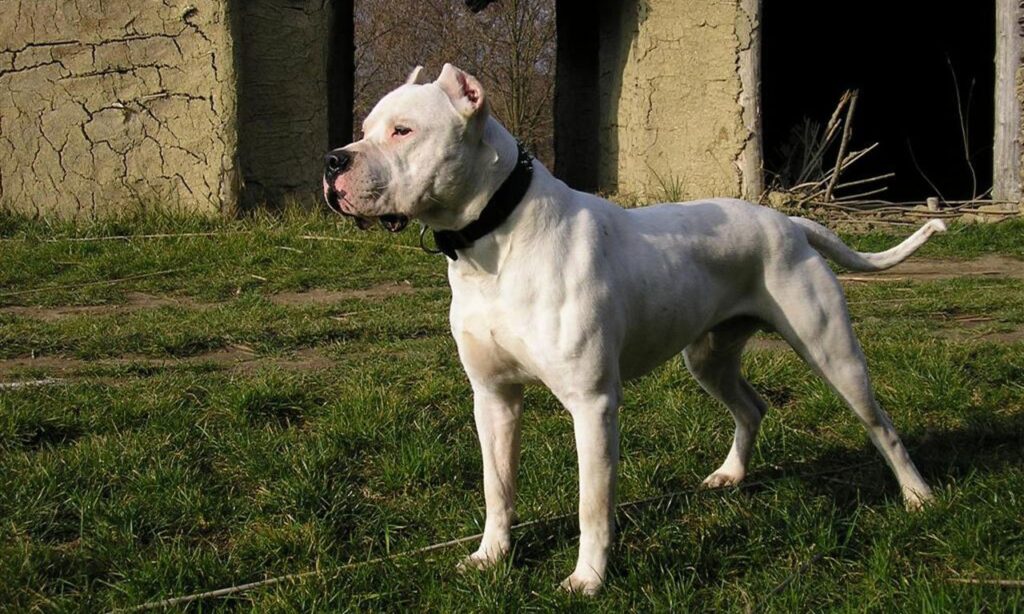
A white athlete of the Argentine plains — a powerful, fearless big-game hunter: strong, hardy, devoted and gentle with the family. The Dogo Argentino is a mighty white molosser bred for hunting boar and puma and for guarding; despite its imposing look, within the family it is an affectionate, cheerful companion, but a serious breed for an experienced owner with a firm hand.
Apartment · not suitableKidsCats · not suitableOther dogs · with caveatsBeginners · not suitable
The Argentine Dogo, or Dogo Argentino, is far more than just a dog; it's a true embodiment of strength, elegance, and unwavering loyalty. These magnificent white canines, with their muscular and harmonious build, capture hearts with their bravery, endurance, and incredible hunting prowess. Despite their formidable appearance, within the family circle, they transform into gentle and affectionate companions. This detailed overview, prepared by the Tvaryny team, will help you delve into the world of this unique breed and understand all its characteristics.
Argentine Dogos are exceptionally cheerful, active, and peace-loving dogs who will never display unprovoked aggression towards humans. They adore movement and will gladly become your partners in sport, whether it's a jog in the park or a long hike. Their intelligence and eagerness to please their owner make them highly trainable, though they do require a specific approach.
Argentine Dogo: Key Breed Characteristics
Argentine Dogo: Key Breed Characteristics · 10
Parameter
Characteristic
Origin
Argentina, Córdoba Province
Creation Date
1920s, officially recognised by FCI in 1973
Purpose
Big game hunting (puma, peccary), companion dog, guard dog
Lifespan
10–14 years
Height at Withers
Males: 62–68 cm, Females: 60–65 cm
Weight
Males: 45–55 kg, Females: 40–45 kg
Temperament
Loyal, brave, family-friendly, dominant
Exercise Needs
Very high
Grooming Difficulty
Low
Trainability
High, but requires an experienced owner
Interesting Facts About the Argentine Dogo
National Symbol: The Argentine Dogo is a national pride and the only breed developed in Argentina to receive international recognition.
White Colour for Hunting: The snow-white coat was not chosen by chance. It allows the hunter to easily distinguish the dog from dark prey (e.g., a wild boar) during a confrontation, reducing the risk of accidental injury.
Actor Dog: Argentine Dogos have appeared in films. One of the most famous is "Bombón – El Perro" (The Dog), where a representative of this breed "starred" in the main role.
Not a Fighting Dog: Despite having the blood of the Cordoba Fighting Dog in its veins, Antonio Nores Martinez made every effort to eliminate excessive aggression towards other dogs, as for big game hunting, dogs had to work in a pack.
Creator's Rescue: There is a legend that once, while hunting, Antonio Martinez was attacked by a peccary. He was saved by one of his first Dogos, who demonstrated incredible courage and loyalty.
History of the Argentine Dogo's Origin
The history of the Argentine Dogo is a tale of one man's dream and passion. It is inextricably linked with the names of two Argentine brothers – Antonio and Agustin Nores Martinez. At just 18 years old, Antonio, inspired by the idea of creating the perfect dog for hunting big game found in Argentina, began his selective breeding work. His goal was to develop a breed that combined strength, endurance, an excellent sense of smell, speed, and boundless courage.
The foundation for the new breed was the local Fighting Dog of Cordoba (Perro de Pelea Cordobes) – unfortunately, a now extinct breed that was a crossbreed of the Spanish Mastiff, Bull Terrier, old-type English Bulldog, and Boxer. These dogs were known for their incredible bravery and fighting qualities, but were often aggressive towards other dogs and unable to work in a pack. Antonio decided to "refine" them by adding the blood of ten other breeds, each contributing desired traits:
English Pointer – for a keen sense of smell.
Irish Wolfhound – for speed and a calm temperament.
Great Dane (Harlequin) – for large size and strength.
Dogue de Bordeaux – for powerful jaws.
Bull Terrier – for courage and pain tolerance.
English Bulldog – for a broad chest and tenacity.
Spanish Mastiff – for power and endurance.
Boxer – for playfulness and better human contact.
Pyrenean Mountain Dog – for a snow-white coat and resistance to various weather conditions.
Great Dane (Fawn) - to solidify size and structure.
The result of this colossal effort was a versatile dog, capable of pursuing prey for hours, then engaging in a struggle and holding it until the hunter arrived. In 1964, the breed was recognised by the Argentine Cynological Federation, and in 1973, it received official recognition from the Fédération Cynologique Internationale (FCI), becoming the first and only officially recognised Argentine breed.
What the Argentine Dogo Looks Like: Standard and Appearance Description
The Argentine Dogo is the athlete of the canine world. It has a robust, powerful, yet harmonious and proportionate mesomorphic body type. This is a dog with well-defined musculature, clearly visible beneath its taut skin.
Head: Massive, with a powerful skull and a slightly convex profile. The stop (transition from forehead to muzzle) is smooth. The muzzle is square, with strong jaws. Lips are dry and tight-fitting.
Nose: Large, broad, with well-developed nostrils, always black in colour.
Ears: Set high, wide apart. Historically, they were cropped into a triangular shape. In many countries, cropping is forbidden, so natural ears are pendulous and medium-length.
Eyes: Medium-sized, almond-shaped, set wide apart. Colour – from dark brown to hazel. The gaze is confident and intelligent.
Neck: Very strong, muscular, with a pronounced nape. There are loose skin folds on the throat.
Body: The back is strong and broad. The loin is short and muscular. The chest is wide and deep, providing ample volume for the lungs.
Tail: Long, thick at the base, tapering towards the tip. When at rest, it hangs down; in motion, it rises to back level or slightly above and moves constantly.
Limbs: Straight, parallel, with powerful bones and well-defined musculature. Paws are compact, well-knuckled, with strong pads.
Coat: Short, smooth, straight, and dense. Harsh to the touch. Average hair length is 1.5–2 cm. There is no undercoat, which makes the dog sensitive to cold.
Colour: Exclusively white. A single black or dark spot on the head ("pirate patch") is permissible, which should not cover more than 10% of the head's surface.
Character of the Argentine Dogo: Temperament and Behaviour
At first glance, the Argentine Dogo might seem like a formidable and even aggressive animal, but this is merely a protective facade. By nature, they are very friendly, cheerful, and devoted dogs. They form strong bonds with their family and are willing to do anything for them. Their character is a unique blend of hunting ardour, protective instinct, and tenderness towards "their own."
Argentine Dogos are highly intelligent and possess an excellent memory. They quickly learn commands but dislike pointless repetition. They require an owner with a firm hand but a fair heart. Harshness and physical punishment are unacceptable for this breed – it can lead to withdrawal or, conversely, to aggression. In this regard, they are similar to other molossers, such as the American Bulldog, who also need a confident leader.
Towards children in their own family, Dogos are very patient and gentle, often becoming true nannies for them. However, due to their large size and strength, their play with small children should always be supervised by adults. They are wary of strangers but without excessive aggression unless they perceive a direct threat. However, they may display dominance towards other dogs, especially those of the same sex. Early and proper socialisation is key to raising a well-balanced and manageable dog.
Pros and Cons of the Argentine Dogo Breed
Before getting such a serious dog, it's worth soberly assessing all the advantages and disadvantages of the breed.
Pros and Cons of the Argentine Dogo Breed · 8
Pros (+)
Cons (-)
Incredible loyalty to family
Not suitable for novice dog owners
Excellent guarding qualities
Tendency towards dominance and aggression towards other animals
High intelligence, trainability
Requires very early and prolonged socialisation
Minimal coat care
High need for physical exercise
Good health and stamina
Prone to deafness and allergies
Patient with children in the family
Does not tolerate loneliness well
Striking and impressive appearance
Sensitive to cold due to lack of undercoat
Doesn't bark without reason
Breed is banned or restricted in some countries
Training and Socialisation of the Argentine Dogo
Training an Argentine Dogo is a task for an experienced, patient, and self-assured owner. These dogs are intelligent and learn quickly, but their innate instinct for dominance requires clear leadership. Training and socialisation must begin from the very first day the puppy arrives home.
Socialisation means introducing the puppy to various people, animals, sounds, places, and situations. This will help raise a well-balanced dog that reacts appropriately to the surrounding world. Training should be based on positive reinforcement – praise, treats, and play. Argentines are very sensitive to unfairness and harshness. If shouted at, they may withdraw and refuse to obey commands. They are not as straightforward to train as, for example, some working breeds, and in this respect, they resemble other independent guardians, such as the Dogo Canario.
It is very important from an early age to teach the Dogo not to pick up food from the street and not to pull on the lead. It is recommended to complete a general obedience course with an experienced dog trainer who is familiar with the breed's peculiarities. Engaging in protection work (schutzhund) should only be done with a dog that has a stable psyche and perfectly executes obedience commands, and only under the guidance of a professional instructor.
Caring for an Argentine Dogo
Caring for these dogs is surprisingly straightforward. Their short coat doesn't require complicated procedures. Simply brush it once a week with a rubber brush or grooming mitt to remove dead hairs and maintain a healthy shine. During seasonal shedding (spring and autumn), the procedure can be done more frequently. Bathe your Dogo only when necessary, using specialised shampoos for white dogs to prevent yellowing of the coat.
Particular attention should be paid to:
Ears: Regularly inspect the ear canals for dirt, redness, or unpleasant odour. Clean them using a special lotion and cotton pads.
Eyes: Check the eyes daily. Small discharges in the corners are normal; they can be removed with a clean cloth dampened with chamomile infusion or plain water.
Claws: If the claws don't wear down naturally during walks on hard surfaces, they need to be trimmed with large breed nail clippers once or twice a month.
Teeth: To prevent tartar build-up, regularly give your dog special dental treats or brush their teeth using a dog-specific toothbrush and paste.
Argentine Dogos can be kept in an apartment, but with one crucial condition – ensuring daily long and active walks. This is not a couch potato dog. They need at least 2–3 hours of activity per day: running, playing, and exercises. Without sufficient physical exertion, the dog can become unruly and start damaging things at home.
Nutrition
Feeding the Argentine Dogo: Key Recommendations
Health and risks
Health of the Argentine Dogo: Typical Diseases and Prevention
Frequently Asked Questions About the Breed (FAQ)
Is the Argentine Dogo suitable for a family with children?
Yes, with proper upbringing and socialisation, the Argentine Dogo can become a wonderful companion for a family with children. They are very patient and gentle with "their" children. However, due to their strength and size, any interaction with small children should be supervised to avoid accidental injuries during play.
Can an Argentine Dogo live in the same home with other animals?
It's challenging, but possible. If a Dogo puppy grows up with a cat or another dog, there's a good chance they will become friends. However, their innate hunting instinct and tendency towards dominance can create problems, especially with unfamiliar animals outdoors. Introductions to new animals should be gradual and controlled. They have a stronger dominance instinct than, for example, a Bullmastiff, but with the right approach, they can coexist.
How much does an Argentine Dogo puppy cost?
The price of an Argentine Dogo puppy from a responsible breeder can vary significantly. It depends on the parents' lineage, their titles, health test results (especially the BAER test for deafness), and the puppy's prospects (show class, breeding class, pet class). It's not advisable to choose the cheapest puppy, as this could lead to significant veterinary expenses in the future.
Is it true that the breed is banned in some countries?
Yes, unfortunately, due to its formidable appearance and the fighting past of its ancestors, the Argentine Dogo has been placed on the list of "dangerous" or banned breeds in several countries, including the UK, Australia, New Zealand, Denmark, Norway, Ukraine, and others. Before travelling to another country with such a dog, always familiarise yourself with local legislation. This issue affects many powerful breeds, such as the Italian Cane Corso or the lesser-known Cão de Castro Laboreiro.
Video about the Breed
FAQ
What was the Dogo Argentino bred for?
For hunting large and dangerous game (boar, puma) and for guarding; a strong, hardy white molosser, and at the same time a devoted family companion.
Is the Dogo Argentino suited to a novice?
No — a powerful, serious breed with a hunting instinct and possible dog aggression in some lines; it needs experience, a firm hand, early socialisation and space.
Is it true they can be deaf?
Yes — as in many white breeds, congenital deafness linked to the white pigment occurs; responsible breeders test puppies for hearing.