

| Height | 48–56 cm |
| Weight | 15–22 kg |
| Lifespan | 12–14 years |
| FCI group | 6 · scenthounds |
| Origin | Austria |
Exact ratings
Common health issues
Nutrition
The Austrian Black and Tan Hound, also known as the Brandlbracke, is an elegant, athletic, and exceptionally loyal hunting dog with a history stretching back centuries. This breed, a source of national pride in Austria, combines stamina, a keen sense of smell, and a balanced temperament. Originally bred to work in demanding alpine conditions, this hound makes an ideal companion for active individuals and, naturally, for hunters. While at home it transforms into a calm and affectionate family member, its hunting instincts always remain sharp. You can find out more about all aspects of this unique breed here on Tvaryny.
With a powerful instinct for pursuit, the Brandlbracke needs an owner who can provide ample physical and mental stimulation. Its obedience and intelligence make the training process relatively straightforward, yet its upbringing demands consistency and an understanding of its hunting nature. This dog is not suited for apartment living or for those who lead a sedentary lifestyle. Its natural habitat is wide open spaces, the woods, and the fields, where it can truly fulfil its potential.
General Characteristics of the Austrian Black and Tan Hound Breed
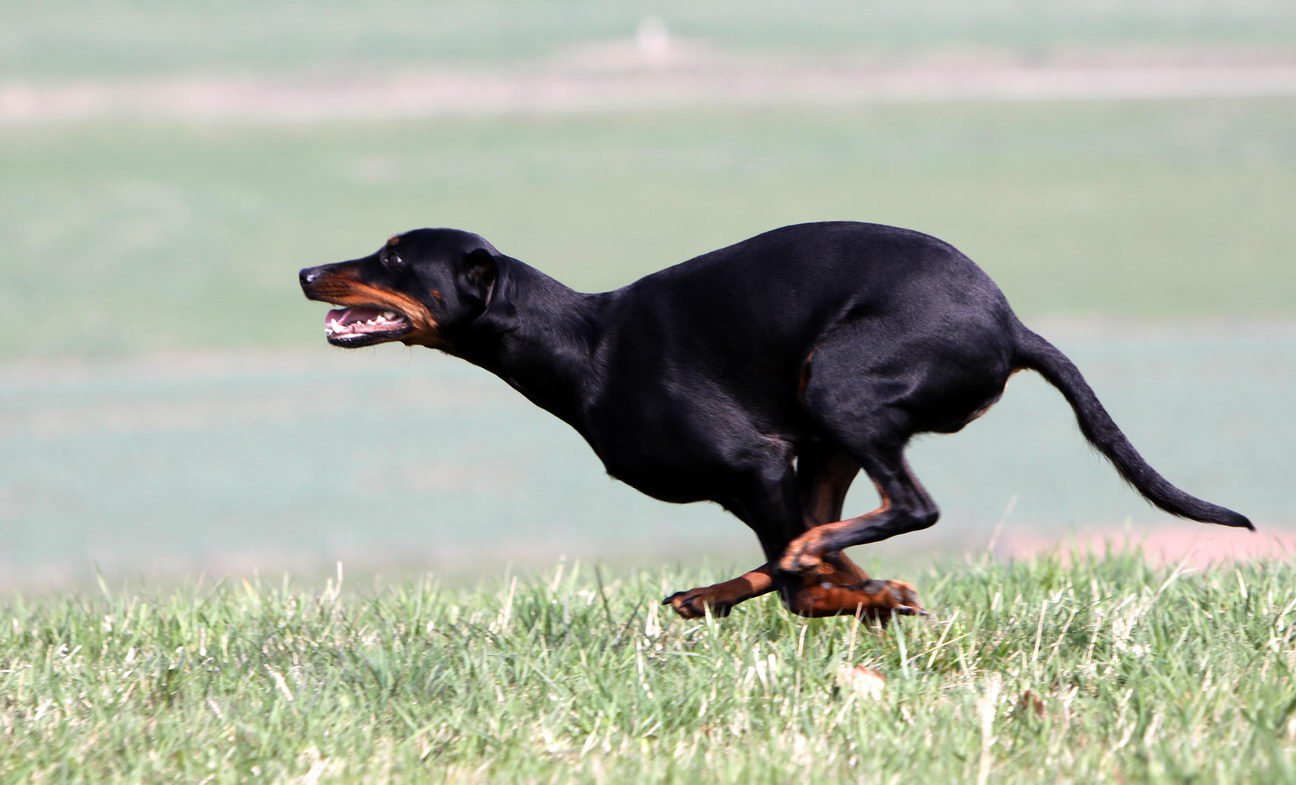
| Breed Name | Austrian Black and Tan Hound (Brandlbracke) |
| Country of Origin | Austria |
| Date of Origin | Middle Ages, standard approved in 1884 |
| FCI Classification | Group 6 (Scent Hounds and Related Breeds), Section 1.2 (Medium-sized Hounds). Standard Number 63. |
| Height (at shoulder) | Males: 50–56 cm; Females: 48–54 cm |
| Weight | 15–22 kg |
| Life Expectancy | 12–14 years |
| Temperament | Intelligent, loyal, energetic, balanced, strong hunting instinct |
| Use | Bloodhound, mountain work, companion dog |
| Care | Minimal, requires regular physical exercise |
| Coat Colour | Black with clearly defined fawn or reddish-brown markings |
History and Origin of the Breed
The history of the Austrian Black and Tan Hound is deeply intertwined with hunting in Europe’s alpine regions. It is believed that its direct ancestors were the so-called “Celtic Hounds,” which were widespread in these territories as far back as the Roman Empire. These dogs were valued for their stamina, their ability to work in challenging mountainous terrain, and their excellent sense of smell. For centuries, they were bred purely for their working qualities, which allowed for the development of a stable dog type perfectly adapted to local conditions.
The first written mentions describing dogs very similar to modern Brandlbrackes date back to the Middle Ages. Notably, Emperor Maximilian I (1450-1519) of the Holy Roman Empire, a great hunting enthusiast, referred in his records to “black hounds with tan markings” that he used for hunting hares and foxes in the alpine forests. These dogs were already renowned for their ability to relentlessly pursue game trails for extended periods.
Targeted breeding efforts and the official recognition of the breed came much later. In 1884, the first official standard of the Austrian Black and Tan Hound was approved, solidifying its unique characteristics and distinguishing it from other European hounds. Since then, the breed has been selectively bred “in purity,” without the introduction of blood from other dogs. Despite its long history and excellent working qualities, the Brandlbracke has never gained widespread popularity outside its homeland. In Austria, however, it remains one of the most beloved hunting dog breeds and is considered a national treasure. Another robust and hardworking Austrian breed, bred for similar alpine hunting, is the Styrian Coarse-haired Hound.
Breed Standard and Appearance of the Brandlbracke
The Austrian Black and Tan Hound is a medium-sized dog with a robust yet elegant build. Its appearance clearly marks it as a classic European hound, designed for speed and endurance. Every element of its body is functional and geared towards effective work in the field.
Head, Eyes, and Ears
The Brandlbracke’s head features a clearly defined, elongated skull with a slightly marked stop. The muzzle is strong, with a straight nasal bridge. Lips are dry and tight-fitting. The eyes are dark brown, with a clear, intelligent, and confident gaze. The ears are medium-long (reaching the tip of the nose), set high, with rounded tips. They hang smoothly along the cheeks, a typical characteristic of hounds.
Body and Limbs
The dog’s body is athletic, with well-developed musculature. The neck is medium-long, muscular, without loose skin. The back is straight and long. The chest is deep and broad, providing ample space for the lungs and heart, which is crucial for an enduring hound. The limbs are lean, bony, with strong muscles. The paws are compact, with sturdy pads, allowing the dog to move confidently over any terrain. The tail is long, set high, and tapers towards the end. When moving, the dog carries it slightly curved upwards.
Coat and Colour
The coat is one of the breed’s key features. It is short (around 2 cm), smooth, lying close to the body, with a dense undercoat. This structure reliably protects the dog from inclement weather. The classic colour is black with small, clearly defined light or dark reddish-brown markings. These markings are located on the muzzle (“Vieräugl” – two spots above the eyes), chest, limbs, and on the underside of the tail. Small white patches on the chest are permissible according to the standard but are not desirable.
| Parameter | Description according to FCI Standard No. 63 |
|---|---|
| General Appearance | Medium-sized, strong hound, elegant, with a lean build. |
| Proportions | Body length slightly exceeds height at the shoulder. |
| Skull | Broad, occipital protuberance barely visible. |
| Muzzle | Strong, straight. Lips dry, pigmented. |
| Bite | Scissor bite, complete set of 42 teeth. |
| Eyes | Clear, dark brown, without visible third eyelid. |
| Ears | Medium length, set slightly above eye level, hanging smoothly, tips rounded. |
| Back | Long, straight, strong. |
| Chest | Deep and broad, but not barrel-shaped. |
| Tail | Long, gradually tapering, slightly curved, densely feathered. |
| Movement | Free, ground-covering, far-reaching. |
Character and Temperament of the Austrian Hound
The character of the Austrian Black and Tan Hound is a harmonious blend of hunting passion and domestic tranquillity. This is a dog with a dual nature: when hunting, it is tireless, persistent, and even tenacious towards its quarry, but at home, it is an affectionate, calm, and devoted companion. The Brandlbracke is very much focused on its owner and eager to please. It is intelligent, learns quickly, and readily understands what is expected of it. This trait makes it more obedient compared to many other hound breeds, which tend to be more independent. For instance, the German Hound, similar in purpose, might display more stubbornness during training.
It is friendly towards people, including strangers, so it does not make a good guard dog. With children, it is generally patient, but due to its strong hunting instincts, it is not recommended to leave it unsupervised with very young children. Any small household pets (cats, rodents, rabbits) will be perceived as potential prey. Early and correct socialisation can somewhat mitigate this instinct, but eliminating it entirely is impossible. It usually gets along well with other dogs, especially if raised with them, but can show dominance towards same-sex representatives.
Pros and Cons of the Breed
✅ Pros
- Excellent Working Qualities: One of the best hounds for blood tracking, especially in mountainous regions.
- High Intelligence and Trainability: Easily trained, eager to please its owner.
- Robust Health: no breed-wide list of hereditary diseases has been compiled — “not described” means “not studied”, not “not there”.
- Dual Nature: An energetic hunter in the field and a calm companion at home.
- Minimal Coat Care: Short coat requires no elaborate grooming.
- Family Devotion: Forms a very strong bond with its owner and family members.
❌ Cons
- Very Strong Hunting Instinct: Not suitable for households with small animals. Prone to escaping if it catches an interesting scent.
- Requires High Physical Exercise: Not suitable for apartment living or for inactive individuals.
- Space Requirement: Needs a large, securely fenced garden.
- Not a Guard Dog: Too friendly towards strangers.
- Rarity: Difficult to find a puppy outside Austria and neighbouring countries.
- Sensitivity: Reacts poorly to shouting and harsh training methods.
Care and Upbringing
Caring for the Austrian Black and Tan Hound is straightforward but requires adherence to several important rules related to its origin and purpose.
Living Conditions and Physical Exercise
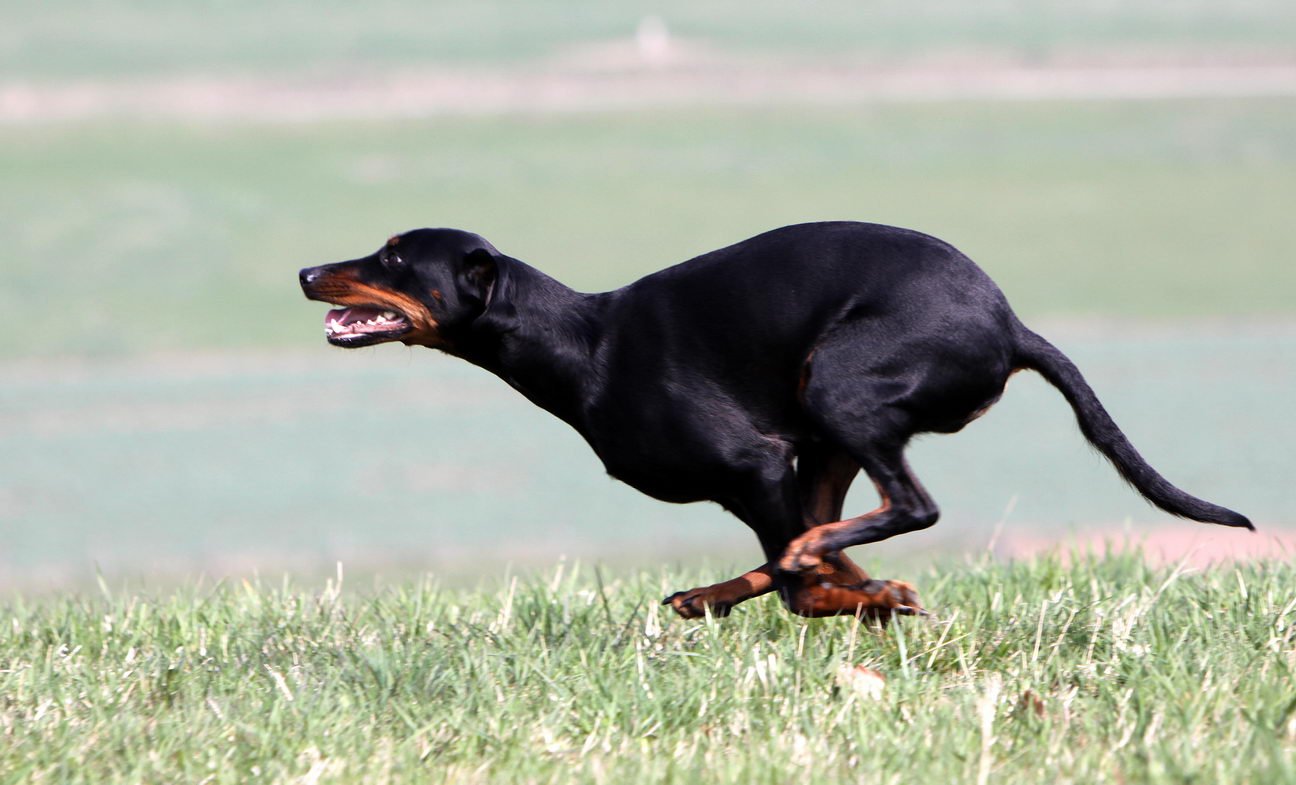
The main requirement is space and activity. This dog is categorically unsuitable for city apartment living. The ideal place for it would be a private house with a large, securely fenced garden. The fence should be high and robust, as a Brandlbracke, once captivated by a scent, can easily jump over or dig under it.
The Brandlbracke needs daily, long, and intense physical exercise. A simple walk on a lead is not enough for it. It needs the opportunity to run freely, explore territory, and utilise its sense of smell. Ideal activities include:
- Long walks (1.5-2 hours daily) in the woods or fields.
- Running alongside a bicycle.
- Participation in hunting or canine sports (e.g., coursing, tracking).
- Scent games that stimulate its mental activity.
Grooming and Hygiene
Care for the Brandlbracke’s short and smooth coat is minimal. It’s sufficient to brush it once a week with a rubber brush or grooming mitt to remove dead hairs. Shedding is seasonal and not overly intense. The dog should only be bathed when absolutely necessary, as frequent washing can damage the natural oily layer that protects the skin. Special attention should be paid to its pendulous ears. They must be regularly inspected and cleaned to prevent the development of infections and inflammations. Don’t forget regular nail trimming and dental care either.
Training and Socialisation of the Austrian Black and Tan Hound
Training the Austrian Hound is an interesting but responsible process. Thanks to its intelligence and desire to please its owner, it learns quite easily. However, the key aspect is consistency and patience. Training should be based on positive reinforcement – praise, treats, play. Harsh methods and punishments are unacceptable, as this dog has a sensitive nature and can become withdrawn.
The main focus in upbringing should be on perfecting the “Come!” command and control from a distance. This is absolutely essential due to its strong hunting instinct. Early socialisation is mandatory. The puppy should be introduced to various people, places, sounds, and other animals (with caution). This helps to raise a balanced and confident dog. Compared to other Austrian breeds, such as the Styrian Coarse-haired Hound, the Black and Tan variety is considered somewhat more pliable and easier to train outside of a hunting context.
Diet: What to Feed a Brandlbracke
Health and Typical Diseases of the Breed
Interesting Facts about the Austrian Hound
- The “Four-Eyed” Hound: The characteristic reddish-brown spots above the eyes, an obligatory breed trait, are popularly called “a second pair of eyes” or “vieräugl”. It was believed that these markings allowed the dog to ward off evil spirits.
- Voice on the Trail: The Brandlbracke belongs to the so-called “lautjagend” hounds, which means “those that give voice on the trail.” During the pursuit of game, it emits a characteristic, melodious bark, informing the hunter of its movement.
- National Heritage: In Austria, this breed is part of the cultural heritage. There are specialised clubs that strictly monitor the purity of the breed and the preservation of its unique working qualities.
- Virtually Unknown Worldwide: Despite all its advantages, the Austrian Black and Tan Hound remains an extremely rare breed outside its homeland and the nearest countries, such as Germany and Switzerland.
Frequently Asked Questions about the Breed (FAQ)
Can the Austrian Black and Tan Hound live in an apartment?
No, this is absolutely not recommended. This breed needs ample living space and daily intense exercise, which cannot be provided in an apartment. A lack of activity will lead to destructive behaviour, excessive barking, and health problems.
Does the Brandlbracke get along with cats and other animals?
Extremely poorly. Its hunting instinct is extraordinarily strong, and any small animal, including cats, rodents, or birds, will be viewed as prey. Even with shared socialisation from a young age, the risk remains very high.
How much does an Austrian Black and Tan Hound puppy cost?
Due to the breed’s rarity, finding a puppy, especially outside Austria, is very challenging. The price can vary significantly, but it is typically high, as breeders invest heavily in maintaining their working qualities and health. You should be prepared for the possibility of travelling to Europe and a lengthy waiting period.
Does this dog bark a lot?
When hunting – yes, it uses its voice for signalling. At home, provided it gets enough exercise, it is quite silent. However, if it is bored or left alone for long periods, it might bark out of boredom or to attract attention.
Is the Austrian Black and Tan Hound suitable for an inexperienced owner?
More likely no than yes. Although intelligent, its specific exercise needs and strong hunting instinct require experience, an understanding of hound psychology, and a willingness to dedicate significant time and effort to the dog.
Video about the Breed
- Hardy, with an excellent nose
- Level-headed, calm and gentle at home
- Devoted to the family
- Very robust “natural” health
- Vocal — “gives tongue” on the trail
- Strong hunting instinct (risky with cats)
- High exercise needs — not for a flat
- Independent at work
| Styrian Coarse-haired Hound | Tyrolean Hound | Bavarian Mountain Hound | |
|---|---|---|---|
| Height | 45–53 cm | 42–50 cm | 44–52 cm |
| Energy | 4.5 | 4.5 | 4 |
| Apartment | 2 | 2 | 1.5 |
| Beginners | 2.5 | 2.5 | 1.5 |
Where does the name “Brandlbracke” come from?
Is the Austrian Black and Tan Hound good at home?
How does it differ from the Styrian Coarse-haired Hound?
FCI Standard No. 63 · Österreichischer Kynologenverband
For apartments · For kids · For beginners · Active · Smartest · Hypoallergenic · All rankings →