

| Height | 48–55 cm |
| Weight | 22–25 kg |
| Lifespan | 12–14 years |
| FCI group | 6 · scenthounds |
| Origin | France (Vendée) |
Exact ratings
Common health issues
Nutrition
The Briquet Griffon Vendéen is a passionate and loyal hunter, wrapped in a harsh, slightly dishevelled coat. This resilient French scent hound, a specialist in big game like wild boar and deer, is impressive for its courage and determination in the field. Yet, in the family home, it transforms into a calm, gentle, and incredibly friendly companion. It possesses an innate friendliness, no aggression towards people, and gets on well with other dogs. If you’re looking for more than just a pet, but an active partner for adventures, this hound could be the ideal choice, but it requires a specific approach to training and a significant amount of physical exercise. Find out more about the unique characteristics of this breed at Tvaryny.
Briquet Griffon Vendéen: Key Breed Information
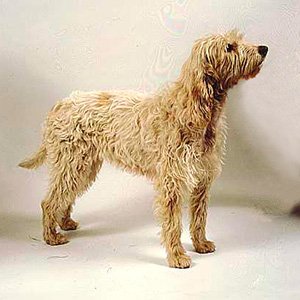
| Breed Name | Briquet Griffon Vendéen |
| Country of Origin | France (Vendée region) |
| FCI Classification | Group 6 (Scent hounds and related breeds), Section 1.2 (Medium-sized scent hounds). Standard number 282. |
| Purpose | Scent hound, primarily for hunting boar, roe deer, red deer, and fox. |
| Lifespan | 11-14 years |
| Height at Withers | Males: 50-55 cm; Females: 48-53 cm |
| Weight | 20-25 kg |
| Temperament | Energetic, brave, passionate hunter, obedient (for a hound), sociable, and gentle with the family. |
| Grooming | Moderate, requires regular brushing (1-2 times a week). |
| Activity Level | Very high, needs at least 1.5-2 hours of intense exercise daily. |
| Training | Requires patience, consistency, and positive reinforcement. Can be stubborn. |
| Child-Friendly | Good, patient and playful. |
| Pet-Friendly | Gets on well with other dogs. Requires early socialisation to live with cats due to its strong prey drive. |
The History of the Briquet Griffon Vendéen
The story of the Briquet Griffon Vendéen is inextricably linked with the Vendée region in western France, known for its dense forests and challenging terrain. This dog is a direct descendant of the Grand Griffon Vendéen, which in turn descends from ancient Gallic hounds. The name “Briquet” in French hunting terminology means “medium-sized dog,” which accurately describes its place among the four Vendéen Griffon breeds.
The breed began to take shape before the French Revolution, but it was after this period—when the large packs of aristocratic hunting dogs were largely destroyed—that the breed almost disappeared. Its revival began in the late 19th and early 20th centuries thanks to the efforts of enthusiasts, particularly Count d’Elva. He aimed to recreate a dog smaller than the Grand Griffon but just as effective for big game hunting. To achieve this, the best smaller specimens of the Grand Griffon were selected for breeding. It’s believed that to improve their sense of smell and obedience, the blood of other breeds was introduced, notably the ancestors of the modern-day Griffon Nivernais, who were famed for their outstanding working qualities.
The First World War once again brought the breed to the brink of extinction. It was only due to the dedicated work of French cynologists during the interwar period that the population was saved and stabilised. The breed standard was officially recognised in the 1920s. Today, the Briquet Griffon Vendéen remains a popular hunting dog in France, but it is quite rare outside the country, making it an exclusive and unique breed.
The Appearance of the Briquet Griffon Vendéen: Standard and Look
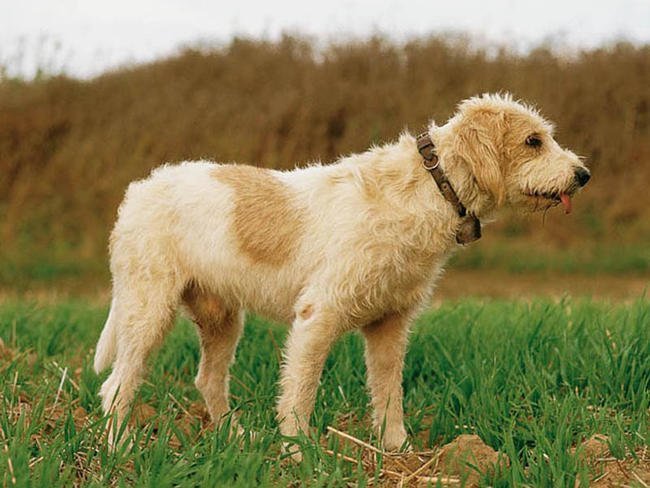
The Briquet Griffon Vendéen is a medium-sized dog with a robust but not heavy build and harmonious proportions. Its appearance radiates endurance and energy, while its “scruffy” coat and expressive “eyebrows” and “moustache” give it a unique charm.
Head and Muzzle
The Griffon’s head is light and not too long. The skull is slightly domed, with a clearly defined stop. The muzzle is straight and ends in a square shape, not pointed. The lips are covered in thick whiskers. The eyes are large, dark, and have a lively, intelligent expression; thick eyebrows should not obscure them. The ears are thin, flexible, covered with long hair, set below the eye level, and curl slightly inward.
Body and Limbs
The back is strong and straight, with muscular loins. The chest is deep but not too broad, providing plenty of room for the lungs and heart required for long pursuits. The limbs are straight, with strong bones and well-developed muscles. The feet are compact with tough pads. The tail is set high, thick at the base, and tapers towards the tip. The dog carries it like a sabre, never curled over its back.
Coat and Colour
The breed’s main feature and protection is its coat. It is harsh, long but not excessively so, and has a dense undercoat. The coat feels rough to the touch, which protects the dog from thorny bushes and bad weather. It should not be silky or curly. The presence of characteristic eyebrows, a moustache, and a beard is essential.
Acceptable colours are varied:
- Fawn with a black mantle (black and fawn).
- Black with tan markings.
- Fawn with black speckling (charcoal dusting).
- Sandy with black speckling, with or without white markings.
- Tricolour: White, black, and fawn.
The Temperament and Character of the Briquet Griffon Vendéen
This hunting dog combines what might seem like incompatible traits: a passionate, independent hunter and a gentle, obedient companion. When hunting, the Briquet Griffon Vendéen is the embodiment of energy, determination, and endurance. It is capable of tracking prey for hours over difficult terrain, relying on its excellent sense of smell and loud, ringing voice. Its independence, an asset in its work, can become a challenge in daily life, as it is prone to making its own decisions.
At home, it transforms into a calm and affectionate family member. The Briquet Griffon Vendéen shows no aggression towards people, is friendly with guests, and gets on well with children, displaying patience and playfulness. These dogs are valued as companions precisely for their peaceful nature. They live well in a pack with other dogs, especially if they are raised together. Similar character traits can be observed in other European hounds, such as the Smaland Hound or the Slovakian Kopov, though each breed has its unique characteristics.
Despite its adaptability, this Griffon should not be acquired as a casual ‘sofa dog’. Its hunting instincts and need for movement must be satisfied. Without sufficient exercise, it can become restless, noisy, and even destructive.
Breed Pros and Cons
| Pros | Cons |
|---|---|
| An excellent hunter: Hardy, brave, with an excellent sense of smell and a good voice. | Very high activity needs: Unsuitable for sedentary people and apartment living. |
| Friendly nature: Gentle, non-aggressive, an excellent family companion. | Tendency towards independence and stubbornness: Requires an experienced and patient owner. |
| Gets on well with children and other dogs: Innate sociability. | Strong hunting instinct: May run off when it picks up an interesting scent. Requires a secure fence and a lead. |
| Robust health: Rarely suffers from serious hereditary diseases. | Requires regular grooming: The coat is prone to matting and needs brushing. |
| Low maintenance: Its harsh coat protects it from all weather conditions. | Noisy: Prone to barking and howling, especially if bored. |
Care and Upkeep
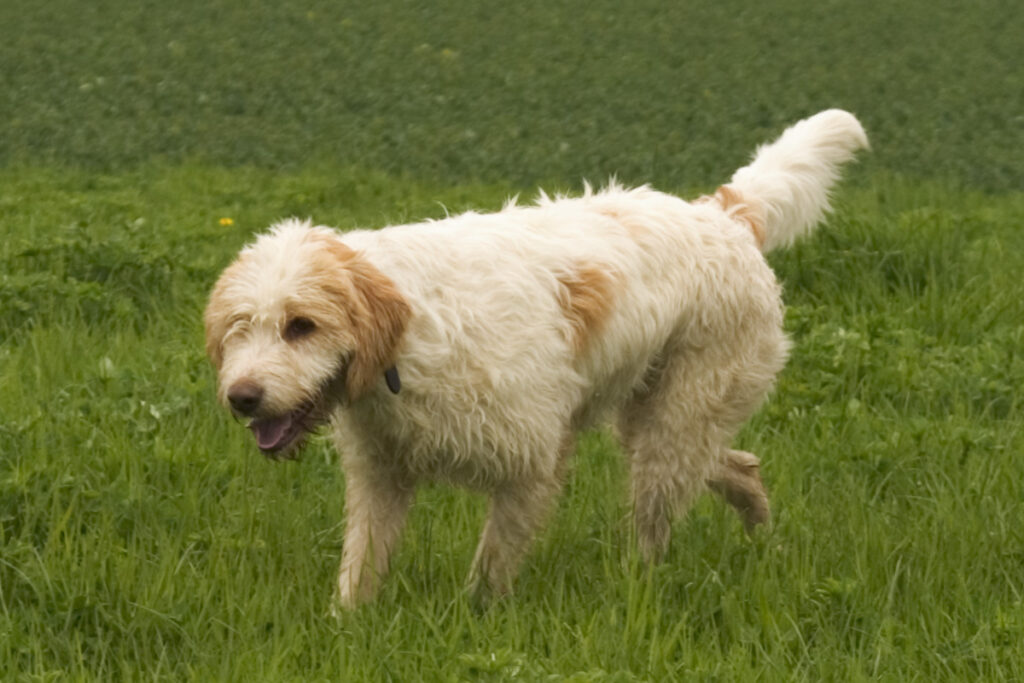
Grooming and Coat Care
The Griffon’s harsh, scruffy coat was created by nature for protection, not for show. It doesn’t require complicated care but does need regular attention. A few times a week, the dog should be thoroughly brushed with a special brush or comb to remove dead hair and prevent matting. Special attention should be paid to the beard, moustache, and the hair on the paws, where dirt and burrs most often get stuck.
Bathing the dog should be done only when absolutely necessary, as frequent washing can strip the natural oily layer that protects the skin and coat. It is not recommended to clip or trim the Griffon, as this can damage the coat’s texture and its protective properties. It is important to regularly check the Griffon’s hanging ears, as poor ventilation can lead to otitis. Clean them with a special lotion when needed. Also, don’t forget to trim the claws if they don’t wear down naturally.
Physical Exercise and Activity
This is the most crucial aspect of keeping the breed. The Briquet Griffon Vendéen is an athlete who needs daily, long, and intense exercise. A standard walk on a lead is not enough for them. The ideal scenario is 1.5-2 hours of free running in a safe area (a securely fenced plot), long hikes in the woods, or running alongside a bicycle. This dog will be happy to participate in sports such as canicross, bikejoring, or nosework (scent-based activities) where it can use its natural talents.
Living Conditions
The best place for a Griffon to live is a country house with a large, securely fenced garden where it can run freely. The fence should be high and sturdy enough, as these dogs can dig under or jump over if they catch an interesting scent. While they can adapt to life in a large city flat, this is only possible if the owner is prepared to spend several hours a day on active pursuits with the dog in the countryside.
Training and Socialisation
The independent nature of a scent hound always requires a firm, consistent, and patient approach from the trainer. The Briquet Griffon Vendéen is intelligent and clever, but its innate independence means it will not blindly follow commands. The best method is positive reinforcement—praise, treats, and games. Harshness and punishment can lead to stubbornness and a refusal to cooperate.
Early socialisation is key. From a young age, the puppy should be introduced to different people, sounds, places, and other animals. This will help raise a confident and well-balanced dog. Special attention should be given to the “Come!” command. Due to its strong hunting instinct, a Griffon can ignore everything in the world once it’s on an interesting scent, so training a reliable recall is the number one priority for the owner.
Health and Common Ailments
Diet: Key Recommendations
Place in the Griffon Vendéen Family
The Briquet Griffon Vendéen is part of a large family of four breeds that originate from the same region. They all share a similar harsh coat type and a hunter’s nature but differ in size and purpose. Understanding these distinctions helps to better appreciate the uniqueness of the “Briquet.”
- Grand Griffon Vendéen: The largest and fastest of the family, the ancestor of all the others. Used for hunting big game like red deer and wild boar.
- Briquet Griffon Vendéen: The dog featured in this article. Smaller but just as brave, it is ideal for hunting roe deer and wild boar in small packs.
- Grand Basset Griffon Vendéen: A long dog on short legs (“Basset”). Slower but incredibly hardy, it specialises in hunting hares and rabbits.
- Petit Basset Griffon Vendéen: The smallest member of the family, an energetic and cheerful “clown,” also used for hunting small game.
Interesting Facts
- The name “Briquet” doesn’t come from the word for “brick,” but is an old French hunting term meaning “medium-sized dog.”
- This breed almost disappeared twice in its history: after the French Revolution and during the First World War. Its existence today is the result of the work of dedicated enthusiasts.
- Their “scruffy,” harsh coat is the ideal camouflage and protection. It shields them from sharp branches, the teeth of prey, and harsh weather conditions, allowing them to work in all seasons.
- Despite their serious hunting purpose, these dogs often look like they are “smiling” thanks to their expressive eyebrows and beard.
Frequently Asked Questions about the Breed (FAQ)
Is the Briquet Griffon Vendéen suitable for apartment living?
Generally, no. It is a very energetic breed that needs space and daily, intense exercise. Apartment living is only possible for very active owners who are willing to spend several hours a day outdoors with the dog, allowing it to run freely.
Does this breed shed a lot?
They have moderate shedding. Regular brushing helps to control the amount of hair in the house. They are not a hypoallergenic breed.
Are they easy to train?
They are intelligent but independent and can be stubborn. Training requires patience, consistency, and experience. They are not the best choice for a first-time owner.
How do they get along with cats and other small animals?
They have a very strong hunting instinct. If they haven’t been raised with a cat from a young age, living together can be problematic. They will most likely perceive any smaller animals (hamsters, rabbits) as prey.
Can you leave a Briquet Griffon Vendéen alone for a long time?
They are social dogs and don’t cope well with loneliness. If they get bored and are left alone for too long, they can become destructive and noisy (lots of howling and barking).
Video about the Breed
- Brave, resolute, hardy
- Genial, friendly to other dogs
- Calm and affectionate in the family
- Works superbly in a pack and alone
- Strong-willed, stubborn — needs a firm hand
- Vocal — “gives tongue” on the trail
- Strong hunting instinct (risky with cats)
- Not for a flat or a novice
| Grand Griffon Vendéen | Griffon Nivernais | Grand Basset Griffon Vendéen | |
|---|---|---|---|
| Height | 60–65 cm | 53–60 cm | 34–42 cm |
| Energy | 4.5 | 4.5 | 4 |
| Apartment | 1.5 | 2 | 2.5 |
| Beginners | 2 | 2.5 | 2.5 |
What does the Medium Vendéen Griffon hunt?
Is the Briquet good for a family?
Is this breed easy to train?
FCI Standard No. 19 · Société Centrale Canine
For apartments · For kids · For beginners · Active · Smartest · Hypoallergenic · All rankings →