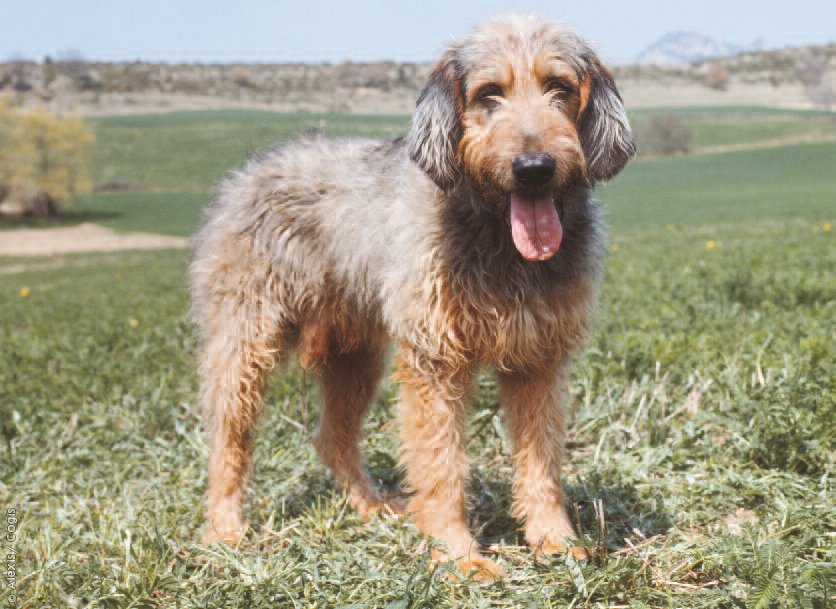
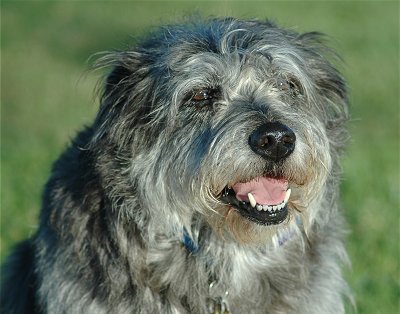
A shaggy wolf-grey hound of the Nivernais with unbreakable persistence — brave and independent: hardy, level-headed, devoted to the family and reserved with strangers. The Griffon Nivernais is an ancient French breed of rough-coated hounds for boar hunting; behind the rugged working looks hides a friendly, trusting companion at home, but the breed calls for an experienced owner.
Apartment · not suitableKidsCats · not suitableOther dogsBeginners · not suitable
The Griffon Nivernais is an ancient and distinctive breed of French hound whose history dates back centuries. Known for its shaggy, somewhat unkempt appearance and incredible persistence on the hunt, this dog is the very embodiment of the hunting spirit. Its specialisation is wild boar hunting, though it also excels at tracking foxes and other game. Despite its serious working exterior and tough behaviour in the field, the Griffon Nivernais transforms into a friendly, loyal, and trustworthy companion at home. This breed requires an experienced owner who can appreciate its independent nature and provide the necessary conditions for a happy life. Read more about all aspects of this unique dog's care, character, and history on Tvaryny.
These hardy hounds can become a wonderful friend for an active owner and their family. With proper upbringing and early socialisation, they are good with children and other pets, especially other dogs. Their care is not overly complicated, but training will require patience, consistency, and possibly the help of an experienced professional. The shaggy coat and stubborn nature are merely the outer shell, behind which hides the devoted heart of a true friend.
Griffon Nivernais: A Brief Overview of the Breed
For a quick introduction to the breed's main characteristics, we've compiled key information in this table. This will help you get a first impression of this unusual dog.
Griffon Nivernais: A Brief Overview of the Breed · 13
Characteristic
Description
Country of Origin
France (Nièvre region)
FCI Classification
Group 6 (Scent hounds and related breeds), Section 1.2 (Medium-sized hounds). With working trial.
Long, shaggy, harsh, dense. Forms a beard and moustache on the muzzle.
Colour
Fawn with a black saddle (charbonné), grey (from light to dark), sable. Fawn markings are permissible.
Purpose
Hunting (primarily wild boar), companion dog for active people
Activity Level
Very high
Grooming Needs
Low
Attitude to Children
Good, provided they are raised together and the child shows respect
Attitude to Other Animals
Good with other dogs (especially in a pack), strong hunting instinct towards small animals
Interesting Facts About the Griffon Nivernais
The name "Griffon" comes from the type of coat – harsh and bristly.
Thanks to their stamina and courage, Griffon Nivernais are able to pursue a boar for many hours, covering dozens of kilometres across rugged terrain.
It is believed that these dogs are depicted on many medieval tapestries illustrating scenes of royal hunting.
Their voice is so loud and melodious that experienced hunters can determine from its tone which animal has been found and what stage the chase is in.
Despite its ancient history, the breed remains quite rare outside of France and the circle of hunting enthusiasts.
History of the Griffon Nivernais
The history of the Griffon Nivernais is one of the oldest and most fascinating among all French hounds. It is believed that its direct ancestors were the legendary "grey dogs of Saint Louis" (gris de Saint-Louis), which were used by the Gauls to hunt wolves and boars. These dogs were known in France as early as the 12th century and were highly valued by the royal court for their bravery and working abilities. For centuries, these hounds were an integral part of the hunting culture of the Nièvre region, from which the breed takes its name.
However, after the French Revolution (1789–1799), the breed was on the brink of extinction. The downfall of the aristocracy and the decline of traditional large-scale hunting led to the near disappearance of the Griffon Nivernais. The breed's revival began only in the late 19th and early 20th centuries, thanks to a group of enthusiasts. They sought out the few surviving descendants of the "grey dogs" and crossed them with other wire-haired hounds to restore the gene pool. Breeds such as the Grand Griffon Vendéen, the Griffon Bleu de Gascogne, and possibly the Otterhound took part in the breed's restoration, giving it its modern look and stamina.
The breed club was founded in 1925, when the first standard was also developed. Today, the Griffon Nivernais is a respected hunting breed not only in France but also beyond its borders. Its unique working qualities and ability to operate in difficult terrain make it an indispensable assistant in hunting large game. In the USA and Canada, these dogs are sometimes even used for bear hunting.
Standard and Appearance of the Griffon Nivernais
The Griffon Nivernais is a dog with a sturdy, muscular, yet lean build that conveys an impression of stamina and strength. Its appearance is very distinctive and recognisable, primarily thanks to its long, shaggy coat, which gives it a "tousled" look. It is for this reason that the dog was sometimes jokingly called "the ragamuffin" in its homeland.
The main distinguishing feature is its harsh, wiry coat, which the French call poil de sanglier (wild boar hair). It should not be curly or soft. Such a coat ideally protects the dog from bad weather, cold, and insect bites, as well as from branches and thorns while chasing prey through dense thickets. On the muzzle, the coat forms thick eyebrows, a moustache, and a beard, which gives the dog a stern and serious expression.
Standard and Appearance of the Griffon Nivernais · 7
Body Part
Description according to FCI Standard No. 17
Head
Long, strong, lean. The skull is almost flat, with a barely noticeable stop (transition from forehead to muzzle). The muzzle is the same length as the cranial part.
Eyes
Dark, penetrating, very expressive. The gaze is lively and brave. Eyebrows are thick but do not cover the eyes.
Ears
Hanging, soft, medium-length, set at eye level. Slightly curled inward at the tips and covered with long hair.
Body
Slightly elongated. The back is strong and straight. The loins are powerful. The chest is deep but not too wide, extending to the level of the elbows. The ribs are moderately sprung.
Tail
Not set too high. The dog carries it like a sabre. When moving, the tail is raised higher but does not curl over the back. Well-covered with hair.
Limbs
Lean, bony, with strong muscles. The paws are oval, with firm pads and strong dark claws.
Colour
Predominantly "charbonné" (fawn with heavy black shading) or various shades of grey (wolf grey, blue-grey). Fawn or sand-coloured markings on the eyebrows, cheeks, chest, and limbs are possible. A small white spot on the chest is allowed.
Griffon Nivernais Character and Temperament
The character of the Griffon Nivernais is a complex but fascinating blend of hunting passion and calm devotion to its family. To understand this dog, you must always remember its original purpose.
In the field, it is a tireless, brave, and incredibly persistent pursuer. It has an outstanding sense of smell and a loud, penetrating voice with which it alerts the hunter to a found trail. The Griffon is not afraid to engage with large game, such as a boar, showing exceptional courage. Its independence and self-reliance at work are traits highly valued by hunters but can create difficulties in training for an average owner.
At home, it is a completely different dog. It is calm, well-balanced, and very attached to its family. The Griffon Nivernais is not a one-person dog; it gives its love to all family members. Since they were historically used for pack hunting, they are not prone to aggression towards other dogs and generally get along well with them, especially if they have grown up together. However, their hunting instinct is very strong, so any small household pets (cats, rodents, rabbits) may be perceived as potential prey. Early and correct socialisation can help, but complete trust in this matter is unwise.
The Griffon is reserved with strangers but not aggressive. Its loud bark is more of an announcement of a visitor's arrival than a sign of distrust. This makes it a good watchdog, but not a guard dog. It is patient and friendly with children, provided that the children are taught to respect the animal and its personal space.
Pros and Cons of the Breed
Before getting a serious dog like the Griffon Nivernais, it's important to soberly evaluate all its advantages and disadvantages. This breed is not for everyone.
Pros and Cons of the Breed · 6
✅ Pros
❌ Cons
Exceptional family devotion. Forms a strong bond with all family members.
Extremely high need for activity. Not suitable for apartment living or sedentary people.
Good compatibility with other dogs. Thrives in a "pack" environment.
Very strong hunting instinct. Dangerous to small animals, prone to running off after a scent.
Robust health and stamina. Rarely gets sick and tolerates bad weather well.
Stubbornness and independence. Difficult to train, requires an experienced owner.
Low grooming requirements. The coat does not need complicated care.
Loud voice. Barks a lot and loudly, which may not be popular with neighbours.
Unique and charismatic appearance. A dog that always attracts attention.
Not a guard dog. Friendly to people, does not show aggression towards strangers.
Great companion for hiking and running. Always ready for adventures in the countryside.
Needs a lot of space. Ideally suited for a country house with a large, securely fenced garden.
Training and Education of the Griffon Nivernais
Training a Griffon Nivernais is a challenge even for an experienced dog handler. Their stubbornness and independence are the result of selective breeding aimed at self-reliant work in the forest, far from the hunter. They are intelligent but do not strive to please people at all costs. Similar to other stubborn hounds, such as the Polski Gończy or the Polish Hound (Ogar Polski), the Griffon Nivernais requires a special approach.
Here are the key principles for successful training:
Early start: Begin socialisation and teaching basic commands from 3–4 months of age.
Leadership and consistency: The owner must become an undisputed but fair leader for the Griffon. The rules established in the home must be consistent and followed by all family members.
Positive reinforcement: Griffons respond well to tasty rewards and praise. Harshness, shouting, and physical punishment will only increase their stubbornness and can destroy trust.
Patience: Be prepared to repeat commands many times. What the dog did today, it might "forget" tomorrow. This is not a sign of stupidity but a manifestation of its independent nature.
The "Come!" command: This is the most important and difficult command for any hound. It needs to be practised constantly, starting from an early age, and you should never let the dog off the lead in an unfenced area.
If you plan to use the dog for hunting, its specialised training is best entrusted to a professional. If the Griffon is just a companion for you, a general obedience course will suffice, but it will require significant effort from you.
Care and Maintenance of the Griffon Nivernais
Caring for a Griffon Nivernais has its own peculiarities related to its origins and purpose. This is not a sofa dog, and it needs appropriate conditions.
Physical exercise. This is a key aspect of their care. A Griffon Nivernais needs a minimum of 1.5–2 hours of intensive exercise every day. This isn't just a walk on a lead, but running, long hikes through the woods, and the opportunity to run freely in a secure area. Swimming is also a great activity, as these dogs usually love water. An insufficient amount of exercise will lead to destructive behaviour, constant barking, and health problems.
Grooming and coat care. Despite its shaggy appearance, coat care is not difficult. It needs to be brushed with a hard brush about once a week to remove dead hair and dirt. Frequent bathing is not recommended, so as not to damage the protective layer of skin oils. It is sufficient to wash the dog only when absolutely necessary. After every walk in the woods, you should check the coat, paws, and ears for ticks, burrs, and other foreign objects.
Ear care. As with all dogs with drop ears, the Griffon Nivernais's ears are poorly ventilated, which creates a risk of infections and inflammation (otitis). It is necessary to regularly, at least once a week, inspect and clean the ears with a special lotion. This is especially important after swimming.
Living conditions. The ideal place for a Griffon is a country house with a large, securely fenced garden. The fence must be high and strong, as these dogs are prone to digging under and escaping if they catch an interesting scent. It is highly inadvisable to keep them in a city flat.
Nutrition
Feeding: What to Feed a Griffon?
Health and risks
Health and Common Ailments
Frequently Asked Questions about the Breed (FAQ) · 5
Can a Griffon Nivernais live in a flat? No, it is strictly not recommended. This dog needs space, a large area for free running, and intensive daily exercise, which is almost impossible to provide in a city environment.
Does the Griffon Nivernais shed a lot? Shedding is moderate and seasonal. Their coarse coat does not scatter all over the house like the fur of smooth-coated breeds; instead, it tends to gather in small tufts that are easy to remove during brushing.
Is their coat difficult to care for? No, care is minimal. Brushing once a week is enough, along with checking for dirt and parasites after walks. Clipping or trimming is not necessary.
Can this dog be left alone for a whole day? It's not advisable. Like any pack dog, the Griffon tolerates long periods of solitude poorly. If it gets bored and doesn't get enough exercise, it can become destructive: chewing furniture, howling, and barking continuously.
Is the Griffon Nivernais suitable as a first dog for a novice owner? No, this breed is not for beginners. Its independent and stubborn character, combined with its high exercise needs, requires experience, patience, and a deep understanding of the psychology of hunting dogs.
Video about the Breed
FAQ
What was the Griffon Nivernais bred for?
Chiefly for wild boar hunting, though it works excellently on fox and other game too; a hardy, keen hound in a wolf-grey rough coat.
Is the Griffon Nivernais good at home?
Yes — despite the rugged working looks and tough behaviour on the hunt, at home it is friendly, faithful and trusting, level-headed with the family and good with children; only reserved with strangers.
Is the breed suited to a novice?
Not really — an independent working hound with a strong instinct; it needs an experienced owner, space and work, not a flat.