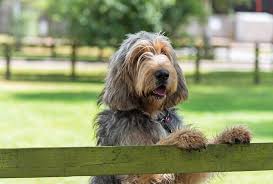
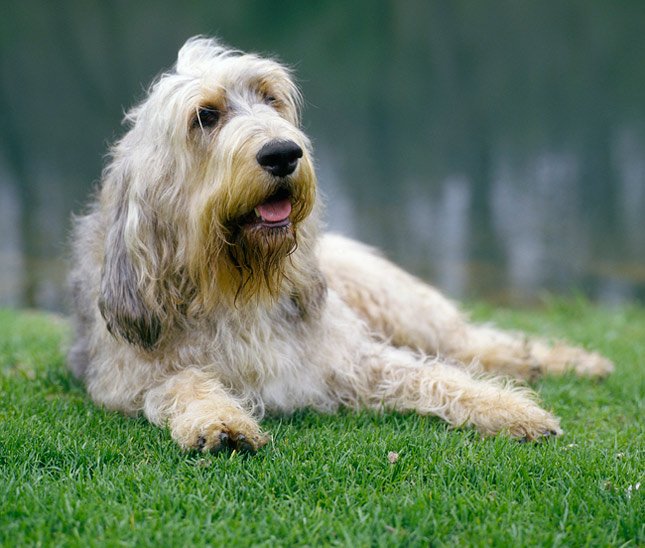
A shaggy water hound with a loud voice: friendly, irrepressible, hardy and independent. The Otterhound is a rare British otter hunter with webbed feet and a waterproof coat; it is made for water and space, so it needs exercise and a patient owner.
Apartment · not suitableKidsCats · with caveatsOther dogsBeginners · not suitable
The Otterhound is a large, shaggy, good-natured giant from Great Britain. Once the scourge of river predators, today it has become an exclusive companion for true connoisseurs. There are fewer than a thousand of them left worldwide, making an encounter with an Otterhound a rarer event than a date with a white rhino. Learn more on Tvaryny.
Interesting facts about the breed
This breed is full of surprises that are revealed upon closer acquaintance.
Smell, capable of working in water. The Otterhound can sense the "taste" of an otter's trail in the water even several hours after the animal has swum past. Their nose is so sensitive that some individuals are used by rescue workers to search for people in the water.
Genetic rarity. Fewer than 50 litters are born worldwide per year. In the UK, they are listed as a Vulnerable Native Breed because their numbers are critically low.
Long-livers among giants. For their size (up to 50 kg), they live quite a long time - often reaching 12–13 years, maintaining activity into old age.
Colour chameleons. Otterhound puppies are often born black or dark, and with age their coat "blooms", changing colour to a lighter wheaten, grey ("grizzle") or sand colour.
History of the breed: from royal kennels to the Red List
The history of the Otterhound reaches deep into the Middle Ages. The first mentions of dogs specialised in otter hunting date back to the reign of King John (1199–1216). In those days, the otter was considered not merely a pest destroying fish in the ponds of monasteries and the nobility, but a serious threat to the fishing industry. To combat this agile water predator, a dog of a special design was required: strong, enduring, capable of swimming in icy water for hours and possessing a phenomemal nose.
It is believed that ancient Bloodhounds (which gave the breed its incredible nose), various types of wire-haired terriers and Griffons participated in the formation of the breed. This relates them to other hunting breeds, such as the Latvian Hound, although their specialisation differs. The breed flourished in the 19th century when otter hunting became a popular sport among the British aristocracy. Packs of Otterhounds, announcing the discovery of a scent with their deep, musical baying, were the pride of many estates.
However, in the 20th century, the situation changed radically. The otter population in Britain fell sharply, and public opinion began to turn against blood sports. In 1978, otter hunting was officially banned. This was a blow to the breed - large, expensive-to-keep, highly specialised dogs became redundant. Fortunately, a group of enthusiasts undertook the rescue of this unique gene pool, repurposing the Otterhound as a companion dog and show dog.
Appearance and unique anatomical features
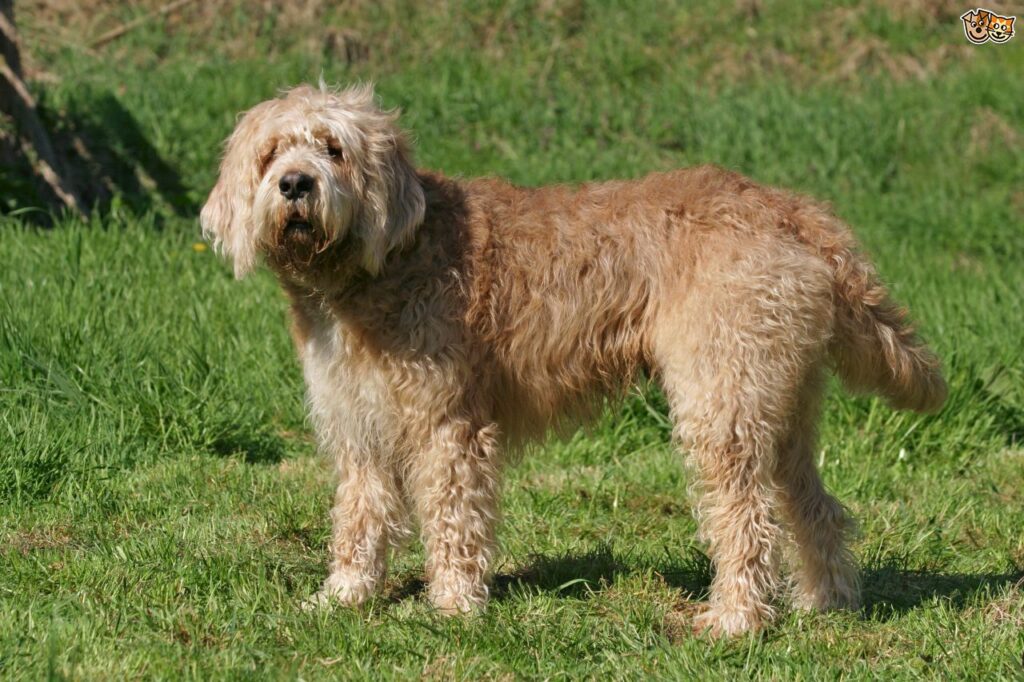
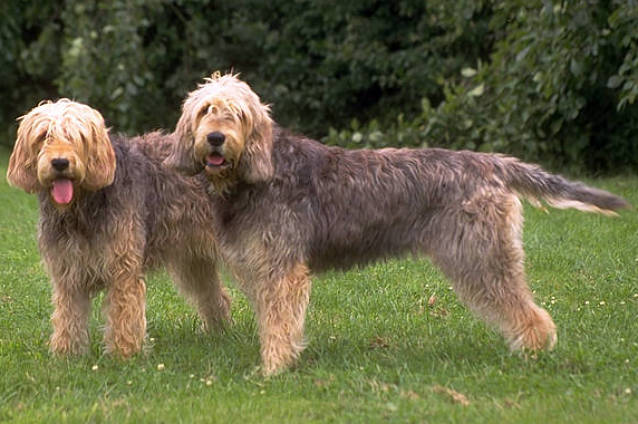
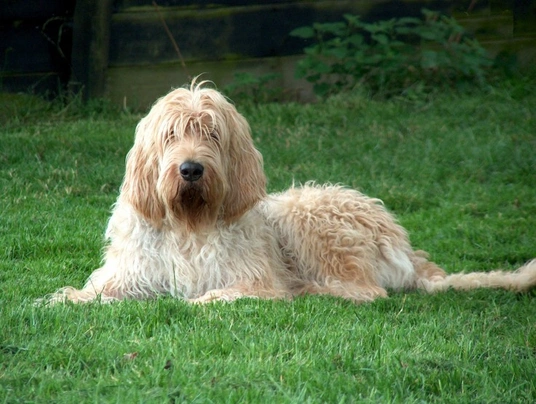
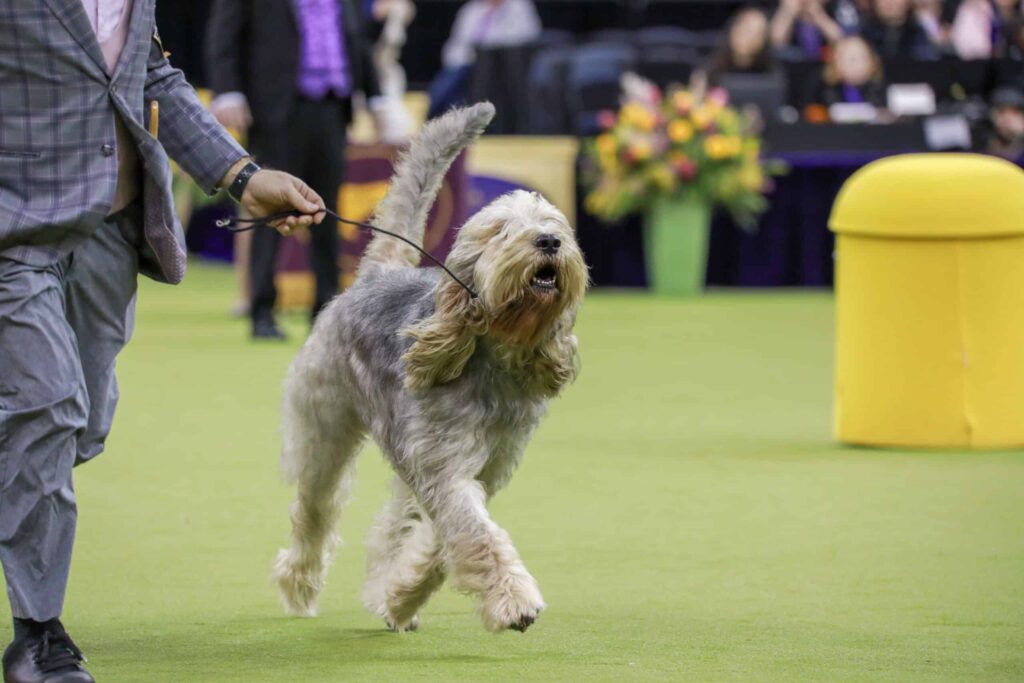
The Otterhound is a dog of large, but not coarse, constitution. The first thing that catches the eye is its coat and head. The head is majestic, deep, and covered with hair that forms a characteristic moustache and beard, giving the dog the look of a wise old man. The ears are long, pendulous, and "curled into a tube" (a characteristic feature), which helps to gather scents and direct them to the nose.
Parameter
Males
Females
Height at withers
69 cm
61 cm
Weight
35–52 kg
30–45 kg
Life span
10–13 years
10–13 years
Coat type
Double, rough, oily
Double, rough, oily
Webbed feet. This is perhaps the breed's most famous feature. The Otterhound's paws are large, round, with well-developed membranes between the toes. This makes them unsurpassed swimmers, capable of covering significant distances against the current.
Coat. The Otterhound's coat is unique. It is double: a soft, dense, oily undercoat that does not let water through to the skin, and a rough outer coat 4–8 cm long. To the touch, the coat may seem a bit greasy - this is normal, a natural protection against water. In terms of coat structure and grooming needs, they somewhat resemble a breed like the Griffon Nivernais, which is also known for its "shagginess" and endurance in thickets.
Character and temperament: a clown in an aristocrat's body
If you expect unquestioning obedience from an Otterhound like you would from a Shepherd, you had better look towards other breeds. This is a classic hound - independent, stubborn, but boundlessly good-natured. Owners often describe them as "big clowns". They love to play, can be clumsy in the house (mind the vases on low tables!) and adore socialising.
Friendliness. Aggression is not typical of this breed. They rejoice at guests, children, and other dogs. However, their size and boisterous joy can be a problem for very small children.
Voice. The "music" of the Otterhound is a separate topic. They don't just bark, they "sing". Their voice is a deep, resonant bass that can be heard for miles. They also love to "mutter" and make various funny sounds when talking to their owner.
Hunting instinct. The nose rules the brain. If an Otterhound catches an interesting scent, he goes "deaf" to commands. That is why walking without a lead in the city is a taboo.
Comparing them with less hunting-focused breeds, for example, if we take the Odis, which is perfectly adapted to a city apartment and oriented towards humans, the Otterhound requires significantly more space and understanding of its primal nature. He is not a servant, but a partner in adventure.
Training and upbringing: who trains whom
Training an Otterhound requires angelic patience and a sense of humour. They are intelligent, but thier intellect is aimed at solving their own tasks (how to get food off the table or how to find the source of a smell), rather than performing the "sit" command for the tenth time. Harsh methods do not work - the dog will simply shut down or take offence. Only positive reinforcement, treats, and play work.
It is important to understand that they mature slowly. A two-year-old dog may have the body of a giant and the brain of a naive puppy. Socialisation must be early to teach this giant to behave carefully with smaller creatures.
Pros and cons of the breed
Advantages (+)
Unique appearance and exclusivity (you are unlikely to meet another one on a walk).
Lack of aggression towards people, friendly character.
They get along wonderfully with other dogs (habit of living in a pack).
High intelligence and ability to make independent decisions.
Disadvantages (-)
Complex grooming of coat and beard ("wet beard" everywhere).
Specific "doggy" smell (especially when wet), which can be stronger than in other breeds.
Loud voice, which neighbours might not like.
Stubbornness in training.
High price and difficulty in acquiring a puppy (long waiting lists).
Care requirements: prepare for water and hair
The Otterhound is a "dirty" dog in the sense that he attracts everything to himself: burrs, twigs, mud and, of course, water. Particular attention is needed for the beard. Every time the dog drinks, he plunges his muzzle deep into the bowl, and then, lifting his head, arranges a "shower" for everything around. Experienced owners keep towels in every room.
The coat does not require clipping (except for hygiene), but needs regular brushing (at least once a week) to prevent mats forming. Frequent washing is not recommended so as not to wash away the protective oily layer, but paws and belly will have to be rinsed after every walk in bad weather.
Nutrition
Diet and nutrition: how to feed a giant
Health and risks
Health and genetic risks
Frequently Asked Questions (FAQ) · 3
Is an Otterhound suitable for a flat? Theoretically yes, if the flat is spacious and the owners are ready for long walks and a large amount of hair/dirt. But the ideal option is a detached house with a securely fenced garden (they are prone to wandering if they catch an interesting scent).
How do they relate to cats? If the puppy grew up with a cat - they will be friends. But a street cat running away automatically turns into prey. The instinct to chase is very strong in them.
Do they shed a lot? Yes, and this process is almost constant. The undercoat falls out, and the long outer hair can trap it, forming mats. During the seasonal moult, the amount of hair in the house increases significantly.
Video about the breed
FAQ
How rare is the Otterhound?
It is one of the rarest breeds in the world — only a few dozen puppies are registered each year; finding one is very hard.
Does the Otterhound love water?
Very — it was bred to hunt otters: it has webbed feet and a waterproof double coat and loves to swim.
Is the Otterhound suitable for a beginner?
Rather not — independent, loud and in need of a lot of exercise; better for an experienced, active owner with space.