

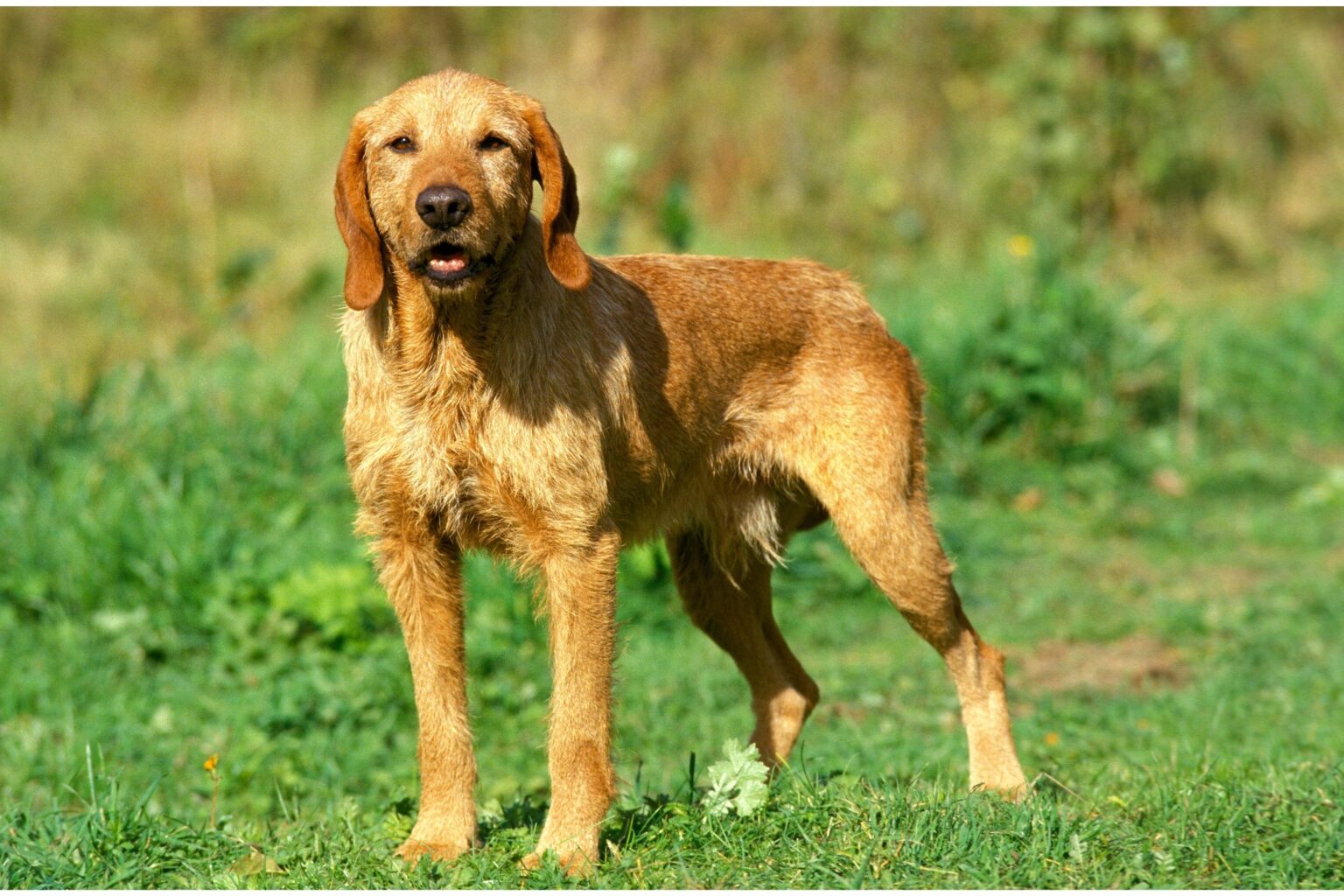
| Height | 48–56 cm |
| Weight | 17–21 kg |
| Lifespan | 12–14 years |
| FCI group | 6 · scenthounds |
| Origin | France (Brittany) |
Exact ratings
Common health issues
Nutrition
The Fawn Brittany Griffon (Griffon Fauve de Bretagne) is more than just a hunting dog; it’s a living piece of French history, embodied in a fiery red, wiry coat and a piercing gaze. This ancient hound breed, originating from the Brittany region, combines an incredible passion for the hunt with endurance and loyalty to its family. Its independent nature requires patience and consistent training, but the reward is not just an obedient pet, but a true friend and reliable partner. You can read more about the intricacies of owning, the character, and the history of this unique dog on Tvaryny.
Despite its outstanding working qualities, the Fawn Brittany Griffon is a relatively rare breed outside of its homeland today. This makes it even more sought after by true connoisseurs of hunting dogs who are looking for not only an assistant, but a dog with a rich history and a unique temperament. Successful breeding has managed to balance its strong-willed nature with a calm character, but it remains a dog that requires an experienced and persistent owner.
General Characteristics of the Breed
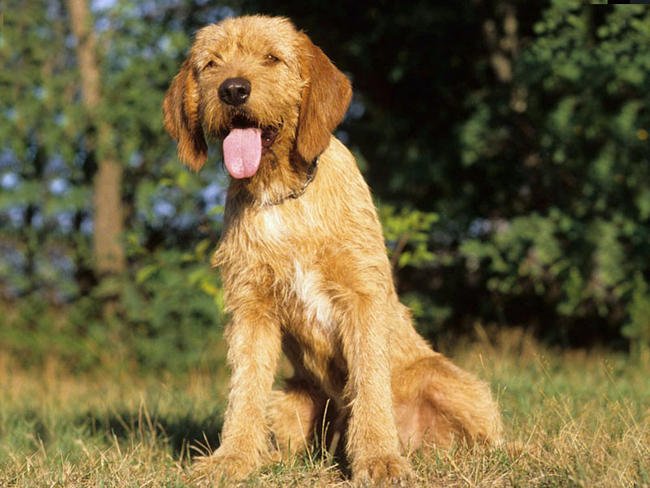
To better understand the breed, its key parameters and characteristics are summarised in the table below. This will help you quickly assess whether the Fawn Brittany Griffon meets your expectations and lifestyle.
| Parameter | Characteristic |
| Breed Name | Fawn Brittany Griffon (Griffon Fauve de Bretagne) |
| Country of Origin | France (Brittany region) |
| FCI Classification | Group 6 (Scent Hounds and Related Breeds), Section 1.2 (Medium-sized Scent Hounds). Working trial is mandatory. |
| Life Expectancy | 11-13 years |
| Height (at the withers) | 48–56 cm (allowance of +/- 2 cm) |
| Weight | 18-22 kg |
| Colour | From golden fawn to brick red. A small white star on the chest is allowed. |
| Coat | Very harsh, dry, quite short, never curly or woolly. |
| Temperament | Passionate, brave, stubborn, devoted, sociable. |
| Use | Hunting small and medium game (hare, fox, wild boar), companion dog. |
| Exercise Needs | Very high. |
History: From Wolf Packs to Breed Revival
The history of the Fawn Brittany Griffon is rooted in the Middle Ages. It is believed that its ancestors were ancient Celtic hounds. As early as the 14th century, the Breton knight Huon du Banbère kept a pack of these dogs, with which he hunted wolves. The breed was so revered that even French King Charles IX mentioned the fawn hound in his famous 1570 work, ‘The Royal Hunt,’ describing it as an enduring and brave hunter.
With the disappearance of wolves in France, the breed’s popularity began to wane, and hunting shifted to smaller game such as foxes and hares. The Great French Revolution and subsequent social changes dealt a significant blow to many aristocratic dog breeds, and the Fawn Brittany Griffon was no exception. By the end of the 19th century, the breed was on the verge of extinction.
The true revival began only in 1949, when a group of enthusiasts led by Marcel Pambère founded the “Club de Fauve de Bretagne.” They gathered the surviving representatives of the breed and began careful breeding work. Thanks to their efforts, they not only managed to save the breed but also popularise it among hunters. Interestingly, to reduce the size and adapt to hunting smaller game, the Basset Fauve de Bretagne, its short-legged version, was bred from the Griffon.
Standard and Appearance
The Fawn Brittany Griffon is a medium-sized dog of a sturdy, but not heavy, build, which speaks to its stamina and energy. Its appearance harmoniously combines strength and elegance.
- Head: The skull is elongated, slightly domed, with a noticeable occipital protuberance. The transition from forehead to muzzle (stop) is not sharply defined. The muzzle is more tapered than square.
- Eyes: Dark brown, not bulging. The gaze is lively and penetrating.
- Ears: Drooping, set at eye level, slightly pointed at the ends, covered with shorter and softer hair than on the body.
- Body: The back is broad and short. The loins are strong and muscular. The chest is deep and spacious, providing enough room for the lungs.
- Tail: Medium length, thick at the base and tapering towards the end, sabre-shaped. When in motion, the dog carries it slightly above the topline.
- Coat and Colour: The main feature of the breed is its harsh, dry, “wiry” coat. It should not be long or curly. This coat provides excellent protection for the dog against thorny bushes and bad weather. The colour ranges from golden fawn to a rich brick red. A small white spot on the chest is sometimes allowed.
Temperament and Character Traits
The character of the Fawn Brittany Griffon is a combination of two worlds. When hunting, it is a passionate, brave, and incredibly stubborn hound, capable of chasing prey for hours. Its keen sense of smell and ringing voice make it a first-class hunter. It often becomes the leader of a pack but can also work effectively on its own, demonstrating independence in decision-making. This trait makes it similar to other hounds, such as the Posavac Hound, which are also known for their independence in work.
At home, it is an affectionate, calm, and very devoted companion. It forms strong bonds with its family and gets along well with children, provided they respect its personal space. However, its hunting instincts do not disappear. It can be wary of strangers and will always announce their arrival with a loud bark. It will likely perceive small domestic animals (cats, rodents, birds) as prey, so keeping them together requires great caution and early socialisation.
Pros and Cons of the Fawn Brittany Griffon
Before getting such a dog, it is worth weighing all the “for” and “against.” The Fawn Brittany Griffon is not suitable for everyone. This is a specific breed with clearly defined needs.
| Pros (+) | Cons (-) |
|---|---|
| Outstanding hunting qualities: tireless, with an excellent sense of smell and a distinctive voice. | Extremely high need for physical exercise: not suitable for apartment living or sedentary people. |
| Devotion to family: bonds strongly with its owner and becomes a wonderful companion. | Stubbornness and independence: requires an experienced and patient owner for training. |
| Robust health: no breed-wide list of hereditary diseases has been compiled — “not described” means “not studied”, not “not there”. | Strong hunting instinct: may chase small animals and is prone to running away if it catches a scent. |
| Low-maintenance grooming: the harsh coat does not require complicated grooming. | Loud voice: prone to barking, which can be a problem for neighbours. |
| Good watchdog: will always warn of approaching strangers. | Needs space: thrives best in a private house with a large, securely fenced garden. |
Care and Maintenance: Creating Ideal Conditions
Grooming and Coat Care
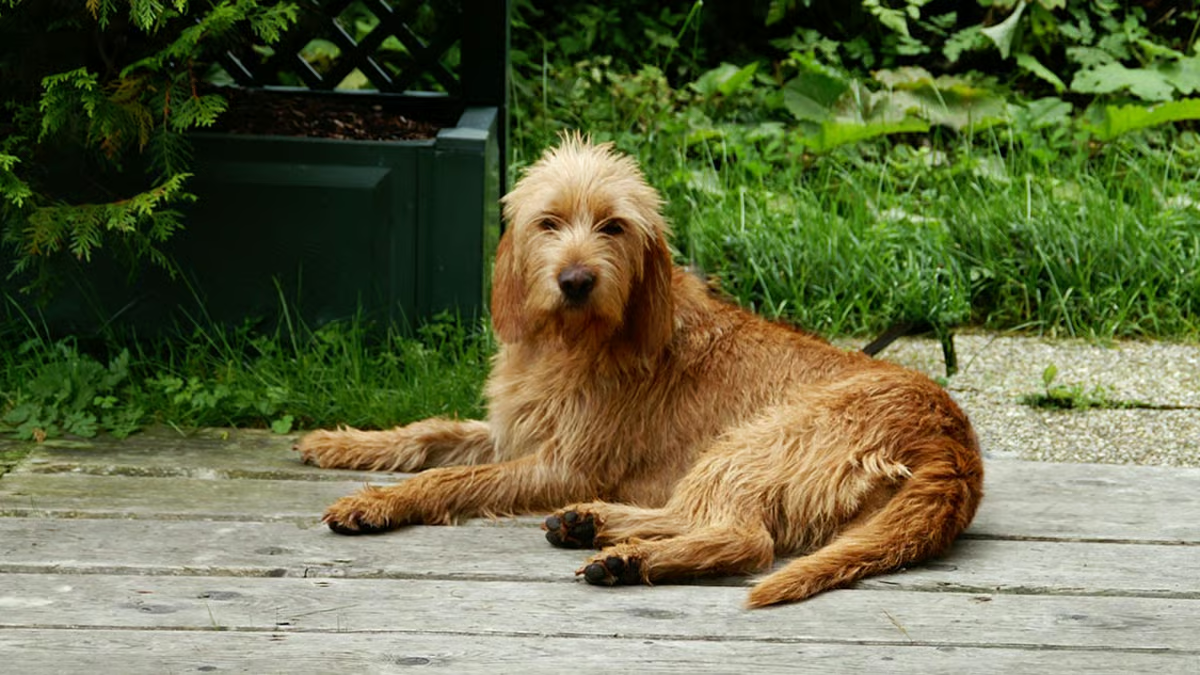
Caring for the Fawn Brittany Griffon’s coat is straightforward. Its harsh “armour” needs to be brushed once a week with a metal brush or a Furminator to remove dead hair. The dog does not require frequent bathing, as its coat has self-cleaning properties. Bathe it only when absolutely necessary, using special shampoos for wire-haired breeds.
Special attention should be paid to the ears. As with all dogs with floppy ears, they have poor ventilation, which creates favourable conditions for the development of infections. Regularly check and clean the ears with a special lotion. Also, do not forget to trim its claws (every 3-4 weeks) and care for its teeth.
Physical Exercise and Activity
This is the most important aspect of owning a Griffon. This dog is made for movement. It needs a minimum of 1.5-2 hours of active walks per day. These cannot be calm walks on a lead around the house. The Griffon needs to run, play, and have the opportunity to explore its surroundings. Ideal activities for it are long walks in the woods or fields, running alongside a bicycle, canicross, and scent work training.
Warning! Due to its extremely strong hunting instinct, you should only let a Griffon off the lead in a securely fenced area. If it catches an interesting scent, it may bolt and ignore all of your commands.
Living Conditions
An apartment is emphatically not the best place for a Fawn Brittany Griffon. Confined spaces and the lack of opportunity to burn off energy can lead to destructive behaviour and psychological problems. The ideal option is a private house with a large, secure garden where the dog can run freely. The fence must be high and escape-proof, as these dogs are skilled escape artists.
Training and Raising a Strong-Willed Griffon
Training a Fawn Brittany Griffon is a challenge that requires patience, consistency, and an understanding of the psychology of a hunting dog. Its independent nature and stubbornness mean it will not blindly follow commands. It needs to understand their purpose. Harsh methods and shouting will not work and will only destroy trust. Positive reinforcement works best: praise, treats, and toys.
Key points in training are:
- Early socialisation: From a young age, introduce the Griffon to different people, sounds, places, and other dogs. This will help it grow into a balanced and confident dog.
- Consistency: The rules established in the house must be followed by all family members without exception.
- The “Come!” command: This is the most important and difficult command for any hound. Start practising it from a young age in a quiet place, gradually making the conditions more challenging.
- Mental stimulation: Intellectual challenges are just as important for them as physical ones. Use puzzle toys, teach new tricks, and engage in scent games. This helps to channel their energy in the right direction, which is important for any working breed, whether a hound or a herding dog like the Entlebucher Mountain Dog.
Nutrition: How to Feed a Fawn Brittany Griffon?
Health and Common Diseases
Interesting Facts About the Brittany Griffon
- The name “Fauve de Bretagne” translates from French as “Fawn from Brittany.”
- It is one of the oldest surviving French hound breeds.
- In France, there is a saying that characterises their hunting passion: “They hunt today, they will hunt tomorrow.”
- During the breed’s revival in the mid-20th century, enthusiasts used not only the surviving Griffons but also added blood from other wire-haired hounds to expand the gene pool.
- Despite its devotion, the Fawn Brittany Griffon will never be a “one-person dog” in the classic sense. It loves all members of its “pack,” although it may single out one leader.
Frequently Asked Questions About the Breed (FAQ)
Is the Fawn Brittany Griffon suitable for a family with small children?
Yes, with proper training and socialisation. Griffons are patient and friendly with children in their family. However, any interaction between a young child and a dog should be supervised by an adult.
Does the Fawn Brittany Griffon shed a lot?
Shedding is moderate. Regular brushing with a stiff brush helps to keep it under control and significantly reduces the amount of hair in the house.
Can this dog be kept with a cat?
This is very risky. The Griffon’s hunting instinct is extremely strong. If you get a puppy for a home where there is already an adult cat and socialise them from a young age, there are chances of success, but no one can guarantee it.
How much does a Fawn Brittany Griffon puppy cost?
This is a rare breed, so the price can be quite high. It depends on the pedigree, the parents’ titles, and the reputation of the breeder. Since the breed is not commercial, finding a puppy can be difficult, especially outside of France. You should always research reputable breeders. Budget for the running costs rather than the one-off sum: food, routine check-ups, parasite treatment, equipment and training classes.
Can the Griffon be used only as a companion and not for hunting?
Yes, but only if you are willing to provide it with an adequate substitute for hunting. This means daily long and intense physical exercise, as well as mental stimulation involving its phenomenal sense of smell (e.g., scent games).
Video about the Breed
- Hardy, keen hunter
- Friendly, devoted, good with children
- Clever and adaptable
- Does not shy from strangers
- Independent — needs patience in training
- Vocal — “gives tongue” on the trail
- Strong hunting instinct (risky with cats)
- High exercise needs — not for a flat
| Fawn Brittany Basset | Griffon Nivernais | Medium Vendéen Griffon | |
|---|---|---|---|
| Height | 32–38 cm | 53–60 cm | 48–55 cm |
| Energy | 4 | 4.5 | 4.5 |
| Apartment | 3 | 2 | 2 |
| Beginners | 3.5 | 2.5 | 2.5 |
How does the Fawn Brittany Griffon differ from the Fawn Brittany Basset?
Is the Fawn Brittany Griffon good for a family?
Is the breed suited to a flat?
FCI Standard No. 66 · Société Centrale Canine
For apartments · For kids · For beginners · Active · Smartest · Hypoallergenic · All rankings →