

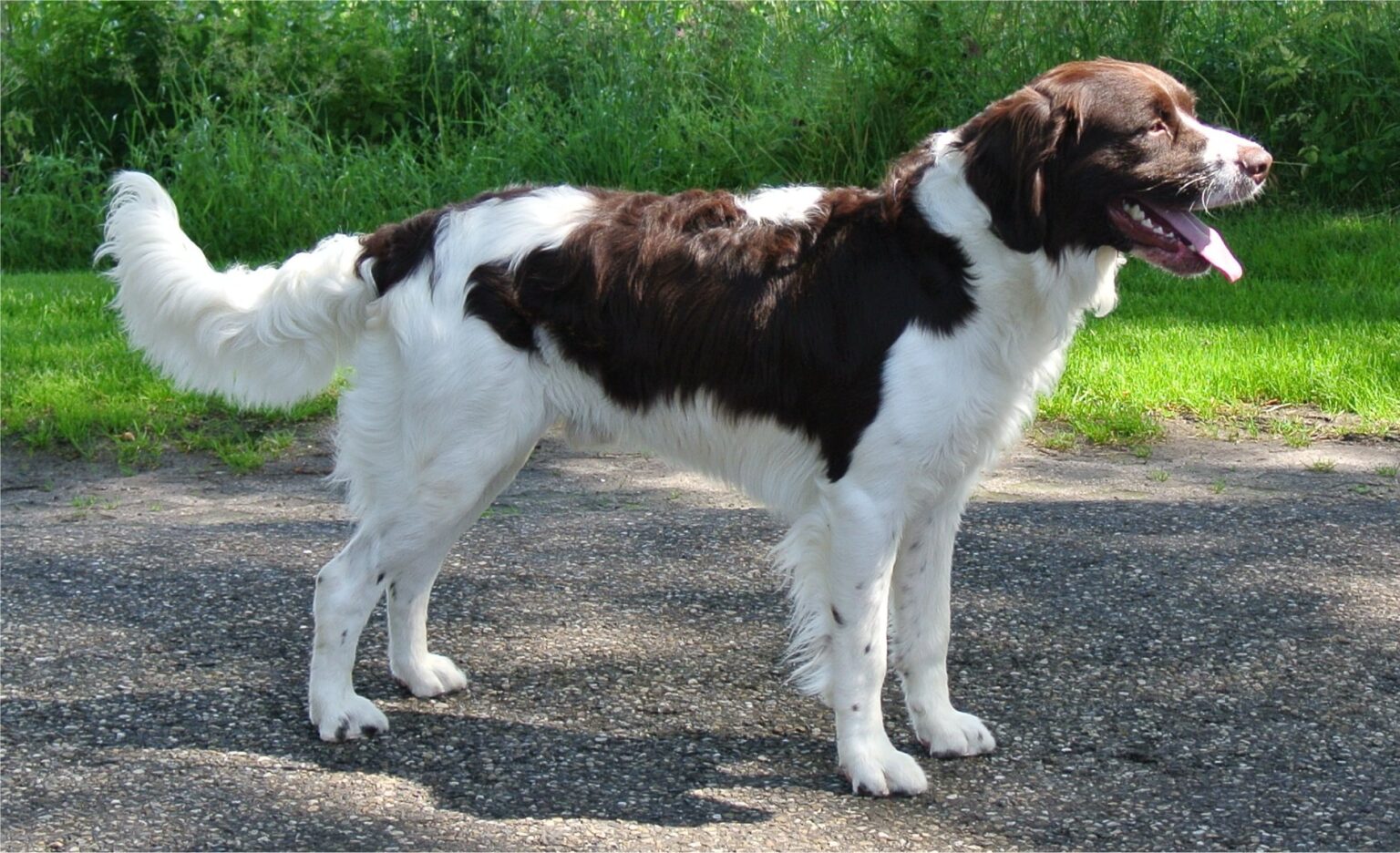
| Height | 55–63 cm |
| Weight | 21–33 kg |
| Lifespan | 12–14 years |
| FCI group | 7 · pointing dogs |
| Origin | Netherlands (Drenthe) |
Exact ratings
Common health issues
Nutrition
The Drent Partridge Dog (Drentsche Patrijshond) is more than just a gundog; it’s a true all-rounder and a loyal member of the family. Hailing from the province of Drenthe in the Netherlands, this dog has been a reliable assistant to farmers and hunters for centuries, capable of both finding game and guarding the homestead. It combines the qualities of a retriever, a pointer, and a companion.
Although the breed is considered relatively rare outside its homeland, its popularity is slowly growing thanks to its unique blend of working abilities and balanced temperament. This is an intelligent, sensitive, and energetic dog that demands a great deal of attention and physical exercise, but repays this love in spades. You can read more about this amazing dog, its history, and care requirements later on Tvaryny.
Breed Characteristics and a Brief Overview
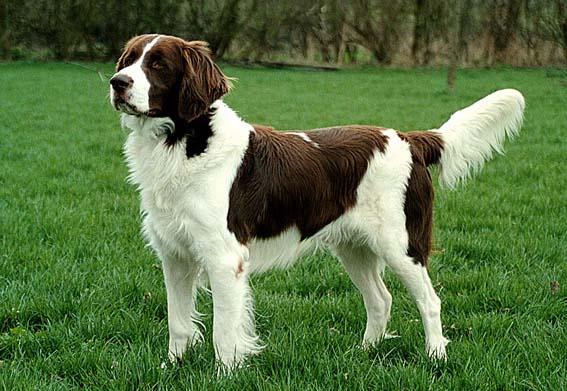
| Breed Name | Drent Partridge Dog (Drentsche Patrijshond, Drent) |
| Origin | Netherlands (Province of Drenthe) |
| FCI Recognition | Group 7 (Pointers), Section 1.2 (Continental Pointers, “Spaniel” type) |
| Lifespan | 12-14 years |
| Height at withers (males) | 58-63 cm |
| Height at withers (females) | 55-60 cm |
| Weight | 23-32 kg (depending on sex and build) |
| Energy Level | High |
| Grooming Needs | Medium (Regular brushing, special attention to ears) |
| Intelligence | High, but can be stubborn |
| Friendliness to children | Very high |
| Friendliness to other animals | Medium (High hunting instinct, socialisation needed) |
History and Origin of the Breed
The history of the Drent Partridge Dog is closely linked to the province of Drenthe in the northeast Netherlands. It is one of the oldest Dutch breeds. It’s believed its ancestors, called “Spioenen” or “Spanjoelen” (which points to Spanish roots), arrived in the Netherlands via France as far back as the 16th century.
Unlike many other gundog breeds, which were bred by the nobility, the Drent was the dog of the common farmer. The province of Drenthe was relatively isolated, which allowed the breed’s purity to be maintained for centuries. Farmers needed an all-purpose dog: it had to help hunt partridge and other small game, find and retrieve it, guard the farm against pests and strangers, and in the evening, be a gentle companion for the family.
This versatility is a key trait of the breed. The dogs from Drenthe were not narrow specialists; they were “jacks of all trades”. They possessed an excellent sense of smell, a strong pointing instinct, and a desire to please their owner.
Official recognition came rather late for the breed. It wasn’t until 1943 that the Dutch Kennel Club (Raad van Beheer) officially recognised the Drentsche Patrijshond. This happened largely thanks to the efforts of enthusiasts who feared the breed might disappear during the Second World War.
The Drent Partridge Dog is a close relative of other European gundogs, particularly breeds like the Stabyhoun (another Dutch breed) and the Small Munsterlander from Germany. Today, the breed remains rare but has dedicated fans both in its homeland and beyond.
What the Drent Partridge Dog Looks Like: Breed Standard
The Drent is a medium-sized dog, harmoniously and strongly built, with an elegant yet powerful frame. Its appearance suggests the strength and agility needed for working in the field.
General Build and Size
The body is slightly longer than it is tall. The back is strong and level, with a muscular loin. The chest is deep, reaching the elbows, with well-sprung ribs. The belly is moderately tucked up. The limbs are muscular with strong bone, providing good drive and endurance.
Head, Eyes, and Ears
The head is wedge-shaped when viewed from above, but the muzzle is not pointed, rather slightly blunt as noted in the original description. The stop (transition from forehead to muzzle) is gradual, not abrupt. The eyes are one of the breed’s most expressive features. They are medium-sized, oval, and have a distinctive amber colour. The expression is intelligent, kind, and alert. The ears are set high, hanging close to the cheeks without folds. They are covered in long, wavy hair (feathering), giving them a spaniel-like appearance.
Coat and Colour
The Drent’s coat is dense, of medium length, not curly but can be slightly wavy. It feels quite harsh to the touch, but has a good undercoat that protects it from bad weather and thorns. On the head, the hair is short. On the ears, the back of the legs, the neck, and the tail, the hair is longer, forming “feathering”.
The primary colour is white with brown or orange patches (known as ‘plates’). The breed standard prefers large, distinct patches rather than heavy ticking (small spots), although ticking is permitted. A solid ‘blanket’ (where the patches merge to cover most of the body) is highly undesirable. Occasionally, a tricolour (white with brown and tan markings, usually over the eyes and on the paws) occurs, but this is rare.
Tail
The tail is long, reaching the hock. At rest, it hangs down. When the dog is moving, it is carried horizontally or slightly raised (in a sabre shape). The tail is well-feathered with a beautiful “plume”. When hunting, the tail acts as an indicator – the dog often rotates it in a circle when it catches a scent.
Character and Temperament
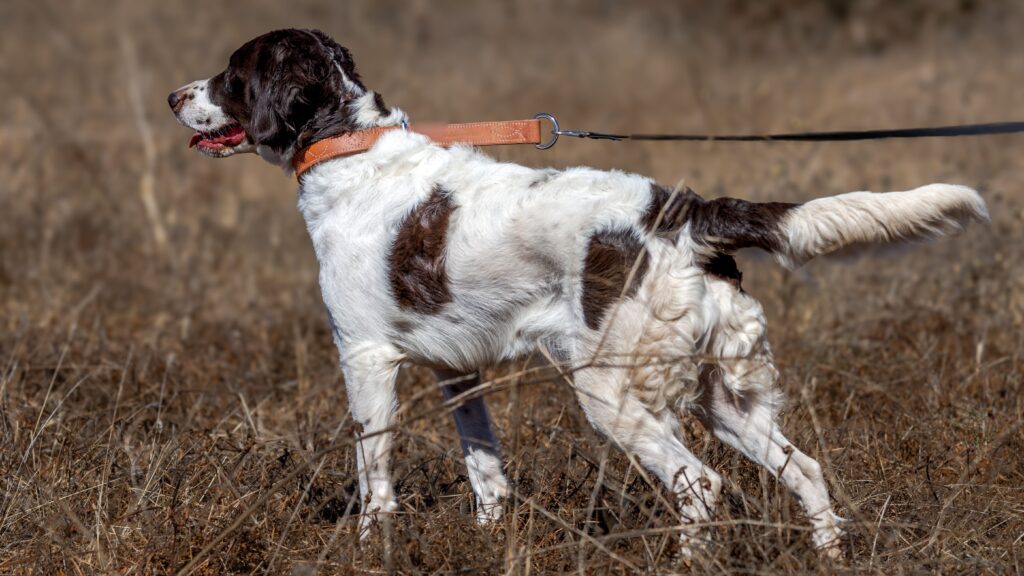
The Drent Partridge Dog’s character is its main asset for family life. It is one of the few gundog breeds that is so strongly human-oriented and comfortable in the role of a companion.
Loyalty and Family Orientation
The Drent is a classic “Velcro dog”. It forms a strong bond with its owner and the entire family, wanting to be near them 24/7. This breed is absolutely not suited for kennelling or living on a chain. Isolation from people makes this dog miserable, which can lead to destructive behaviour or depression. They want to be involved in all family activities, whether it’s watching TV on the sofa or a trip to the countryside.
Intelligence and the “Drent’s Stubbornness”
These are very clever dogs, quick to learn. They have an innate desire to please, which makes training easier. However, their intelligence has a downside – they get bored quickly with monotonous repetition. Furthermore, they are known for their “Drent’s stubbornness”. This isn’t aggression, but rather a tendency to make their own decisions. If the Drent doesn’t understand the purpose of a command, it might simply refuse to do it. They require a patient, consistent, and above all, creative approach to training.
The Drent Partridge Dog and Children
The breed is considered one of the best for families with children. They are exceptionally gentle, patient, and tolerant of children’s antics. A Drent will happily be a playmate and a reliable protector. Of course, as with any dog, interaction with very young children should be supervised.
Relationship with Other Animals
Drents usually get along well with other dogs, especially if socialised from an early age. They are not prone to dominance or aggression. However, the situation is more complex with small pets (cats, rabbits, rodents, birds). It’s crucial to remember this is a hunter with a very strong prey drive. Although a Drent can be taught to live with a cat if they grow up together, any small animal running in the street will be seen as potential prey.
Guarding Qualities
The Drent is an excellent watchdog. It is vigilant and will always alert its owner with a loud bark to the approach of strangers. This makes it a good guardian for a private home. However, it is not an aggressive guard dog; its job is to warn, not to attack. Once introduced, it is usually friendly towards guests.
Pros and Cons of the Breed
Before getting a Drent Partridge Dog, it’s important to soberly assess all the advantages and potential difficulties associated with this breed.
✅ Pros:
- Incredible loyalty: A human-oriented dog, a true family member.
- High intelligence: Learns quickly and is eager to please.
- Excellent with children: Considered one of the best “nanny” breeds.
- Versatility: Can be both a successful gundog and a calm family pet (if given enough exercise).
- Good watchdog: Will always alert you to visitors.
- Robust health: Generally a healthy breed with responsible breeding.
❌ Cons:
- Very high energy needs: Requires 1-2 hours of vigorous exercise daily.
- Does not tolerate being alone: Prone to separation anxiety, not suitable for people who are at work all day.
- Stubbornness: The “Drent’s stubbornness” requires patience and training experience.
- Strong hunting instinct: May chase cats and other small animals.
- Shedding: Sheds moderately but regularly, requres brushing.
- Rarity: It can be difficult to find a puppy from a responsible breeder.
Care and Maintenance
Caring for a Drent isn’t overly complicated, but it demands consistency and attention to specific areas, particularly the ears and activity levels.
Physical Exercise and Activity
This is the most critical aspect of ownership. The Drent Partridge Dog is a high-energy breed. A simple 20-minute walk on a lead is not enough. This dog needs to run, think, and work.
- Daily needs: A minimum of 1-2 hours of active engagement. This could be running alongside a bicycle, long walks in the woods (where the dog can run off-lead if well-trained), swimming (they are excellent swimmers), or games of fetch.
- Mental stimulation: Due to their high intelligence, they get bored without mental work. Obedience training, scent games, dog frisbee, agility, or canicross will all help keep the dog’s mind sharp.
- Living in a flat: Surprisingly, a Drent can live in a flat, but *only* if the owner provides comprehensive daily exercise. If the dog cannot “run off” its energy, it will become destructive and unhappy. The ideal situation is a house with a well-fenced garden.
Grooming and Coat Care
The Drent’s coat has self-cleaning properties – dirt, once dry, often just brushes off.
- Brushing: Brushing the dog 1-2 times a week with a good brush or deshedding tool is sufficient to remove dead undercoat and prevent mats, especially on the feathering (ears, legs, tail).
- Bathing: Bathe the dog only when absolutely necessary. Frequent washing strips the natural protective oils from the skin and coat.
- Ears: This is their most vulnerable area. Their pendulous shape creates a warm, moist environment, ideal for bacterial and yeast infections. Check their hanging ears regularly, clean them with a special lotion, and ensure they are dry after swimming. This will prevent infections and otitis, to which the breed is quite prone.
- Nails: Trim their nails every 3-4 weeks if they don’t wear down naturally.
Health: Common Conditions
Training and Socialisation
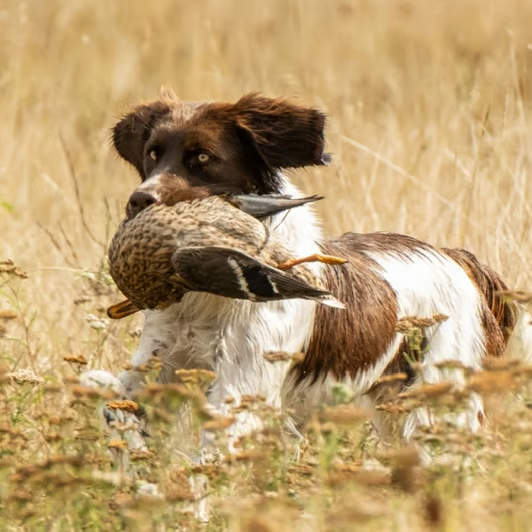
The Drent Partridge Dog is intelligent and eager to please, but its training has its quirks. This is not a breed that will blindly follow commands.
Sensitivity and Training Methods
The key word is sensitivity. Drents respond poorly to harsh methods, shouting, or physical punishment. This can cause the dog to “shut down” or increase its stubbornness. The best results come from positive reinforcement: praise, treats, and games. Training sessions should be short, interesting, and consistent. They want to work *with* their owner, not *for* them.
Early Socialisation
Socialisation is vitally important. From a young age, the puppy must be introduced to different people, sounds, places, and other animals (in a controlled environment). This will help raise a confident and well-balanced dog that is not fearful or overly reactive.
Hunting Instincts in Training
Even if you don’t plan to hunt, the hunting instincts won’t disappear. They need to be channelled. Drents love to retrieve – it’s in their blood. Use scenting games (“find the toy”) to satisfy their need to work with their nose. A reliable “come” command is an absolute must before you can ever let this dog off the lead.
Nutrition
Breeds Similar to the Drent Partridge Dog
If you like the Drent but want to consider similar options, look at other continental pointers and spaniels. They all share common roots and a similar “all-purpose hunter” temperament.
- Stabyhoun: Another rare Dutch breed from Friesland. They are slightly smaller than the Drent, usually black and white, and are also versatile hunters and excellent companions.
- Small Munsterlander: A German relative, very similar to the Drent in appearance (brown and white) and working abilities. Also known for its high intelligence and energy.
- Brittany Spaniel: A French pointer, also compact, energetic, and very owner-oriented. It is one of the most popular hunting companions in the world.
- Blue Picardy Spaniel: A rare French breed known for its unique grey-black (blue) roan coat. Like the Drent, it is a gentle companion and a reliable hunter.
Interesting Facts About the Breed
- In its homeland, the Drent is often called just “Drent” or “Patrijs” (“Partridge”).
- It is one of the few pointer breeds that actively uses its tail while working. When the dog catches a scent, its tail begins to rotate energetically in a circle.
- Historically, the breed was so unknown outside its province that during WWII, enthusiasts had to literally search remote farms for purebred examples to save the gene pool.
- Although it is a hunting dog, it has a distinct “off switch”. In the field, it is a tireless worker, but at home, it’s a calm and gentle family member who loves to sleep on the sofa (preferably next to its owner).
Frequently Asked Questions (FAQ)
Does the Drent Partridge Dog shed a lot?
Yes, they do shed. Not as extremely as some double-coated breeds, but the shedding is noticeable and constant throughout the year. Twice a year, in spring and autumn, they have a heavy seasonal shed. Regular brushing (1-2 times a week) is essential to control the hair in the house.
Is this breed suitable for a first-time owner?
This is debatable. Due to their sensitivity, high intelligence, and stubbornness, they are generally not recommended for novices. They need an owner who understands the need for consistent, positive training and is prepared to dedicate a lot of time to physical and mental exercise. A first-time owner might be overwhelmed by their energy or the “Drent’s stubbornness”.
Does the Drent get along with cats?
It’s complicated due to their innate hunting instinct. If a Drent puppy grows up with a cat, they will likely become friends. However, an adult Drent that has not been exposed to cats will very likely see them as prey. Any small, fleeing animal will activate its chase instinct.
How much does a Drent Partridge Dog puppy cost?
As the breed is rare, especially outside the Netherlands, the price for a puppy can be high. More important than the price, however, is finding a responsible breeder who performs all necessary health tests and properly socialsies the puppies. Keeping the animal for its whole life always outweighs what you pay at the start, and that is the figure worth thinking about first.
Video of the Breed
- An all-rounder: pointer, retrieve, watchdog, companion
- Clever, sensitive, easy to train
- Devoted, good with children
- Level-headed at home
- A high energy level — not for a flat
- An independent streak, sometimes stubborn
- Reserved with strangers at first
- Needs plenty of attention and exercise
| Small Munsterlander | Stabyhoun | German Longhaired Pointer | |
|---|---|---|---|
| Height | 50–56 cm | 48–53 cm | 60–70 cm |
| Energy | 4.5 | 3.5 | 4 |
| Apartment | 2.5 | 3 | 2 |
| Beginners | 3.5 | 3.5 | 3 |
What can the Drentse Patrijshond do?
Is the breed suitable for a family?
Where does the breed come from?
FCI Standard No. 224 · Raad van Beheer
For apartments · For kids · For beginners · Active · Smartest · Hypoallergenic · All rankings →