

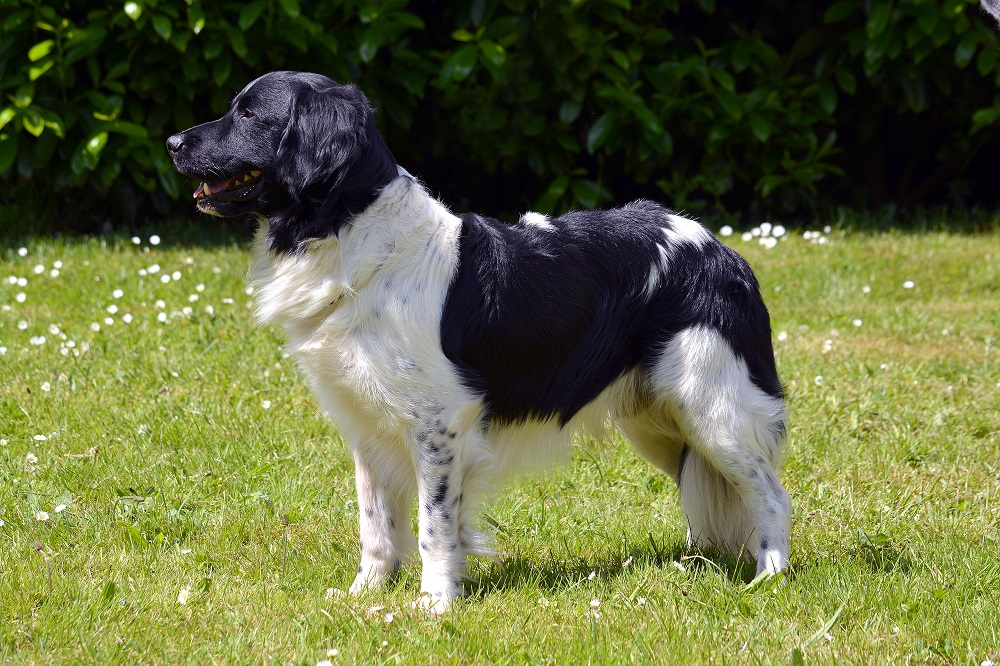
| Height | 48–53 cm |
| Weight | 15–25 kg |
| Lifespan | 13–15 years |
| FCI group | 7 · pointing dogs |
| Origin | Netherlands |
Exact ratings
Common health issues
Nutrition
The Stabyhoun, or Frisian Pointer, is one of the national treasures of the Netherlands. Representatives of this rare, versatile gundog breed make wonderful family pets thanks to their calm, friendly nature. The robust health of Stabyhouns, their need for relatively simple care, and their strong guarding instinct make it possible to keep them in a flat, but only with sufficient exercise. However, these hard-working dogs will feel most at home in the midst of a busy country life. The Dutch value their Frisian Pointers for their reliability in various life situations, which is why Stabyhouns have become loyal companions for local families. More on this at Tvaryny.
Stabyhoun: Breed Quick Facts
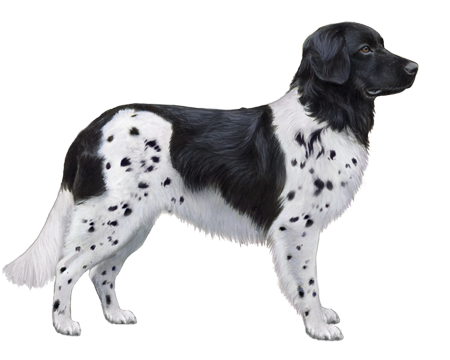
| Original Name | Stabyhoun / Stabijhoun / Frisian Pointer |
| Country of Origin | Netherlands (Friesland) |
| FCI Group | Group 7 (Pointing Dogs), Section 1.2 (Continental Pointing Dogs, “Spaniel” type) |
| Lifespan | 13-15 years |
| Height at the withers | Males: 50-53 cm Females: 48-51 cm |
| Weight | Males: 20-25 kg Females: 18-23 kg |
| Temperament | Devoted, intelligent, calm, stubborn, gentle, excellent watchdog |
| Energy Level | High (requires daily exercise) |
| Shedding | Average, with two pronounced seasonal peaks |
| Grooming | Low (self-cleaning coat) |
| Purpose | Hunting (especially small game and moles), companion dog, watchdog |
History of the Breed
This ancient and rare breed originates from Friesland, a province in the northeast of the Netherlands. The name “Stabyhoun” (or “Stabijhoun”) comes from the Frisian language and likely means “stand by me dog” (from “sta mij bij” – “stand by me” and “houn” – “dog”). This perfectly describes its role as an all-purpose farm dog.
The Stabyhoun was the “poor man’s” dog, belonging to small farmers who could not afford to keep several specialised dogs. Therefore, the Stabyhoun performed a multitude of tasks: it was an excellent hunter, especially of small game (foxes, martens) and birds, and also had a unique specialisation for a pointer – hunting moles and rats. In addition to hunting, it served as a reliable but not aggressive watchdog, and was even sometimes harnessed to light carts to transport milk to market.
It is believed that the Dutch Stabyhouns were developed by crossing local Frisian dogs with Spanish and other spaniels brought to the Netherlands during the Spanish occupation (16th-17th centuries). The breed’s ancestors are thought to include German and French Spaniels (possibly even the Pont-Audemer Spaniel), as well as the Drentse Partridge Dog.
Historically, the Stabyhoun was often kept alongside the Wetterhoun, another Frisian breed. The Stabyhoun was the “soft-mouthed” pointer, indicating game, while the tougher Wetterhoun was used for hunting larger game and otters. The breeds were actively interbred, but in 1942 they were officially separated, and separate standards were approved. The first Stabyhoun breed standard was adopted in 1959 (as noted in the original card), although the breed was nationally recognised earlier in 1942.
Today, the Stabyhoun remains one of the rarest breeds in the world. Its population numbers only a few thousand individuals. Breeding is strictly controlled by the Dutch Stabyhoun and Wetterhoun Association (NVSW) to preserve the breed’s health and working qualities. Outside the Netherlands, the breed is almost unknown, although there has been a recent surge of interest in Scandinavia, the UK, and North America.
What Does the Stabyhoun Look Like: Breed Standard
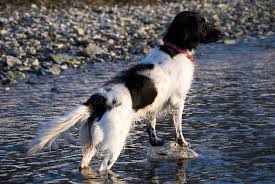
The Stabyhoun is a sturdily built, well-balanced dog of rectangular proportions, which should be neither too massive nor too refined. It is a functional working dog, whose appearance combines power and elegance.
General Appearance and Proportions
The dog has a strong bone structure, but without being coarse. The body is slightly longer than the height at the withers (rectangular format). The back is straight and strong, the loin is powerful, and the croup is slightly sloping. The chest is broad when viewed from the front and deep, reaching the elbows, with well-sprung ribs. The belly is moderately tucked up.
Head, Eyes, and Ears
The head is “dry” (without folds of skin), proportionate to the body, and slightly longer than it is wide. The skull and muzzle are of equal length. The skull is slightly rounded but not narrow. The transition from the forehead to the muzzle (the stop) is moderately pronounced. The muzzle is strong, tapering to the nose leather, but not pointed. The bridge of the nose is straight. The nose is well-developed, black in dogs with black and white colouring and brown in dogs with brown and white or orange and white colouring.
- Eyes: Round, medium-sized, set level. The colour is dark brown for black and white dogs and a lighter brown for other colours. The expression is direct, friendly, and intelligent.
- Ears: This is one of the breed’s distinguishing features. They are set quite low and are trowel-shaped. The ear hangs closely against the cheek. The hair on the ears is characteristic: long at the base, it gradually shortens towards the bottom third, and the tip itself is covered with short hair.
Body and Tail
The neck is of medium length, muscular, and without a dewlap. The limbs are well-developed, with strong bones and good angulation, providing the dog with an efficient, ground-covering gait. The paws are compact, “cat-like,” with thick pads.
The tail is long, reaching the hock joint. In a calm state, the dog holds it down, often with a slight curve at the end. When the Stabyhoun is in motion or excited, the tail is carried higher, but never curls over the back. The tail is well-feathered – long hair on the underside that becomes shorter towards the tip, giving it the appearance of a feather.
Coat and Colour
The coat is another unique feature. It is long, smooth, or with a very slight wave over the croup. A curly coat is considered a serious fault. The coat is silky to the touch, not harsh. There is “feathering” on the back of the legs, and longer “furnishings” on the chest, neck, and tail.
The most important property of the Stabyhoun’s coat is that it is self-cleaning. Mud and dirt that cling to it during a walk simply dry and fall off on their own, leaving no odour. This makes grooming the dog surprisingly easy.
Permitted colours:
- Black and white (with white markings)
- Brown and white (with white markings)
- Orange and white (with white markings – the rarest)
In the white areas, ticking or roaning (a mixture of coloured and white hairs) is permitted. A tricolour coat (e.g., black and white with tan markings) is a disqualifying fault.
Character and Temperament
Stabyhouns are known for their balanced temperament and calm, friendly behaviour. They are very sensitive and gentle dogs that form deep bonds with their family. They long to be close to their owner, which is how they earned their “stand by me” nickname.
A notable feature of these four-legged helpers is their exceptional devotion to their owners and their strong work ethic. They get along well with all family members – especially children, whom they treat with appropriate gentleness and patience. The Stabyhoun is a wonderful companion for children’s games, but as with any dog, interaction with small children should be supervised.
In contrast, the Stabyhoun greets strangers with some caution and wariness, but without aggression. This makes it an excellent watchdog – it will always warn of approaching visitors with a loud bark. However, it is not a guard dog; its job is to warn, not to attack. Once acquainted, it usually becomes friendly quickly.
The hunting instinct of this loyal companion remains strong. It has a high prey drive, especially for birds and small rodents (remember the mole hunting). This means that small pets (hamsters, guinea pigs, rabbits) should be kept safe. With proper socialisation from an early age, the Stabyhoun usually gets along well with other dogs and even cats it has grown up with.
One of the key character traits is the “Frisian stubbornness”. The Stabyhoun is very intelligent, but it will not blindly follow commands. If it sees no point in an action, it may simply refuse. This requires patience, consistency, and a creative approach to training from the owner.
Pros and Cons of the Breed
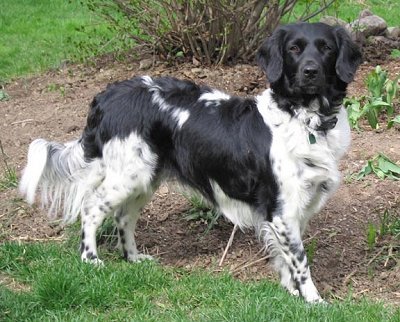
Like any breed, the Stabyhoun has its advantages and disadvantages. It is important to assess them soberly before getting such a dog.
| Pros | Cons |
|---|---|
| ✅ Extremely devoted to family and gentle with children. | ❌ High energy level, needs 1-2 hours of vigorous activity daily. |
| ✅ High intelligence, learns new commands easily (with the right approach). | ❌ Famous “Frisian stubbornness,” can be independent in its decisions. |
| ✅ Excellent watchdog – always warns of danger. | ❌ Sensitive to criticism and harsh training methods. |
| ✅ Low grooming requirements thanks to its self-cleaning coat. | ❌ Strong hunting instinct (a danger to small animals). |
| ✅ Gets along well with other dogs and pets (with socialisation). | ❌ Prone to separation anxiety (dislikes being left alone). |
| ✅ Relatively robust health due to controlled breeding. | ❌ Moderate but regular shedding, with two heavy seasonal peaks. |
| ✅ Versatile: companion, hunter, athlete (agility, flyball). | ❌ Rare breed – a puppy is hard to find, and there is likely a waiting list. |
Training and Education: The “Frisian Stubbornness”
The Stabyhoun’s natural intelligence makes it quick to learn, but its education has its nuances. Like other gundog breeds, these pointers require firm, but fair and consistent training. The Stabyhoun is a dog that wants to please, but it also has its own view on things.
The key to success is positive reinforcement. They respond wonderfully to praise, treats, and games. They are very sensitive to their owner’s tone of voice. Shouting, physical punishment, or unfair treatment will cause the dog to “shut down,” lose trust, and become even more stubborn. Early socialisation is crucial: introducing them to different people, sounds, places, and other animals will help raise a confident and calm dog.
As mentioned, the Stabyhoun can be quite stubborn (this is known as “Frisian stubbornness”). It won’t blindly follow a command if it sees no point in it. This isn’t stupidity, but a sign of independant thought. Training sessions should be short, interesting, and varied, as the Stabyhoun quickly gets bored with monotonous repetition. They enjoy intellectual challenges: scent games, tricks, and dog sports (agility, obedience).
Physical Exercise and Activity
This is not a dog that will be content with a short walk around the block. The Stabyhoun is an energetic working breed that needs a minimum of 1-2 hours of vigorous physical exercise daily. This can include:
- Long walks or runs (especially in woods or fields).
- Active games of fetch with a ball or Frisbee (they are excellent retrievers).
- Swimming (most Stabyhouns love water).
- Dog sports: agility, flyball, nosework.
This hunting energy will look for an outlet. If a Stabyhoun doesn’t get enough physical and mental stimulation, it can become destructive (chewing furniture, digging holes) or excessively noisy. They need an “outlet” for their hunting instincts. Scenting games (hiding a toy or treat) are an excellent way to satisfy their needs. They will happily retrieve both shot game and a toy ball for you.
Care and Grooming: The Self-Cleaning Coat
A country home with a large, securely fenced garden is ideal for keeping a Stabyhoun. Given the dog’s innate desire to be busy with work, it is best suited for farm owners, hunters, or simply very active people.
Grooming a Stabyhoun is surprisingly simple. They do not need to be clipped. Thanks to the unique “Teflon-like” structure of the coat, mud and snow barely stick to it, and anything that does simply falls off after drying.
Brushing: It is enough to brush the dog 1-2 times a week to remove dead hair and prevent mats from forming, especially in areas with longer hair (behind the ears, on the “trousers,” and on the tail).
Shedding: The long coat sheds moderately throughout the year, but twice a year (in spring and autumn) they have a heavy seasonal shed. During this period (about 3 weeks), be prepared for daily brushing to manage the amount of hair.
Bathing: It should be noted that overly frequent bathing is strongly discouraged. Washing with shampoo strips the natural oils that protect the skin and give the coat its self-cleaning properties. A Stabyhoun should only be bathed when absolutely necessary (e.g., if it has rolled in something very dirty or smelly).
Ears: As with all dogs with drop ears, they need a regular check (1-2 times a week) for any dirt, redness, or unpleasant smell. This will help prevent ear infections.
Other: Don’t forget about regular nail trimming (if they don’t wear down naturally) and teeth cleaning.
Stabyhoun Health: Common Diseases and Prevention
Nutrition: How to Feed a Stabyhoun?
Interesting Facts About the Stabyhoun
- Name: “Stabyhoun” or “Stabij” comes from the Frisian “sta mij bij,” which means “stand by me” or “be with me.”
- Mole Hunter: This is one of the few pointing breeds that specialised in hunting moles. Farmers valued them for their ability to clear their land of these pests.
- Rare Breed: The Stabyhoun is considered one of the 5 rarest dog breeds in the world. The majority of the population (around 80-90%) still resides in the Netherlands.
- Strict Controls: Due to the small population, breeding is strictly controlled by the national breed club (NVSW) to avoid inbreeding and maintain health.
- Not for Everyone: The Dutch breed club is very selective about future owners and often does not allow puppies to be exported if the goal is simply “showing” or “breeding.” They look for people who will value the dog’s working qualities and companion nature.
Frequently Asked Questions (FAQ)
Is the Stabyhoun suitable for living in a flat?
Yes, but with a big “if”. A Stabyhoun can live in a flat, as it is very people-oriented and wants to be close to its family. However, this is only possible if the owner provides it with daily, long (1-2+ hours), and intensive physical and mental stimulation. Without this, the dog will be unhappy and likely destructive.
Does the Stabyhoun shed a lot?
They have moderate shedding throughout the year and two very heavy seasonal sheds (spring/autumn) when they “blow” their undercoat. During this period, there will be hair everywhere, and the dog will need to be brushed daily. At other times, brushing 1-2 times a week is sufficient.
Does the Stabyhoun get along with children and other animals?
They are considered one of the best dogs for children thanks to their gentle and patient nature. They also get along well with other dogs and cats they have grown up with. However, due to their strong hunting instinct, they should not be left alone with small pets (rodents, rabbits, birds).
Is the Stabyhoun difficult to train?
Yes and no. They are very intelligent and learn quickly, but at the same time, they are very stubborn and sensitive. They do not respond well to harshness or shouting – this only leads to resistance. Training must be consistent, patient, and based on positive reinforcement (treats, praise, games).
Video About the Breed
- Gentle, patient, devoted
- Excellent with children and animals
- Easy to care for, undemanding
- Generally a very healthy breed
- A very rare breed, hard to find
- Needs moderate exercise
- Can be somewhat stubborn
- Dislikes long solitude
| Wetterhoun | Drentse Patrijshond | Small Munsterlander | |
|---|---|---|---|
| Height | 55–59 cm | 55–63 cm | 48–56 cm |
| Energy | 4 | 4 | 4.5 |
| Apartment | 3 | 3.5 | 3 |
| Beginners | 2.5 | 3.5 | 3.5 |
How rare is the Stabyhoun?
Is the Stabyhoun good for a family?
Is the Stabyhoun healthy?
FCI Standard No. 222 · The Kennel Club
For apartments · For kids · For beginners · Active · Smartest · Hypoallergenic · All rankings →