not FCI-recognised (UKC/AKC recognised) · United States of America
American English Coonhound
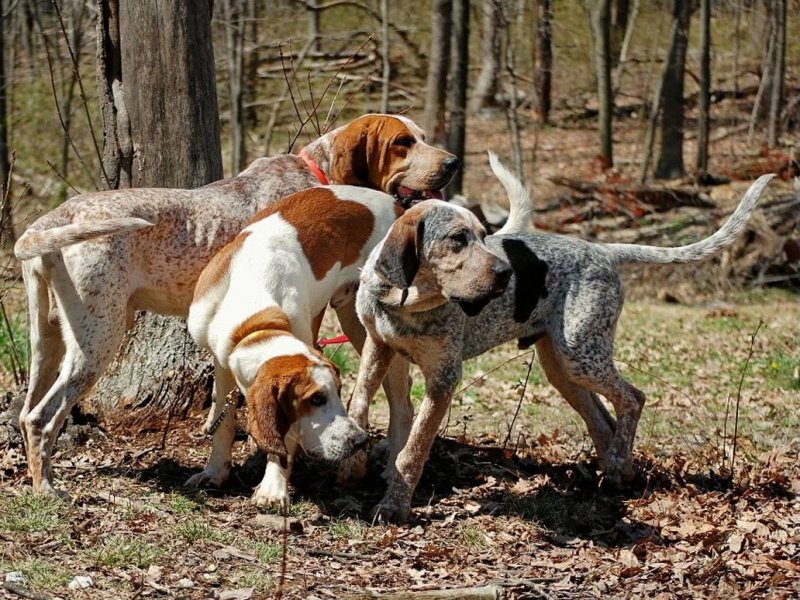
A versatile American coonhound, “three in one” — agile and tireless: energetic, sociable, attentive and devoted. The American English Coonhound is a fast, hardy hunter that combines the qualities of an agile catcher, an attentive watchdog and a devoted companion; friendly and affectionate at home, it has a very loud voice and high energy, so it suits active owners best.
Friendly and affectionate at home, good with children
Fast, hardy, with an excellent nose
Cons
Very loud — a far-carrying voice
Inexhaustible energy — a challenge for a novice
Strong hunting instinct (risky with cats)
Not for a flat without exercise
Size
ToySmallMediumLargeGiant
Compatibility
Apartment · not suitableKidsCats · not suitableOther dogsBeginners · with caveats
The American English Coonhound, sometimes also called the Raccoon Hound, is an exceptionally versatile animal that performs, as they say, "three-in-one" functions. This dog wonderfully combines the astonishing qualities of a nimble hunter, an attentive guardian, and a devoted companion. In this detailed overview, prepared by the Tvaryny team, we will explore all aspects of this unique breed. Read more about it on Tvaryny. This four-legged creature, endowed with extraordinary abilities and talents, definitely deserves your attention!
American English Coonhound: A Brief Breed Overview
American English Coonhound: A Brief Breed Overview · 8
Characteristic
Value
Origin
United States of America
Year of First Mention
1905 (UKC Recognition)
Life Expectancy
11–12 years
Height at Withers (males)
58–66 cm
Height at Withers (females)
56–64 cm
Weight
18–30 kg
Group
Hounds
Temperament
Energetic, sociable, devoted, stubborn
Interesting Facts about the American English Coonhound
A Voice That Tells a Story. It's not just a bark, but a whole system of signals. Experienced hunters can accurately determine what's happening based on the tone and rhythm of a Coonhound's voice: whether the dog has just picked up a trail, is actively pursuing prey, or perhaps has "treed" a raccoon, meaning it has chased it up a tree.
Presidential Roots. The ancestors of the modern Coonhound, known as "Virginia Hounds," were bred with the direct involvement of the first US President. George Washington was an avid hunter and breeder who crossed English Hounds with French ones to create the ideal hunting dog for American terrains.
"Coloured" Name. The most famous coat colour of the breed is red-ticked, which is why they are often simply called "Redtick." However, originally, dogs with blue-ticked and tricolour markings were also included in this breed, but they were later separated into distinct Coonhound breeds.
Bred for the Night. Unlike most hounds, the American English Coonhound was specifically bred for working in the dark. This required the dog to have not only an exceptional sense of smell and endurance but also considerable courage and the ability to navigate a nocturnal forest.
Large Game Hunter. Although "Coonhound" translates to "Raccoon Hound," the capabilities of this breed are much broader. These are fearless and strong dogs that are successfully used for hunting large and dangerous predators, such as pumas and even bears.
History of the American English Coonhound Breed
The history of the American English Coonhound is closely intertwined with the colonisation of America. Its ancestors, English Foxhounds, were brought to the continent by European settlers in the 17th and 18th centuries. These dogs, known as "Virginia Hounds," formed the basis for creating a new breed. American pioneers needed a versatile hunting dog capable of working in challenging terrain and hunting diverse game.
The main requirement for the new breed was the ability to hunt effectively both during the day and at night. By day, their prey was foxes, and as night fell, they switched to raccoons. Breeders crossed English Hounds with other breeds brought from France, Ireland, and possibly Germany, to improve speed, endurance, and most importantly, scenting ability. The key task was to breed a dog that could "tree" a raccoon — meaning to chase it up a tree and hold it there with loud barking until the hunter arrived. Over time, the breed also proved effective in hunting larger game such as deer, pumas, and even bears, making it an indispensable helper for early settlers.
Initially, all Coonhounds were registered under one name, "English Foxhound and Coonhound." However, in 1905, the United Kennel Club (UKC) officially recognised the American English Coonhound as a separate breed, distinguishing it from other coonhounds, such as the Treeing Walker Coonhound or the Bluetick Coonhound. The American Kennel Club (AKC) recognised the breed significantly later, in 2011. Today, this dog remains popular among hunters, but it is increasingly found as a family pet. It's also worth noting the Anglo-Russian Hound, which is another excellent hunting breed.
What the American English Coonhound Looks Like: Appearance Description
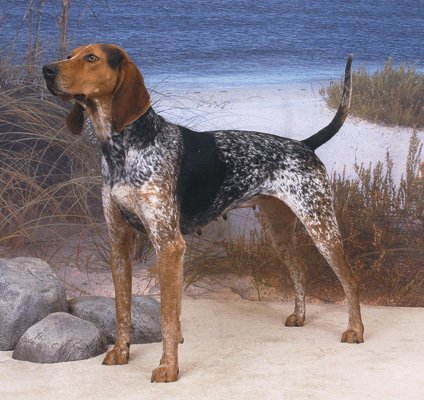
The American English Coonhound is the embodiment of strength, speed, and endurance. Dogs of this breed are characterised by a well-built, proportionate, and harmonious body with prominent, athletic musculature that testifies to their working qualities. This is a medium to large hound, bred for prolonged pursuit of game across varied terrain.
The Coonhound's head is quite broad and strong, but not coarse. The muzzle is elongated and rectangular in shape. The eyes are large, set wide apart, with a soft and pleading expression, coloured from hazel to dark brown. The ears are long, set low, soft to the touch, and hang in graceful folds, with the tips almost reaching the nose. The body is sturdy, with a deep chest that provides ample room for the lungs, and a tucked-up abdomen. The back is straight and strong. The tail is set high, scimitar-shaped, carried freely and jauntily, but it never curls over the back.
The American English Coonhound's coat is short, harsh, and dense, reliably protecting it from bad weather and branches in the woods. It appears glossy and satiny, shimmering beautifully in the sunlight. The coat colour can be varied: red-ticked, blue-ticked, tricolour with ticking, white and red, or white and black. The most common is red-ticked.
Character: Temperament and Behaviour
The American English Coonhound is a true source of tireless energy, a real "Energiser" in the dog world. This dog can pursue a scent for hours, developing immense speed without stopping for rest. Its hunting instinct is extraordinarily strong, so during walks in unfenced areas, it should be kept on a lead — if it catches an interesting scent, the Coonhound might forget everything else.
At home, this dog transforms into a gentle and friendly companion. It is very family-oriented and strongly attaches to its owner. Coonhounds are known for their patient and tender attitude towards children, which makes them excellent family dogs. However, they do not like solitude. If left alone for too long, a Coonhound might start howling or destroying things out of boredom and excess energy.
This is a pack breed, so the American English Coonhound usually gets along well with other dogs, especially if raised together. It enjoys company and may even compete in games. However, due to its strong hunting instinct, its introduction to cats and other small animals should be closely supervised. Brave, active, and fearless, the Coonhound is an indispensable helper on any hike or hunt. Its loud, melodious baying is a characteristic feature of the breed, appreciated by hunters, but which can become a problem for neighbours in urban environments.
Training and Socialisation
Training an American English Coonhound can be both rewarding and challenging. On one hand, they are intelligent dogs who aim to please their owner. On the other hand, their independence and stubbornness, inherited from their hunting ancestors, require patience and consistency from the owner. They were bred to make independent decisions during hunting, so they may sometimes ignore commands if they are preoccupied with something more interesting.
Early socialisation and obedience training are critically important. Introduce the puppy to various people, sounds, places, and other animals from a young age. This will help it grow into a confident and well-adjusted dog. Training should be based on positive reinforcement — praise, treats, and toys work much better than harshness and punishment. A harsh word can deter a Coonhound from cooperating for a long time. Training sessions should be short, engaging, and varied to prevent the dog from getting bored.
Particular attention should be paid to the "Come!" command, as their strong hunting instinct might lead the dog to chase prey. Unlike breeds focused solely on companionship, such as the American Hairless Terrier, the Coonhound requires constant mental stimulation, for example, search games or nose work activities.
Pros and Cons of the Breed
Before getting an American English Coonhound, it's important to weigh all the pros and cons. This is a wonderful dog, but it's not suitable for every family.
Pros and Cons of the Breed · 6
Pros (Advantages)
Cons (Disadvantages)
✅ Devoted Companion: Very strongly attached to its family.
❌ Needs a lot of exercise: Not suitable for apartment living or inactive people.
✅ Excellent with Children: Patient and playful.
❌ Strong Hunting Instinct: Can run away following a scent; dangerous for small animals.
✅ Good Watchdog: Will always alert to the approach of strangers.
❌ Very Vocal: Loud, melodious baying and howling can annoy neighbours.
✅ Easy to Groom: Short coat does not require complex grooming.
❌ Stubborn in Training: Requires an experienced and patient owner.
✅ Usually gets along well with other dogs.
❌ Doesn't Tolerate Solitude: Can suffer from separation anxiety.
✅ Robust Health and Endurance.
❌ Prone to Roaming: Requires a secure, high fence.
How to Care for the Coat?
Caring for an American English Coonhound is not difficult but requires regularity. Its short, harsh coat does not require the services of a professional groomer. It's sufficient to brush it once a week with a rubber brush or a stiff comb to remove dead hairs and keep the skin healthy. Shedding is moderate but can increase seasonally.
You should only bathe the dog when necessary, if it gets very dirty. Frequent washing can disrupt the skin's natural oil balance. The ears require the most attention. They need to be checked weekly for dirt, redness, or unpleasant odour and gently cleaned with a special lotion. It's also important to regularly clean the dog's teeth and trim its nails if they don't wear down naturally.
This breed is absolutely unsuitable for apartment living. The American English Coonhound is made for space and movement. It needs a large, securely fenced garden where it can run freely. This is an extremely energetic dog that requires at least 1–2 hours of intense physical exercise daily. This could be running, long walks, swimming, or participating in dog sports. Without sufficient activity, it becomes restless and can develop destructive behaviour. Similar activity requirements apply to the Canadian Eskimo Dog, which is also a working breed.
Nutrition
Nutrition: Key Recommendations
Health and risks
Health of the American English Coonhound: Typical Diseases and Prevention
Frequently Asked Questions about the Breed (FAQ) · 4
Is the American English Coonhound suitable for city living? No, it is strongly not recommended. This breed needs space, a large garden, and intense daily exercise, which is difficult to provide in urban conditions. Furthermore, their loud baying can lead to conflicts with neighbours.
Can a Coonhound live with cats? It's possible, but difficult and risky. If a Coonhound puppy grows up with a cat from a young age, they might become friends. However, an adult dog is highly likely to perceive a cat as prey. Introductions should always take place under strict supervision.
How much does an American English Coonhound puppy cost? The cost of a puppy depends on its pedigree, the breeder's reputation, and the parents' titles. The price can vary, but it's important to choose a responsible breeder who cares about the health and socialisation of their dogs, rather than chasing a low price. More to the point, the purchase is the smallest part of it — food, veterinary care, grooming and insurance across the dog's life weigh far heavier.
Does this breed shed a lot? Shedding is moderate but constant, with an increase in spring and autumn. Regular brushing helps to keep this process under control.
Video about the Breed
FAQ
Why is the American English Coonhound called “three in one”?
Because it combines three roles: an agile hunter (coonhound), an attentive watchdog and a devoted companion; an extremely versatile working breed.
Is the American English Coonhound good for a family?
Yes — at home a friendly, affectionate and sociable dog, good with children and dogs; but because of its inexhaustible energy and very loud voice it is a challenge for a novice and not for a flat.
Does the breed get on with cats?
Poorly — the strong hunting instinct makes living with cats and small animals risky.