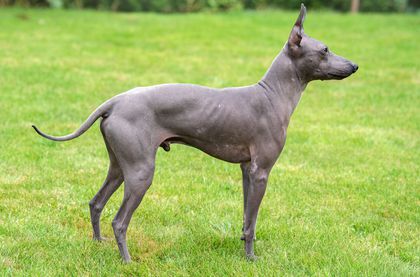
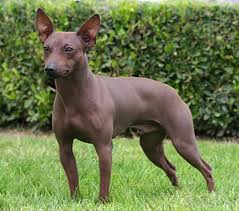
A hairless American terrier with expressive faces — active and clever: fearless, affectionate, cheerful and watchful. The American Hairless Terrier is a rare hairless breed with ratting roots; despite its small size it is a true terrier with a companion's temperament, adoring its family, getting on well with children and animals, but needing the bare skin protected from sun and cold.
ApartmentKidsCats · with caveatsOther dogsBeginners
The American Hairless Terrier is a truly unique, active, and incredibly intelligent dog breed. Despite their compact size, they embody fearlessness, confidence, and a whole arsenal of genuine terrier qualities. These animals are renowned for their expressive facial movements, capable of conveying the widest spectrum of emotions – from genuine surprise and infectious joy to unforgettable grimaces that unfailingly bring a smile to your face. This detailed overview will help you get better acquainted with this amazing companion, who brings a wealth of positivity and cheerfulness to their owners. Read more about this fascinating breed on Tvaryny.
American Hairless Terrier: Key Breed Characteristics
American Hairless Terrier: Key Breed Characteristics · 10
Sweating Through Skin: Unlike most dogs, who cool down primarily through panting, American Hairless Terriers can sweat through their skin.
Size Variety: There are two varieties of the breed: miniature (up to 33 cm) and standard (from 33 to 46 cm).
Not Just Hairless: There is also a coated variety of the American Terrier (Coated American Hairless Terrier). They have a short, smooth coat and are born in the same litter as the hairless puppies. They are essential for maintaining the genetic diversity of the breed.
"Smiling" Dogs: Many owners note that their pets can "smile," showing their teeth in moments of joy, which is a characteristic trait of the breed.
History of the American Hairless Terrier Breed
The history of this breed is truly unique and doesn't begin in ancient times, but in 1972 in Louisiana, USA. In a litter of ordinary Rat Terriers belonging to the breeders Edwin and Willie Scott, a completely hairless puppy was born. This event was the result of a spontaneous natural mutation. The female puppy was named Josephine. She became the family's favourite and laid the foundation for the purposeful breeding of a new variety.
The Scotts were so captivated by Josephine that they decided to solidify this unique trait. Over the following years, they meticulously worked on a breeding programme. Initially, successes were modest, but after nine years, they managed to produce the first litter that included two hairless puppies. This was a real breakthrough and allowed them to establish a stable line. It's important to note that the hairlessness gene in the American Hairless Terrier is recessive, unlike the dominant gene in other hairless breeds such as the Xoloitzcuintli or the Peruvian Hairless Dog. This means that only hairless puppies are born from hairless parents, and the breed does not suffer from the dental problems often associated with other hairless breeds.
The breed received official recognition from the United Kennel Club (UKC) in 2004, and the American Kennel Club (AKC) recognised it in 2016. Today, the American Hairless Terrier is a popular companion, especially in families with allergy sufferers.
What the American Hairless Terrier Looks Like: Standard and Appearance Description
The American Hairless Terrier is a small to medium-sized dog with well-developed musculature and harmonious proportions. Despite its elegance, it gives the impression of a sturdy and athletic canine. Its body is slightly longer than its height at the withers, giving it a rectangular outline.
Body: Compact, muscular, with a deep chest and tucked-up abdomen.
Neck: Long, elegant, smoothly transitioning into the shoulders.
Limbs: Strong, straight, with well-developed muscles.
Head: Wedge-shaped, proportionate to the body. Skull wide, slightly domed.
Eyes: Expressive, obliquely set, can be any colour.
Ears: V-shaped, erect or semi-erect, giving the dog an alert and inquisitive look.
Skin: The main distinguishing feature of the breed. It is smooth and warm to the touch. Puppies are born with a thin coat of fur, which they completely lose by 8–10 weeks of age. The skin is usually pink with contrasting patches, which can be black, grey, golden, or reddish-brown. With age, the number and size of the patches may increase, and the skin itself may darken, especially when exposed to sunlight (tanning).
Character: Temperament and Behaviour
The American Hairless Terrier possesses a wonderful character, making it an ideal family pet. It's an embodiment of energy, intelligence, and loyalty. Although its ancestors were rodent hunters, the modern AHT is primarily a companion. Its hunting instincts manifest in a love for active games and chasing toys, rather than actual prey.
This is a very people-oriented breed. They adore being the centre of attention, participating in all family activities, and do not cope well with solitude. Left alone for too long, a terrier may become bored and exhibit destructive behaviour. They get along splendidly with children, being tireless playmates. They also coexist well with other pets, especially if raised together. Despite their boldness, reminiscent of larger dogs like the Dogo Argentino, they are not prone to aggression. These are inquisitive, cheerful, and sociable dogs, whose company brings immense pleasure.
Pros and Cons of the Breed
Pros
Cons
✅ Hypoallergenic: An ideal choice for people with fur allergies.
❌ Sensitive Skin: Requires protection from sun in summer and cold in winter.
✅ High Intelligence: Easy to train, quickly learns commands and tricks.
❌ Needs Attention: Copes poorly with solitude, can suffer from separation anxiety.
✅ Friendliness: Gets along wonderfully with children and other animals.
❌ High Energy Level: Requires daily active walks and games.
✅ Compact Size: Suitable for apartment living.
❌ Prone to Barking: Can be a "doorbell", which isn't always convenient.
✅ No Shedding: No fur in the house, simplifying cleaning.
❌ Tendency to Dig: Terrier instinct may manifest in digging up flowerbeds.
Training and Socialisation
The American Hairless Terrier is a very intelligent and clever breed, which makes the training process easy and enjoyable. They are eager to please their owner and enthusiastically learn new commands and tricks. Positive reinforcement – treats, praise, toys – works best with them. Thanks to their energy and intelligence, they excel in various canine sports, such as agility, flyball, and obedience.
Early socialisation is key. Introduce your puppy to different people, sounds, places, and other animals so that they grow into a confident and well-behaved dog. Despite their friendliness, without proper socialisation, they can become timid or excessively noisy.
How to Care for an American Hairless Terrier
Caring for this breed is not complicated, but it has its specificities related to the absence of fur.
Skin Care:
Bathing: Bathe your dog regularly, approximately 1–2 times a week or as needed, using mild, hypoallergenic dog shampoos. This helps to wash away dirt and allergens.
Sun Protection: In summer, before walks, always apply sunscreen with a high SPF, designed for animals or children, to your dog's skin.
Cold Protection: In winter and cold weather, the dog needs warm clothing: sweaters, jumpsuits, jackets.
Moisturising: If the skin becomes dry, you can use special moisturising lotions or natural oils (e.g., coconut oil) after consulting with a vet.
Care of Teeth, Ears, and Claws:
Teeth: Brush teeth 2–3 times a week with a special dog toothpaste to prevent tartar buildup.
Ears: Regularly inspect ears and clean them as needed.
Claws: Trim claws 1–2 times a month.
Nutrition
Feeding the American Hairless Terrier: Key Recommendations
Health and risks
Health of the American Hairless Terrier: Typical Ailments and Prevention
Frequently Asked Questions About the Breed (FAQ) · 4
Do they get very cold in winter? Yes, due to the lack of fur, they are very sensitive to cold. In winter, they need warm clothing for walks and possibly boots to protect their paws.
Can they be left alone? They do not cope well with solitude. If you spend a lot of time away from home, this breed may not be suitable for you. They should not be left alone for more than 4–5 hours.
Do they have an odour? No, American Hairless Terriers practically have no specific "doggy" odour, which is another plus for apartment living.
Is their skin care complicated? Care is not complicated, but it is regular. It boils down to protection from sun and cold, periodic bathing, and moisturising. This is simpler than daily brushing of long-haired breeds.
Video about the Breed
FAQ
Is the American Hairless Terrier hypoallergenic?
Being hairless and non-shedding, the breed is considered loosely hypoallergenic and is often well tolerated by allergy sufferers; but no dog is 100% hypoallergenic.
How do you care for the bare skin?
It must be protected from the sun (with dog sunscreen) and, in winter, from the cold (with clothing), since hairless dogs get cold quickly; regular gentle skin cleansing is also needed.
Is the American Hairless Terrier good for a family?
Yes — an affectionate, cheerful and clever companion that adores its family, gets on well with children and animals and suits even a novice and a flat.