Tvaryny ›
Dogs ›
Mexican Hairless Dog (Xoloitzcuintli)
Group 5 · primitive types · Mexico
Mexican Hairless Dog (Xoloitzcuintli)
The ancient hairless guardian of the Aztecs: calm, devoted and dignified. The Xoloitzcuintle (Xolo) is one of the oldest breeds in the world; its bare, warm skin needs special care, but it is clean, hypoallergenic and boundlessly attached to its person.
ApartmentKidsCats · with caveatsOther dogs · with caveatsBeginners · with caveats
The Mexican Hairless Dog, or Xoloitzcuintli, is, without exaggeration, one of the most enigmatic breeds in the world of cynology. The origin story of these Mexican hairless dogs is shrouded in mystical secrets rooted thousands of years in the past. The ancient Aztecs viewed them as the earthly incarnation of the god Xolotl and as guides for souls into the underworld of Mictlan. Others believed that the warm skin of these animals could cure rheumatism and other human ailments. Unfortunately, history also holds darker chapters: there are theories that they were sacrificed to the gods and sometimes even used as food during ceremonial banquets. Today, Xolo owners claim they not only protect homes from uninvited guests but also guard their owners against negative energy. One thing is certain: Xoloitzcuintli are gentle, intelligent, and lovely creatures with an unusual appearance, making them loyal companions for the entire family. Learn more on Tvaryny.
The Mexican Hairless Dog (Xoloitzcuintli): A Brief Overview and Characteristics
The Mexican Hairless Dog (Xoloitzcuintli): A Brief Overview and Chara… · 8
Characteristic
Description and Data
Country of Origin
Mexico
Historical Age
Over 3000 years (first mentions in modern registries around 1886)
Life Expectancy
12–15 years (with proper care, they often live up to 18)
Size Varieties
Miniature, Intermediate, Standard
Height at Withers
From 25 to 60 cm (depending on the variety)
Weight
From 4 to 18 kg
Coat Type
Completely hairless (skin) or coated (rare variety)
Purpose
Companion dog, guard (standard size), "living hot water bottle"
Comparison with Other Ancient and Hairless Breeds
Xoloitzcuintli are often confused with other exotic dogs. However, the difference between them is substantial both in origin and character. If you are interested in other ancient breeds of the so-called "primitive type", we recommend looking at the Basenji (the dog that doesn't bark) or the refined and aristocratic Pharaoh Hound.
There are other hairless breeds in the world, but the genetics of their "nakedness" can differ. It is worth knowing the difference between the Xolo and the Peruvian Hairless Dog (its closest relative), or comparing them with the popular Chinese Crested Dog, which has a completely different body constitution. There is also the unique American Hairless Terrier - the only hairless breed that does not suffer from the teeth and skin problems typical of ancient species.
Interesting Facts About the Xolo
Cartoon Star: The character Dante from Pixar's popular film "Coco" is a Xoloitzcuintli. The film's creators very accurately conveyed the dog's habits and appearance, including the funny tongue that hangs out due to missing teeth.
Sacred Food: Sadly, the Aztecs considered the meat of these dogs a delicacy and believed that by consuming it, they received magical protection. Today, of course, this is strictly forbidden.
Four-Legged Doctor: In Mexico, it is still believed that sleeping in an embrace with a Xolo helps with arthritis, stomach pains, and insomnia.
Breed History: From the Aztecs to Frida Kahlo
The Xoloitzcuintli is possibly the most ancient dog on our planet to have survived in an almost unchanged form. This is even attested to by the Guinness Book of Records. In ancient burial sites across Mexico and Central America, archaeologists have repeatedly discovered clay figurines of these dogs, known as "Colima dogs", dating back to 3000 BC.
The etymology of the name is complex but fascinating. The Aztecs called these dogs "Xoloitzcuintli", combining two words. "Xolotl" is the name of the Aztec god of lightning and death, considered the guardian of the realms of the living and the dead. The second part, "itzcuintli", simply translates as "dog". Therefore, the name literally translates as "Dog of the god Xolotl".
Since ancient times, these animals have been considered sacred. Legend has it that the god Xolotl created this dog from a "splinter of life", from which all humanity was also created, and gifted it to people. The covenant was as follows: the dog must guard the human during life, and after death, guide their soul through the nine rivers of the underworld, Mictlan. This is precisely why Xolos were often buried alongside their masters.
The Xoloitzcuintli made it into the Guinness Book of Records not only due to its antiquity. It also earned the title of the warmest mammal in the world. Due to the lack of fur, heat loss from the skin occurs directly, and the dog feels hot to the touch (although its body temparature is the same as other dogs - about 38–39 degrees Celsius). It is thanks to this tactile feature that they have long been considered therapeutic, used as a living hot water bottle.
The history of the breed is tragic. There was a time when indigenous people raised Xolos for food. After the Spanish conquistadors colonised Mexico, they began a mass extermination of local dogs. Firstly, as a source of meat during famines, and secondly, as part of the pagan culture they sought to eradicate. The breed found itself on the brink of total extinction, surviving only in remote mountain villages where civilisation had not reached.
The revival began only in the 20th century. A huge role in popularising the breed was played by the famous artist Frida Kahlo and her husband Diego Rivera. They made the Xolo a symbol of Mexican identity, depicting them on their canvases. In 1954, Norman Pelham Wright organised the "Xolo Expedition", heading into remote Mexican villages to find purebred representatives to restore the population. Today, dogs of this breed are a national treasure of Mexico. In 2008, after a long hiatus, the Xolo made a triumphant return to the registries of major cynological organisations.
What the Mexican Hairless Dog Looks Like: Detailed Appearance
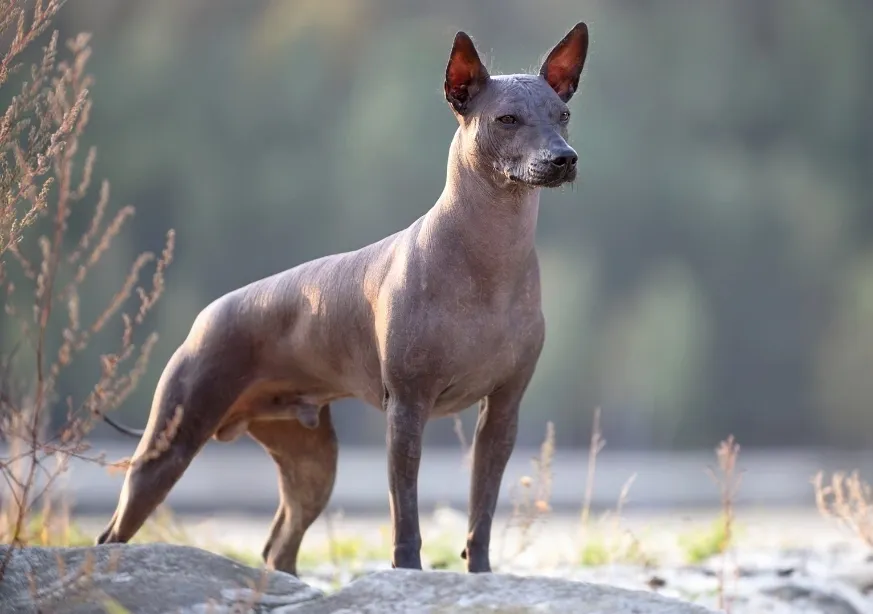
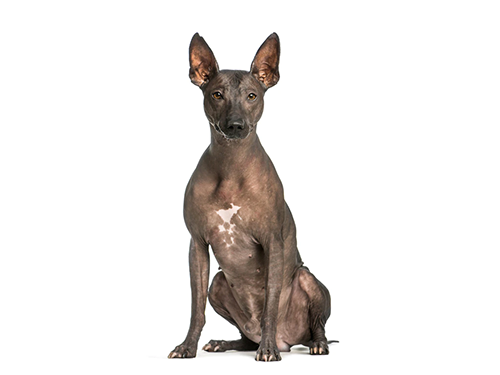
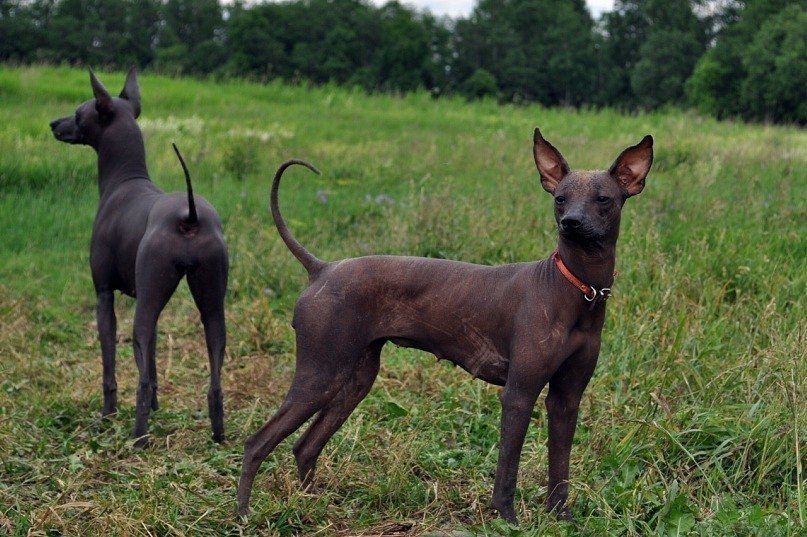
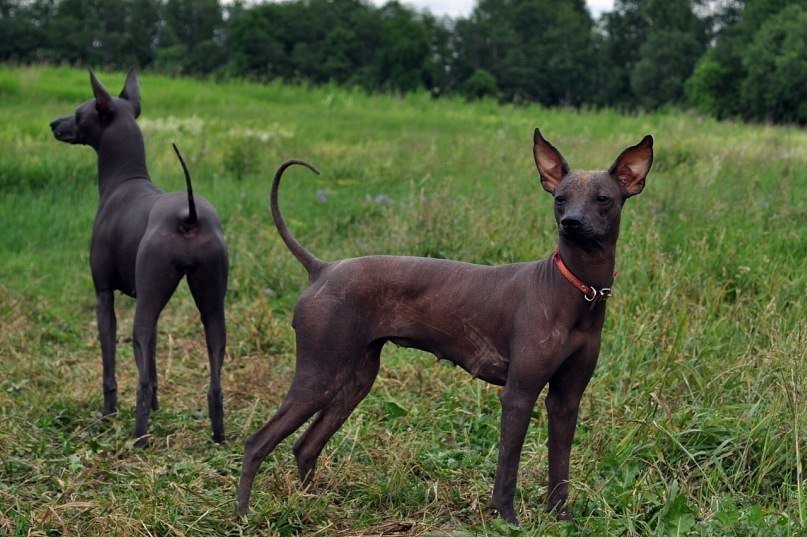
The appearance of a Xolo is a combination of primitive grace and alien aesthetics. It is a harmoniously built dog that never looks coarse or overly heavy.
Varieties by Size
The uniqueness of the breed lies in the fact that it exists in three size variations, allowing you to choose a pet for any living condition:
Standard: Height at the withers from 46 to 60 cm. These are serious dogs that can perform guard duties.
Intermediate: Height from 36 to 45 cm. The ideal balance between a protector and an indoor dog.
Miniature: Height from 25 to 35 cm. A wonderful companion for small flats, which, nevertheless, possesses a robust psyche.
Hairless and Coated: Genetic Roulette
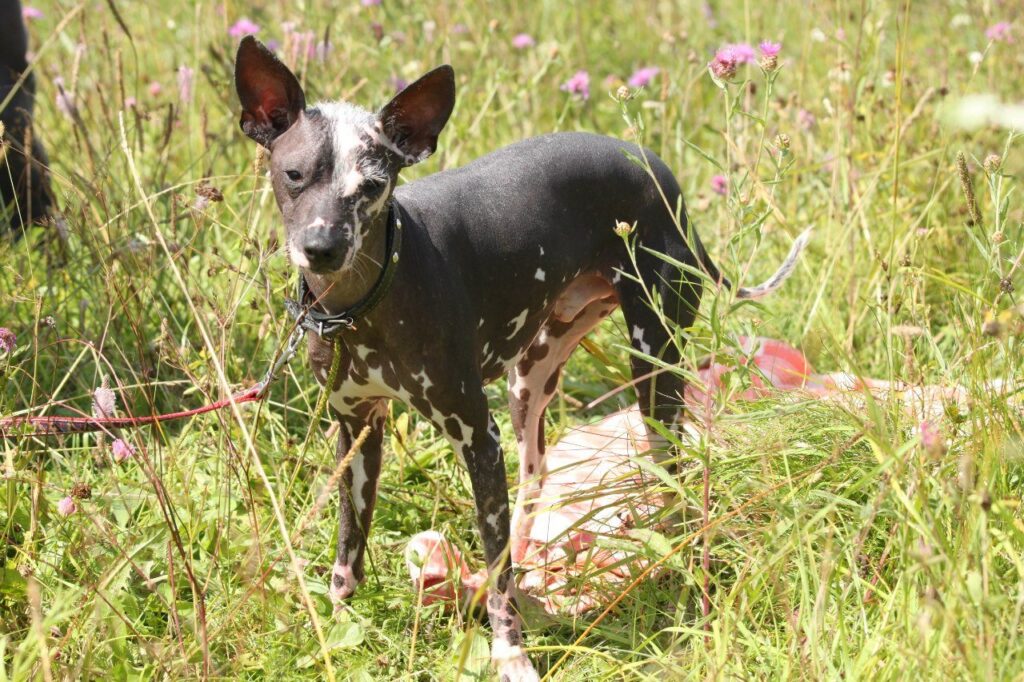
Few people know, but in a single Xolo litter, both completely hairless puppies and puppies covered in short fur can be born. This is linked to the function of the FOXI3 gene. Hairless dogs are elegant, with well-developed musculature. Their skin is thick, elastic, and hot to the touch.
Exterior Features:
Head: "Wolf" type, with a broad, wedge-shaped skull. The transition from forehead to muzzle is smooth but noticeable.
Ears: Large, thin, resembling bat ears. In an excited state, they always stand vertically.
Eyes: Almond-shaped, colour varies from yellow to black. The gaze is intelligent and penetrating.
Dental System: A unique feature of hairless Xolos - they often lack premolars, and sometimes even incisors. This is genetically linked to the absence of hair and is not considered a defect for the hairless variety. Coated individuals, however, must have a full set of teeth.
Skin and Coat: In hairless individuals, the presence of a "Mohawk" - coarse hair on the head - is permissible, as well as a little hair on the paws and tail. Skin colour can be: black, grey (graphite), liver, or bronze.
Character: Temperament, Intelligence, and Behaviour
Xoloitzcuintli are dogs with high intelligence, but their minds differ from service breeds, such as shepherds. This is a "primitive" breed, which means strong instincts for self-preservation and the ability to make independent decisions.
One-Person Dog: They are extremely devoted to the family but often choose one person whom they consider the "centre of the universe". A Xolo will follow you like a shadow, trying to be in physical contact at all times.
Distrust of Strangers: They are natural-born guardians of their territory. They won't jump for joy at every guest. They treat strangers with suspicion, behave with restraint, and in case of a threat, can display an active defensive reaction.
Tactile Nature: Xolos particularly love being stroked and caressed - they are extraordinarily sensitive to the warmth of human hands. This is the ideal dog for people who need emotional support.
Activity at Home: In a flat, adult Xolos behave calmly and with dignity. They won't bark aimlessly or wreck furniture if they get enough exercise outside.
Training and Socialisation
Xoloitzcuintli are clever but sometimes stubborn. They quickly learn to open doors, fridges, and find weak spots in the fence. Xolos require early socialisation. Your task is to introduce the puppy to the noise of the city, other dogs, and people from the very first days.
Adhere to the following principles during training:
Positivity Only: Harsh methods will lead to the Xolo withdrawing into itself or becoming aggressively fearful. They are very sensitive to tone of voice.
Food Motivation: Xolos generally love to eat, so training for treats works best.
Variety: They quickly get bored of repeating the same command 20 times. Keep sessions short and interesting.
Pros and Cons of the Breed
Pros (+)
Cons (-)
No hair in the house and no "doggy" smell
Needs clothes in cold weather and sun protection
Hypoallergenic (but not absolute, testing required)
Prone to skin problems and allergies
High intelligence and devotion to family
Complex character, can be stubborn
Exotic appearance that attracts attention
Incomplete dental formula (gum care needed)
Excellent guard qualities (warn by barking)
Cost of puppies is quite high
How to Care for Xoloitzcuintli Skin: A Detailed Guide
Caring for a Mexican Hairless Dog is more reminiscent of caring for a human than an animal. Here are the main rules to help keep the skin healthy:
Bathing: You shouldn't bathe a Xolo too often, so as not to wash away the protective oily layer. Once every 2 weeks is sufficient, useing mild shampoos (products for sensitive baby skin can be used).
Moisturising: The skin needs to be regularly lubricated with oil or lotion. Almond, olive, or coconut oil works best. Vitamin A or E in an oil solution can also be used. Important: do not apply oil before going out in the sun - this will lead to burns (frying effect).
Sun Protection: In summer, be sure to use sun cream (SPF 30–50) for dogs or hypoallergenic children's cream.
Exfoliation: Once a month, you can perform a light peeling with a soft sponge to remove dead skin cells and prevent clogged pores.
Ears: Xolos have large ear flaps where dust accumulates quickly. Wipe them with a cotton pad once a week.
Winter Wardrobe: This is not a whim, but a necessity. The Xolo has no thermal insulation. At temperatures below +10°C, the dog needs a jumper, and in frost - a warm jumpsuit covering the neck and belly. It is also advisable to protect the paws with special shoes or wax.
Nutrition
Nutrition: Menu and Prohibitions
Health and risks
Health and Genetics: Typical Diseases and Prevention
Frequently Asked Questions About the Breed (FAQ) · 3
Is it true that Xoloitzcuintli are completely hypoallergenic? No, this is a myth. Although they have no fur (the main accumulator of allergens), allergies can be caused by dander (skin particles) or the animal's saliva. Before buying, be sure to interact with an adult dog.
Is it hard to toilet train a Xolo? Xolos are naturally very clean. However, in the cold season, they may refuse to go outside. Many owners of miniature Xolos successfully train them to use puppy pads at home.
Do they get along with cats? Yes, if the dog grew up with a cat from puppyhood. But remember their hunting instincts: a strange cat on the street can become an object of pursuit.
Video About the Breed
FAQ
Does the Xolo need special skin care?
Yes — the bare skin needs moisturising, sun protection (cream) in summer and clothing against the cold in winter; but there is no bother with a coat.
Is the Xolo hypoallergenic?
Mostly yes — the absence of a coat means fewer allergens; it suits many sensitive people, though the reaction is worth testing.
Is the Xoloitzcuintle healthy?
Very — it is one of the oldest and hardiest breeds; the main peculiarities are skin care and a frequent lack of teeth.