

| Height | 50–60 cm |
| Weight | 17–30 kg |
| Lifespan | 12–14 years |
| FCI group | 5 · spitz breeds |
| Origin | Russia / Siberia |
Exact ratings
Common health issues
Nutrition
The Samoyed isn’t just a beautiful, snow-white creature; it’s a loyal friend and companion for active, cheerful people. Its famous “Samoyed smile” can melt any heart, but beneath this charming exterior lies a strong character, a rich history, and specific needs. If you’re ready to dedicate plenty of attention, daily exercise, and mental stimulation to a pet, then this northern canine will undoubtedly become an ideal family member. These dogs are descendants of ancient sledding breeds, so it’s no wonder they constantly need to cover long distances and be on the move. Discover all the unique aspects of keeping, training, and the health of this wonderful breed – more on this at Tvaryny.
Samoyeds are incredibly good-natured and positive, absolutely loving to be the centre of attention. They’re wonderful with children, seeing them as playmates and sources of fun. They also get along well with other dogs, having historically grown accustomed to working in packs. Solitude is their biggest foe; a Samoyed left alone for too long can become destructive and rather vocal. They enjoy a good bark, “hunting” birds and cats, and their natural curiosity drives them to explore every nook and cranny of your home, especially during puppyhood. Therefore, a future Samoyed owner must be patient, consistent, and prepared for an active lifestyle.
Samoyed Dog: Key Breed Information

| Parameter | Characteristic |
| Origin | Russia (North, Siberia) |
| FCI Classification | Group 5 (Spitz and Primitive Types), Section 1 (Nordic Sledge Dogs) |
| Lifespan | 12-15 years |
| Height (at the withers) | Males: 54-60 cm; Females: 50-56 cm |
| Weight | Males: 20-30 kg; Females: 17-25 kg |
| Temperament | Friendly, outgoing, lively, playful, a tad stubborn |
| Usage | Companion dog, Sledge dog, Show dog |
| Colour | Pure white, cream, white with biscuit |
| Grooming Needs | High |
| Activity Level | Very High |
The History of the Samoyed Breed
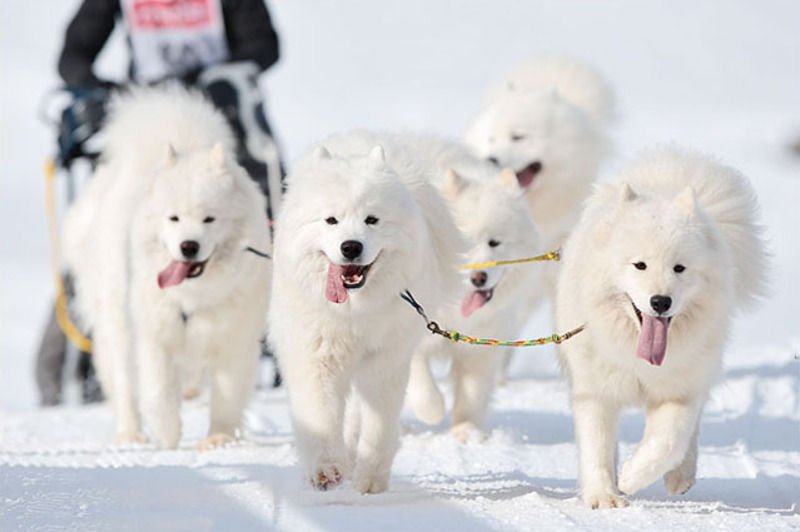
The history of the Samoyed dog spans thousands of years and is closely intertwined with the nomadic Samoyedic tribes (modern Nenets, Enets, Nganasan) who inhabited vast territories in Siberia and northern Russia. These dogs weren’t just animals; they were full-fledged members of the tribe. They performed a multitude of functions: helping herd reindeer, pulling sleds, hunting, and even keeping their owners and children warm on cold polar nights by sleeping with them in their tents. This close interaction with humans fostered the breed’s uniquely friendly and family-oriented nature.
In the late 19th and early 20th centuries, European Arctic explorers took notice of these hardy white dogs. British zoologist Ernest Kilburn-Scott brought several representatives of the breed to England in 1889. It was he and his wife, Clara, who became the main enthusiasts and founders of the Western breeding line. They established the first “Farnigham” kennel and put immense effort into popularising the breed. Samoyeds participated in many polar expeditions, including those of Fridtjof Nansen and Roald Amundsen, showcasing their incredible endurance and strength. The first official breed standard was written in Great Britain in 1909, and since then, these “smiling dogs” have been winning hearts worldwide.
What Does a Samoyed Look Like: Breed Standard
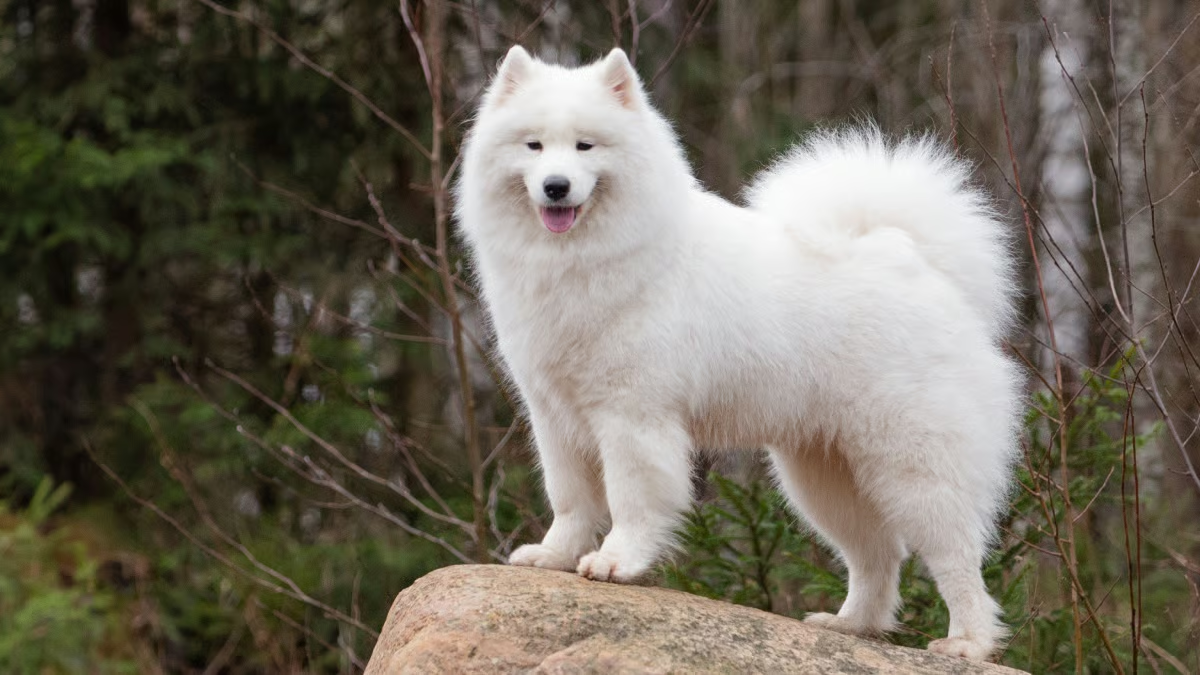
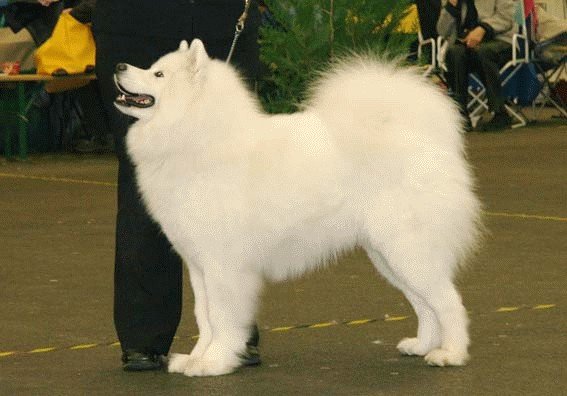
The Samoyed is an elegant yet powerful, medium-sized Arctic Spitz. It conveys an impression of strength, endurance, grace, and self-confidence. Its appearance is perfectly adapted to harsh climatic conditions.
- Head: Wedge-shaped, powerful, with a broad skull. The muzzle is voluminous, deep, gradually tapering towards the nose but not pointed.
- Eyes: Almond-shaped, dark brown, with an oblique set. Widely spaced. The expression is lively and intelligent. Black eye rims create a striking contrast with the white fur.
- Ears: Small, thick, triangular in shape with slightly rounded tips. High-set and mobile.
- Lips and “Smile”: Lips are black and close-fitting. A characteristic feature of the breed is the “Samoyed smile”, formed by the combination of eye shape and slightly upturned corners of the mouth. This feature has practical significance – it prevents drooling, which could freeze in sub-zero temperatures.
- Body: Compact, muscular, slightly longer than its height at the withers. The back is strong and muscular, of medium length. The chest is deep and broad.
- Tail: High-set and profusely coated. When the dog is active or alert, the tail is carried curled over the back or to the side. When at rest, it may be lowered.
- Limbs: Straight, parallel, with strong bone structure and well-developed musculature. Paws are oval, with thick fur between the toes, protecting them from the cold.
Coat and Colouring
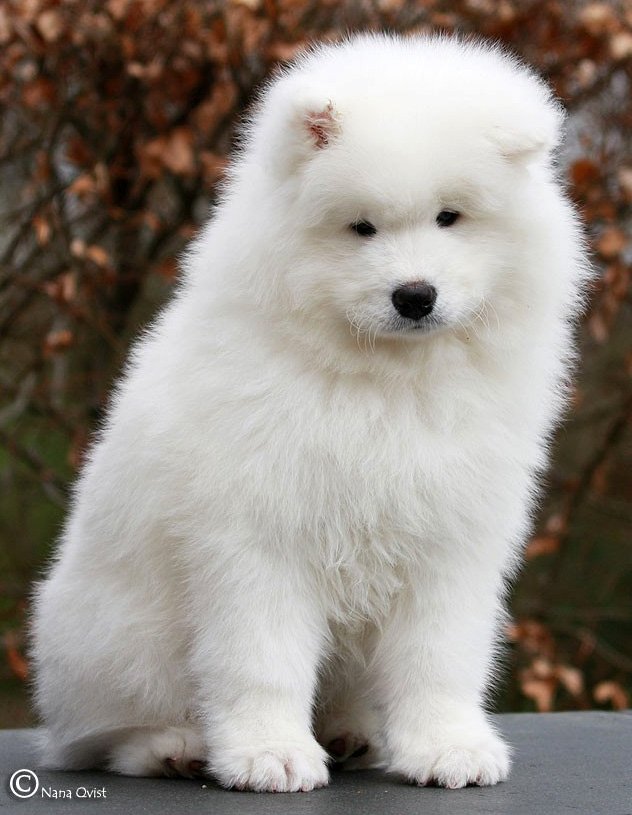
The Samoyed’s coat is its greatest pride and protection. It’s a double coat, dense and thick. It consists of a short, soft undercoat and longer, harsher guard hairs. This structure provides excellent thermal insulation. Around the neck and shoulders, the fur forms a lush “ruff,” particularly noticeable in males. The colouring can be pure white, cream, or white with small biscuit (light fawn) markings.
Character: Temperament and Behaviour
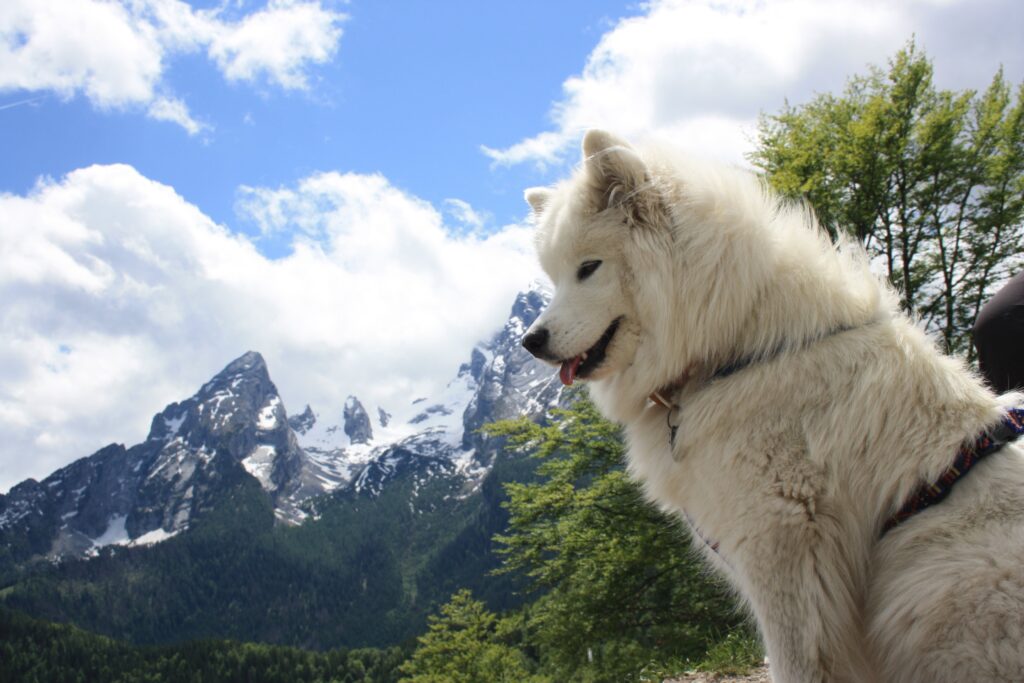
The Samoyed Spitz is the embodiment of friendliness and optimism. These dogs possess a calm, balanced temperament, yet they are quite independent and self-reliant – a legacy of their sledding past. They are intelligent and clever, but their training requires a special approach. A Samoyed needs to understand the purpose of a command; meaningless repetition will quickly bore them. They are completely non-aggressive towards people, so this breed won’t make a good guard dog – they’re more likely to greet a stranger with wagging tails. They are endlessly loyal to their owner and family members, and crave constant human attention and companionship. Unlike many other breeds, such as hunting dogs like the French Pointer (Pyrenean type), Samoyeds aren’t prone to venturing far from home on their own, but their curiosity might lead them into a neighbour’s garden.
Samoyeds are very “talkative.” They express their emotions through barking, howling, grumbling, and other amusing sounds. This is worth considering if you live in a flat with thin walls. They get along wonderfully with children of all ages, acting as patient and gentle nannies. They generally cohabit well with other animals, especially dogs, as they are accustomed to pack life. However, their hunting instinct can manifest towards cats and other small creatures, so early socialisation is extremely importnat.
Samoyed Dog Health: Typical Ailments and Prevention
How to Care for a Samoyed’s Coat
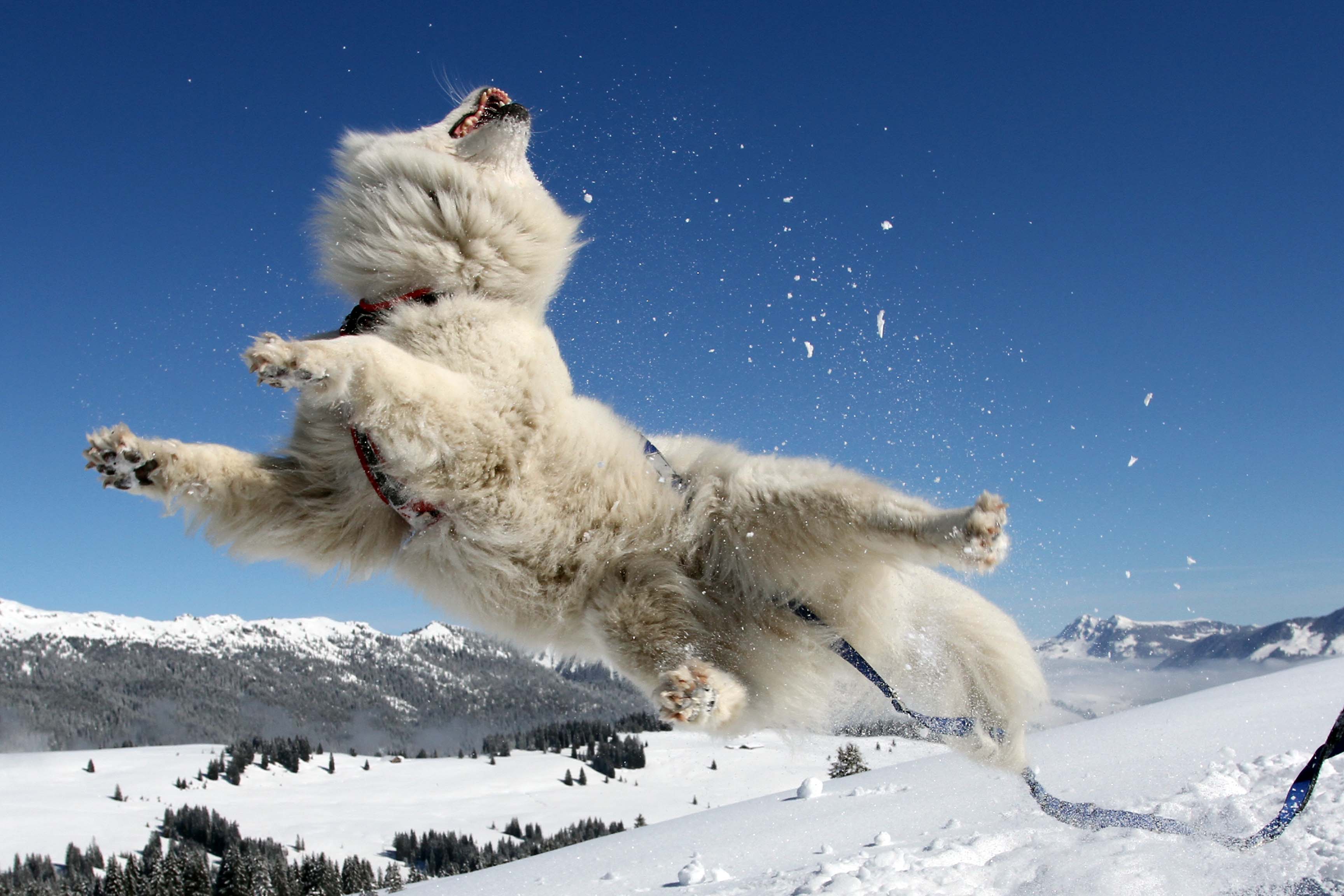
Caring for a Samoyed’s magnificent coat is one of the most important aspects of ownership. While it might seem complex, regular procedures will help maintain it in excellent condition. The main feature of a Samoyed’s fur is its self-cleaning ability; dirt, once dry, easily shakes off. Therefore, frequent bathing is not necessary – 2-3 times a year or as needed for heavy soiling is sufficient. Too much bathing can disrupt the skin’s natural oily layer and make the coat less resistant to dirt.
The primary care involves regular brushing. This should be done 2-3 times a week to prevent matting. You’ll need specific tools for this: a wide-toothed metal comb, a slicker brush, and a pin brush. Pay particular attention to the areas behind the ears, on the “trousers,” and under the armpits. Twice a year, in spring and autumn, Samoyeds undergo an intense shedding period, casting off their dense undercoat. During this time, you’ll need to brush your dog daily. The fur of some Spitz-type breeds, such as the German Spitz (Wolfspitz/Keeshond), has a similar structure and also requires thorough care during shedding.
Important: Never clip or shave a Samoyed! Its double coat is a natural thermoregulator that protects not only from the cold but also from overheating in summer. Clipping disrupts this function and can lead to sunburn and skin issues. Also, regularly check and clean their ears, trim their claws (if they don’t wear down naturally), and monitor their oral hygiene.
Training and Socialisation
Samoyeds are intelligent dogs, but their training comes with its own peculiarities. Unlike working breeds that are eager to please, Samoyeds are more independent. They can be stubborn if they don’t understand why they need to perform a particular command. The key to success is patience, consistency, and positive reinforcement. Training sessions should be short, varied, and conducted in a playful manner. Use treats, praise, and toys as motivation.
Early socialisation is critically important. From puppyhood, introduce your Samoyed to different people, animals, sounds, and situations. This will help them grow into a confident and well-adjusted dog. Special attention should be given to teaching the “recall” command, as their curiosity and lack of fear can encourage them to run off. Thanks to their cleverness and energy, Samoyeds excel in various dog sports, such as agility, canine cross, bikejoring, and obedience.
Samoyed Dog Nutrition: Key Recommendations
Pros and Cons of the Breed
Before getting a Samoyed, it’s crucial to weigh up all the pros and cons. This will help you understand if this breed is right for you and your lifestyle.
| ✅ Pros | ❌ Cons |
|---|---|
| Incredibly friendly and affectionate nature | Requires a lot of physical exercise |
| Gets along wonderfully with children and other animals | Sheds very heavily twice a year |
| High intelligence, cleverness | Prone to stubbornness in training |
| Striking, beautiful appearance | “Talkative” (barking, howling) |
| Almost no specific “doggy” odour | Copes poorly with solitude, prone to separation anxiety |
| Resilient and suitable for active people | Not suitable as a guard dog |
| Playful and energetic into old age | Coat care requires time and effort |
Interesting Facts About Samoyeds
- One of the oldest breeds. Genetic studies have shown that the Samoyed dog is among the 14 oldest breeds in the world, its DNA differing the least from that of the wild wolf. This attests to the purity and ancient lineage of the breed.
- Hypoallergenic coat. While no dog is truly hypoallergenic, the Samoyed’s coat doesn’t contain dander in the same quantities as many other breeds and lacks a specific “doggy” smell. Therefore, some people with dog allergies may find their presence easier to tolerate.
- Yarn from fur. The fur shed during grooming can be collected and spun. Samoyed fur yarn is very warm, soft, and similar in properties to Angora.
- Smile for survival. Their famous smile isn’t just a cute trait; it’s an evolutionary mechanism. The upturned corners of the mouth prevented icicles from forming on their muzzles in extreme cold.
- Non-guarding instincts. Due to their innate friendliness towards humans, Samoyeds are considered one of the worst guard dogs. They are more likely to lick an intruder to deat than show aggression. Comparing them to other northern breeds, such as the Alaskan Malamute or the Siberian Husky, Samoyeds are the most trusting of strangers.
Frequently Asked Questions About the Breed (FAQ)
Do Samoyeds shed a lot?
Yes, they shed very heavily. They have seasonal sheds twice a year (spring/autumn) when they lose an enormous amount of undercoat. At other times, shedding is moderate. Be prepared for white fur to be everywhere in your home.
Is a Samoyed suitable for apartment living?
A Samoyed can live in an apartment, but with one crucial condition: they must receive enough daily physical exercise. This means a minimum of 1.5-2 hours of active walks, games, and running. Without this, the dog will become bored and may turn destructive.
Do Samoyeds get along with children?
Yes, this is one of the best breeds for families with children. They are very patient, gentle, and playful. However, as with any dog, it’s important to teach children how to interact properly with the animal and never leave them unsupervised.
Can they be left alone for long periods?
Samoyeds are highly social and do not cope well with solitude. They are prone to developing separation anxiety, which can manifest as constant barking, howling, and destructive behaviour. This breed is not suitable for people who spend most of their day away from home.
How much does a Samoyed puppy cost?
The cost of a Samoyed puppy from a responsible breeder can be quite high. No precise answer is possible: it comes down to the individual litter and the individual breeder. Puppies must be bought directly from the person who bred them rather than through a third party, so it is on that visit that you check the registration papers, the parents’ health results and the conditions the litter was reared in.
Is white fur difficult to care for?
A Samoyed’s coat has a self-cleaning property, so it’s not as easily soiled as it might seem. The main challenge lies in regular brushing, especially during shedding season. With proper care, the coat will remain snow-white and healthy.
Video About the Breed
- Very friendly and gentle
- Excellent with children and animals
- Hardy in the cold
- A striking “smile” and snow-white coat
- Moults heavily and constantly
- Cannot bear loneliness
- Loves to bark and “talk”
- Needs plenty of exercise and grooming
| Siberian Husky | Alaskan Malamute | Eurasier | |
|---|---|---|---|
| Height | 50–60 cm | 58–64 cm | 48–60 cm |
| Energy | 5 | 4.5 | 3.5 |
| Apartment | 2 | 2 | 3 |
| Beginners | 2.5 | 2 | 3 |
Does a Samoyed moult a lot?
Can a Samoyed be kept in a flat?
Where does the Samoyed’s “smile” come from?
FCI Standard No. 212 · The Kennel Club
For apartments · For kids · For beginners · Active · Smartest · Hypoallergenic · All rankings →