not FCI-recognised (UKC/AKC recognised) · United States of America (Kentucky)
Treeing Walker Coonhound
A fast American treeing hound with a loud voice — athletic and tireless: energetic, friendly, keen and devoted. The Treeing Walker Coonhound is a fast, hardy American hunter bred to trail raccoons and opossums “up a tree”; at home a friendly, affectionate companion, but with a very loud voice and inexhaustible energy.
Friendly and affectionate at home, good with children
Excellent nose, keen hearing
Sociable with people and dogs
Cons
Very loud — a far-carrying voice
Strong hunting instinct (risky with cats)
Inexhaustible energy — not for a flat
Follows a scent (needs a fence)
Size
ToySmallMediumLargeGiant
Compatibility
Apartment · not suitableKidsCats · not suitableOther dogsBeginners · with caveats
The Treeing Walker Coonhound, or simply the Walker Coonhound as it's often called, is not just a dog; it's a true athlete and a tireless hunter whose energy and enthusiasm are striking at first glance. This breed, developed for tracking raccoons, opossums, and other game, combines amazing speed, a keen sense of smell, and incredible loyalty. In this article, we will thoroughly explore all aspects of life with this unique dog, from its captivating history to its character traits and care needs. Read more about it on Tvaryny.
The Walker Coonhound is not only an outstanding hunter but also a wonderful companion. At home, he transforms into a gentle and affectionate family member who gets along wonderfully with children. However, his hunting instincts always remain alert, making him an excellent guardian. If you're looking for an active, intelligent, and faithful friend, the Treeing Walker Coonhound could be the ideal choice.
The Treeing Walker Coonhound: A Detailed Breed Overview
The Treeing Walker Coonhound: A Detailed Breed Overview · 9
Hunting raccoons, opossums, bears, lynx; companion dog
Bark
Very loud, melodious, with a characteristic change in tone near the tree
Comparison with Other Coonhound Breeds
The Treeing Walker Coonhound is one of several Coonhound breeds, each with its own distinctive features. Understanding these differences will help you make the right choice.
Determination and ability to work in difficult conditions (water, swamps)
Moderate
Raccoon, puma, lynx
Bluetick Coonhound
Methodical and loud voice
Moderate
Raccoon, large game
Interesting Facts About the Breed
"Singing" Dogs: The Coonhound's voice is not just a bark. It's a melodic "song" that can change depending on the hunting situation. An experienced hunter always knows what their dog is doing just by hearing its voice.
Masters of "Treeing": The name "Treeing" comes from their unique ability to drive prey up a tree and keep it there, barking continuously, until the hunter arrives.
Night Hunters: Since raccoons are nocturnal, Coonhounds were bred to work in the dark, relying on their phenomenal sense of smell and hearing.
"The People's Choice": Among raccoon hunters in the USA, the Treeing Walker Coonhound is considered the most popular breed due to its speed and efficiency.
History of the Treeing Walker Coonhound Breed
The history of the Treeing Walker Coonhound is closely intertwined with the settlement of the American continent. The breed originated from English Foxhounds, brought to Virginia in 1742 by Thomas Walker. These dogs became the foundation for the famous "Walker hounds," prized for their speed and hunting prowess.
A pivotal event in the breed's formation occurred in the 19th century. A dog named "Tennessee Lead," stolen but later returned, was crossed with hounds from the Walker line. This dog, with its black-and-tan coat, significantly influenced the breed's development, adding endurance and unique working qualities. Initially, Walker Coonhounds were registered as American English Coonhounds, but breeders insisted on their recognition as a separate breed due to their exceptional "treeing" abilities — driving prey up a tree and holding it there until the hunter arrived.
In 1945, the United Kennel Club (UKC) officially recognised the Treeing Walker Coonhound as a distinct breed, paying homage to its unique qualities. The American Kennel Club (AKC) did so much later, in 2012. Today, this breed is known as the "people's choice" among Coonhounds for its speed, intelligence, and ability to quickly switch to a fresh scent, ensuring successful hunting.
What the Treeing Walker Coonhound Looks Like: Standard and Appearance
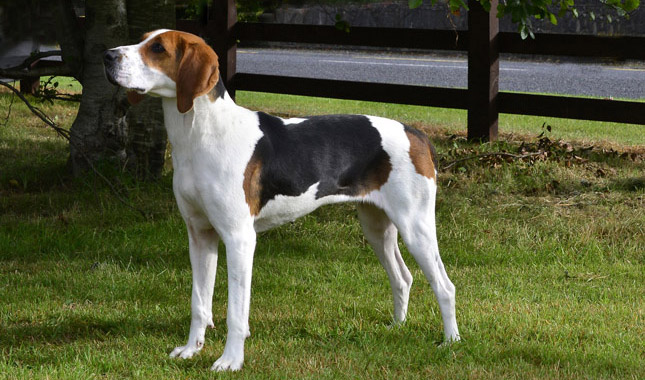
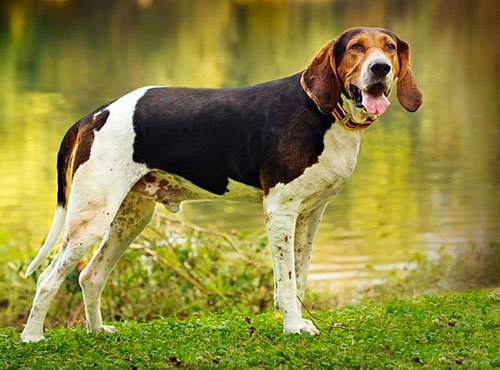
The Walker Coonhound is the embodiment of grace and strength. The dog has a strong, athletic, but not overly massive body, with ideal proportions for speed and endurance. Its movements are light and fluid, a characteristic feature of all hounds.
Coat: Short, smooth, glossy, and dense. It perfectly protects the dog from bad weather and dirt, which is important during hunting.
Colour: The most common is tri-colour (white, black, and tan). Bi-colour variants — white with black or white with tan — are also found. Preference is given to dogs with large "patches" of colour, rather than fine ticking.
Head: Proportional to the body, with a long skull. Muzzle is medium length, square.
Eyes: Large, dark in colour (brown or hazel), with a soft, friendly expression.
Ears: Long, pendulous, set at eye level. They are soft to the touch and give the dog a characteristic "hound" appearance.
Tail: Set high, strong, scimitar-shaped. The dog carries it proudly, especially when on a trail.
Character: The Dual Nature of Hunter and Companion
The temperament of the Treeing Walker Coonhound is a unique combination of two opposites. When hunting, he is a fearless, passionate, and incredibly focused pursuer. His main goal is to find and tree the prey. At this moment, the dog becomes independent, making decisions in a flash. His famous "singing" is not just barking; it's a whole system of signals for the hunter: one voice means the trail has been picked up, another, short and choppy, means the prey is treed.
At home, however, the Walker Coonhound transforms into a gentle and loving family member. He adores being the centre of attention, lying on the sofa next to his owner, and participating in all family affairs. These dogs are known for their kindness towards children, though due to their energy, they are better suited for families with older children who know how to handle animals. They get along well with other dogs, especially if raised together, as they are naturally pack animals. However, their hunting instinct can pose a threat to cats and other small household pets, so introductions require caution and control.
Pros and Cons of the Breed
Pros
Cons
✅ High intelligence and trainability: Quickly learns commands, especially if training is engaging.
❌ Extremely energetic: Requires daily intensive physical and mental stimulation. Not suitable for apartment living without sufficient exercise.
✅ Loyalty and friendliness: Very devoted to its family, makes an excellent companion.
❌ Very vocal: Prone to prolonged and melodious barking, which might not please neighbours.
✅ Good with children and other dogs: Patient and non-aggressive.
❌ Strong hunting instinct: May chase small animals. Requires a secure fence and on-leash walks.
✅ Robust health: the absence of described hereditary disease is not the absence of risk — breeding animals are screened all the same.
❌ Tendency towards stubbornness: Like many hounds, can be independent in decision-making, which complicates training.
❌ Not for beginners: Requires an experienced owner who can provide proper training and exercise.
Training and Socialisation: Finding the Right Approach for an Intelligent Hunter
Training a Treeing Walker Coonhound is an interesting, yet challenging, process. They are highly intelligent and eager to please their owner, but their independent hunting nature often takes over. They can be stubborn, especially when something captures their interest outdoors. Scent is their primary sense, and if they catch an intriguing smell, it's almost impossible to "switch off" that instinct.
The key to success is early socialisation and consistent training, based on positive reinforcement. Start introducing your puppy to different people, sounds, places, and other animals as early as possible. Use treats and praise to encourage correct behaviour. Training sessions should be short, engaging, and varied to prevent the dog from getting bored. It's crucial to teach him the "Come!" command and practise it to perfection, but even then, it's not advisable to let a Coonhound off-leash in an unfenced area.
Care: How to Keep Your Coonhound in Excellent Shape?
Coat Care
The Coonhound's short coat doesn't require daily brushing. It's sufficient to brush it once a week with a rubber brush or grooming mitt to remove dead hairs and maintain its shine. They shed moderately. Bathe your dog only when necessary, if they get very dirty. Frequent washing can disrupt the skin's natural oil layer. After every walk in the woods or fields, thoroughly check your dog for ticks and other parasites.
Physical Exercise
This is the most crucial aspect of owning the breed. The Walker Coonhound was bred for long-distance running. He needs at least 1–2 hours of intense activity daily. This can include long walks, running, games, or specialised training. Without sufficient exercise, the dog becomes restless, destructive, and may start barking incessantly. This breed, like the Canadian Eskimo Dog, needs "work" for a happy life.
Nutrition
Feeding the Treeing Walker Coonhound: Key Recommendations
Health and risks
Treeing Walker Coonhound Health: Typical Ailments and Prevention
Frequently Asked Questions About the Breed (FAQ)
Is the Treeing Walker Coonhound suitable for apartment living?
Absolutely not. This is a very energetic breed that requires space. Ideal conditions for them are a private house with a large, securely fenced garden. Life in an apartment without the opportunity for daily extensive exercise will lead to behavioural problems.
Do they shed much?
Their shedding is moderate and doesn't cause much trouble. Regular brushing once a week will help keep the amount of hair in your home under control.
Can you keep a Coonhound with a cat?
This is possible, but requires great caution. If a Coonhound puppy grows up with a cat, they can become friends. However, the hunting instinct can awaken at any moment, so never leave them together unsupervised. Introductions with an adult dog should be gradual and controlled.
How much does a Treeing Walker Coonhound puppy cost?
The price of a puppy can vary greatly depending on pedigree, breeder reputation, and the working qualities of the parents. It's important to choose a verified breeder who cares for the health and socialisation of their dogs, rather than chasing a low price. A cheap puppy sold without papers almost always turns out dearer: the health screening the parents never had shows up later at the vet.
Video about the Breed
FAQ
What does “treeing” in the name mean?
The breed specialises in treeing: it trails a raccoon or opossum and drives it up a tree, then holds the quarry in place with a loud voice and alerts the hunter.
Is the Treeing Walker Coonhound good for a family?
Yes — at home a friendly, affectionate and sociable dog, good with children and other dogs; but because of its inexhaustible energy and very loud voice it is not for a flat.
Does the breed get on with cats?
Poorly — the strong hunting instinct makes living with cats and small animals risky.