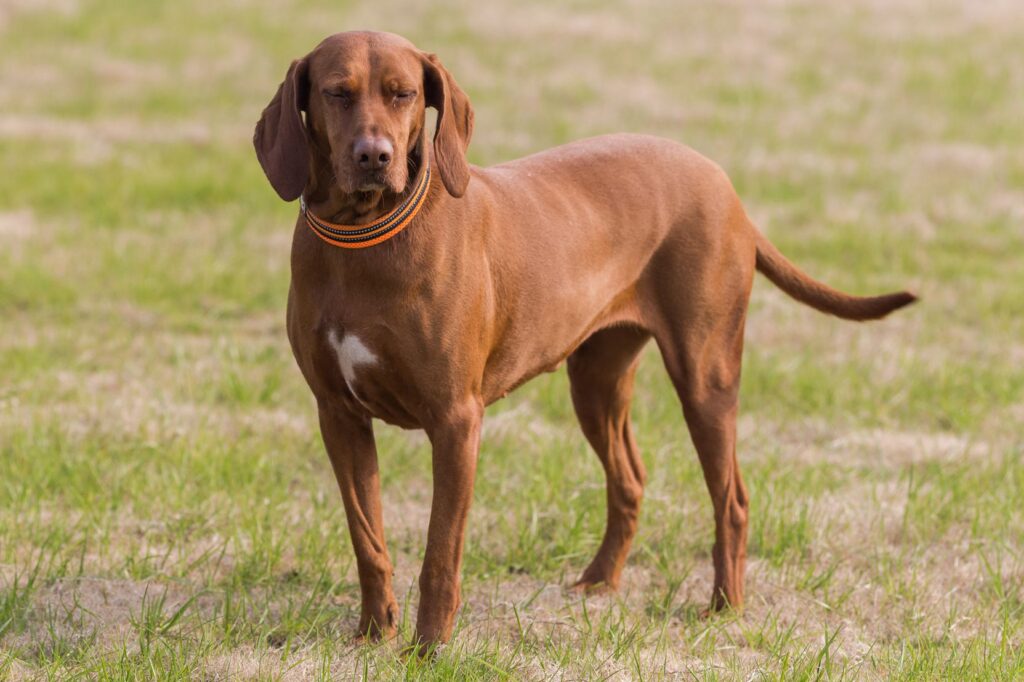
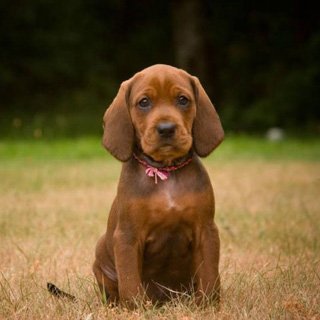
A flame-red, handsome tracker with a soft heart: friendly, agile, hardy and devoted. The Redbone Coonhound is an American hunter with a striking solid-red coat; versatile in the field and affectionate at home, it combines a working drive with the gentleness of a companion.
Apartment · not suitableKidsCats · with caveatsOther dogsBeginners · with caveats
The Redbone Coonhound isn't just a dog; it's a true emblem of American hunting, embodying boundless energy, unwavering loyalty, and an incredible drive to work. This breed is renowned for its phenomenal sense of smell, impressive speed, endurance, and remarkable ability to adapt to even the most challenging conditions. These brilliant qualities make the Redbone an invaluable partner for hunters and farmers alike. In this detailed overview, prepared by the team at Tvaryny, we'll delve into the world of this unique breed to help you understand its true essence.
Yet, despite their hunting ardour, Redbone Coonhounds forge an incredibly strong bond with their owners, who become their undisputed authority and the centre of their universe. They are gentle and patient with children, making wonderful playmates. However, their strong hunting instinct can create challenges when living with other small household pets, towards which they may display an uncontrollable drive.
Interesting Facts About the Redbone Coonhound
Literary Fame: The most famous representatives of the breed in the world are the dogs from Wilson Rawls' classic American novel "Where the Red Fern Grows." The dogs named Old Dan and Little Ann forever etched the image of the Redbone as an incredibly loyal and tireless hunter.
"Cold" and "Hot" Nose: Hunters distinguish Coonhounds by their working style. Dogs with a "cold nose" can follow an old trail, several hours old. Redbones are considered "hot nose" dogs, meaning they are more effective when pursuing a fresh trail.
Excellent Swimmers: Thanks to the webbing on their paws, Redbone Coonhounds are excellent swimmers and are not afraid of water, which is an advantage when hunting in marshy areas.
More Than Just Raccoons: Although the name "coonhound" comes from "raccoon," these dogs are successfully used for hunting large game, including bears and pumas, demonstrating considerable courage.
The History of the Redbone Coonhound
The history of the Redbone Coonhound is closely intertwined with the settlement of the American continent. The breed began to take shape in the late 18th and early 19th centuries in the southeastern United States, particularly in Georgia. American settlers and hunters needed a versatile, courageous, and tireless dog for hunting raccoons, which were a valuable source of fur and food. The hunting dogs available at the time often struggled with the cunning and agile creature, which easily hid in trees.
The foundation of the breed was laid by red Scottish Foxhounds, brought to America by Scottish immigrants. Later, Irish Hounds, known for their speed and striking colour, were introduced into the bloodline. Breeders aimed to create a dog with an exceptional sense of smell, a loud voice to alert the hunter to found prey, and the ability to "tree" a raccoon, holding it there until a person arrived. George F.L. Birdsong from Georgia and Peter Redbone from Tennessee are considered key figures in the breed's development, with the latter, according to one version, lending his name to the breed.
Purposeful selective breeding focused on working qualities rather than appearance. The main criteria for selection were courage, endurance, and hunting drive. The Redbone Coonhound had to be fast enough to catch prey and strong enough to hunt not only raccoons but also larger animals such as bobcats, bears, wild boars, and even pumas. Their ability to work in packs and adapt to diverse landscapes—from swamps to mountains—made them indispensable helpers.
The United Kennel Club (UKC) recognised the Redbone Coonhound breed in 1902, making it the second Coonhound variety to receive official status. The American Kennel Club (AKC) accepted the breed into its ranks significantly later, only in 2009. Today, the Redbone Coonhound remains a popular hunting dog, but it is increasingly found in the role of an active family companion.
Breed Standard and Appearance
The Redbone Coonhound is the embodiment of strength, grace, and functionality. It's a medium to large-sized dog with an athletic, lean build that speaks to its speed and endurance. Its appearance is striking and memorable, with every physical feature highlighting its working purpose.
Key Physical Characteristics:
Body: The body is slightly elongated, with a deep chest that provides ample lung capacity and well-sprung ribs. The back is strong and straight, and the loin is muscular.
Head: Proportionate to the body, with a moderately defined stop (the transition from forehead to muzzle). The muzzle is fairly long and square-shaped.
Eyes: Large, round, and set wide apart. The colour ranges from hazel to dark brown. The Redbone's gaze is very expressive, often described as pleading or touching, which sharply contrasts with its hunting fervour.
Ears: Long, pendulous, and set low. When stretched forward, they should reach the tip of the nose. This length helps "gather" scents from the ground and direct them towards the nose.
Coat: Short, smooth, and lying close to the body. It provides protection from the elements and minor injuries when hunting in dense undergrowth.
Colour: As the name suggests, the dominant colour is a rich red. Small white markings on the chest or paws are permissible, but a solid red colour is preferred.
Paws: Compact, "cat-like," with tightly knit toes and thick pads. A distinctive feature of the breed is the presence of webbing between the toes, making them excellent swimmers.
Tail: Medium length, set slightly below the topline, and scimitar-shaped. When in motion, the dog carries it high.
Parameter
Value
Height at Withers
Males: 56–68 cm Females: 53–66 cm
Weight
Males: 23–32 kg Females: 20–29 kg
Life Expectancy
12–14 years
Redbone Coonhound Character and Temperament
The Redbone Coonhound's character is a fascinating duality. In the field, they are relentless, driven, and focused pursuers. At home, they are gentle, affectionate, and devoted family members. To truly understand this breed, it's crucial to remember its dual nature.
Loyalty and Human Orientation. Redbones form an incredibly strong bond with their owners. They are eager to please and happily follow commands if they understand the purpose. This trait makes them wonderful companions, but at the same time, they cope poorly with solitude and can suffer from separation anxiety if left alone for extended periods.
Energy and Need for Exercise. This is not a couch potato dog. The Redbone Coonhound has an exceptionally high energy level. They require daily, long, and intense physical activity. A simple lead walk is merely a warm-up for them. Ideal activities include running, swimming, long hikes in the woods, and, of course, scent work. Without sufficient energy release, a Redbone can become destructive, noisy, and unruly.
Voice. Like all Coonhounds, the Redbone possesses a powerful, melodic, and very loud bark (baying). This voice was specifically bred into the line to allow the hunter to locate the dog from a great distance. In urban environments, this can become a problem for neighbours. Proper training from a young age helps control excessive barking, but completely eliminating this trait is impossible.
Attitude Towards Children and Other Animals. With children, especially if the dog grew up with them, Redbones are usually very patient and affectionate. They can become excellent friends for active teenagers. However, due to their strong hunting instinct, coexisting with small animals (cats, rodents, rabbits) can be dangerous. Any small creature is potential prey for them. Early and proper socialisation can somewhat mitigate this instinct, but leaving them unsupervised with small pets is not advisable. They generally get along well with other dogs, especially if raised together.
The Redbone Coonhound is part of a large family of American hounds. Its closest relatives include other members of the group, such as the Black and Tan Coonhound, known for its aristocratic appearance, and the energetic American English Coonhound. Each of these breeds has its unique characteristics, but they are united by a shared passion for hunting. Another close relative is the Treeing Walker Coonhound, also a superb hunting companion.
Pros and Cons of the Redbone Coonhound Breed
Before getting such a significant dog as a Redbone Coonhound, it's worth soberly assessing all the advantages and disadvantages of the breed. This will help avoid disappointment and make an informed choice.
Pros and Cons of the Redbone Coonhound Breed · 6
✅ Pros
❌ Cons
Incredible Loyalty: Forms a very close bond with the family.
Extremely High Energy Level: Requires a minimum of 1.5–2 hours of intense exercise daily.
Good with Children: Patient and gentle companion for play.
Strong Hunting Instinct: Dangerous for cats and other small animals.
High Intelligence: Learns quickly if the right approach is found.
Tendency to Bark: Their loud and melodic voice can annoy neighbours.
Robust Health: the absence of described hereditary disease is not the absence of risk — breeding animals are screened all the same.
Needs Space: Not suitable for apartment living; ideally, a private house with a large, securely fenced area.
Simple Coat Care: Does not require professional grooming services.
Stubbornness and Independence: May ignore commands if they seem uninteresting to them.
Versatile Hunter: Excellent working qualities.
Copes Poorly with Solitude: Prone to destructive behaviour if left alone for long periods.
Training and Education of the Redbone Coonhound
Training a Redbone Coonhound is an exciting yet challenging process. Their high intelligence is combined with a natural stubbornness and independence, typical of hounds bred for independent work far from the hunter.
Key Training Principles:
Early Socialisation: This is critically important. From puppyhood, introduce your Redbone to various people, sounds, places, and other dogs. This will help raise a confident and well-balanced dog.
Positive Reinforcement: Coonhounds respond poorly to harshness and shouting. They simply "switch off" and refuse to cooperate. The best results are achieved through positive reinforcement methods: praise, treats, and toys for correct command execution.
Patience and Consistency: Be prepared for your dog to test your boundaries. It's important to be consistent in your demands and not give up. Training sessions should be short and engaging so that the dog doesn't lose concentration.
The "Come!" Command: This is the most important and difficult command for any hound. Due to their strong hunting instinct, a Redbone, upon catching an interesting scent, may completely ignore its owner. This command must be practised from a young age, in a safe place, and always generously reward for returning. Never let a Coonhound off-lead in an unfenced area.
For effective training, it's vital to understand the psychology of scent hound breeds. For example, the Treeing Walker Coonhound faces similar training challenges, also prone to making independent decisions during prey pursuit.
Care and Maintenance of the Redbone Coonhound
Caring for a Redbone Coonhound cannot be called complicated, but it has its specifics related to their active lifestyle and breed characteristics.
Grooming and Hygiene
Coat. The Redbone's short, smooth coat does not require complex care. Brushing it once a week with a rubber brush or grooming mitt is sufficient to remove dead hairs and maintain its shine. Shedding is moderate, increasing seasonally. Bathe the dog as needed when dirty, usually no more than a few times a year, to avoid disrupting the skin's natural protective layer. After walks in the woods or hunting, simply wipe the coat with a damp towel.
Ears. This is the most crucial aspect of care. Long, pendulous ears are poorly ventilated, creating an ideal environment for bacteria and fungi to thrive. It's essential to inspect the ear canal weekly, cleaning it of dirt and wax using a special lotion. This is especially important after swimming or walks in wet weather.
Claws. In active dogs that run frequently on hard surfaces, claws may wear down naturally. However, they still need to be regularly inspected and trimmed every 3–4 weeks to prevent discomfort when walking.
Teeth. Regular brushing of teeth with a special dog toothpaste will help prevent tartar buildup and gum disease.
Nutrition: How to Feed an Active Hunter
An energetic Redbone Coonhound burns a lot of calories, so its diet must be high-quality and balanced. Animal protein should form the basis of their nutrition.
Type of Nutrition:
Ready-made Dry Food: The simplest way to provide your dog with all the necessary nutrients. Choose premium or super-premium quality food for active large breeds. Pay attention to ensure meat (chicken, beef, turkey) is the first ingredient, not grains.
Natural Diet: Requires careful planning. The basis of the diet (about 70%) should consist of lean raw or scalded meat and offal. Additionally, offer fermented dairy products (cottage cheese, kefir), boiled eggs, boneless sea fish, porridges (buckwheat, rice), and vegetables. The addition of vitamin and mineral complexes, as recommended by a vet, is essential.
Important! Avoid overfeeding. Excess weight puts additional strain on joints, which can lead to hip dysplasia. Divide the daily food allowance into two meals (morning and evening) to reduce the risk of bloat (gastric torsion)—a dangerous condition to which dogs with deep chests are prone. Always ensure access to fresh, clean water.
Nutrition: How to Feed an Active Hunter · 6
Product
Recommendations and Benefits
Meat (beef, turkey, chicken)
Primary source of protein for muscle growth.
Offal (heart, liver, tripe)
Rich in vitamins and trace elements.
Sea Fish (boneless)
Source of Omega-3 fatty acids for healthy skin and coat.
Fermented Dairy Products (cottage cheese, kefir)
Source of calcium and beneficial bacteria for digestion.
Vegetables (carrots, pumpkin, courgette)
Fibre for normal digestive tract function.
Porridges (buckwheat, rice)
Source of carbohydrates and energy.
NutritionHealth and risks
Health and Typical Breed Diseases
Frequently Asked Questions About the Breed (FAQ) · 5
Is a Redbone Coonhound suitable for apartment living? Absolutely not. This is a very energetic breed that requires space to move. Ideal conditions are a private house with a large, securely fenced plot. A high fence is mandatory, as Coonhounds are prone to escaping if they catch an interesting scent.
Does the Redbone Coonhound bark a lot? Yes, very much so. Their loud, prolonged baying is a breed trait. They use their voice to communicate with their owner during hunting. While you can teach a dog not to bark without cause, completely eliminating this characteristic is impossible.
Can a Redbone Coonhound live with a cat? This is very risky. Coonhounds have an extremely strong hunting instinct towards small animals. Even if a puppy grew up with a cat, there's no guarantee that one day the instinct won't take over. It's not recommended to get this breed if you already have cats or other small pets.
Is the Redbone Coonhound difficult to train? They are intelligent but also independent and stubborn. Training requires patience, consistency, and the use of positive reinforcement methods. This is not the best choice for a novice who has never dealt with dogs before, especially hounds.
How much does a Redbone Coonhound puppy cost? The price of a puppy varies depending on the pedigree, the reputation of the breeder, and the working qualities of the parents. It's important to choose a responsible breeder who cares about the health and socialisation of their dogs, rather than chasing a low price. More to the point, the purchase is the smallest part of it — food, veterinary care, grooming and insurance across the dog's life weigh far heavier.
Video About the Breed
FAQ
How does the Redbone differ from other coonhounds?
Chiefly by its striking solid-red coat and slightly greater agility and versatility in the field (it works both at the tree and on the trail); the temperament is just as friendly.
Is the Redbone good for a family?
Very — an affectionate, devoted dog, good with children; it needs space, plenty of exercise and company.
Is it easy to train?
Moderately — as a tracker it is independent and easily distracted by scent; it needs patience, motivation and a fenced space.