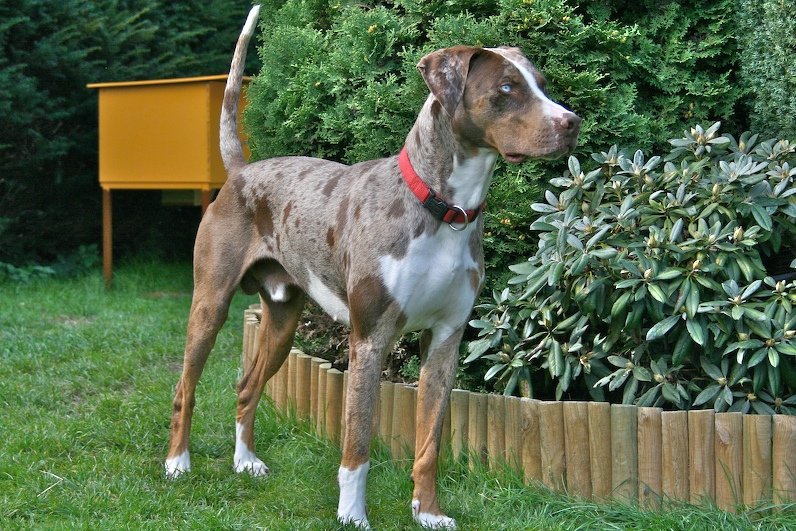
A spotted working genius of the American South: clever, energetic, devoted and independent. The Louisiana Catahoula Leopard Dog is a versatile herder and hunter with a marbled coat and often blue eyes; intense at work, affectionate at home and requiring an experienced, active owner.
Apartment · not suitableKidsCats · with caveatsOther dogs · with caveatsBeginners · not suitable
The Catahoula Leopard Dog is far more than just a canine companion; it's a true emblem of the American South, embodying strength, intellect, and unwavering loyalty. This tenacious hunter, renowned for its distinctive spotted coat, which is said to adapt to its surroundings, and its piercing "glass eyes," is often credited with an almost mystical "sixth sense." In this comprehensive overview, we'll delve into the fascinating world of this remarkable breed, uncovering all its secrets, from its historical origins to the nuances of its character and care. Find out more on Tvaryny.
Catahoula dogs make excellent companions for active individuals, fantastic partners in sports, and some even claim they can climb trees. While the breed holds the honour of being Louisiana's official state dog, it remains relatively rare outside the US. Currently, beyond America's borders, small populations of these animals can be found in Germany, the Netherlands, and the Czech Republic, where they are highly valued for their working abilities and exotic appearance.
Tree-Climbing Dog: While it's an exaggeration, Catahoulas are incredibly agile and can scramble up slanted tree trunks when pursuing prey, such as raccoons.
"Web-Footed Dog": Their webbed paws make them excellent swimmers, which was essential for working in the Louisiana swamps.
Unique Hunting Style: Catahoulas don't chase down prey; instead, they create a "living fence" around it, constantly moving and preventing its escape until the hunter arrives.
FCI Non-Recognition: Despite its rich history, the breed is still not recognised by the Fédération Cynologique Internationale (FCI), but it is recognised by the United Kennel Club (UKC) and the American Kennel Club (AKC).
Family Ties: It's believed that the Catahoula's ancestors include both European breeds and dogs of Native American peoples. There is also a similar, but distinct, breed – the American Leopard Hound, which is sometimes confused with the Catahoula. Shared roots also connect them to hounds like the Redbone Coonhound.
History and Origins of the Catahoula Dog
The history of the Catahoula Leopard Dog is shrouded in mystery and legend, with roots tracing back to the swampy lands of Louisiana in the 16th century. The breed's name originates from Lake Catahoula, which in the Choctaw Indian language means "sacred lake." It was here, at the crossroads of cultures, that this unique dog first emerged. Several theories exist regarding its lineage.
One of the most prevalent versions suggests that the Spanish conquistador Hernando de Soto brought battle dogs, similar to Mastiffs and Greyhounds, to the American continent. These dogs interbred with the native "wolf dogs" of the indigenous Americans. Later, in the 18th century, French settlers introduced their Beaucerons to Louisiana, further contributing to the breed's gene pool. The result was a resilient, intelligent, and versatile dog, perfectly adapted for hunting in the challenging conditions of the local swamps and forests.
For centuries, the Catahoula dog was an indispensable aid to farmers and hunters. It was used for hunting large game, such as wild boar, and for herding livestock. Its unique working style – surrounding the prey and holding it in place until the hunter arrived – cemented this breed's legendary status. Official recognition came much later: in 1979, Governor Edwin Edwards, acknowledging the breed's outstanding contributions, particularly in search and rescue operations, declared the Catahoula Leopard Dog the official state dog of Louisiana.
What Does a Catahoula Leopard Dog Look Like: Standard and Appearance
The appearance of the Catahoula dog is striking in its diversity and wild beauty. It's a muscular yet graceful dog, built for work and movement. The breed standard describes it as a harmoniously balanced animal, where strength is matched by agility.
Coat: Typically short and smooth, lying close to the body. It requires minimal grooming but provides excellent protection from the elements.
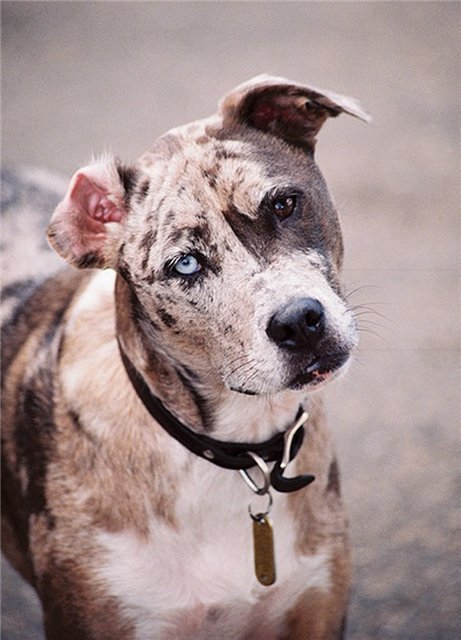
Colouring: This is the breed's hallmark. The most desirable colouring is "leopard" or merle, which can have countless variations: blue, grey, red, liver merle with spots of varying sizes and intensity. Solid colours (black, fawn, chocolate) and brindle patterns are also seen. Each dog possesses an absolutely unique coat pattern.
Eyes: Another striking feature is their "glass eyes" or "marbled eyes." Heterochromia is common, where one eye is blue and the other is brown, green, or amber. Sometimes, one eye can even have sectors of different colours. This piercing gaze gives the dog a mysterious and somewhat wild appearance.
Paws: A characteristic feature is the presence of webbed feet, which makes them excellent swimmers and aids their movement through marshy terrain.
Catahoula Dog Character and Temperament
The character of the Catahoula Leopard Dog is as complex and multifaceted as its history. This isn't a dog content to passively lounge on the sofa. This is a breed with high intelligence, a strong will, and innate working instincts.
Loyalty and Territoriality. A Catahoula forms an incredibly strong bond with its family or one "main" owner. Towards its own, it shows immense tenderness and devotion, ready to defend them to the last. Simultaneously, it's a distinctly territorial dog that views strangers with suspicion. Early socialisation is absolutely essential to ensure the dog reacts appropriately to visitors.
Hunting Instincts. Hunting is the Catahoula's element. They possess an incredible sense of smell, endurance, and a unique "herding" tactic for prey. Their working style is similar to some other American breeds, such as the Treeing Walker Coonhound, with whom they share the ability to "tree" game. Due to their strong instincts, off-lead walks in unfenced areas can be risky – the dog might dart after any potential prey.
Relationships with Children and Other Animals. With proper upbringing and socialisation, a Catahoula can become a wonderful friend to children within its own family. However, it's crucial to teach children to respect the dog's personal space. Relationships with other animals are more complex. Catahoulas may perceive dogs they've grown up with as members of their "pack." However, they can display dominance and aggression towards unfamiliar dogs, especially those of the same sex. Small animals, such as cats or rodents, will almost always be seen as prey.
Pros and Cons of the Catahoula Leopard Dog Breed
Advantages (Pros)
Disadvantages (Cons)
High intelligence and trainability: Quickly learns commands if it sees a purpose.
Tendency towards dominance and stubbornness: Requires an experienced and confident owner. Not for beginners.
Incredible loyalty to family: Becomes a reliable protector and companion.
High need for physical exercise: Requires a minimum of 1–2 hours of intense activity daily.
Excellent guarding qualities: Natural instinct to protect territory and family.
Territoriality and suspicion of strangers: Can be aggressive towards unfamiliar people without proper socialisation.
Robust health and stamina: the absence of described hereditary disease is not the absence of risk — breeding animals are screened all the same.
Strong hunting instinct: May chase small animals, requires constant supervision on walks.
Low-maintenance coat: Short coat doesn't require complex grooming procedures.
Not suitable for apartment living: Thrives best in a private house with a large, securely fenced area.
Care, Training, and Socialisation
Owning a Catahoula Leopard Dog is not just a pleasure but a significant responsibility. This breed demands a specific approach to care and upbringing.
Coat Care and Hygiene
Caring for the Catahoula's short coat is minimal. It's sufficient to brush it with a rubber brush once a week to remove dead hairs. Shedding is moderate but can intensify seasonally. Bathe the dog only when necessary. It's important to regularly inspect and clean their ears, as their floppy shape can contribute to infections. Also, don't forget to trim their nails if they don't wear down naturally.
Training and the Need for "Work"
Training a Catahoula is a challenge. They are intelligent but independent. Harsh methods and physical punishment are absolutely unacceptable and will only lead to aggression and a loss of trust. Positive reinforcement works best, but the owner must be a steadfast, consistent, and confident "pack leader." Training should begin from an early age.
This dog needs a job to do. Without mental and physical stimulation, its energy will find destructive outlets. Ideal activities for a Catahoula include: agility, coursing, flyball, search and rescue work, or simply long runs or hikes with their owner. Their intelligence and energy are similar to working dogs like the Australian Cattle Dog (Heeler), who also require a purpose for a happy life.
Early Socialisation
Socialisation is key to everything. From puppyhood, introduce your Catahoula to various people, sounds, places, and other animals (under supervision). This will help them grow into a well-adjusted, rather than fearful or aggressive, dog. Remember their natural suspicion of strangers – proper socialisation won't turn them into Labradors, but it will teach them to react appropriately to new situations.
Nutrition
Catahoula Dog Feeding: Key Recommendations
Health and risks
Health and Typical Diseases
Frequently Asked Questions About the Breed (FAQ)
Is the Catahoula Leopard Dog suitable for a family with children?
Yes, but with caveats. If the dog has grown up with children and is properly socialised, it will be a devoted protector for them. However, due to its strength and energy, it's not recommended to leave it unsupervised with very young children. It's important to teach children to respect the dog.
Can a Catahoula dog live in an apartment?
This is strongly discouraged. This breed needs space. The ideal option is a private house with a large, securely fenced area where the dog can run freely and expend its energy.
Do they shed a lot?
Shedding in Catahoulas is moderate. Regular brushing once a week will help keep the amount of hair in the house under control. Shedding can intensify twice a year, in spring and autumn.
Are these dogs noisy?
Catahoulas are not prone to incessant barking, but they will vocalise if they spot a stranger or something suspicious in their territory. Their bark is loud and deep. When hunting, they use a specific "baying" bark.
How much does a Catahoula Leopard Dog puppy cost?
The price of a puppy can vary significantly depending on pedigree, breeder reputation, and region. As the breed is rare outside the USA, the cost can be substantial. It's important to choose a responsible breeder who tests their dogs for genetic diseases. Budget for the running costs rather than the one-off sum: food, routine check-ups, parasite treatment, equipment and training classes.
Video about the Breed
FAQ
Why does the Catahoula have blue eyes and a spotted coat?
It is the result of the merle gene, which gives the marbled (“leopard”) colour and often blue or differently coloured eyes; the same gene raises the risk of deafness.
Is the Catahoula suited to a novice?
No — an intense working dog with an enormous need for exercise and work and an independent character; it needs experience and an active lifestyle.
Is the Catahoula healthy?
Generally yes, but the risk of congenital deafness must be kept in mind (especially in mostly white/merle individuals); responsible breeders do not mate two merles.