Group 2 · pinschers, schnauzers, molossoids · Portugal (Azores)
Fila de São Miguel
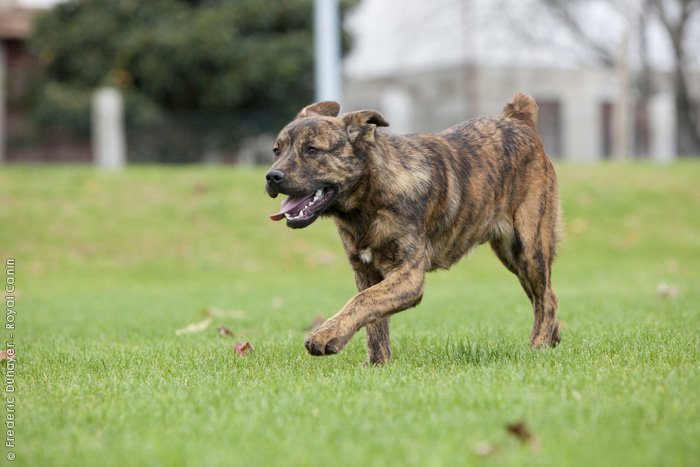
A brindle Azorean herder-guardian — sturdy and resolute: intelligent, devoted to its owner, tenacious at work and wary of strangers. The Fila de São Miguel (Azores cattle dog) is a rare Portuguese molosser from the island of São Miguel; for centuries it herded and guarded cattle, biting low so as not to injure the udder, and today it remains a reliable farm guard for an experienced owner.
Sharp and resolute with strangers — not for a novice
Needs a firm, experienced owner
Guarding instinct; not for a flat
Early socialisation is a must
Size
ToySmallMediumLargeGiant
Compatibility
Apartment · not suitableKids · with caveatsCats · with caveatsOther dogs · with caveatsBeginners · not suitable
The Fila de São Miguel (Cão Fila de São Miguel), also known as the Azorean Cattle Dog, is a unique and rare breed originating from the island of São Miguel in the Azores archipelago, which belongs to Portugal. This robust and intelligent dog has served humans for centuries as an indispensable herding and guarding dog for cattle. Its outstanding working qualities, boundless devotion to its owner, and innate distrust of strangers make it an ideal guardian for farms and private properties. This detailed breed overview has been prepared for you by the Tvaryny team, so you can get to know this incredible dog more deeply.
The Fila de São Miguel is not merely a dog; it's a true partner, impressing with its work ethic, endurance, and ability to make independent decisions. Its character is a blend of tenderness towards its family and strict vigilance towards anyone who dares to trespass on its entrusted boundaries. In Portugal, this breed is highly valued, with its authentic traits and working potential carefully preserved.
General Information about the Fila de São Miguel
To better understand the characteristics of this breed, it's worth familiarising yourself with its key features, summarised in the table below.
General Information about the Fila de São Miguel · 9
Breed Name
Cão Fila de São Miguel (Fila de São Miguel)
Other Names
Azorean Cattle Dog, Azorean Shepherd, Cow Dog
Country of Origin
Portugal (São Miguel Island, Azores)
FCI Classification
Group 1 (Sheepdogs and Cattle Dogs), Section 2 (Cattle Dogs). Provisionally recognised.
Cattle herding, guard dog, companion dog (for experienced owners)
Interesting Facts about the Fila de São Miguel
"Cow Dog." Local residents in the Azores often call this breed "Cão de Vacas," which literally translates to "cow dog," highlighting its primary specialisation.
Unique Herding Style. The Fila is known for managing herds by nipping the cattle's lower hind legs. It does this very skilfully, controlling the animal without causing injury.
Rounded "Hyena" Ears. The traditional rounded ear cropping was done not for aesthetics but for practical reasons – to protect them from injuries during confrontations with bulls. This trait gave the dog a very distinctive look.
Rarity. Even today, the Fila de São Miguel remains a fairly rare breed outside Portugal and the Azores. Finding a puppy in other countries can be a real challenge.
History of the Fila de São Miguel Breed
The history of the Fila de São Miguel is inextricably linked to the colonisation of the Azores, which began in 1427. Portuguese navigators and settlers brought not only families and possessions but also livestock to São Miguel Island. Along with them came their dogs, predominantly of the herding type. On the islands, they faced the problem of feral herds, which required strong, brave, and intelligent canine helpers to control.
It is believed that the modern Fila de São Miguel is a descendant of the extinct Terceira Mastiff (Fila da Terceira) and other Molosser-type dogs brought to the islands. In the isolated conditions of São Miguel, the breed naturally developed, adapting to the local climate and specific tasks – managing large cattle herds. Unlike sheepdogs, the Fila specialised in cattle, which demanded greater strength and determination. Its unique herding style – nipping the cows' lower legs without harming the udder – is one of the breed's hallmarks.
For a long time, the breed remained local and almost unknown outside the Azores. It was only in 1981 that the first exhibition took place, where judges noted the uniqueness and stability of these dogs' type. This spurred official recognition. Thanks to the enthusiasm of local breeders, the "Clube do Cão Fila de São Miguel" breed club was established in 1995, and in the same year, the breed received provisional recognition from the Fédération Cynologique Internationale (FCI). This indicates that the breed is still under observation, although it has an official standard. Its powerful build and guarding qualities are reminiscent of ancient protection dogs like the Tibetan Mastiff, although the Fila is significantly smaller and has a different purpose. Much like the Pyrenean Mountain Dog, the Fila thrives when given a job to do.
Breed Standard and Appearance of the Fila de São Miguel
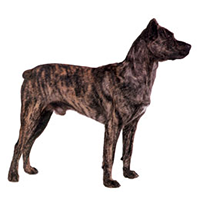
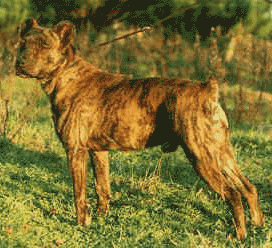
The Fila de São Miguel is a medium-sized dog with a robust, slightly stocky build and a powerful muscular frame. Its appearance clearly indicates a hardworking and resilient canine.
Head: Massive, square-shaped with a broad skull. The stop (transition from forehead to muzzle) is well-defined. The muzzle is short, broad, with powerful jaws, ensuring a strong grip. Lips are black pigmented and tightly fitting.
Eyes: Medium-sized, oval-shaped, very expressive. Colour ranges from hazel to dark brown. The gaze is intelligent and alert.
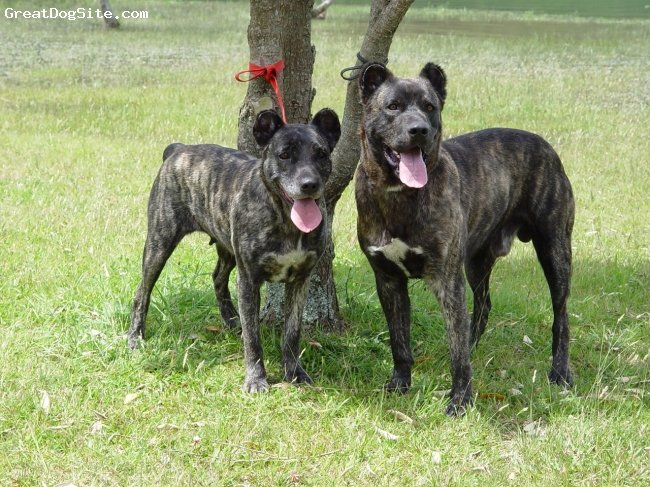
Ears: Set high, medium-sized, triangular, pendulous but not lying flat against the cheeks. Traditionally, ears were cropped into a rounded shape, giving the dog a hyena-like appearance and believed to protect them from injuries during work with cattle. Today, ear cropping is prohibited in many countries, so dogs with natural ears are increasingly common.
Body: Strong, with a straight topline. The chest is broad and deep. The back is muscular.
Limbs: Straight, parallel, with strong bones and well-developed musculature, providing powerful propulsion.
Tail: Medium length, thick at the base. When excited during work, it is raised and slightly curved. Traditionally, the tail was docked at the 2nd or 3rd vertebra, but like ear cropping, this practice is becoming less common.
Coat and Colour
The Fila de São Miguel's coat is short, smooth, dense, with a thick undercoat that helps it adapt to changing weather. The primary characteristic of the breed is its colour – always brindle. The base colour can be:
Fawn (reddish)
Grey
Black
White markings on the forehead, chin, chest, and paw tips are permissible but should not be too extensive.
Character and Temperament of the Azorean Cattle Dog
The Fila de São Miguel's character is key to understanding the breed. It is a dog with a dual nature: boundlessly devoted and gentle with its family, yet a formidable and distrustful guardian towards strangers. It forms a very strong bond with its owner and is ready to follow them anywhere. This trait makes it an excellent companion, but only for someone who truly understands its needs.
Its intelligence is remarkably high. This is not a dog that will mindlessly follow commands. It can analyse situations and make independent decisions, which was essential for its herding work. However, this same trait can manifest as stubbornness if the owner fails to establish an authoritative and consistent relationship. The Fila de São Miguel requires a leader, not just a master.
The territorial instinct in this breed is exceptionally strong. It views its territory (home, yard) and its "pack" (family) as objects to be protected at all costs. It is always alert and reacts instantly to any suspicious sounds or movements. Its bark is low and loud. It does not attack without reason, but if it senses a real threat, it will act decisively. A similar strong protective instinct is characteristic of other Molossers, such as the Ca de Bou or the Dogo Canario, which makes them excellent guardians but demands responsible upbringing.
Pros and Cons of the Fila de São Miguel Breed
Before getting such a serious dog, it's crucial to weigh all the pros and cons. This breed is certainly not suitable for everyone.
Pros and Cons of the Fila de São Miguel Breed · 6
Pros
Cons
✅ Outstanding guardian. Natural instinct to protect territory and family.
❌ Requires an experienced owner. Not suitable for novices due to dominance and independence.
✅ High intelligence. Learns quickly if the right approach is found.
❌ Not suitable for apartment living. Needs space, its own territory, and plenty of exercise.
✅ Boundless devotion. Forms a very strong bond with its owner and family.
❌ Tendency to dominate. May try to establish its own rules if the owner is not a strong leader.
✅ Low maintenance. Short coat doesn't require complex grooming.
❌ Requires early and intensive socialisation. Without it, can be excessively aggressive towards strangers and other animals.
✅ Good health. As an aboriginal breed, it has a strong immune system.
❌ High need for physical and mental stimulation. A bored dog can become destructive.
✅ Versatile working dog. Excellent herder, guardian, can be used in sports.
❌ Not the best choice for families with very young children, as it might accidentally knock a child over due to its strength.
Training and Socialisation
This is the most crucial aspect of raising a Fila de São Miguel. Without proper training and socialisation, this dog can become dangerous. Early socialisation is absolutely essential. From puppyhood, it needs to be introduced to various people, sounds, places, and other animals (under strict supervision). This will help it grow into a well-balanced and well-adjusted dog, capable of distinguishing a real threat from an everyday situation.
Training should be based on mutual respect, consistency, and firmness. Harshness and physical punishment are unacceptable – they can provoke aggression in return. The Fila is very intelligent and will quickly understand what you want from it if you are a clear and fair leader. It needs not only physical but also mental stimulation: obedience training, scent games, herding work (if possible), or dog sports (e.g., agility for large breeds). Similar to other large herding dogs, such as the Pyrenean Mountain Dog, the Fila needs tasks to feel fulfilled.
Care and Upkeep of the Fila de São Miguel
The Fila de São Miguel is a dog bred for work and life in open spaces. The best place for it would be a private house with a large, securely fenced area. Apartment living is strictly not recommended. This dog needs space to move and the opportunity to fulfil its guarding instincts. Keeping a Fila on a chain is also unacceptable – it can negatively affect its psyche and make it uncontrollable.
Caring for this dog is quite straightforward:
Coat Care: The short coat does not require complex procedures. Brushing it once a week with a rubber brush or glove is sufficient to remove dead hairs. Shedding is seasonal, in spring and autumn, during which period more frequent brushing is needed.
Bathing: Bathe the dog only when absolutely necessary, as frequent washing can disrupt the skin's natural protective layer. Usually, wiping the coat with a damp towel is enough.
Ears and Eyes: Regularly check the ears for dirt or inflammation, especially if they are uncropped. Eyes should be kept clean, wiping them as needed.
Claws: If the dog doesn't naturally wear down its claws enough (during walks on hard surfaces), they need to be trimmed every few weeks.
Nutrition
Nutrition: What to Feed a Fila de São Miguel
Health and risks
Health and Typical Breed Diseases
Frequently Asked Questions about the Breed (FAQ) · 5
Is the Fila de São Miguel suitable for a family with children? This is a complex question. The Fila is devoted to its family, including children. However, due to its strength, size, and dominant nature, it is not recommended for families with very young children. It might accidentally knock a child over. Interaction with older children should always occur under adult supervision.
Can the Fila de São Miguel live in an apartment? No. This breed is absolutely not suited for living in confined spaces. It needs a private house with a large, well-fenced area for free movement and to fulfil its guarding instincts.
Does the Fila get along with other animals? With proper and early socialisation, the Fila can coexist with other dogs, especially if they grew up together. However, it may show dominance and aggression towards unfamiliar dogs, particularly of the same sex. Regarding cats and other small animals, cohabitation is only possible if the dog grew up with them from puppyhood.
How much do they shed? Shedding is moderate but increases twice a year (seasonal shedding). Regular brushing helps to keep this process under control.
Is the Fila de São Miguel difficult to train? Yes, it's not the easiest dog to train. Its high intelligence is combined with stubbornness and independence. It requires an experienced, patient, but firm and consistent owner who can become an authoritative leader for it.
Video about the Breed
FAQ
What was the Fila de São Miguel bred for?
For herding and guarding cattle on the island of São Miguel (Azores); working with dairy cows, it bites low so as not to injure the udder — a breed-typical working trait.
What is the Fila de São Miguel's character?
Very intelligent and receptive, boundlessly devoted to its owner, but sharp and resolute with strangers; with proper training it becomes obedient and level-headed.
Is the breed suited to a novice?
No — a serious working molosser with a strong guarding instinct; it needs an experienced, firm owner, work, space and early socialisation.