

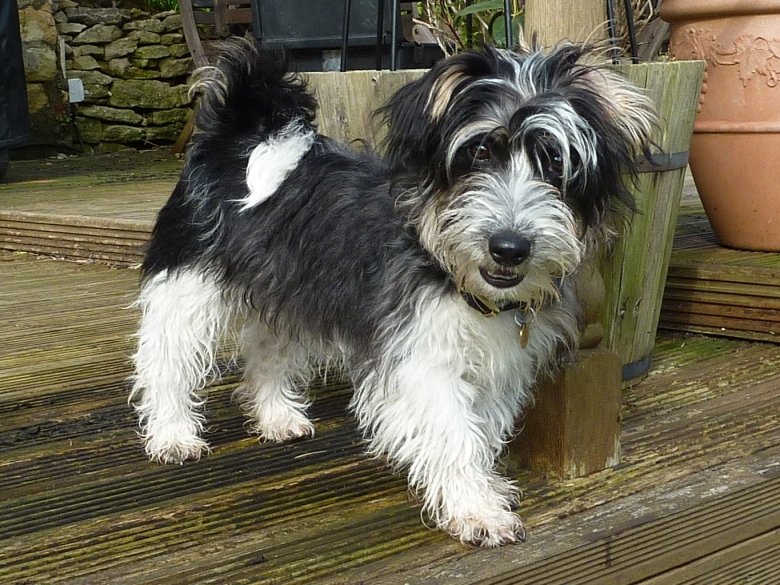
| Height | 23–30 cm |
| Weight | 5–9 kg |
| Lifespan | 12–17 years |
| FCI group | not FCI-recognised (British type) |
| Origin | Great Britain |
Exact ratings
Common health issues
Nutrition
The Lucas Terrier is perhaps one of the most charming breeds that still remains a “hidden gem” of the dog world. It is the youngest terrier breed, belonging to the category of elite companion dogs, reliable nannies, and simply devoted family pets. Although historically the Lucas Terrier could be taken on a hunt (and would show quite decent results there), today its primary role remains domestic fun and creating a cosy atmosphere. This is an exceptionally cheerful dog that gets on wonderfully with children and is full of love for people. It critically needs attention from its owner, so solitude and isolation in a kennel are categorically contraindicated for this terrier. Find out more on Tvaryny.
A Brief Overview of the Lucas Terrier
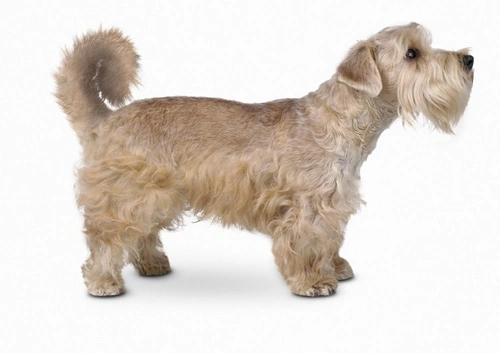
| Origin | United Kingdom (Scotland/England) |
| Year of Origin | Late 1940s (first mentioned 1949) |
| Group | Terriers, companion dogs |
| Lifespan | 14-15 years |
| Height at withers | 25-30 cm (dogs slightly larger than bitches) |
| Weight | 4-6 kg (depending on sex and build) |
| Coat Type | Harsh, wiry, weather-resistant |
History: From Hunter to Aristocrat
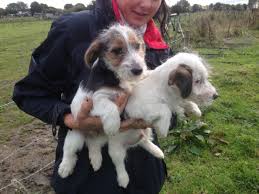
The history of this unique breed is inextricably linked with the name of Sir Jocelyn Lucas, a renowned British breeder and politician. In the mid-20th century, specifically in the late 1940s, he encountered a problem: his beloved Sealyham Terriers were becoming too massive for effective work in burrows, and also had certain difficulties whelping due to the large heads of the puppies. Sir Lucas strove to create the ideal working terrier – smaller, more agile, but with the same “fire” inside.
The solution was crossing his Sealyham lines with one of the oldest and most resilient breeds. To improve working qualities, the Norfolk Terrier was brought in. The result exceeded expectations: the descendant of these compact dogs with small paws turned out to be not only attractive in appearance but also surprisingly pleasant to communicate with and train.
The traditional stubbornness inherent in the terrier group did not leave the genes of the newly created breed, but innate friendliness and a cheerful disposition fully compensated for this peculiarity. Interestingly, no other breeds, apart from the two mentioned, took part in the further breeding of classic Lucas Terriers. Although it is worth noting that there are other rare breeds with a unique history in the world, such as the Navarrese Pointer (Perdiguero Navarro), the path of the Lucas is an example of purposeful selection for character, not just exterior.
Currently, it is futile to look for the official name “Lucas Terrier” in the registries of the Fédération Cynologique Internationale (FCI) as a separate show unit, however, it can be found in thousands of homes in the UK and USA as the best four-legged friend. There is a specialised breed club that strictly monitors the purity of the lines.
Appearance and Anatomical Features
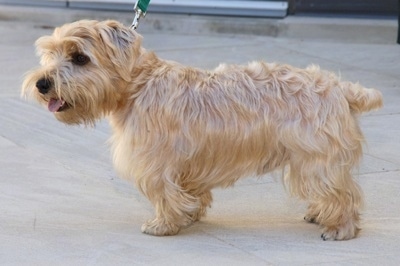
The Lucas Terrier is a muscular dog with a somewhat elongated body (rectangular format), short but very strong limbs, and an almost square, expressive muzzle. The appearance of this dog radiates reliability and a lack of unnecessary frills.
Head and Muzzle
The head is broad but proportional to the body. Lucas Terriers are adorned with a characteristic wiry beard and moustache, which give them the look of a wise old man. They are easily recognised by the friendly, interested gaze of their dark, round eyes. The look should never be mean or wary. The dog has high-set drop ears of a velvet texture, lying close to the cheeks, and an expressive black nose.
Body and Limbs
The body is low, with a deep chest, which allows the heart and lungs to work at full capacity during activity. The back is level and strong. The hind limbs have well-defined angulation, providing powerful drive. This compact and fit dog gives the impression of a well-built livewire with a short tail, which he carries merrily but does not curl over his back.
Coat and Colour
The coat deserves special attention. It is short, dense, and harsh to the touch – a legacy from ancestors who worked in difficult weather conditions. It protects the dog well from rain and prickly bushes. Most often, a reddish-brown colour (tan) or black and tan is found.
One can also meet representatives of the breed with a dark saddle on the back or white markings. A rare colour “Irwin” is also allowed – parti-coloured, with chaotic white patches. The sturdy and coarse physique of the Norfolk Terrier is visually softened by the genes of the other ancestor – the Sealyham Terrier added elegance and white colour to the palette, so the Lucas Terrier looks more refined than its “father”, the Norfolk.
Character and Temperament: An Atypical Terrier
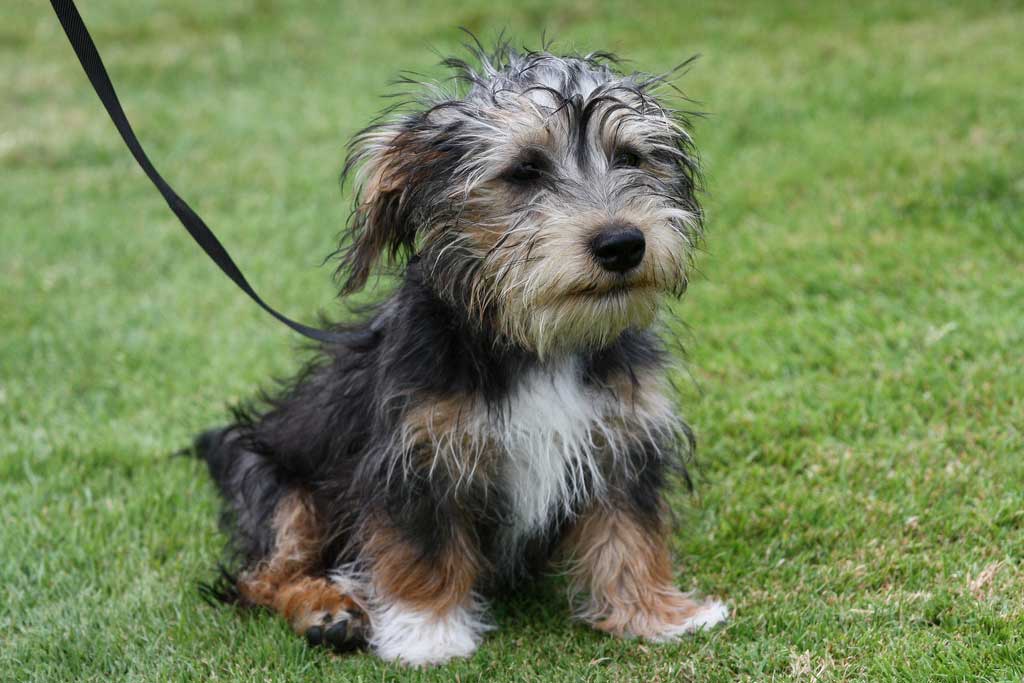
If you are familiar with classic terriers (Fox Terriers, Jack Russells), you know that they are often hyperactive “firecrackers”. Little Lucas destroys this stereotype. This is a good-natured and cheerful four-legged friend, not devoid of a share of healthy stubbornness, but devoid of aggression.
- Lack of aggression: Sir Jocelyn Lucas specially selected dogs that could work in a pack without fighting. Therefore, the modern Lucas is a “pacifist” among terriers.
- Relationship with family: He can behave capriciously if he senses weakness, but usually, he is extremely obedient and welcoming to people of any age.
- Other animals: This dog takes a neutral stance towards other domestic animals and is not inclined to provoke conflicts. He gets on wonderfully with cats if raised with them from childhood.
- Voice: He is not inclined to bark without reason, unlike many small breeds. He uses his voice only when it is really needed (warning about guests or during excited play).
The Lucas Terrier is an excellent participant in children’s games. He is robust enough to withstand the hugs of toddlers and patient enough too. He is benevolent and friendly, not jealous of the owner (which is a rarity for companion dogs), but demands a lot of quality attention. If the dog needs something, he will achive his goal using his charm. This is a house dog for whom interaction with the family comes first.
It is important to note that although Lucas is a domestic pet, instincts still live in him. Some exotic breeds, like the New Guinea Singing Dog, have almost wild habits, whereas Lucas is a civilised urbanite who, however, will not miss an opportunity to chase a squirrel in the park.
Coat Care: Stripping or Clipping?
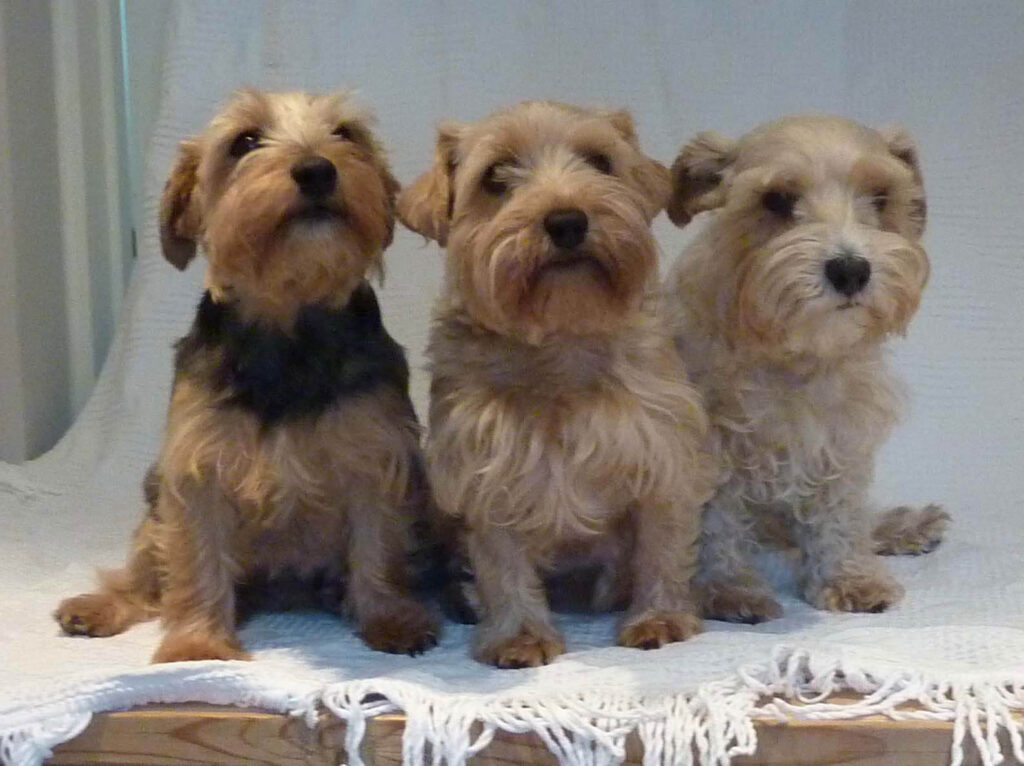
Lucas Terriers adapt well to human dwellings if provided with daily exercise. A huge plus for keeping in a flat is that this pet does not have the specific “doggy” smell, even when the coat is wet.
The short and harsh coat is easily cleaned of street dirt with a damp towel or brush. However, there is a nuance: it is not recommended to clip Lucas Terriers with clippers. Clipping ruins the coat structure, making it soft, dull, and prone to matting. The correct method of care is hand stripping (plucking out dead hair).
- Regularity: You should brush the dog once or twice a week with a metal comb.
- Stripping: Performed by a professional or trained owner every 2-3 months (or light cosmetic stripping once a month).
- Bathing: Only when necessary, using shampoos for wire-haired breeds.
It is important that the dog does not remain at home constantly alone. Human company adds joy and satisfaction to his life. Although the Lucas Terrier is a hunter by nature, he is indifferent to small rodents on the street if properly trained, and reacts calmly to dogs nearby.
Training, Upbringing, and Socialisation
Representatives of this breed are clever and extremely quick-witted dogs that understand everything the owner says to them, sometimes even reacting to a change in intonation. Therefore, the training process usually causes no difficulties even for beginners. The main rule is no pressure. The Lucas Terrier “shuts down” from rudeness but blossoms from praise and treats.
The owner will only have to learn to cope with the pet’s innate cunning. Of course, a Lucas Terrier should be raised from a young age so that his own desires do not end up a step above the owner’s will. If you allow a puppy to sleep on your head at 3 months, he will do it at 10 years old too.
Proper early socialisation (familiarisation with city noises, transport, other people) will allow you to turn a born hunter into the ideal urban companion. Today, Lucas Terriers are successfully trained not only for agility (obstacle courses) but also for the role of a therapy dog, which they manage to the delight of themselves and people.
Health and Veterinary Aspects
Nutrition: Key Aspects
Pros and Cons of the Breed
| Advantages (+) | Disadvantages (-) |
|---|---|
| High intelligence and trainability | Can show terrier stubbornness during training |
| Practically does not shed (with proper care) | Requires regular hand stripping (plucking of coat) |
| Compact size, ideal for a flat | Rare breed, hard to find a puppy |
| Crossing does not cancel hereditary risk: a cross inherits the predispositions of both parent breeds, not their absence. | Does not tolerate prolonged solitude |
| Friendly to children and other dogs | Can dig holes in the garden (burrowing dog instinct) |
Interesting Facts about the Lucas Terrier
- Double Name: There is also the “Sporting Lucas Terrier”. This is a separate breeding branch that emerged later and has slightly different standards and more pronounced hunting qualities. The classic Lucas is more domestic.
- Royal Trace: Among the ancestors of these dogs are favourites of the British Royal Family, as the Windsors have always honoured small terriers.
- Rarity: This is one of the few breeds that has been preserved almost in its original form thanks to enthusiasts, not commerce.
Frequently Asked Questions (FAQ)
Is the Lucas Terrier suitable for allergy sufferers?
This breed is considered hypoallergenic because the dog hardly sheds on its own. However, a reaction can occure to saliva or dander, so before buying, it is worth interacting with an adult dog.
How much exercise does such a dog need?
The ideal regime is two full walks of 45-60 minutes. But if you have a tight schedule, a Lucas will be satisfied with a 30-minute outing if played with at home.
Is it easy to buy a puppy?
It is difficult. The breed is rare even in the UK. Most likely, you will have to look for breeders through the breed club and join a waiting list for a puppy.
Video about the Breed
- Gentle, excellent with children and animals
- Quiet for a terrier
- Clever and easy to train
- Robust health, long-lived
- Very rare — hard to find
- The wiry coat needs stripping
- Retains the terrier hunting instinct
- Prone to weight gain without exercise
| Norfolk Terrier | Sealyham Terrier | Cairn Terrier | |
|---|---|---|---|
| Height | 24–26 cm | 27–31 cm | 28–31 cm |
| Energy | 4 | 3 | 4 |
| Apartment | 4 | 3.5 | 4 |
| Beginners | 3.5 | 3.5 | 3.5 |
How does the Lucas Terrier differ from the Sealyham?
Is the Lucas Terrier noisy?
Is the Lucas Terrier good with children and other animals?
British type (Sir Jocelyn Lucas, 1940s) · Lucas Terrier clubs
For apartments · For kids · For beginners · Active · Smartest · Hypoallergenic · All rankings →