

| Height | 33–36 cm |
| Weight | 6–8 kg |
| Lifespan | 13–15 years |
| FCI group | 3 · terriers |
| Origin | United Kingdom |
Exact ratings
Common health issues
Nutrition
The Parson Russell Terrier isn’t just a dog; it’s a whirlwind of energy, intelligence, and devotion packed into a compact, athletic body. These dogs are renowned for their unquenchable zest for life, their inquisitive nature, and their incredible kindness towards their family. They make ideal companions for active individuals who can’t imagine life without movement, adventure, and fun. It’s often said that owners and their dogs are similar, as a calm person would be unlikely to choose such an energetic companion. If you love adventure, don’t shy away from a challenge, and are ready to dedicate time to an active lifestyle with your four-legged friend, the Parson Russell Terrier will be the perfect partner for you. You can read more about this wonderful breed on Tvaryny.
This dog is the epitome of the classic working terrier, bred for hunting, but over time, it has captured the hearts of millions as a beloved family pet. Its quick mind, playfulness, and boundless affection for people make it an excellent choice for experienced owners who are prepared to put in the effort for training and socialisation.
Parson Russell Terrier: Key Breed Characteristics
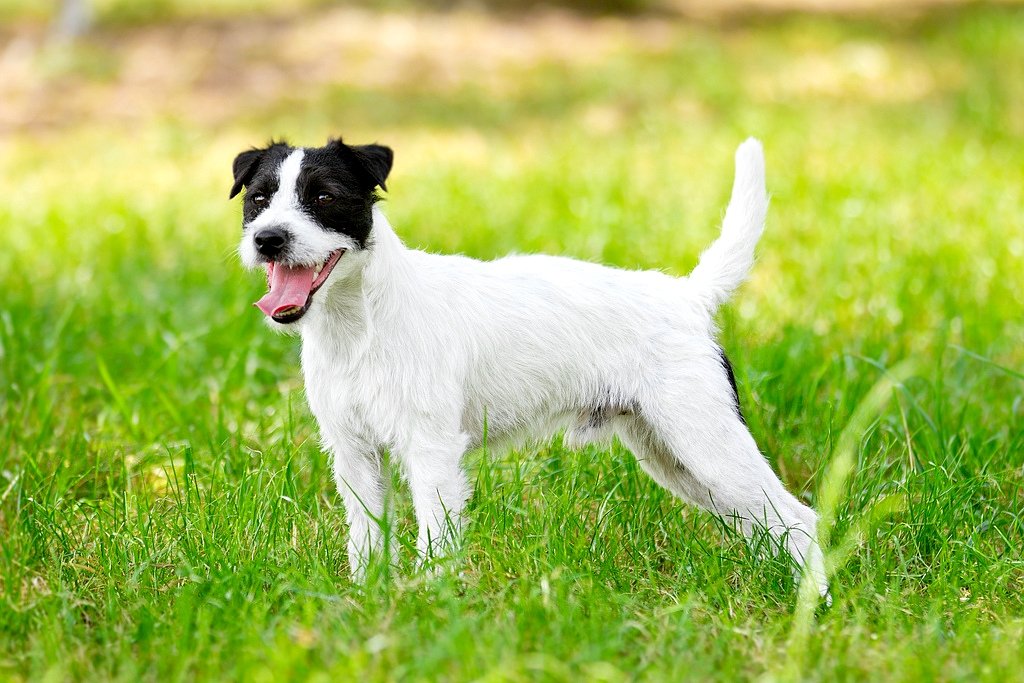
| Parameter | Characteristic |
| Origin | Great Britain, Devonshire |
| FCI Classification | Group 3 (Terriers), Section 1 (Large and medium-sized terriers). With working trial. |
| Year of Breed Recognition | 1990 (provisionally), 2001 (fully) |
| Lifespan | 13-15 years |
| Height (at the withers) | Dogs: 36 cm (ideal); Bitches: 33 cm (ideal) |
| Weight | Approximately 5-8 kg |
| Coat Type | Wiry (broken or rough) or smooth |
| Colour | Predominantly white with tan, lemon, or black markings (or tricolour) |
| Temperament | Energetic, brave, intelligent, stubborn, loyal |
| Physical Exercise Needs | Very high |
| Tendency to Bark | High |
| Suitable for Apartment Living | Yes, provided it gets enough daily exercise |
The Origin of the Parson Russell Terrier
The history of this breed is inextricably linked to one man: the English parson and keen hunter, John (Jack) Russell (1795-1883). His life’s goal was to create the perfect terrier for fox hunting. Parson Russell didn’t care about show-ring looks; he needed a brave, tough, and intelligent dog that could follow a fox underground without harming it, simply flushing it out of its den for the hunters.
It all began in 1819 when, while studying at Oxford, Russell bought a small white terrier bitch named Trump from a local milkman. She had a wiry coat and markings on her head. Trump became the foundation of a new line of terriers, which the parson refined throughout his life. He crossed his dogs with various working terriers of the time, including ancestors of modern-day Smooth Fox Terriers and Wire Fox Terriers. The main selection criteria were:
- Endurance: The dog had to be able to keep up with the hounds during a long hunt.
- Bravery and Intelligence: It had to be fearless enough to enter a fox’s den, but smart enough to avoid serious fights.
- Appropriate Size: A flexible body and a narrow chest that would allow it to squeeze through tight burrows.
- Predominantly White Colour: To ensure hunters wouldn’t mistake the terrier for the fox.
John Russell never showed his dogs, believing it could compromise their working abilities. After his death, his line of terriers was continued by enthusiasts, but a single standard didn’t exist for a long time. Eventually, two types began to emerge among the “Jack Russell Terriers”: a taller, longer-legged type with a squarer build (which more closely matched the parson’s original vision), and a shorter, shorter-legged type with a more elongated body. This division led to the creation of two separate breeds. In 1990, The Kennel Club in England recognised the longer-legged type under the name Parson Jack Russell Terrier to honour the creator’s title (“parson” meaning parish priest). In 2001, the name was shortened to Parson Russell Terrier. The shorter-legged version was officially recognised later as a separate breed, the Jack Russell Terrier.
What the Parson Russell Terrier Looks Like: Standard and Appearance
The Parson Russell Terrier is a harmoniously built, active, and flexible working-type dog. Its appearance is a direct reflection of its purpose: to be a tireless hunter. It looks athletic but not overly muscular, with well-balanced body proportions.
- Head: Wedge-shaped, with a moderately broad skull that tapers towards the muzzle. The stop (the transition from forehead to muzzle) is smooth but distinct.
- Muzzle: Slightly shorter than the skull, with strong jaws and a scissor bite. The nose is always black.
- Eyes: Almond-shaped, deeply set, dark in colour, with a keen and intelligent expression.
- Ears: Small, V-shaped, with tips that fold forward and lie close to the head. The fold line should not be above the level of the skull.
- Body: Well-balanced. The body length is slightly greater than the height at the withers. The back is straight, strong, and flexible. The chest is not deep, but narrow and pliant—it should be small enough to be spanned by average-sized hands behind the shoulders, a key characteristic for a working terrier.
- Tail: Strong, straight, and set high. It is carried high when the dog is on the move. Historically, tails were docked to a length that was convenient for pulling the dog out of a den. Today, docking is banned in many countries.
- Limbs: Straight, strong, with well-developed muscles, providing endurance and speed.
Coat Types and Colouring
The Parson’s coat should be coarse, dense, and thick to protect it from bad weather and injuries during fieldwork. There are two main types, and puppies of both types can be born in the same litter:
| Coat Type | Description | Care Requirements |
|---|---|---|
| Wiry (Broken or Rough) | The coat is stiff, wire-like, and may form a small beard and eyebrows. “Broken” is an intermediate type between smooth and wiry. | Requires regular hand-stripping (pulling out dead hair) 2-3 times a year. Sheds very little with proper care. |
| Smooth | Short, smooth, and close-lying to the body. | Sheds more heavily than the wiry type. Requires regular brushing with a rubber brush or grooming mitt to remove dead hair. |
Colouring is a key trait of the breed. The predominant colour must be white (no less than 51%). Markings of tan, lemon, or black, or a combination of these (tricolour), are permitted on the white background. The markings are typically located on the head and/or at the base of the tail.
Parson Russell Terrier Character and Temperament
A Parson’s character is a potent mix of intelligence, energy, and hunting drive. This is not a lap dog but a companion that demands attention, exercise, and mental stimulation.
- Energy: This is an extremely active breed. A Parson needs at least 1.5-2 hours of vigorous walks a day. Without sufficient physical exercise, they can become destructive, excessively noisy, and unmanageable.
- Intelligence and Cunning: Parsons are very intelligent and quick learners. However, their intelligence is often paired with a stubborn streak. They can use their wits to manipulate their owner or find ways to avoid commands if they’re bored.
- Hunting Instincts: The instinct to chase and dig is in their blood. On a walk, a Parson might dart after a cat, a squirrel, or even a carrier bag blowing in the wind. Therefore, it is crucial to walk them on a lead in unfenced areas. Also, be prepared for your garden to be turned into a digging ground.
- Loyalty and Affection: Despite their independence, Parsons are very attached to their families. They love being the centre of attention, participating in all family activities, and sleeping under the duvet with their owner.
- Relationship with Children and Other Animals: Parsons get along well with children, especially if they grow up together. However, they will not tolerate rough handling, so it is vital to teach children to respect the dog. Due to their strong hunting instincts, they may see small household pets (hamsters, guinea pigs, birds) as prey. Conflicts with other dogs, especially same-sex ones, can arise if the Parson was not properly socialised from a young age.
The energy of this terrier is significantly higher than many other breeds, such as the calm Bernese Mountain Dog, and can even surpass the activity levels of some other terriers, like the Irish Terrier. This is something a prospective owner needs to consider.
Care and Maintenance: Keeping a Parson Happy
Caring for a Parson Russell Terrier isn’t complicated, but it does require consistency and an understanding of the breed’s needs. The main aspects are coat care, providing physical exercise, and creating a safe living environment.
Grooming: Coat Care
Care depends on the coat type. Smooth-coated Parsons just need regular brushing (1-2 times a week) with a rubber brush to remove dead hair. This needs to be done more frequently during shedding season. Wiry-coated Parsons and “brokens” shed very little, but their coats require hand-stripping—the manual plucking of old, dead hair. This procedure is done 2-3 times a year. It’s not recommended to clip these dogs with clippers, as it damages the coat’s structure, making it soft, dull, and losing its protective qualities.
Physical Exercise and Activity
This is the most crucial aspect of keeping a Parson. These dogs need more than just walks; they need full-body and mental workouts. The ideal combination is:
- Long walks: A minimum of 1.5 hours per day, ideally with the opportunity to run off-lead in a safe, enclosed area.
- Active games: Fetching a ball or frisbee, tug-of-war.
- Intellectual tasks: Learning new commands, scent work, using interactive dog toys.
- Dog sports: Parsons excel in Agility, Flyball, Freestyle (dog dancing), and Nosework (scent detection).
A Parson Russell Terrier can live in an apartment, but only if the owner provides them with a sufficient level of activity outdoors. Leaving one alone all day without a long walk beforehand is a bad idea. A bored Parson will find its own fun, and you probably won’t like what it finds.
Training and Socialisation of the Parson Russell Terrier
Training a Parson is an exciting but challenging process that requires patience, consistency, and a sense of humour. Their sharp minds allow them to pick up commands in a flash, but their innate stubbornness means they will constantly test your boundaries.
Key principles for successful training:
- Early socialisation: From the first days a puppy arrives home, introduce it to different people, sounds, places, and other (well-behaved and vaccinated) dogs. This will help raise a balanced and confident dog.
- Positive reinforcement: Parsons respond best to methods based on praise, treats, and games. Harshness and physical punishment will only increase their stubbornness and can lead to aggression.
- Short and engaging sessions: Due to their high energy, they don’t tolerate monotony well. Keep training sessions short (10-15 minutes), dynamic, and fun.
- Consistency and firmness: Set clear rules and always stick to them. If the dog isn’t allowed on the sofa today, it’s not allowed on it tomorrow either. All family members must adhere to the same rules.
- Controlling the hunting instinct: Be sure to practise the commands “Come!”, “Leave it!”, and “Drop it!”. These are vitally important for the safety of a dog prone to chasing.
Health and Common Breed Ailments
Feeding the Parson Russell Terrier: How to Fuel an Energiser Bunny
Pros and Cons of the Parson Russell Terrier Breed
Before getting such a dog, it’s important to soberly evaluate all of its advantages and disadvantages.
| ✅ Pros | ❌ Cons |
|---|---|
| Intelligent and clever | Stubborn and prone to making its own decisions |
| Boundlessly loyal to its family | Requires a lot of physical exercise |
| A fun and playful companion | Strong hunting instinct (chases small animals, digs) |
| Compact size, easy to manage | Prone to excessive barking |
| Robust health and longevity | Needs early and thorough socialisation |
| Easy coat care (especially the wiry type) | Can be confrontational with other dogs |
| A great athlete (Agility, Flyball) | Not suitable for inactive people or first-time owners |
Interesting Facts About the Parson Russell Terrier
- The founding parson was a founder of The Kennel Club. Despite not showing his own dogs, John Russell was one of the founding members of The Kennel Club in 1873 and even participated in the development of the Fox Terrier standard.
- The “pliable” chest. One of the most important standard characteristics is the chest girth. Judges at shows check it by spanning the dog with their hands behind the shoulders. It must be narrow enough for the dog to fit through a fox’s den.
- Movie stars. While their shorter-legged Jack Russell relatives are more often seen in films (like in “The Mask”), Parsons have also appeared on screen thanks to their charisma and trainability.
- “Working” scars are normal. For a working terrier, scars and marks from “honest” injuries sustained during hunting are not considered a fault at shows.
- Different coat types in one litter. A pair of Parsons (even if both are smooth-coated) can produce puppies with both smooth and wiry coats, or the intermediate “broken” type.
Frequently Asked Questions About the Breed (FAQ)
What is the difference between a Parson Russell Terrier and a Jack Russell Terrier?
The main difference is in body proportions. The Parson is taller, with longer legs and a more square build (height at the withers is approximately equal to body length). The Jack Russell is shorter, with shorter legs and a more elongated, rectangular body format.
Do Parsons shed a lot?
The smooth-coated type sheds quite noticeably, especially seasonally. The wiry-coated type, with proper care (regular hand-stripping), sheds very little.
Is a Parson Russell Terrier suitable for a family with small children?
Yes, but on the condition that the children are taught to respect the dog and not treat it like a toy. Parsons are playful but will not tolerate rough handling. Adult supervision is always required.
Can a Parson be left alone at home all day?
This is highly undesirable. They are very social dogs who suffer from loneliness. Furthermore, without sufficient stimulation and physical exercise, a bored dog can cause significant damage to your home.
Is a Parson difficult to train for a novice?
Yes, this breed is not recommended for beginners. Their intelligence, combined with stubbornness and high energy, requires an experienced, consistent, and patient owner who can become an authoritative leader for the dog.
Video About the Breed
- Extremely energetic, athletic
- Clever, easy to train
- Boundlessly devoted and cheerful
- Ideal for sport and adventure
- Inexhaustible energy — needs exercise
- Strong hunting instinct (risky with cats)
- Feisty with other dogs; prone to digging
- Not for a novice or passive owners
| Jack Russell Terrier | Smooth Fox Terrier | Lakeland Terrier | |
|---|---|---|---|
| Height | 25–30 cm | 33–39 cm | 33–38 cm |
| Energy | 4.5 | 5 | 4.5 |
| Apartment | 3.5 | 3 | 3.5 |
| Beginners | 3 | 2.5 | 3 |
How does the Parson Russell differ from the Jack Russell?
Is the Parson Russell suited to a novice?
Who is the Parson Russell Terrier suited to?
FCI Standard No. 339 · The Kennel Club
For apartments · For kids · For beginners · Active · Smartest · Hypoallergenic · All rankings →