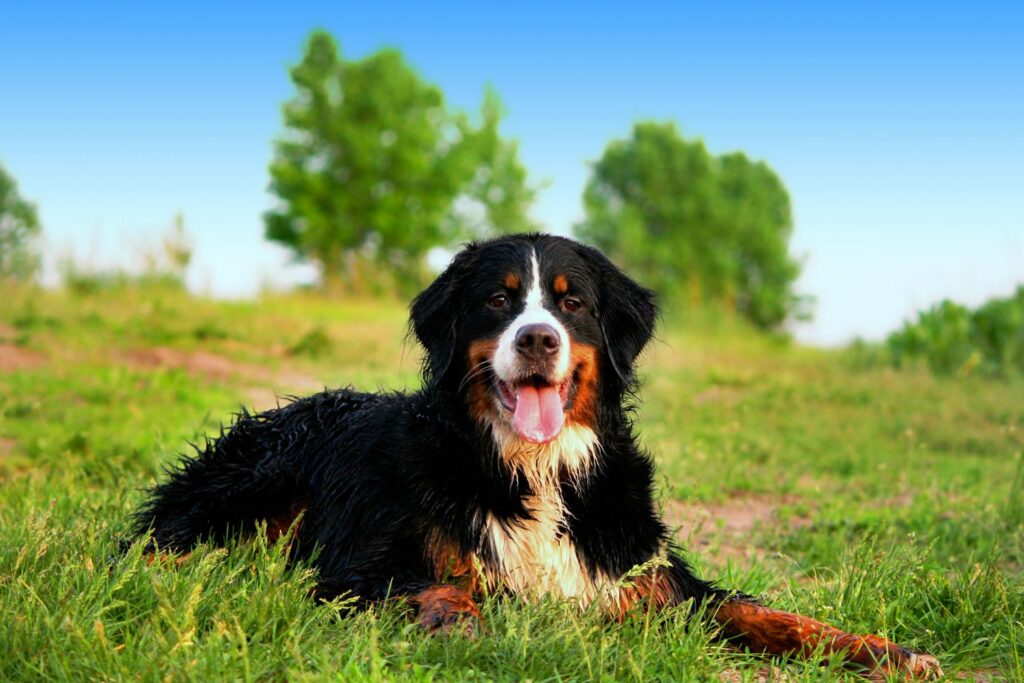
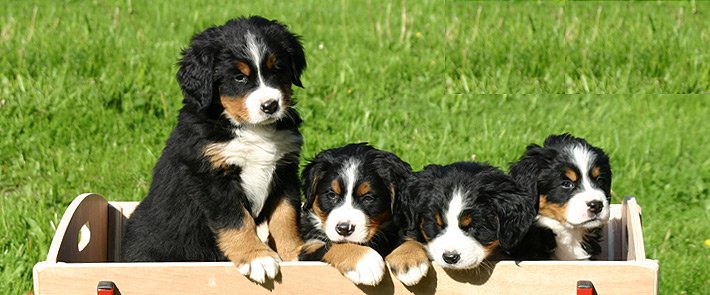
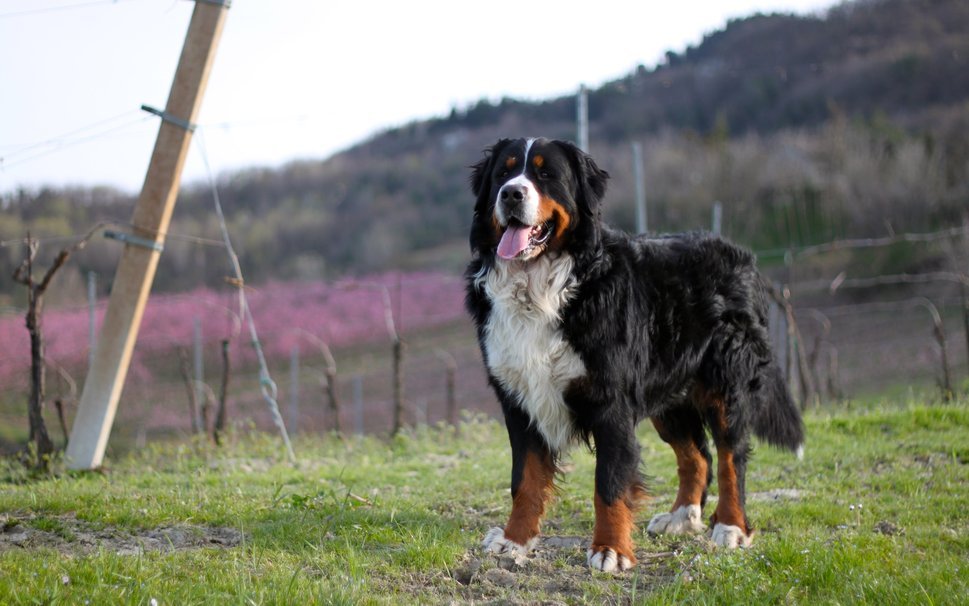
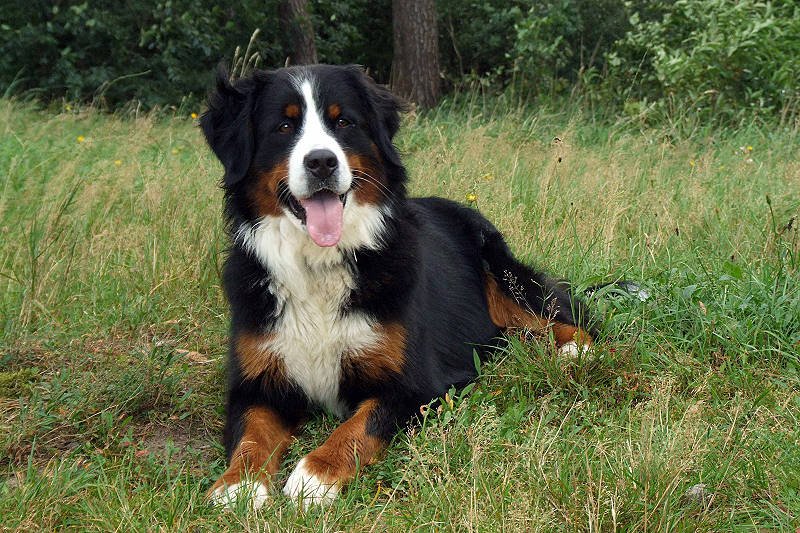
A gentle giant from the alpine meadows: calm, good-natured, devoted and patient. The Bernese Mountain Dog is a family’s dream in character, but with a bitter note: a short life and a high tendency to cancer. Every day with it is precious.
Apartment · not suitableKidsCatsOther dogsBeginners · with caveats
If you're on the lookout for a large, handsome, kind, and endlessly loyal companion, the Bernese Mountain Dog might just be the perfect match for you. These wonderful, affectionate, and devoted dogs become a full-fledged member of the family and a reliable protector. Often considered one of the most good-natured breeds in the world, they adore every family member and are especially patient and gentle with children. It's essential for them to be close to their people and at the heart of all the action. If you're ready for another family member who will be by your side through thick and thin, this breed is an excellent choice. You can find more information about this wonderful breed on Tvaryny.
Bernese Mountain Dog: Breed Profile
Bernese Mountain Dog: Breed Profile · 7
Origin
Switzerland, Bern region
FCI Classification
Group 2 (Pinscher and Schnauzer, Molossoid, Swiss Mountain and Cattle Dogs), Section 3 (Swiss Mountain and Cattle Dogs)
Life Span
7–10 years
Height at the Withers
Males: 64–70 cm Females: 58–66 cm
Weight
Males: 40–55 kg Females: 35–45 kg
Temperament
Confident, friendly, calm, loyal, intelligent
Other Names
Berner Sennenhund, Bernese Mountain Dog
Bernese Mountain Dogs and Other Swiss Breeds
The Bernese Mountain Dog is one of four types of Swiss Mountain Dogs (Sennenhunds) that vary in size and coat type but share a common origin and similar tri-colour coat. Unlike breeds such as the Austrian Black and Tan Hound, which is a scenthound, Sennenhunds are herding and farm dogs. Other dogs with similar characteristics include the Greater Swiss Mountain Dog, the Appenzeller Sennenhund, and the Entlebucher Mountain Dog.
Greater Swiss Mountain Dog: The largest and heaviest of the four, with a short coat.
Bernese Mountain Dog: The only long-haired member of the group.
Appenzeller Sennenhund: A medium-sized, short-haired dog known for its curled tail.
Entlebucher Mountain Dog: The smallest of the four, short-haired, often born with a bobtail.
Interesting Facts about the Bernese Mountain Dog
Four in one: The Bernese Mountain Dog is one of four breeds of Swiss mountain dogs, but the only one with a long coat.
The milk cart driver: Historically, these dogs were used to pull carts of milk and cheese from Alpine farms to towns.
Slow to mature: They reach their full physical size at around one year of age, but their mental and emotional development continues until they are 2–3 years old.
"Velcro dog": Berners earned this nickname for their incredible attachment to their owners and their desire to be by their side every minute.
Newfoundland blood: In 1949, to broaden the gene pool and soften the temperament, Newfoundland blood was officially introduced into the breed.
History of the Bernese Mountain Dog
The Bernese Mountain Dog's history is deeply rooted in antiquity. It is believed their ancestors were the Roman Molossers—large battle dogs that arrived in what is now Switzerland (Helvetia) with Caesar's legions over 2,000 years ago. Over time, these dogs interbred with local herding breeds, adapting to the harsh conditions of the Alpine mountains. For centuries, they faithfully served Swiss farmers, carrying out a wide variety of tasks.
Initially, these dogs were known as 'Dürrbächlers' after the small town of Dürrbach near Bern, where they were particularly common. They were versatile farm dogs: guarding livestock and property, helping to move cattle from pastures to farms, and, thanks to their strength and endurance, they were harnessed to pull carts of milk churns and cheese to markets. Their thick, tri-colour coat offered reliable protection against the cold.
In the late 19th century, with the rise of other breeds like the St. Bernard, the Dürrbächler population began to decline. The revival of the breed is credited to Franz Schertenleib. In 1892, he was so impressed by the intelligence and beauty of these dogs that he made it his mission to preserve and popularise them. Alongside Professor Albert Heim, a geologist and great enthusiast of Swiss breeds, they began a focused breeding programme.
In 1904, the Dürrbächlers were first shown at an exhibition in Bern. The first breed club was founded in 1907, and it was at this time the name was changed to 'Bernese Mountain Dog' to highlight their origin and connection to other Swiss herding dogs. By 1910, 107 dogs were presented at an exhibition in Burgdorf. Since then, the breed's popularity has grown rapidly, not just in Switzerland but across Europe and America. Today, the Bernese Mountain Dog is a beloved pet for millions worldwide, even though its primary purpose has shifted from working dog to cherished family companion.
Breed Standard and Appearance
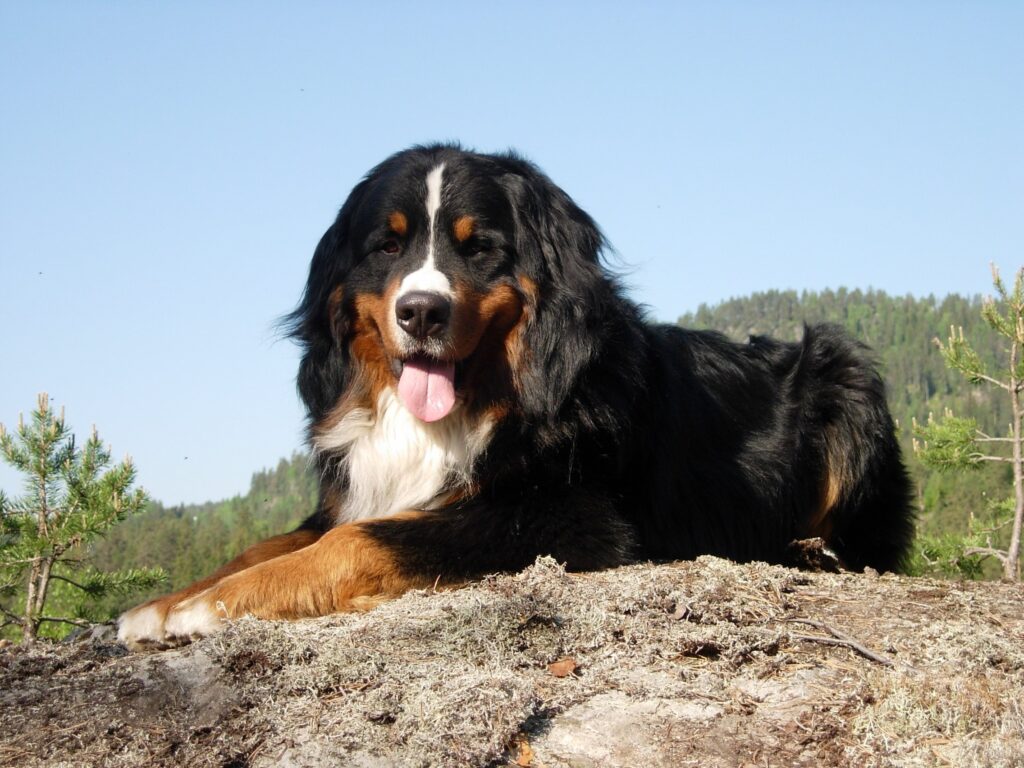
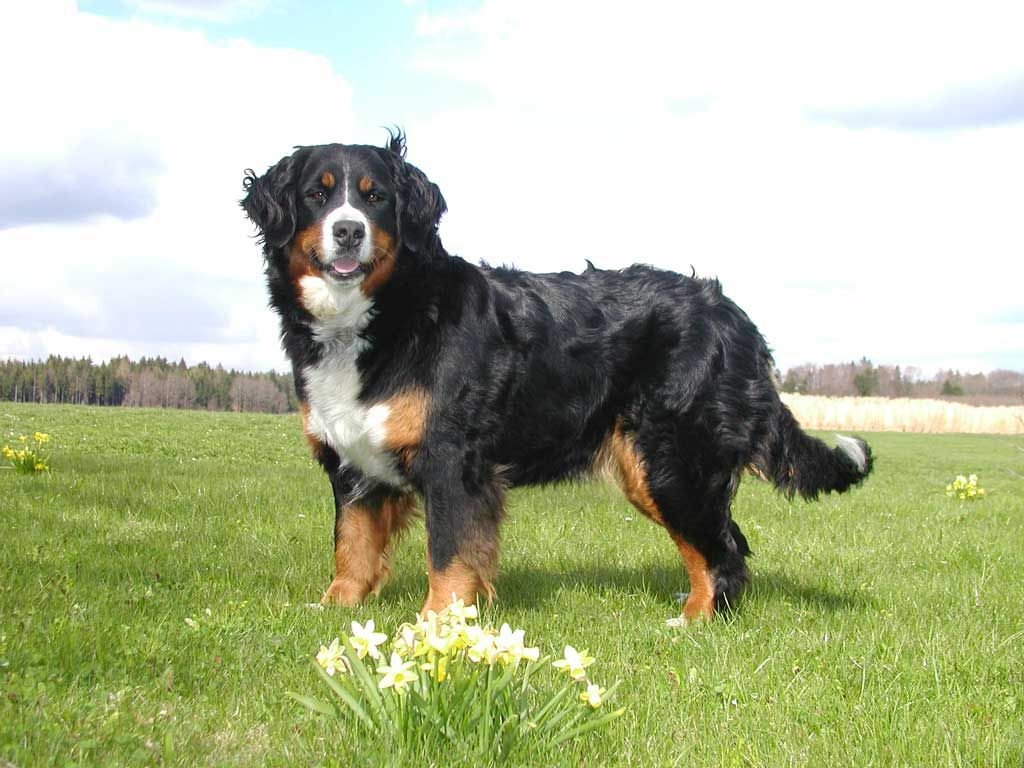
The Bernese Mountain Dog is a large, powerful, yet well-proportioned dog with a long, glossy coat. Its appearance exudes strength, calmness, and friendliness. The main characteristics according to the FCI standard No. 45 are:
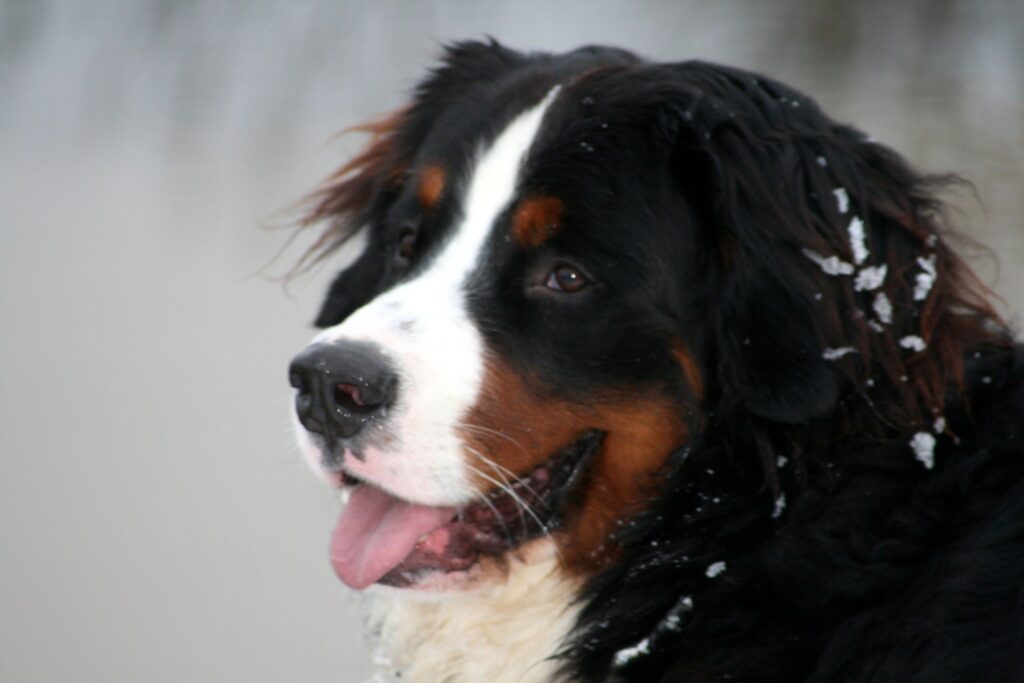
Head: Strong and in proportion to the body. The skull is slightly rounded when viewed from the side and front. The stop is well-defined but not too abrupt.
Muzzle: Strong, straight, and of medium length. The nose is large and black. The lips are tight-fitting and black.
Eyes: Dark brown, almond-shaped, with an intelligent and gentle expression. The eyelids are tight-fitting.
Ears: Medium-sized, triangular, set high. When relaxed, they hang flat against the head. When the dog is alert, the back part of the ear rises while the front edge stays close to the head.
Body: Strong and compact. The ratio of height at the withers to body length is approximately 9:10. The neck is strong and muscular. The chest is broad and deep, reaching the elbows. The back is straight and firm.
Tail: Long and bushy, reaching the hock joint. At rest, it hangs down, but in motion, it can be raised to the level of the back or slightly higher.
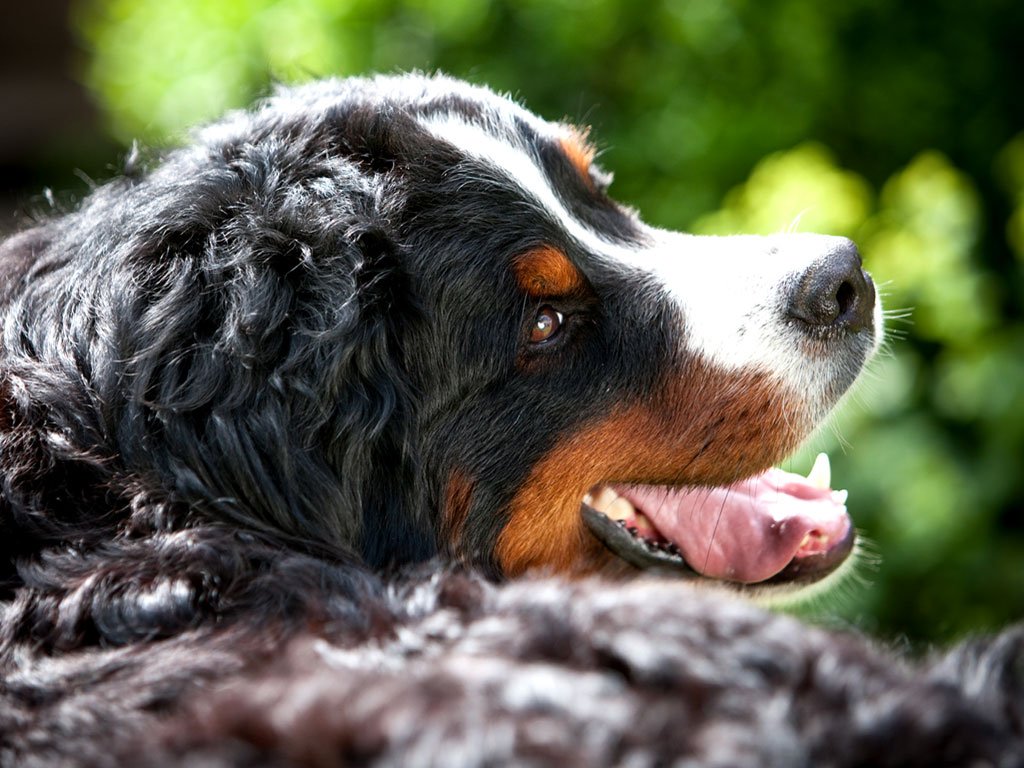
Coat: Long, glossy, straight or slightly wavy, with a thick undercoat.
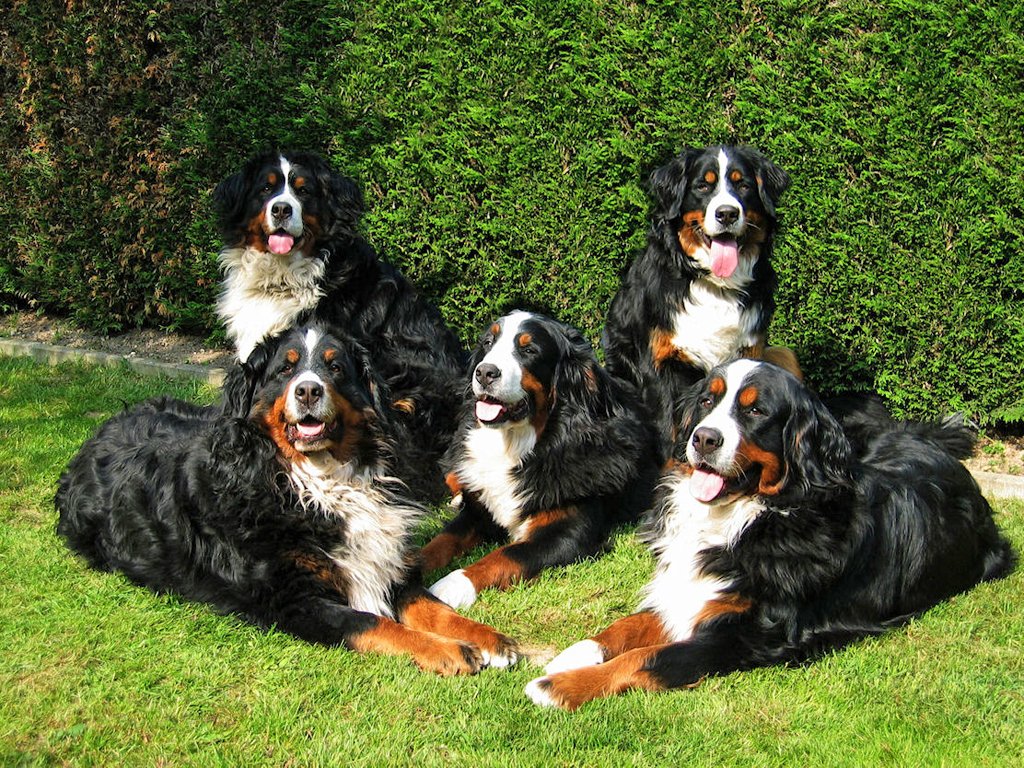
Colour: The characteristic tri-colouring. The main colour is a rich black. The rich, rust-brown markings are located on the cheeks, above the eyes, on all four legs, and on the chest. The white markings are symmetrical: a blaze on the head (which should not extend over the spots above the eyes), a white "tie" on the neck and chest. White "socks" on the paws and a white tip on the tail are desirable.
Bernese Mountain Dog Temperament and Character
Loyalty and family-orientation are the key characteristics of the Bernese Mountain Dog. This dog literally lives for its family and finds it difficult to cope with long periods of loneliness. They become very attached to people and can suffer from separation anxiety, which means they shouldn't be left alone for a whole day. A change of owner for an adult Berner is a huge psychological trauma. You can find more information on similar breeds like the Austrian Black and Tan Hound and the Styrian Coarse-haired Hound to see how they differ in temperament.
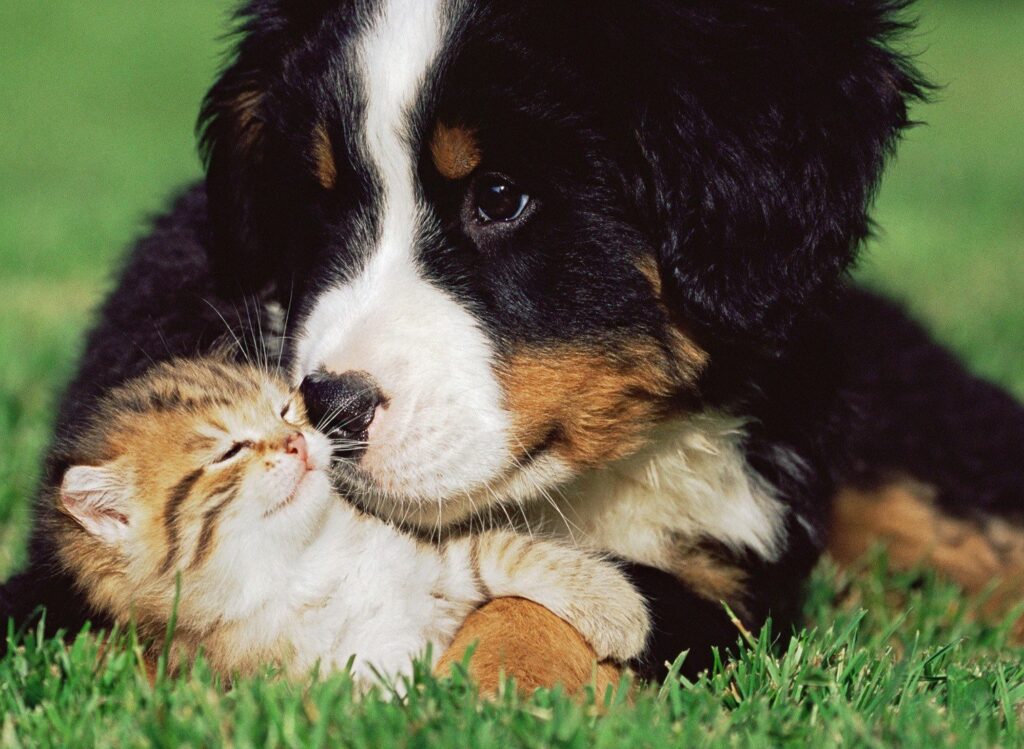
Despite their large size, Berners are incredibly kind and gentle dogs. They are known for their patience and tender attitude towards children, making them a wonderful family pet. They will tolerate the mischief of little ones, but, of course, the interaction between small children and such a large dog should always be supervised by an adult.
Dogs of this breed are intelligent and clever, but don't expect them to execute commands instantly like a German Shepherd. Berners are a bit slow and thoughtful. They'll ponder a command before acting on it. They are sensitive to their owner's mood and respond best to positive reinforcement and gentle, yet persistent, training. Roughness and shouting will only scare the dog and undermine its trust.
Like many large breeds, Bernese Mountain Dogs mature slowly. They reach physical maturity at about one year, but psychologically, they remain 'puppies' until they are 2–3 years old. During this period, they can be very playful and a little clumsy, so it's important to provide them with plenty of toys and attention to protect your household items.
Berners have a natural guardian instinct but are not aggressive. They will announce the arrival of strangers with a loud bark but generally behave with restraint and calmness rather than hostility. Their formidable size is often a sufficient deterrent. They get along well with other pets, especially if they have grown up together.
Pros and Cons of the Bernese Mountain Dog
Before bringing such a large and high-maintenance dog into your home, it's important to weigh up all the pros and cons.
Pros and Cons of the Bernese Mountain Dog · 7
Pros
Cons
✅ Incredibly loyal to their family
❌ Short life span (an average of 7–9 years)
✅ Friendly and patient character
❌ Prone to serious genetic diseases (cancer, dysplasia)
✅ Excellent with children and other animals
❌ Needs a lot of attention and doesn't cope well with loneliness
✅ High intelligence, though can be stubborn at times
❌ Heavy shedding all year round, requiring meticulous coat care
✅ Impressive and beautiful appearance
❌ High maintenance costs (quality food, veterinary services)
✅ A good, but not aggressive, guardian
❌ Doesn't tolerate heat well due to their thick, dark coat
✅ Calm temperament, rarely barks without reason
❌ Needs space, not the best choice for a small flat
Training and Socialisation for the Bernese Mountain Dog
Members of this breed are easy to train thanks to their intelligence and desire to please their owner. However, their training has its own unique characteristics. Socialisation and learning basic commands ("sit," "come," "stay") should begin from a young age. But don't expect lightning-fast reactions—Berners do everything thoughtfully.
Positive reinforcement only: Berners are very sensitive to criticism and harshness. The best results come from training based on praise, treats, and games.
Patience and consistency: Due to their slow maturation and naturally unhurried nature, you will need patience. Be consistent in your demands.
Early socialisation: It's very important to introduce your puppy to different people, sounds, places, and other animals. This will help them grow into a confident and well-balanced dog.
No over-exertion: Serious training involving obstacle courses or heavy loads should be delayed until they are 1.5–2 years old to avoid damaging their joints.
Care and Maintenance for the Bernese Mountain Dog
Coat Care
The Bernese Mountain Dog's magnificent long coat is its pride and joy, but it requires regular and meticulous care. Berners shed constantly, with intensive seasonal shedding twice a year (in spring and autumn). To prevent matting and keep the coat in good condition, the dog should be brushed 2–3 times a week, and daily during shedding periods. You'll need a set of tools: a deshedding rake or comb to remove the dead undercoat, a metal comb with different tooth densities, and a slicker brush.
Bathe the dog as needed, usually no more than once every 2–3 months, using special shampoos for long-haired breeds. Also, regularly inspect and clean their ears and eyes, and trim their nails approximately every 3–4 weeks.
Walks and Exercise
Bernese Mountain Dogs need daily, long walks—at least twice a day for 45–60 minutes. They are not sprinters and don't need excessive, intense exercise like some hunting breeds. Calm walks, games with a ball, and the chance to run freely in a secure area are perfect for them. It is important not to over-exercise puppies and young dogs up to 1.5–2 years old until their joints are fully formed. Avoid jumping from heights and prolonged running on hard surfaces like asphalt.
Living Conditions
The ideal home for a Bernese Mountain Dog is a house with a fenced garden where the dog can move around freely. Thanks to their thick coat, they tolerate cold well and can spend a lot of time outside, even in winter. However, keeping them chained or in an isolated kennel is strictly unacceptable for this breed—they need constant contact with their family. Living in a flat is possible, but only if they are given sufficient exercise and there is enough space. The main danger in summer is heatstroke. Due to their dense, dark coat, Berners cope poorly with heat, so walks should be moved to early mornings and late evenings, and the dog should be provided with a cool spot during the day.
Nutrition
Bernese Mountain Dog Nutrition: Key Recommendations
Health and risks
Health and Common Breed Diseases
Frequently Asked Questions about the Breed (FAQ) · 5
Is the Bernese Mountain Dog suitable for flat living? Yes, but only if the flat is spacious enough and the dog gets long daily walks. A house with a garden is still the ideal option.
How do Bernese Mountain Dogs get along with children? Wonderfully. They are one of the best breeds for families with children thanks to their patience, gentleness, and calm nature. However, due to the dog's large size, interactions with small children should always be supervised.
Do they shed a lot? Yes, very heavily and almost all year round. There will be hair everywhere, so this breed is not suitable for people who are not prepared for daily cleaning and regular grooming.
Can a Berner be left alone for long periods? No. This is a socially-oriented breed that suffers from loneliness. If you spend most of the day away from home, this breed is not for you.
Is the Bernese Mountain Dog a good guard dog? They make a good watch dog—their loud bark will always alert you to the approach of strangers. However, they are not an aggressive breed, and they are more likely to deter with their size than show actual aggression.
Video about the breed
FAQ
How long do Bernese Mountain Dogs live?
Sadly, not long — 7–10 years; the main cause is a high tendency to cancer, especially histiocytic sarcoma.
Is the Bernese good with children?
Excellent — it is a gentle, patient and devoted “gentle giant”, an ideal family dog.
Does the Bernese Mountain Dog tolerate heat?
Badly — the dense coat is prone to overheating; in summer it needs shade and cool.