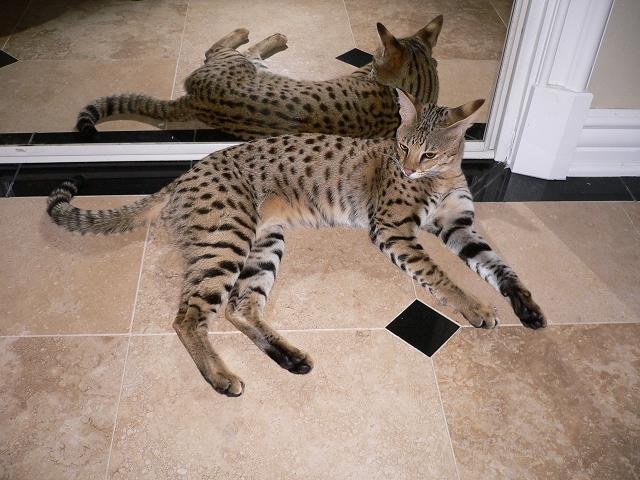
The Savannah is an extraordinarily large, elegant, and active cat, whose exotic spotted coat and physique are reminiscent of the African Serval, one of its direct ancestors. This breed is striking not only for its size and weight but also for its unique blend of 'wild' traits with the wonderfully gentle and devoted nature of a domestic pet. You can discover more about these captivating cats on Tvaryny. Savannahs are renowned for their energy, intelligence, and masterful leaps, making them resemble small cheetahs. These are not cats content with a life solely within four walls; they require space to move, mental stimulation, and, ideally, safe walks on a lead, which are like a breath of fresh air for them.
The Savannah Cat: A Breed Overview
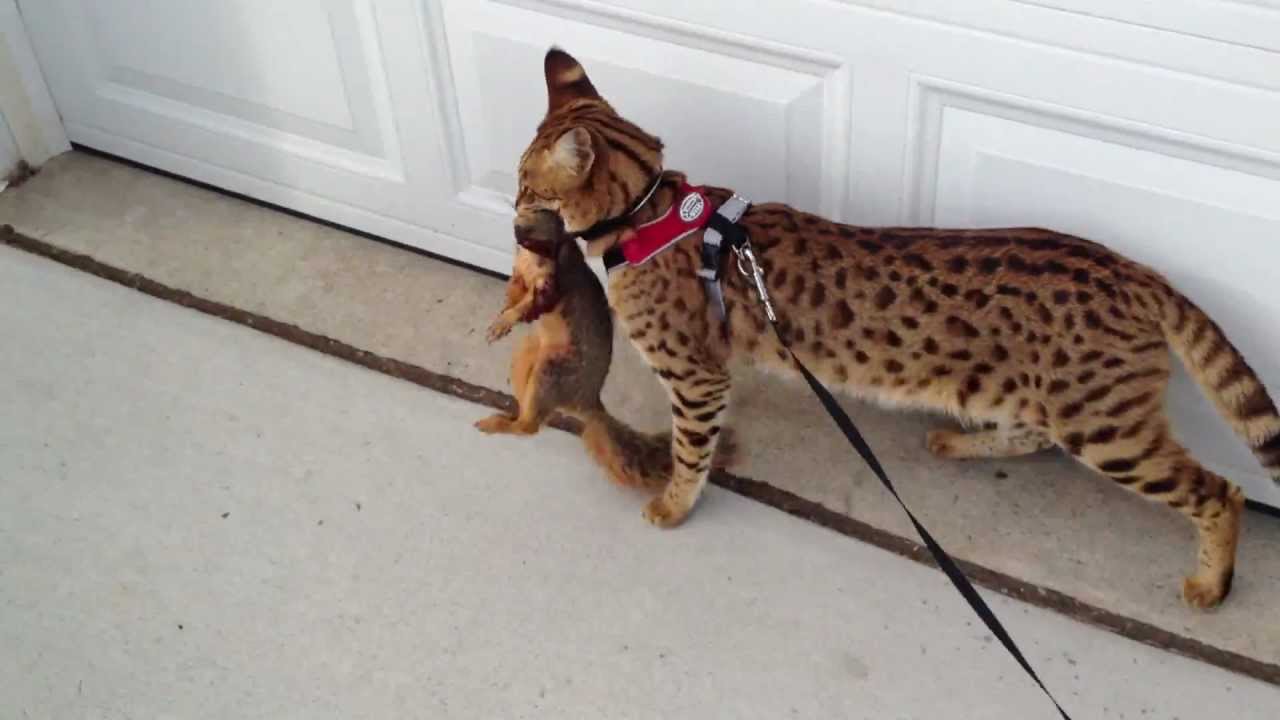
The Savannah Cat: A Breed Overview · 14
| Characteristic | Description |
|---|---|
| Breed Name | Savannah |
| Origin | United States of America |
| Time of Origin | 1986 (first kitten), TICA recognition – 2001 (registration), 2012 (championship status) |
| Ancestors | African Serval (Leptailurus serval) and domestic cats (Siamese, Bengal, Oriental Shorthair, Egyptian Mau, and others) |
| Generations | F1 (closest to Serval) to F5 and beyond (SBT – Stud Book Tradition, considered fully domestic) |
| Lifespan | 12–20 years (average 15+) |
| Height at Withers | Up to 40–45 cm (especially F1/F2 males), one of the tallest domestic breeds |
| Weight | Males: 6–11 kg (sometimes more for F1/F2), Females: 4–8 kg |
| Temperament | Active, intelligent, inquisitive, devoted, playful, sometimes demanding of attention |
| Activity Level | Very high, requires a lot of movement and stimulation |
| Grooming | Minimal, short coat |
| Compatibility with Children | Gets along well if children respect the animal (recommended for older children) |
| Compatibility with Other Animals | Good, especially if raised together; caution needed with small animals due to hunting instinct |
| Price Range | Very high, especially for early generations (F1-F3) |
Interesting Facts About Savannah Cats
- Guinness World Record Holder: A Savannah named Arcturus Aldebaran Powers held the title of the world's tallest domestic cat, with a shoulder height of 48.4 cm (19.05 inches). Sadly, he perished in a house fire in 2017.
- Incredible Jumpers: Savannahs are known for their ability to jump to impressive heights – up to 2.5 metres (over 8 feet) from a standstill! This allows them to easily reach cupboards, refrigerators, and other high places.
- Not All Spots Are Equal: Although the standard only recognises the spotted tabby, the pattern and size of the spots can vary. Some Savannahs have smaller, denser spots, while others have larger, more sparse ones.
- "A Dog in a Cat's Body": Their loyalty, ability to learn commands, and love of games (including 'fetch') often lead to Savannahs being compared to dogs. Many also walk well on a lead.
- Generation Matters: An F1 Savannah can cost as much as a new car, whereas later generation Savannahs (F5, SBT) are significantly more affordable, though still pricier than the average pedigree cat.
- Unique Sounds: Besides the usual meow, Savannahs can make sounds resembling bird-like chirps or a snake's hiss – a legacy from their wild ancestor, the Serval.
- Don't confuse them with other breeds: Savannahs are sometimes mistaken for other spotted breeds, such as the Bengal cat or Ocicat. However, the Savannah stands out with its long legs, large ears, and more elongated body. It's also important not to confuse it with the Serengeti cat, a breed developed to resemble the Serval but with no wild cat ancestry.
- The world of felines is incredibly diverse: While the Savannah impresses with its size and wild lineage, there are other captivating breeds such as the petite Singapura cat, one of the smallest cat breeds, or the Japanese Bobtail, famed for its unique pom-pom tail.
- Legal Considerations: Before acquiring a Savannah, especially an early generation, be sure to check your local laws. Many regions have restrictions on keeping hybrid animals.