

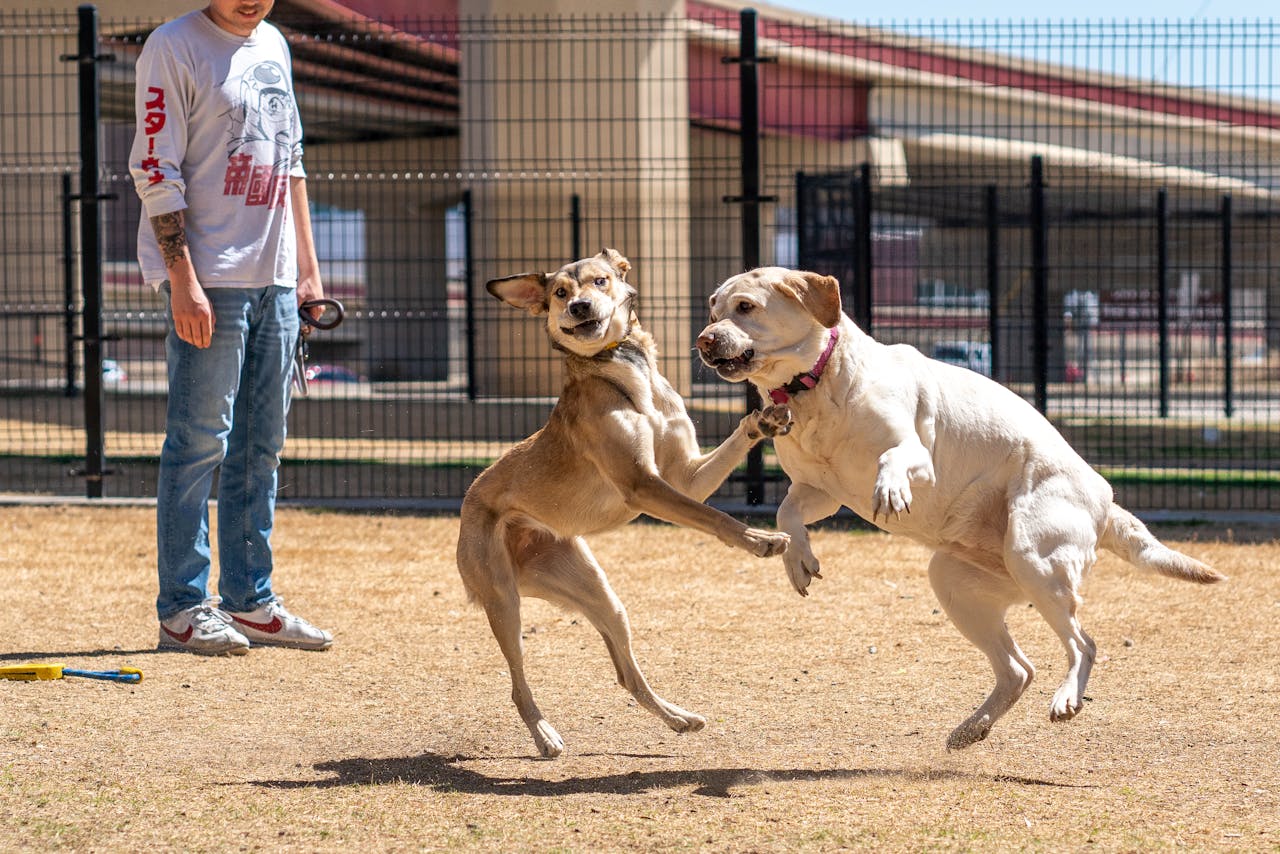
A dog park can be a real paradise for our four-legged friends. It’s a place where they can run free, socialise with other dogs, let off steam, and simply be dogs. For owners, it’s a fantastic opportunity to socialise their pet and enjoy some time in the great outdoors. However, to ensure the experience is a positive one for everyone involved—both two-legged and four-legged—it’s essential to follow certain unwritten rules of conduct. Ignoring dog park etiquette can quickly turn a fun outing into a stressful, conflict-ridden situation.
The responsibility for everyone’s comfort and safety lies with each owner who brings their pet into a shared space. Understanding dog psychology, being able to read their signals, and showing respect for others are the three cornerstones of harmony at the dog park. We’ll explore exactly how to make every visit a safe and enjoyable experience for all, right here on Tvaryny.
Preparing for Your Visit: Is Your Dog Ready for the Park?
Before you open the gate to doggy heaven, it’s worth asking yourself a few honest questions. Not every dog is ready for this type of social interaction, and forcing the issue can lead to psychological trauma or provoke aggression.
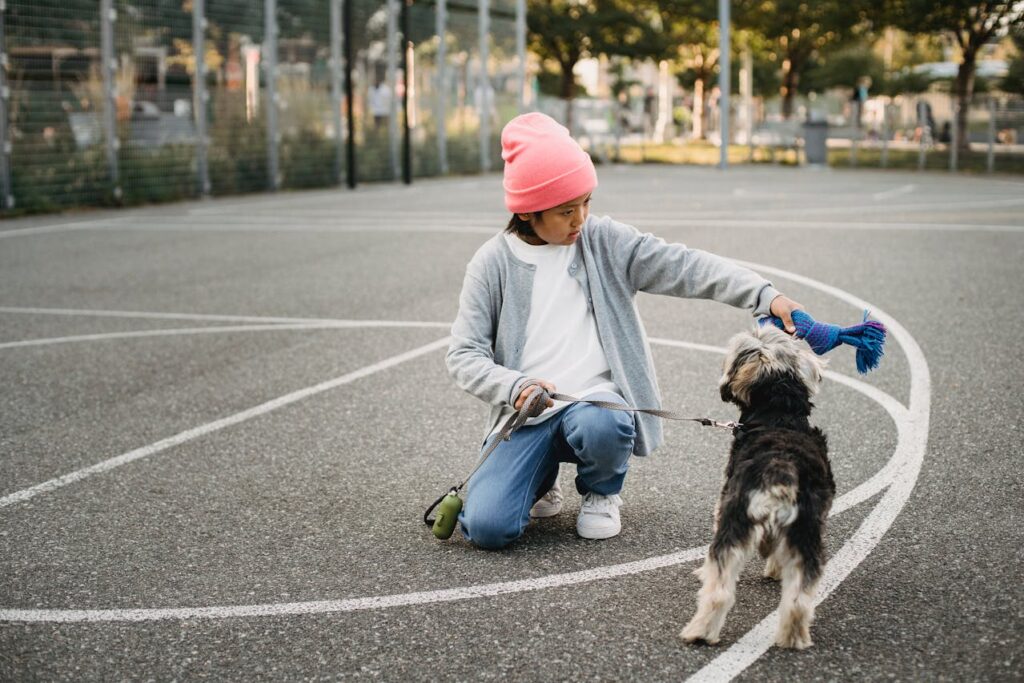
Health and Age Assessment
- Vaccinations: Your dog must be up-to-date with all necessary vaccinations. A large number of animals gather at the park, and the risk of catching an infection increases significantly. This is especially true for puppies.
- Age: Very young puppies (under 4-5 months) don’t yet have a robust immune system or a stable temperament. They can easily be frightened or accidentally injured by adult dogs. It’s best to introduce them to the park only after they’ve completed their full course of vaccinations and quarantine period.
- General Health: Never bring a sick animal to the park. A cough, runny nose, diarrhoea, or any other signs of illness are valid reasons to stay at home.
- Females in Season: Bringing a female dog in season (in heat) to a public park is utterly irresponsible. It is guaranteed to provoke conflicts among male dogs, cause unwanted attention, and create stress for the female herself and everyone around her.
Temperament and Socialisation
Is your dog well-socialised? If your pet has spent most of its life in isolation and lacks experience with other dogs, being suddenly thrown into a crowd can be a shock. Start the socialisation process with one-on-one walks with calm, well-behaved dogs.
Aggression or Fear: Dogs that show aggression towards other animals or people do not belong in an open park. This is a matter of safety. The same applies to overly timid dogs. For them, being surrounded by active dogs can be torture. To address such behaviour, it’s best to consult a dog behaviourist.
Entering and Exiting: First Impressions Matter
The area near the entrance is the biggest flashpoint in any dog park. This is where the most misunderstandings occur.
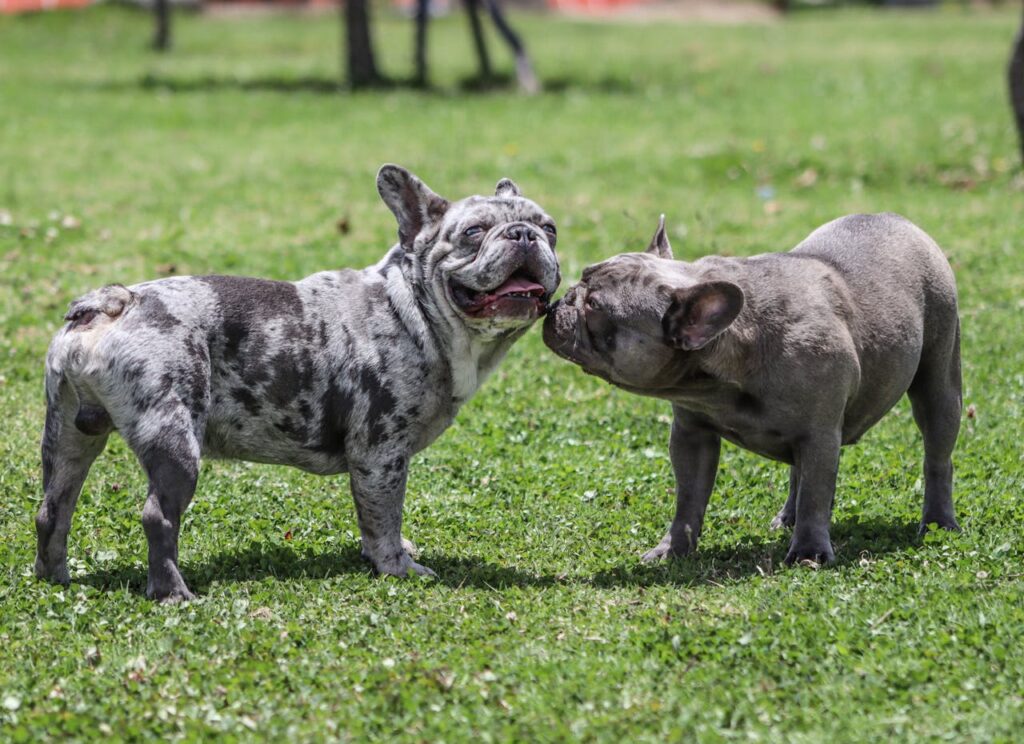
Don’t rush in. Before entering, wait a few minutes by the gate. Allow your dog, still on the lead, to look around, assess the situation, and calm down a little. This also gives the dogs already inside a chance to get used to the new arrival.
Remove the lead correctly. Once inside, don’t unclip the lead right at the gate where the usual ‘welcoming committee’ tends to gather. Move to a quieter area to the side, and only then let your dog off. Crucial point: inside the park, all dogs should be off their leads. A dog on a lead among free-roaming dogs feels constrained and vulnerable, which can provoke defensive aggression.
When you leave, follow the reverse procedure: clip the lead on in a calm spot, away from the exit, and only then head calmly towards the gate.
The Golden Rules of Dog Park Etiquette
So, you’re in. Now the most important part begins – constant supervision and interaction. Here are the fundamental rules you should always follow.
1. Constant Supervision: Your Phone Can Wait
This is arguably the most important rule of all. You came to the park with your dog, not to scroll through your news feed or chat with friends on the phone. Your attention must be 100% focused on your pet and your surroundings. You need to see who they’re playing with, how the play is evolving, and be ready to intervene at any moment. Always keep your dog in your line of sight. You are fully responsible for their actions.
2. Body Language is Key to Understanding
The ability to read dog body language is an incredibly valuable skill. It will help you to spot tension early and prevent a conflict before it even starts.
- Signs of relaxed, friendly play: The “play bow” (when a dog lowers its front end while keeping its rear up), loose and sweeping movements, an open mouth, a relaxed tail, and dogs taking turns chasing each other.
- Signals of stress and discomfort: A tucked tail, flattened ears, yawning, nose licking, turning the head away. If you see your dog showing these signals, or another dog showing them while playing with yours, it’s time to step in and take a break.
- Signs of rising aggression: A direct, hard stare, a tense body, raised hackles (especially on the neck), a high and rigid tail, growling, and showing teeth. Intervene immediately!
3. Intervene Early and Correctly
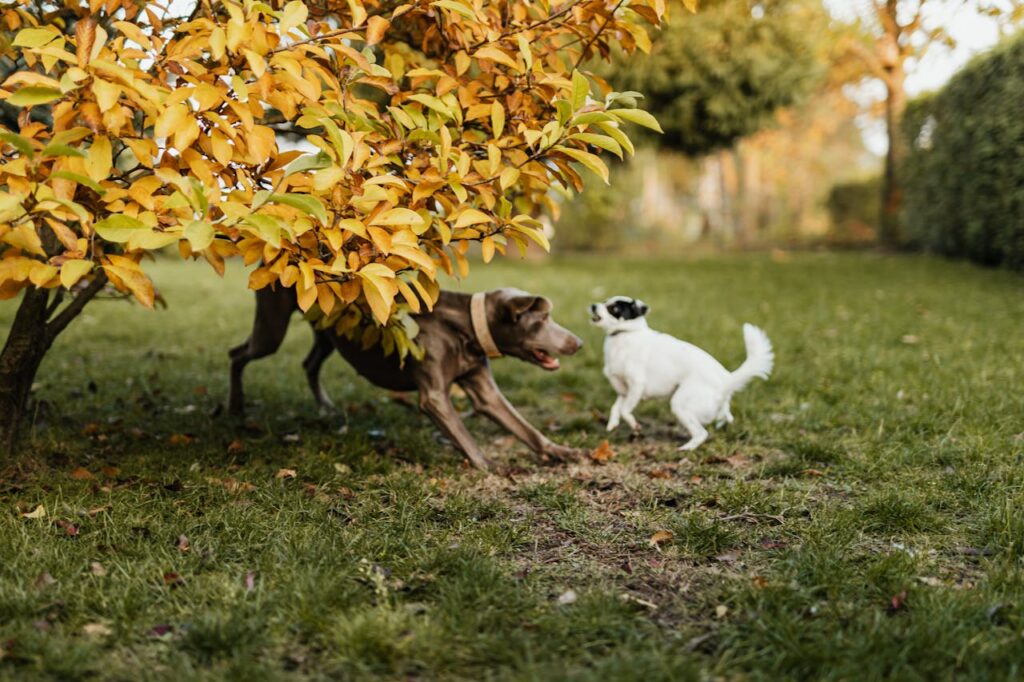
Don’t wait for play to escalate into a fight. If you see that a game is getting too rough, one dog is clearly dominating, and the other is trying to avoid contact, you need to step in.
How to do it? The simplest way is to confidently and calmly walk over and call your dog away. You can give a loud clap to get their attention. Avoid shouting and panic, as this will only increase the tension. Never grab dogs by the collar in the heat of a conflict – you could receive a “redirected” bite.
4. Clean Up After Your Dog. Always. No Exceptions.
This rule doesn’t need much explanation. It’s a matter of hygiene, respect for others, and the health of all dogs visiting the park. Faeces are a source of parasites and infections. Always have a few poo bags with you. If you notice another owner has “forgotten” to clean up, give them a polite reminder.
5. Toys and Treats: A High-Risk Zone
Bringing your dog’s favourite toy to the park is a bad idea. It can provoke “resource guarding,” where your dog will start defending their property from others. If you still want to play, use a neutral ball and be prepared for it to become communal. Feeding your dog treats while surrounded by others is also unwise, as it can lead to a fight. If you’re using treats for training, do it at a distance from other dogs.
Dog Park Dos and Don’ts
| What to Do (Do 👍) | What to Avoid (Don’t 👎) |
|---|---|
| ✅ Keep a constant eye on your dog. | ❌ Staring at your phone, distracted. |
| ✅ Clean up after your pet. | ❌ Ignoring the mess your dog leaves behind. |
| ✅ Intervene if play gets too rough. | ❌ Waiting for a fight to break out. |
| ✅ Know dog body language and react to signs of stress. | ❌ Ignoring signs of discomfort in your dog or another dog. |
| ✅ Take your dog off the lead inside the park. | ❌ Keeping your dog on a lead among free-roaming dogs. |
| ✅ Only bring healthy and vaccinated animals. | ❌ Coming with a sick dog or a female in season. |
| ✅ Communicate politely with other owners. | ❌ Giving unsolicited advice and criticising other people’s dogs. |
| ✅ Leave when your dog is tired or overstimulated. | ❌ Staying until the bitter end, ignoring your dog’s fatigue. |
Handling Common Problem Situations
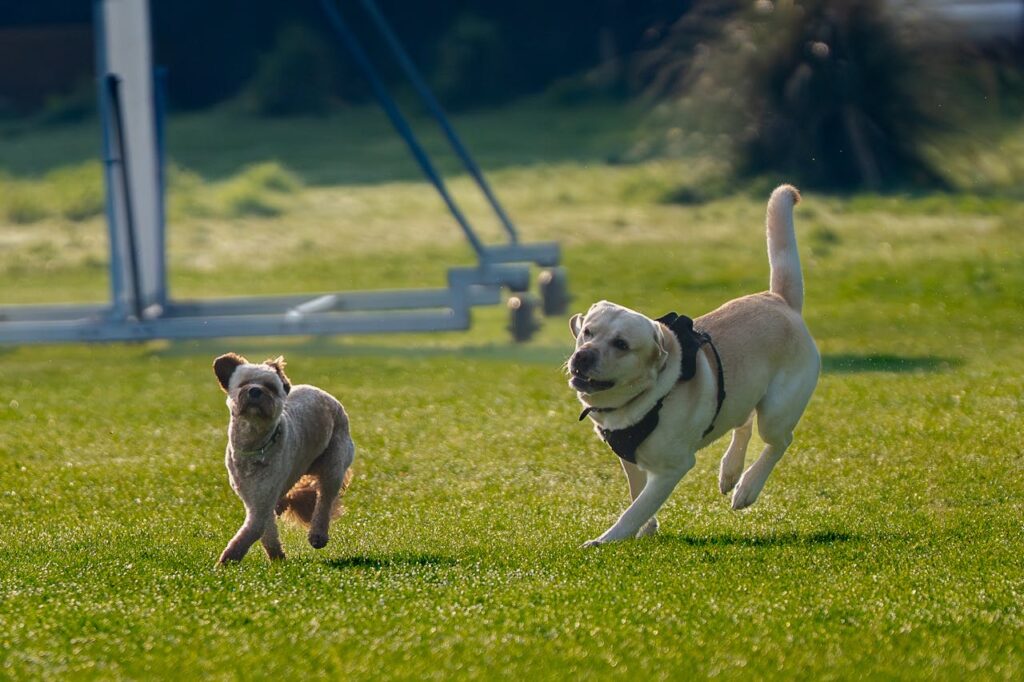
Even when you follow all the rules, awkward moments can still arise. It’s important to know how to react.
- Your dog is being a ‘bully’: If you notice your pet is constantly provoking others, playing too roughly, and ignoring “stop” signals from their playmates, remove them from the park. They may need additional sessions with a behaviourist to correct this behaviour.
- Your dog is being picked on: If another dog is behaving aggressively towards yours, intervene immediately and confidently. Block the other dog with your body and calmly but firmly ask the owner to get their dog. Don’t get into an argument; your main priority is your friend’s safety. If the owner doesn’t react, it’s best to just leave.
- Persistent Mounting: This is a normal part of dog behaviour and isn’t always related to sexual instinct (it can be a sign of overexcitement or dominance). If your dog is mounting another, or vice versa, just calmly separate them. If it keeps happening, take a break.
Ending the Visit: Leave on a High Note
It’s not just about entering correctly, but also about leaving at the right time. Watch for signs of fatigue in your dog: they start panting more, show less interest in playing, or look for a shady spot to lie down. It’s better to leave a little early while your dog is still in a good mood, rather than waiting until they become overtired and irritable. This will ensure they have positive associations with the park.
Conclusion
A dog park is a microcosm with its own laws and rules. Its success depends on every one of us. Respect, responsibility, attentiveness, and a basic knowledge of dog psychology transform a potentially chaotic place into a safe space for joy and socialisation. By following these simple rules of etiquette, you make a huge contribution to creating a positive atmosphere where both you and your four-legged friend can truly enjoy your outing.