

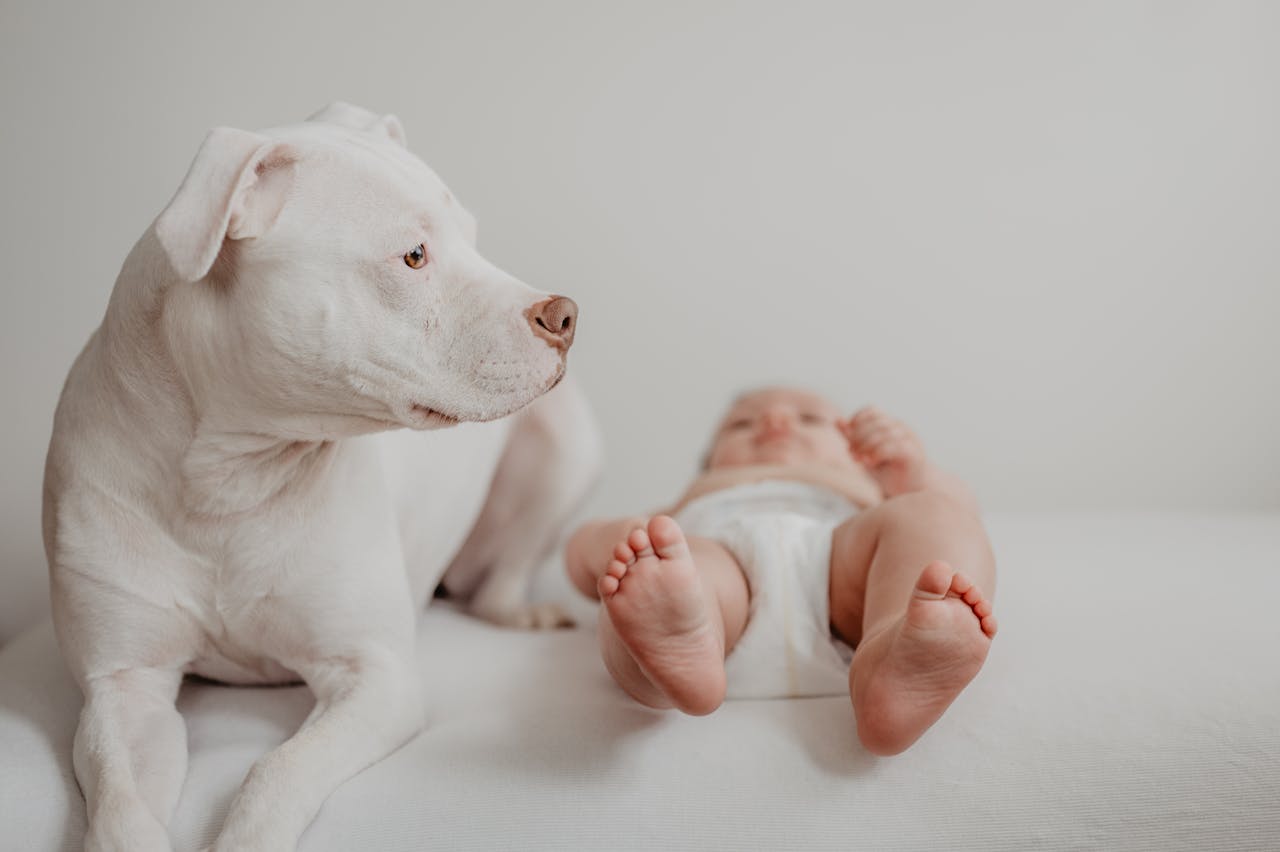
The arrival of a baby in the family is one of life’s most joyous events. It brings boundless love, new emotions, and, of course, significant changes to your usual routine. For dog owners, this period can be tinged not just with happy anticipation, but also with worry: “How will my beloved pet react to the new family member?”, “Can I guarantee the safety of both?”, “Will the dog get jealous?”. These questions are completely natural, and the main thing is not to ignore them.
Proper and timely preparation is key to building a harmonious relationship between your four-legged friend and the newborn. This isn’t just a set of tips; it’s a real investment in your family’s peace of mind and safety. That’s why we’ve put together a comprehensive step-by-step plan to help you transform potential stress into a joyful introduction. Find out all about how to prepare your dog for a baby’s arrival, right here on Tvaryny.
Why you should start preparing early: A dog’s perspective
Dogs are creatures of habit. They thrive in a stable environment with a predictable schedule. The arrival of a baby turns their world upside down. Imagine: suddenly, new, strange smells appear in the home (baby cosmetics, milk, nappies), unfamiliar sounds (crying, babbling, toys), and the attention of their beloved owners is now divided. The routine for walks, feeding, and games changes. For a dog, this can become a source of intense stress and insecurity, which, in turn, can lead to undesirable behaviour. By preparing your dog in advance, you’re not just teaching them new rules – you’re giving them time to adapt to changes smoothly and without shock.
Stage 1: During pregnancy – Laying the groundwork for calm
This period is your main resource. You have several months to gradually and unhurriedly make the necessary adjustments to your dog’s life. Don’t leave it until the last week!
1.1. Behaviour correction and command reinforcement
Even if your dog is well-behaved, some skills will become vital. If there are existing behavioural issues (jumping on people, excessive barking, pulling on the lead), now is the ideal time to address them, perhaps with the help of a professional dog trainer.
- “Place!” command. This is your “superpower”. Your dog should be able to go to their bed or crate on command and stay there until you release them. This is invaluable when you need to quietly feed the baby, change a nappy, or simply need some clear space. Start with short durations, gradually increasing them, and always praise generously for compliance.
- “Leave it!” or “Drop it!” command. Baby toys, dummies, and socks will inevitably end up on the floor. Your dog must unequivocally leave any item on your command. This is not just a matter of discipline, but also the safety of both the child and the dog itself.
- “Wait!” command. This command is useful by doors, before the food bowl, and now – before approaching the baby. It teaches the dog impulse control.
- Stopping jumping. If your dog has a habit of jumping on you when you meet, imagine walking into the house with a newborn in your arms. Discourage this immediately by ignoring the dog when they jump, and only giving attention when all four paws are on the ground.
1.2. Adapting to new sounds and smells
A dog’s nose is their primary organ for perceiving the world. And that world will soon be filled with completely new scents. Start familiarising them with these in advance:
- Smells: Begin using baby lotion, oil, or powder, applying them to your hands. Allow your dog to calmly sniff them. This way, these smells will become associated with you – with something familiar and safe.
- Sounds: Find recordings of baby crying, gurgling, and laughter on YouTube. Play them initially at a very low volume for a few minutes a day while your dog is doing something pleasant (eating, playing). Gradually increase the volume and duration. The goal is to desensitise your dog so that real baby cries don’t cause them anxiety or excessive curiosity.
1.3. Changing routine and personal space
Your schedule will inevitably change. If your dog is used to walks strictly at 7:00 AM and 7:00 PM, start varying these times. Walk them a little earlier, then a little later. Sometimes make walks shorter, sometimes longer. If you plan for your partner or another family member to walk the dog, have them start doing so now. The same applies to feeding and playtime. Your dog shouldn’t associate a sudden change in their usual routine solely with the baby’s arrival.
Arranging the space:
- Nursery: Decide whether your dog will be allowed into the nursery. If not, install baby safety gates now. Your dog will get used to the barrier and won’t associate its appearance with the little one.
- Furniture: If your dog loves sleeping on the sofa where you plan to feed the baby, start discouraging this or teach them to jump up only when invited.
- New items: Assemble the cot, pram, and bouncer in advance. Allow your dog to sniff these items under your supervision so they become part of the familiar home environment.
Stage 2: The first introduction – The most important day
A properly organised first meeting sets the tone for all subsequent relationships. There’s no room for haste or improvisation here. Here’s a clear action plan.
Golden rule: Control, calm, and positive associations. The meeting should be brief and completely controlled by you.
Checklist for introduction day
- Pre-arrival walk: Before you and the baby come home, ask your partner, a friend, or a relative to give the dog a good, long walk. An active, extended walk will help to burn off excess energy and make your dog calmer.
- Scent introduction: Even before you arrive home, have your partner bring in a nappy or an item the baby wore. Place it on the floor and allow your dog to calmly sniff it. Don’t bring the item to their nose, and don’t force it. Simply allow them to show natural curiosity.
- Calm greeting: Firstly, the mother should enter the house alone, without the baby, and calmly greet the dog. This is an important moment that shows the “pack leader” is back and all is well.
- Controlled introduction: Once the dog’s initial excitement has settled, the other adult can bring the baby in. The mother (or whoever the dog obeys best) should keep the dog on a short lead.
- The process: Sit down with the baby in your arms. Allow the dog to approach close enough to sniff the baby’s feet. Do not allow them to lick the baby’s face. The entire interaction should last no more than a minute. Speak to the dog in a calm, happy tone. Praise them for calm behaviour.
- End on a positive note: After the brief introduction, give the dog the “Place!” command or lead them to another room with a favourite toy or treat. The first impression should be light, positive, and unfinished, sparking interest rather than over-excitement.
Stage 3: First weeks and months together – Building trust
The first introduction was successful. What next? The following few months are a period of adaptation and establishing new rules for coexistence. Your main goal is to create a positive association between your dog and the child and to constantly supervise their interactions.
Never leave your dog and child unsupervised!
This is the most crucial rule, with no exceptions. Even the kindest and most patient dog can unintentionally harm a child, simply by jumping or wagging their tail. Or a child might unknowingly hurt the dog, provoking a defensive reaction. “Just for a second” is a dangerous illusion. Always use a playpen, baby safety gates, or close the door if you need to leave the room.
Creating positive associations
Make sure the baby’s presence means something pleasant for your dog. This is the best way to avoid jealousy.
- Feeding time: When you sit down to feed the baby, give your dog a special “long-lasting” toy (e.g., a Kong filled with pate) or a puzzle toy. Your dog will be occupied and will associate the baby’s feeding time with receiving treats.
- Joint walks: As soon as it’s possible, go for walks all together. Your dog will be happy to go for a walk, and the presence of the pram will become a familiar part of this pleasant ritual.
- Showing attention: When the baby is asleep in your arms, call your dog over, stroke them, and talk to them calmly. Show that the baby isn’t an obstacle to your love.
Learn to read your dog’s body language
Dogs rarely bite without warning. They usually give many signals of stress and discomfort. Your task is to learn to notice them and react in time, removing your dog from a situation that makes them anxious. Signs of stress include:
- Yawning (when the dog doesn’t want to sleep)
- Licking lips, nose
- “Whale eye” (when the whites of the eyes are visible)
- Turning head away, avoiding eye contact
- Flattened ears, tucked tail
- Tense body, freezing
Common mistakes and myths to avoid
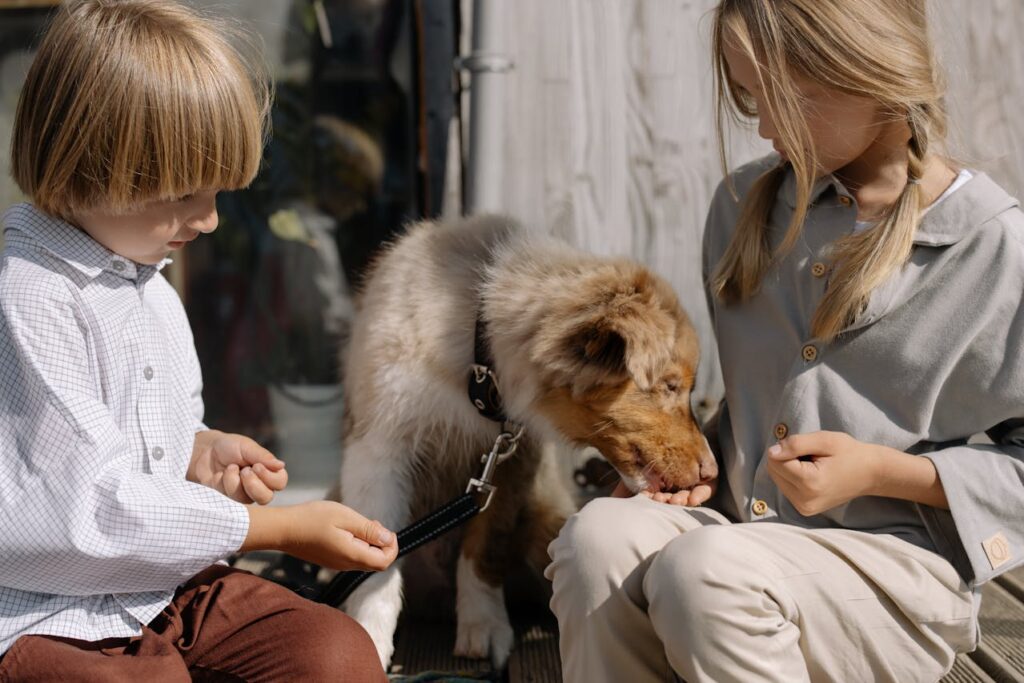
Myth: “My dog is very gentle; they would never bite. There’s no need to worry.”
Reality: Any dog, regardless of breed or temperament, can bite if they feel pain, threatened, or extremely scared. A history of impeccable behaviour is not a guarantee of safety. The responsibility for supervision lies with you.
Myth: “The dog and child should sort out their relationship themselves.”
Reality: This is an extremely dangerous mistake. A dog and an infant cannot “sort things out” on equal terms. You are the mediator and the guarantor of safety. You set the rules and boundaries for both.
Myth: “If a dog is jealous, they should be punished.”
Reality: Jealousy is a sign of insecurity and stress. Punishment will only reinforce negative associations with the child (“when the baby appears, I get told off”). Instead of punishment, work on creating positive associations, and give your dog a sense of security and self-worth.
Conclusion: Patience and consistency – your key to success
Preparing your dog for a baby’s arrival is a marathon, not a sprint. It’s a process that demands your time, attention, patience, and love. Remember, you’re not just preventing problems – you’re laying the foundation for a wonderful friendship that will last for years. Every minute spent on training, every thoughtful action will return to you a hundredfold in the form of a calm and happy family where there’s room for everyone.
By following this plan, you can confidently and joyfully welcome this new stage of your life, knowing that your loyal four-legged friend is ready to become the best fluffy protector and companion for your child.