

Dog pregnancy at a glance
- Pregnancy in dogs lasts on average 63 days (9 weeks), ranging from 58 to 68 days.
- Early signs (weeks 1–3): behaviour changes, sleepiness, sometimes brief “morning sickness”; from weeks 4–6 the nipples swell and darken and the belly and appetite grow.
- The most reliable confirmation is an ultrasound from day 21–22 (heartbeats are visible); an X-ray after day 55 gives the exact number of puppies.
- Feed a puppy formula in small portions; do not add calcium without a vet’s advice (risk of eclampsia). A sharp drop in rectal temperature to about 37 °C signals labour within 12–24 hours.
Pregnancy in a dog is a special and demanding time for both the animal and her owner. Understanding the physiological changes, the care needs and the signs to watch for is the key to the health of the mother-to-be and her litter. Unlike a human pregnancy, a dog’s is far shorter, but it passes through no less complex stages. Recognising the condition in time, arranging nutrition and care properly, and being ready for the birth will help avoid many complications.
What are the signs of pregnancy in dogs, the heat and the cycle?

To understand when and how pregnancy can occur, it’s vital to grasp a dog’s reproductive cycle, known as the heat (oestrus). This cycle is fundamental to recognising the first signs of pregnancy in dogs.
Phases of heat in dogs
A bitch’s reproductive cycle usually occurs twice a year (every 5–8 months) and consists of four phases:
- Proestrus (the run-up to heat): Lasts about 7–10 days. The vulva swells and a bloody discharge appears. The dog becomes attractive to males but is usually not yet ready to mate and may behave aggressively towards them.
- Oestrus (heat proper, “standing heat”): Lasts about 5–9 days. This is the only period when the dog can conceive. The discharge becomes lighter, straw-pink, or disappears. The vulva stays swollen. The dog actively seeks males and is ready to mate, typically flagging her tail to the side. Ovulation occurs in this period.
- Dioestrus (after heat): Lasts about 60–90 days. This is the phase of the corpus luteum, which produces progesterone — the hormone that supports pregnancy. Importantly, dioestrus happens whether or not fertilisation occurred, which is why many dogs develop a false pregnancy in this period, as the hormonal picture closely resembles a real one.
- Anoestrus (rest period): The longest phase (4–5 months), during which the dog’s reproductive system “rests” until the next heat.
The main signs of pregnancy in dogs, week by week
The signs aren’t always obvious, especially early on. They can be broadly divided into early, middle and late.
Early signs (weeks 1–3):
- Behaviour changes: Often the first thing owners notice. The dog may become extremely affectionate and seek more attention, or on the contrary grow withdrawn and seek solitude.
- Reduced activity: The dog may tire more quickly and sleep more.
- Morning sickness: As in people, a dog may have a short spell (usually in week 3) of nausea, loss of appetite or even vomiting due to hormonal changes. It passes quickly.
Mid-pregnancy (weeks 4–6):
- Changes to the nipples: One of the most noticeable signs. The nipples (especially in a first-time mother) grow larger, swell, darken and turn bright pink; the fur around them may thin.
- Increased appetite: After any morning sickness, appetite rises markedly.
- Weight gain and a bigger belly: The belly starts to round out noticeably from about week 5.
- Clear discharge: Small amounts of clear, viscous discharge from the vulva may appear.
- Veterinary diagnosis: At this stage a vet can already palpate the abdomen to detect embryos (best between days 25–30), and perform an ultrasound — the most reliable method, which from day 21–22 shows the foetal heartbeats and confirms pregnancy.
Late signs (weeks 7–9):
- An obviously bigger belly: The belly becomes large and drops; the dog’s gait may turn “waddling”.
- Visible puppy movements: From about day 50 (week 7), placing a hand on the belly while she lies quietly, you can feel and sometimes see the puppies move.
- Colostrum appears: A week or a few days before the birth the mammary glands enlarge greatly, and a gentle squeeze of the nipple may produce the first milk (colostrum).
- Nesting: The dog begins the instinctive nesting behaviour — digging at bedding and looking for a quiet, cosy spot.
Dog pregnancy week by week: a quick table
| Period | What happens / key signs |
|---|---|
| Weeks 1–3 (early) | Behaviour changes, sleepiness, sometimes nausea/“morning sickness” (~week 3) |
| Weeks 4–6 (middle) | Nipples swell and darken, appetite and belly grow; ultrasound from day 21–22, palpation from day 25–30 |
| Weeks 7–9 (late) | Large belly, visible puppy movements (~day 50), colostrum appears, nesting |
| Before labour | Rectal temperature drops to 36.5–37 °C 12–24 h beforehand; the mucus plug is passed, then the waters break |
How long does pregnancy last in dogs?
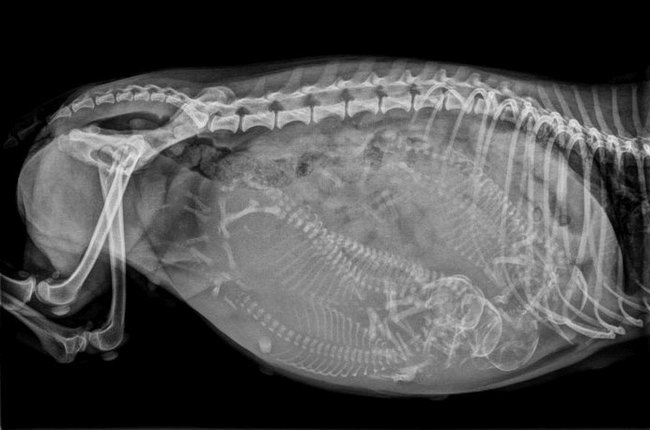
The average length of pregnancy in dogs is 63 days, or 9 weeks.
This can vary somewhat — from 58 to 68 days. Such variation is often linked to several factors:
- Accuracy of the mating date: A male’s sperm can survive in the female’s tract for up to 5–7 days, so actual fertilisation may occur a few days after mating, which complicates precise counting.
- Breed size: It’s thought that small breeds may carry puppies slightly longer while large breeds may have a slightly shorter pregnancy, but this is not a strict rule.
- Number of puppies: Large litters may bring on labour a little earlier, while a pregnancy with 1–2 puppies may last longer.
If pregnancy exceeds 70–72 days, this is considered overdue and is a serious reason to see a vet at once, as it can threaten the lives of both the puppies and the mother.
How to calculate a dog’s due date?
Pinpointing the birth date is one of the hardest tasks for an owner. However, there are several methods of varying accuracy.
- Method 1: by the mating date (most common).
The simplest way is to add 63 days to the date of the first successful mating. For example, if mating took place on 1 March, expect the birth around 3 May. Because of the variability in ovulation, labour may occur within a range of 61–65 days from that date. - Method 2: veterinary methods (most accurate).
If the mating was planned, vets use more precise methods to determine the fertile window. Vaginal cytology and progesterone testing are done before mating to pinpoint the day of ovulation; if the ovulation day is known, birth follows almost exactly 63 days later. Ultrasound can help estimate the puppies’ gestational age from their size, but it is more accurate for confirming pregnancy than for predicting the day of birth. An X-ray is the “gold standard” for counting puppies but can only be done late (after day 55), once the puppies’ skeletons have ossified. - Method 3: monitoring rectal temperature (best at home).
This is the most reliable home way to predict labour. From day 56–57, take the dog’s rectal temperature 2–3 times a day at the same times. Normal is 37.5–39.0 °C. About 12–24 hours before labour begins, body temperature drops sharply by 1–1.5 degrees (to 36.5–37.0 °C). This drop is a clear sign that labour will start very soon.
Caring for a pregnant dog
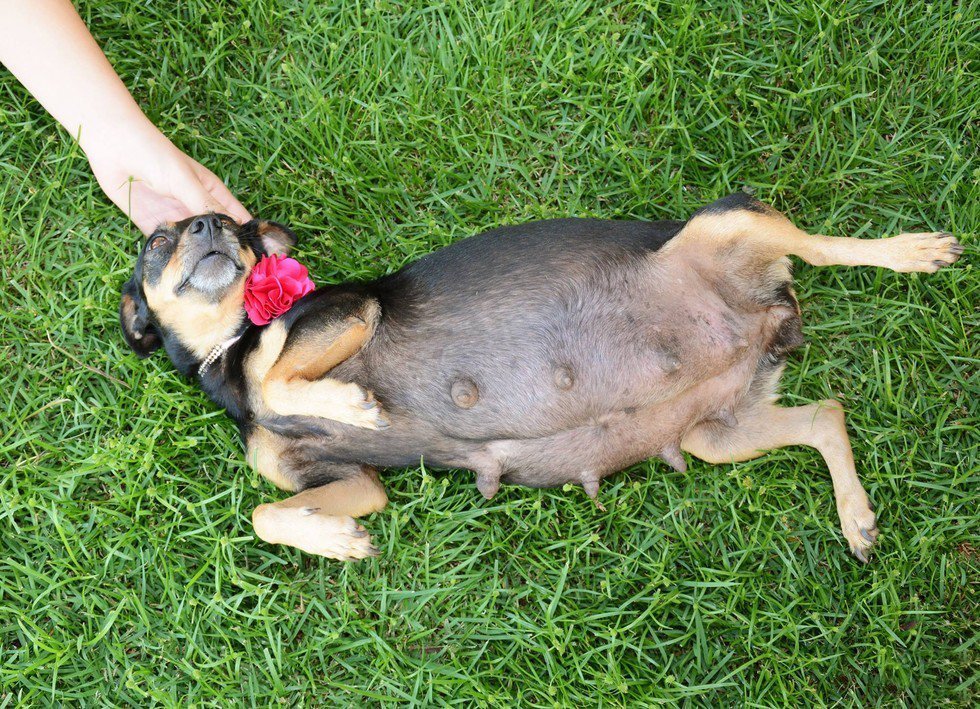
Proper care of a pregnant dog is decisive for her health and that of the future puppies. It includes managing activity, veterinary visits and creating a comfortable environment.
Activity and exercise
In the first half of pregnancy (weeks 1–4) the dog can keep to her usual routine. Ordinary walks and play are good for maintaining muscle tone.
In the second half (from week 5):
- Avoid intense exertion: Jumping, long-distance running, rough play with other dogs and training (such as agility) should stop.
- Keep gentle walks: Short but frequent lead walks are ideal. They maintain muscle tone and prevent obesity without exhausting the dog.
- Caution: Don’t let the dog jump down from high surfaces (bed, sofa).
Veterinary care
Vaccination: All necessary shots should ideally be given before a planned mating. Vaccinating pregnant bitches, especially with live vaccines, is usually not recommended, as it may harm the foetuses. If the mating was accidental and the dog is unvaccinated, discuss the risks and a plan with your vet.
Deworming: This is extremely important. Many parasite larvae (such as Toxocara) can lie dormant in the mother’s tissues and reactivate during pregnancy, infecting the puppies before birth (in the womb) or through milk. There is a special safe deworming schedule for pregnant bitches that your vet will prescribe (fenbendazole-based products are often used from day 40).
Flea and tick treatment: Continue treatment, but make sure you use a product that is safe for pregnant and lactating animals. Many spot-ons and tablets are safe, but always read the label and consult your vet.
Setting up the “nest”
One to two weeks before the expected due date, start preparing a whelping box. It should be:
- In a quiet, calm place, away from draughts and direct sunlight.
- Spacious enough for the dog to lie stretched out, but with sides that stop the newborn puppies crawling out.
- Easy to clean. Line the bottom with newspaper or absorbent pads, then place clean old sheets or towels on top that you won’t mind getting dirty and can easily replace.
Introduce the dog to this spot in advance and let her sleep there so she feels safe and comfortable in it.
How and what to feed a dog during pregnancy
Nutrition is one of the most important aspects of caring for a pregnant dog. Energy and nutrient needs change dramatically over the 9 weeks.
First trimester (weeks 1–4):
At this stage the dog’s needs barely change. The foetuses are still tiny. There is no need to increase portions or change the food. In fact, overfeeding early on can lead to obesity, which complicates the birth. If the dog has morning sickness she may eat less — that’s normal; just make sure she always has fresh water.
Second trimester (weeks 5–6):
Active growth of the foetuses begins and energy needs rise. Start increasing the amount of food gradually (!). By the end of week 6 the dog should be getting about 25–30% more food than usual. This is also the ideal time to switch smoothly to a more calorie-dense food.
Third trimester (weeks 7–9):
This is the period of maximum puppy growth. In week 9 the dog should eat 50–60% more than her usual ration. But there’s a problem: the womb full of puppies presses on the stomach, and the dog physically can’t eat a large portion at once.
Solution: Switch the dog to smaller, more frequent meals. Instead of two large feeds, give her 3, 4 or even 5 small portions a day.
Choosing the food
The best choice is a high-quality dry food designed specifically for puppies (Puppy) or labelled “for pregnant and lactating bitches”. Why this one?
- High calorie content: more energy in a smaller volume.
- Higher protein: needed to build the puppies’ tissues.
- Higher fat: the main energy source.
- The right calcium-to-phosphorus balance: critical for forming the puppies’ skeletons and for milk production.
IMPORTANT: If you feed your dog a quality balanced puppy food, do not add any vitamin or mineral supplements, especially calcium, without a vet’s direct instruction. Excess calcium during pregnancy can disrupt its metabolism and lead to a severe, life-threatening condition — eclampsia (milk fever) — during lactation.
Always provide free access to fresh, clean water.
Medical and surgical termination of an unwanted dog pregnancy
Sometimes unwanted or accidental matings happen. If you are not planning puppies, there are veterinary methods of terminating pregnancy. All of them must be carried out strictly under a vet’s supervision.
- “Mismating injections” (emergency contraception): There are hormonal drugs (e.g. estradiol benzoate-based) that can be given to a dog shortly after mating (usually on days 3 and 5). They alter the uterine environment and prevent implantation of fertilised eggs. This method carries risks and can cause serious side effects (such as pyometra — a purulent inflammation of the uterus).
- Medical abortion (at later stages): There are drugs (e.g. aglepristone-based) that block the action of progesterone, the hormone that supports pregnancy. They can be used up to day 45. The drug is given by injection (usually twice, 24 hours apart), leading to resorption or expulsion (abortion) of the foetuses. The procedure is done under a vet’s control and may be accompanied by signs resembling labour.
- Surgical termination (spaying): The most radical but also the most reliable and, in the long run, safest method is ovariohysterectomy (spaying) of the pregnant dog. During the operation the uterus is removed together with the foetuses. This resolves the current pregnancy and prevents any future pregnancies and reproductive risks (pyometra, mammary tumours).
Never try to give a dog any “human” drugs to terminate pregnancy yourself. This can be fatal.
Signs that labour is approaching in dogs

Knowing these signs will help you prepare and be at your pet’s side when it matters most. Approaching labour comes with a clear set of physical and behavioural changes.
Precursors (12–48 hours before):
- Drop in rectal temperature: As already noted, the most reliable sign. Twelve to twenty-four hours before the first contractions the temperature falls to 36.5–37.0 °C.
- Nesting behaviour: The dog becomes very restless. She may start digging, scratching the floor or her bedding and tearing up newspaper, trying to build a “nest”.
- Fussiness and unease: The dog can’t settle, keeps changing position, breathes heavily (panting), trembles and whines.
- Loss of appetite: Most dogs refuse food entirely 12–24 hours before labour.
- Seeking solitude — or the owner: Some dogs hide in a dark, quiet place (a closet, under the bed); others, on the contrary, won’t leave the owner’s side, seeking support.
- Passing of the mucus plug: A thick, clear or slightly cloudy mucus may be discharged from the vulva. This is the “plug” that sealed the cervix.
The start of labour (first stage):
- Contractions: Uterine contractions begin. They are not yet strong (not bearing-down), and you may not see them, but the dog feels them. She becomes even more restless, may tremble, breathe rapidly and glance at her belly. This stage can last from 6 to 12 hours (up to 24 hours in first-time mothers).
- The waters break: You may see a straw-coloured fluid leaking — the rupture of the amniotic sac. It means the first puppy will appear soon.
After this the second stage of labour begins — active bearing-down and the birth of the puppies. Be ready, and keep your vet’s phone number to hand in case of complications.
FAQ
What is a false pregnancy in a dog?
A false pregnancy (pseudopregnancy) is a state that arises in non-pregnant bitches about 6–12 weeks after heat (in the dioestrus phase). Because of high progesterone, the dog’s body “thinks” it is pregnant. She may show all the signs: a bigger belly, swollen mammary glands, milk production, nesting and even “adopting” toys. It usually resolves on its own, but if symptoms are severe a vet may prescribe treatment to suppress lactation.
Can you do an ultrasound on a pregnant dog? Is it safe?
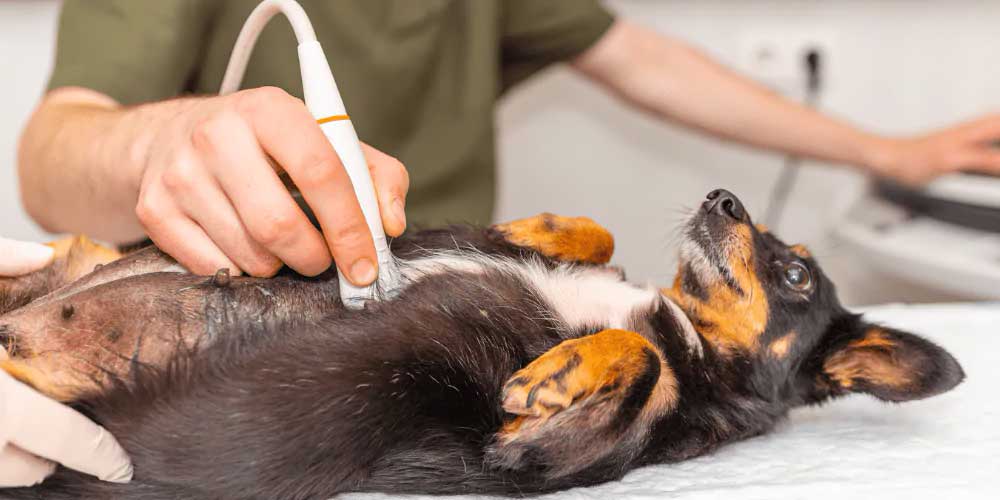
Yes, ultrasound is a completely safe and painless method of diagnosis. It is usually done from day 21–22. It confirms pregnancy, shows the foetal heartbeats and assesses their viability and approximate age. However, ultrasound is not an accurate way to count puppies, as they can “hide” behind one another.
Can you bathe a pregnant dog?
Yes, but with care. Use warm water and a non-slip surface (a rubber mat in the bath) so she doesn’t slip and fall. Be gentle and don’t press on the belly. Dry her thoroughly with a towel and a hairdryer (on a cool setting) so she doesn’t catch cold. Avoid bathing in the last 1–2 weeks before the birth so as not to cause stress.
How many puppies does a dog have on average?
It depends greatly on breed and size. Small breeds (e.g. Chihuahua, Yorkshire Terrier) usually have 1–4 puppies. Medium breeds have 5–8. Large and giant breeds (e.g. Labrador, German Shepherd, Mastiff) can have 8–12 or even more in a litter.
Do you need to X-ray a pregnant dog?
An X-ray is the only accurate way to know the exact number of puppies. It is done late (after day 55), once the puppies’ skeletons are mineralised enough to be visible. The radiation dose at this stage is considered safe for the foetuses. Knowing the exact number is very important: you’ll know when the birth is over and whether a puppy is still in the birth canal, which would need emergency help.