

Autumn is arguably the favourite season for many dog owners. The crisp air, the rustling of leaves under paws, and an incredible number of new scents turn an ordinary walk in the park into a proper adventure. But it is precisely during this period that the beauty of nature conceals serious dangers which could cost your pet their health or even their life. While people head out foraging with their baskets, our four-legged friends conduct their own research – with their noses and tongues. Sometimes, these findings can be fatal. Unfortunately, not all owners know that a common acorn or an unassuming mushroom by the path is a slow-acting poison. Read more about this on Tvaryny.
Why Do Dogs Eat Mushrooms and Acorns? Physiology and Instincts
Before discussing toxins, it is worth understanding why a predator (which a dog is) would be interested in plant food at all. Many owners mistakenly believe: “My dog is smart, he won’t eat poison.” This is a dangerous myth. Dogs are curious opportunistic scavengers.
- Fishy smell of mushrooms. Some species of poisonous mushrooms, particularly the Death Cap and certain types of toadstools, release a smell resembling rotting fish or meat when decaying or even when fresh. To the human nose, this might be imperceptible, but to a dog, it is a signal: “there is food here”.
- Play behaviour. Acorns and conkers (horse chestnuts) are perfectly shaped for play. They roll and crunch when bitten. Young dogs and puppies often swallow them accidentally in the excitement of the game.
- Fibre deficiency. Sometimes eating grass, bark, or mushrooms indicates an attempt by the animal to clear its stomach or make up for a lack of certain elements, although in the case of mushrooms, this is a misguided instinct.
Acorns: The Invisible Threat in Oak Avenues
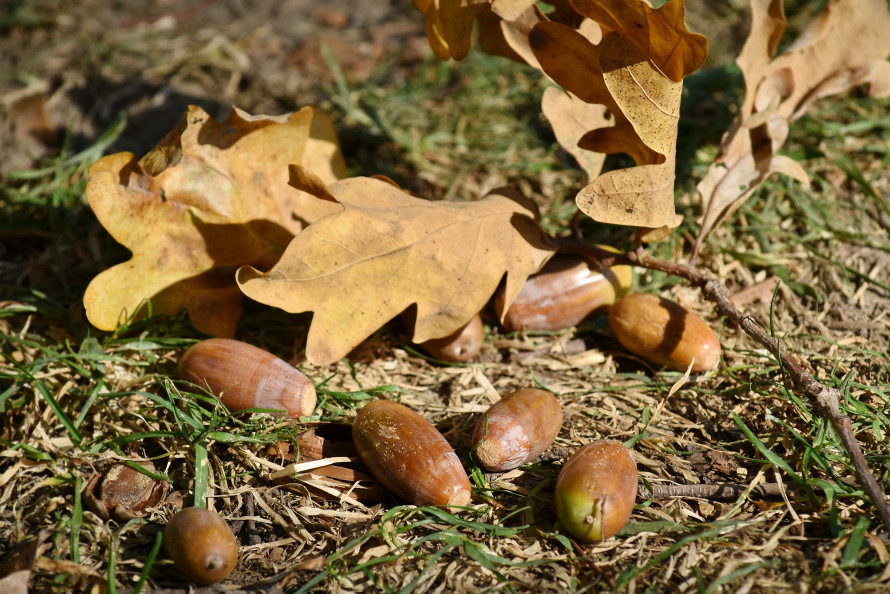
Many people ask: can dogs eat acorns? The answer is categorical – no. Acorns (the fruit of the oak) contain a high concentration of tannins (tannic acid). If a large dog swallows one acorn accidentally, they will likely “digest” it without serious consequences (apart from an upset stomach), but systematic eating or consuming a large amount at once can lead to tragedy.
How do tannins kill the kidneys?
Quercus poisoning (oak poisoning) is an official veterinary diagnosis. Tannins cause:
- Chemical burns to the GI tract. Upon entering the stomach, the acids irritate the mucous membrane, causing gastritis and ulcers.
- Kidney failure. This is the most terrifying consequence. Toxins destroy kidney tissue. Symptoms may not appear immediately, but after a few days, when saving the animal will be extremely diffcult.
- Mechanical blockage. An acorn is a hard object. In small breeds (Yorkies, Chihuahuas, Dachshunds), a whole acorn can get stuck in the intestine, requiring urgent surgery.
Symptoms of acorn poisoning:
- Vomiting (sometimes with traces of blood).
- Lethargy, refusal of food.
- Diarrhoea (stools may be dark and tarry).
- Abdominal pain (the dog hunches over and does not let you touch their tummy).
Mushroom Season: Deadly Traps for Dogs
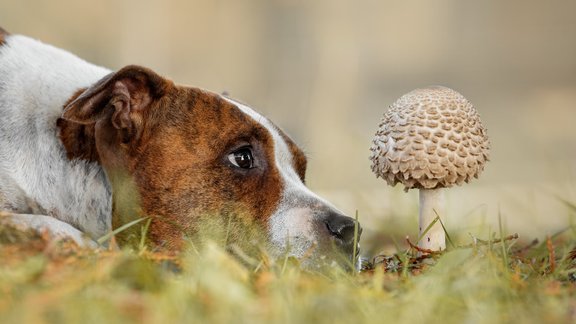
While acorns are everywhere, mushroom poisoning in dogs happens less frequently but progresses much more severely. A multitude of mushrooms grow in our climate, and what is safe for a squirrel or even a human (after cooking) can kill a dog in a matter of hours.
| Mushroom Type | Toxin | Main Danger | Reaction Speed |
|---|---|---|---|
| Fly Agaric (Amanita muscaria) | Ibotenic acid, muscimol | Nervous system damage | 30 mins – 2 hours |
| Death Cap (Amanita phalloides) | Amatoxins | Total destruction of liver and kidneys | 6 – 24 hours (latent period) |
| Fibrecap (Inocybe) | Muscarine | Salivation, bradycardia (heart stoppage) | 15 mins – 2 hours |
| Sulphur Tuft (False Opener) | Hydrazine | GI tract disorders, convulsions | 1 – 3 hours |
1. Hepatotoxic Mushrooms: Death Cap (Amanita phalloides)
This is the “queen” of poisons. The most insidious thing about the Death Cap is that symptoms of poisoning in dogs have a phase of “false recovery”.
The tragedy usually unfolds like this: the dog eats the mushroom. After 6-12 hours, severe vomiting and diarrhoea begin. The owner thinks the dog simply “ate something dodgy”. Then comes relief for 12-24 hours. The owner relaxes. But during this time, toxins are irreversibly destroying liver cells. When symptoms return (jaundice, convulsions, coma), treatment is often ineffective. Fatality rates reach 90%.
2. Neurotoxic Mushrooms: Fly Agaric and Inocybe
The red Fly Agaric looks striking, and dogs rarely eat it whole, but even a small piece causes hallucinations (yes, dogs have them too), coordination problems, and tremors. The dog may behave as if drunk: swaying, barking at empty space, showing aggression, or falling into a stupor.
Mushrooms of the genus Inocybe (Fibrecaps) are small, unassuming brown mushrooms that grow right on lawns in parks. They contain muscarine. The main sign of poisoning is SLUDGE syndrome (Salivation, Lacrimation, Urination, Diarrhoea, Gastrointestinal cramps, Emesis/Vomiting). Saliva may flow like a river, and pupils constrict to pinpoints.
Not Just Mushrooms: The Hidden Threat in Leaves
Speaking of the dangers of an autumn park, one cannot ignore what hides directly in the fallen leaves alongside the mushrooms. Autumn sees a second peak in the activity of ixodid ticks. They often sit on dry grass or low bushes, exactly where mushrooms grow and where your dog sniffs the ground. The symptoms of the diseases they carry can overlap with signs of poisoning (lethargy, refusal of food), complicating diagnosis. Therefore, be sure to read the information on babesiosis and piroplasmosis to distinguish infection from intoxication in time.
First Aid: An Algorithm That Saves Lives
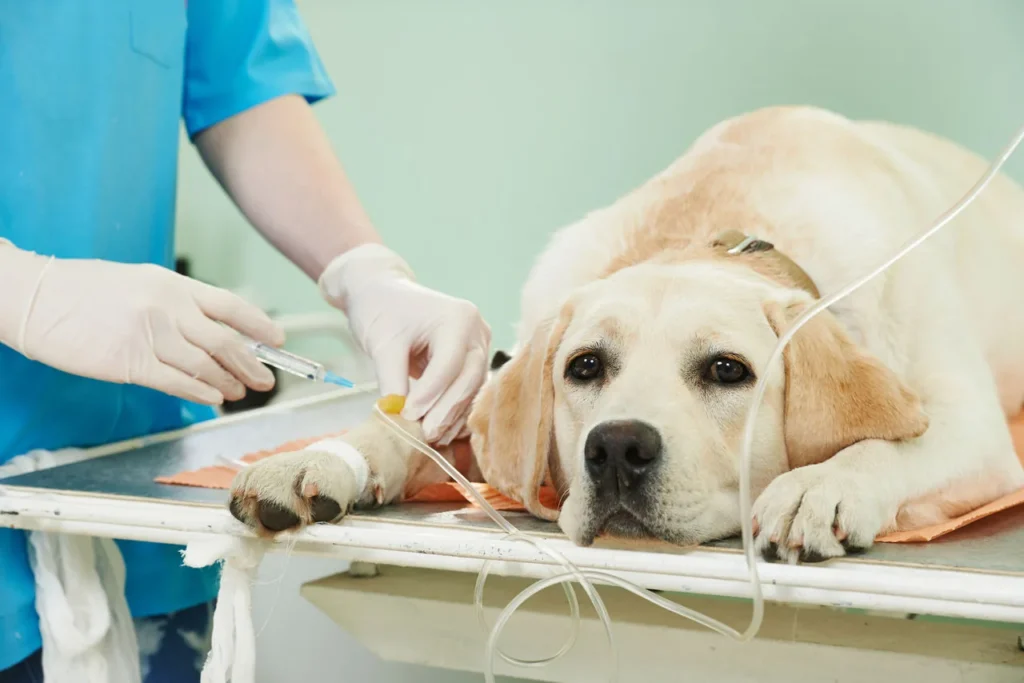
If you see that your dog has eaten a suspicious mushroom or gorged on acorns, you need to act instantly. Time is working against you.
Step 1: Clearing the Stomach (Only the first 30-60 minutes!)
Inducing vomiting is permissible ONLY if:
- The dog is conscious.
- The dog is not having convulsions.
- No more than 2 hours have passed since ingestion (ideally – up to 30 mins).
How to induce vomiting: The safest home method is 3% hydrogen peroxide. Dosage: 1-2 ml per 1 kg of the dog’s weight. Pour it into the cheek pouch using a syringe without a needle. If there is no vomiting after 5 minutes, you can repeat the dose once. No more!
Step 2: Sorbents
After the stomach has cleared (or if you failed to induce vomiting but the dog is conscious), give a sorbent. Activated charcoal is the simplest option, but you need a lot of it (1 tablet per 1 kg of weight). Modern sorbents (Enterosgel, etc.) are more effective and easier to give to an animal. They bind the toxins remaining in the gut and prevent them from being absorbed into the blood.
Step 3: Sample of the “Culprit”
If possbile, take the remains of the mushroom or acorns with you to the clinic. Wrap them in a damp napkin or paper (not in plastic, as the mushroom spoils quickly there and loses identification features). This will help the vet choose an antidote faster, if one exists.
Step 4: Immediate Visit to the Vet
Do not wait for symptoms! First aid for a dog with poisoning at home is merely a way to buy time to get to the emergency vets. With Death Cap poisoning, every minute counts.
Prevention: How to Teach a Dog Not to Scavenge
The best treatment is prevention. Here are a few tips on how to make walks safe.
The “Leave it” or “Drop it” Command
This command must be drilled until it becomes automatic. Practise at home: place a treat on the floor, but do not let the dog take it. When they look at you, praise them and give a different treat from your hand. The dog must understand: what is on the ground is taboo, but the tastiest stuff is in the owner’s pocket.
Muzzle
For breeds prone to acting like “vacuum cleaners” (Labradors, Beagles, Spaniels), a muzzle on a forest walk is not a punishment, but a means of protection. There are special lightweight plastic or mesh muzzles that allow the dog to pant and drink water but prevent them from picking up objects.
A Full Stomach
Never go for a long walk in the woods if the dog is very hungry. A fed animal is less interested in “foraged food”. Although, to be fair, for a Labrador, the concept of being “full” is rather relative and may be unattainable.
Myths and Reality About Poisoning
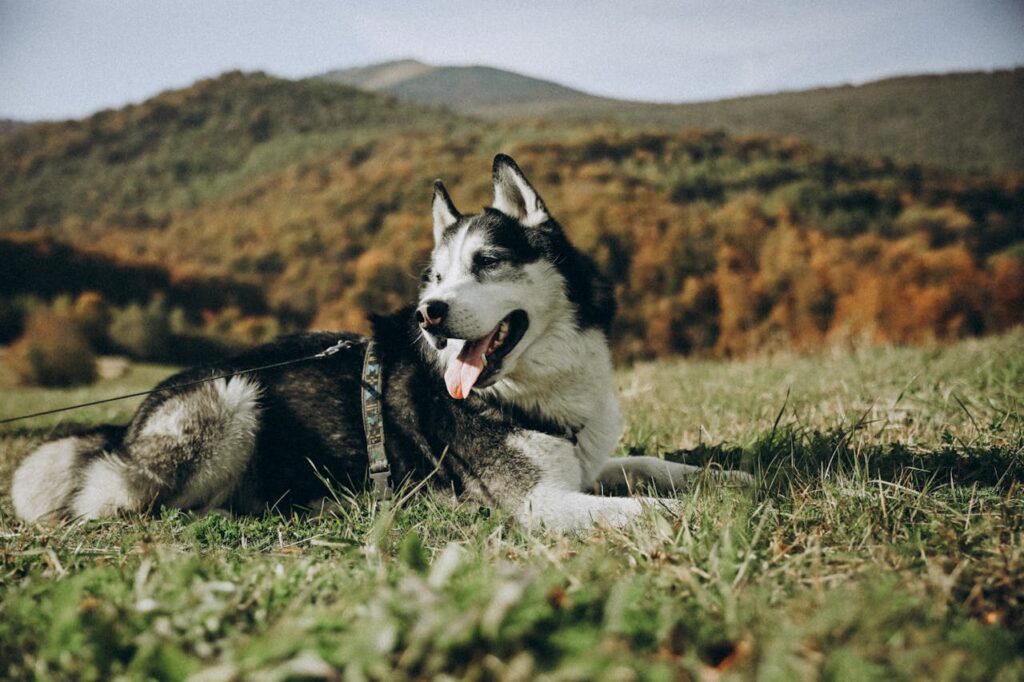
There are many old wives’ tales about checking mushrooms that could cost your pet their life. Let’s debunk the main ones.
- Myth: “If a mushroom is worm-eaten or slugs are eating it, it is safe.”
Reality: Absolutely untrue. Insects and molluscs have a completely different metabolism. The Death Cap is happily eaten by certain insect larvae. - Myth: “Poisonous mushrooms smell bad.”
Reality: As we have already written, the Death Cap has a faint, pleasant smell, and some poisonous Pinkgills smell of fresh flour. - Myth: “Milk neutralises poison.”
Reality: Milk can, on the contrary, accelerate the absorption of certain fat-soluble toxins from the stomach into the blood. Only water and sorbents! - Myth: “The dog knows which grass it needs.”
Reality: Domestic dogs lost many of the natural instincts of their wild ancestors long ago. Furthermore, evolution did not prepare them for encountering new species of toxic plants in city parks.
Recovery After Poisoning
If you were lucky and got your pet to the vet on time, a rehabilitation period lies ahead. The liver and kidneys need time to recover. Vets usually prescribe:
- Diet. These are special therapeutic foods (Hepatic or Gastrointestinal lines). They are easily digestible and place minimal strain on the organs.
- Hepatoprotectors. Preparations for restoring liver cells.
- Plenty of fluids. To flush out residual toxins.
Remember, the park and the forest are wonderful places to relax, but they require your vigilance. Look at what your dog is sniffing, not at your phone. Your attention is the guarantee of their long and happy life. May your walks bring only joy and health, and may foraging remain a safe hobby for humans, rather than a gastronomic experiment for dogs.